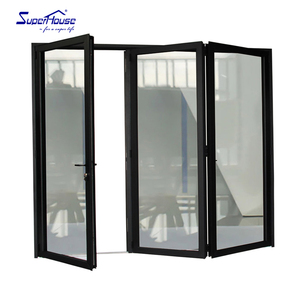
Engineered Solutions for Oceania
Export-Grade Aluminium Roll Up, Pivot & Architectural Enclosure Systems
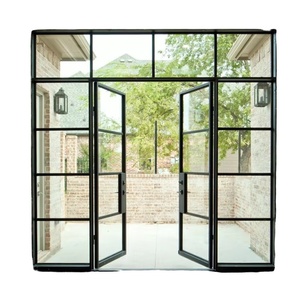
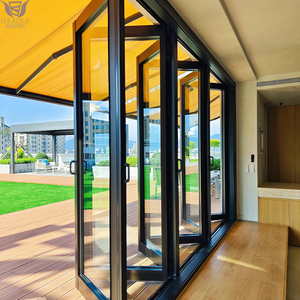
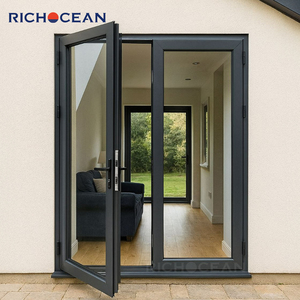
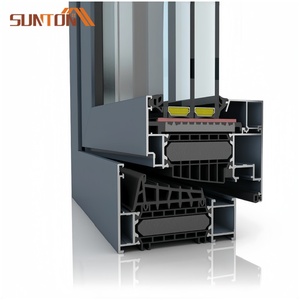
Every product listed below is precision-manufactured using aviation-grade 6063-T5/T6 thermal break extrusions, heavy-duty architectural hardware, and multi-layer surface finishes verified for extreme coastal wind pressures and high-salinity exposure across New Zealand.
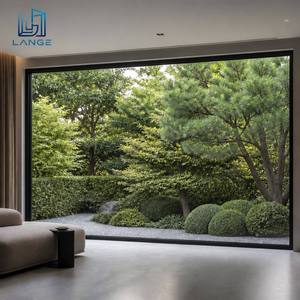
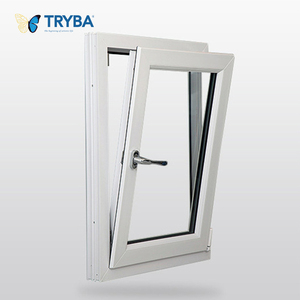
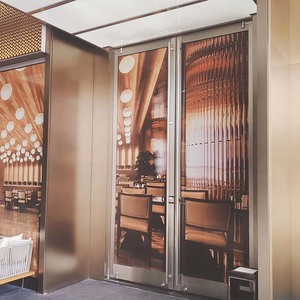
Industrial Backing
Precision Manufacturing Capacity Supporting New Zealand Importers
Operating under Guangdong Dejiyoupin Doors and Windows Co., Ltd. (DERCHI), our dedicated 180,000 m² high-precision fabrication base delivers complete control over extrusion chemistry, profile anodising, fluorocarbon coating, CNC structural processing, and CE-certified assembly. Our factory eliminates intermediary handling risks, offering direct factory wholesale rates to New Zealand distributors, commercial builders, and specification architects.
With rigorous quality tracking conforming to ISO 9001, AS 2047, and CE standards, our factory is fully equipped to manufacture industrial roll-up shutters, double-skin insulated slats, and custom architectural doors suited for harsh Pacific environments.
Send an Inquiry
180,000m²
Integrated Factory Footprint
25+
Years Export Engineering
600+
Specialised Production Staff
100+
Global Patents & Certifications
Technical Localisation
Targeted Application Scenarios Across New Zealand Microclimates
New Zealand presents unique architectural and structural challenges: intense ultraviolet radiation, corrosive maritime microclimates, dynamic thermal variations between the North and South Islands, and rigorous seismic criteria under NZS 4219. Our roll-up doors and architectural entrance systems are custom-configured for these precise operational conditions.
Auckland & Coastal Maritime Logistics Hubs
Facilities situated near the Waitematā Harbour or Manukau industrial corridors face continuous airborne salt spray and cyclonic coastal gusts. Our CE-certified roll up doors incorporate marine-grade 6063-T6 alloy finished with Qualicoat Class 2 / PVDF fluorocarbon coatings exceeding 60 microns. Stainless steel 316 guide hardware, end-locks, and bottom-rail seals effectively prevent galvanic corrosion and preserve mechanical fluidity across high-frequency duty cycles.
Wellington & Cook Strait High-Wind Zones
Wellington’s terrain funnels gale-force winds requiring doors rated for Ultimate Limit State (ULS) wind loads exceeding 2.5 kPa. DERCHI roll-up solutions feature heavy-gauge extruded interlocking slats, structural wind-lock channels, and reinforced vertical mullions tested in line with AS 2047 and AS/NZS 1170.2 provisions. This engineered curtain rigidity prevents track blow-out and mitigates facade compromise during extreme meteorological events.
Christchurch & Central Otago Thermal Performance
Addressing the updated NZBC Clause H1 (Energy Efficiency) mandate, our insulated aluminium roller doors and companion double-glazed facades provide high thermal boundary performance. Injected with high-density polyurethane (PU) thermal foam cores, our roll-up panels break structural thermal bridges, reducing cold-climate interior energy losses and condensation build-up in alpine commercial environments.
Engineering Data Sheets
Compliance Matrix: NZ Standards vs. Factory Engineering Deliverables
Specifiers, structural engineers, and council certifiers require transparent performance data to satisfy New Zealand Building Code compliance schedules. Below is an overview of our engineering thresholds.
| Performance Parameter | NZ Regulatory Standard | Factory Export Specification | Verification & Test Document |
|---|---|---|---|
| Wind Pressure Resistance | AS/NZS 1170.2 / NZS 4211 | Serviceability (SLS) 1.5 kPa / Ultimate (ULS) > 3.0 kPa | AS 2047 N6 Accredited |
| Aluminium Extrusion Alloy | NZS 4284 & AS/NZS 1866 | Architectural Grade 6063-T5 / Structural 6063-T6 | Mill Material Test Cert (MTC) |
| Coastal Corrosion Defense | AS 3715 / AAMA 2604/2605 | Fluorocarbon PVDF (>60μm) / Marine-Grade Anodising (25μm) | 1000-hr Salt Spray Verified |
| Acoustic & Thermal Insulation | NZBC Clause H1 / ISO 10140 | PU Injected core / System U-value down to 1.4 W/m²K | Thermal & Acoustic Testing |
| Drive Automation & Safety | EN 13241-1 / AS/NZS 60335 | CE & FCC certified motors with anti-drop brakes & photocells | CE Directive 2006/42/EC |
Industry Dynamics
Emerging Sourcing & Architectural Trends in New Zealand
How architectural priorities, regulatory changes, and direct supply-chain dynamics are shaping New Zealand's commercial and high-end residential fenestration markets.
1. Direct-from-Factory Consolidations
Due to compounding local distributor margins and domestic fabrication backlogs in Auckland and Christchurch, Tier-1 builders and procurement firms are pivoting to direct factory supply contracts. Consolidating architectural roll up doors, pivot entrance structures, and thermal-break window systems within full-container-load (FCL) shipments directly from Foshan cuts project lead times by up to 35% and overall project costs by 20–30%.
2. Heightened NZBC H1 Energy Mandates
With the New Zealand Ministry of Business, Innovation and Employment (MBIE) mandating higher R-values for building envelopes, uninsulated thin-sheet steel roller shutters are being phased out in high-performance builds. Specifiers favor double-skinned, polyurethane-injected aluminium roll-up slats paired with thermal break perimeter frames to ensure airtight building envelopes that prevent seasonal heat transfer.
3. Modern Architectural Minimalism
Contemporary New Zealand commercial facades and high-end coastal villas increasingly demand seamless aesthetic consistency. Slat profiles with concealed fasteners, recessed side tracks, low-profile roll barrels, and matte architectural black/charcoal architectural finishes dominate current requests, combining industrial protection with clean architectural styling.
Factory Capabilities
Why DERCHI Is the Trusted Partner for New Zealand Importers
With over 25 years of engineering experience and a presence across Australasia and the Pacific, we bridge the gap between factory manufacturing precision and local New Zealand job-site compliance.
Single-Source Fabrication
From raw 6063 alloy billet extrusion to CNC track machining, surface treatment, motor integration, and packing, all steps remain in-house within our 180,000m² manufacturing facility. This vertical integration guarantees dimensional accuracy and complete traceability.
Complimentary CAD Shop Drawings
Our in-house technical team produces comprehensive structural CAD shop drawings and section elevations tailored to your specific opening structural interfaces, lintel configurations, and motor wiring specifications prior to cutting steel or aluminum.
NZST Timezone Project Support
Our dedicated project engineers operate on schedules aligned with New Zealand Standard Time (NZST). Fluent English-speaking structural consultants provide real-time coordination, technical document submittals, and remote installation guidance.
MPI Compliant Export Packaging
Shipping to Auckland, Tauranga, Lyttelton, or Napier ports demands strict biosecurity compliance. We utilize ISPM-15 compliant fumigated timber crating, heavy protective foam wraps, moisture barriers, and reinforced steel-strapped stillages to eliminate sea-transit damage.
Clear Technical Guidance
Frequently Asked Questions by New Zealand Buyers
Direct answers addressing compliance, customs duties, thermal ratings, and installation procedures when importing DERCHI roll up and entrance systems.
Are DERCHI roll-up and entrance door systems compliant with the New Zealand Building Code (NZBC)?
Yes. Our products are engineered and tested in accordance with AS 2047 and AS/NZS 1170 standards, achieving verified wind load ratings up to N6 / ULS 3.0 kPa. For projects requiring council consenting via an Alternative Solution pathway under NZBC Clause B1 (Structure) and E2 (External Moisture), we provide comprehensive manufacturer test certificates, structural calculations, and factory QA documentation.
What automated motor options and electrical safety ratings are provided?
All our automated tubular and central roller drive motors are CE, FCC, and RoHS certified, built to operate reliably on standard New Zealand 230V/240V 50Hz single-phase or 400V 3-phase industrial power supplies. Integrated safety mechanisms include opto-electronic safety edges, emergency manual overrides, anti-drop drop-brake safety systems, and smart automation modules compatible with modern building management systems (BMS).
How do you manage freight logistics and clearance across New Zealand ports?
We offer Full Container Load (FCL) and Less than Container Load (LCL) sea freight shipping to all key NZ ports, including Auckland (Ports of Auckland), Tauranga, Lyttelton (Christchurch), Napier, and Wellington. We supply all commercial export documentation—including the NZ China FTA Certificate of Origin (Form N-Z) for zero preferential import tariffs, bill of lading, and fumigation certificates meeting Ministry for Primary Industries (MPI) biosecurity import protocols.
Can custom sizing, vision slats, and specific architectural colours be manufactured?
Yes, our production operates on a 100% custom-specification model. We produce clear opening spans up to 12 meters wide for commercial hangars and warehouses, down to residential compact architectural garages. Options include perforated ventilation slats, UV-stabilized polycarbonate vision panels, and over 200 architectural powder-coat colors referencing RAL and standard Dulux/Colorsteel matches common in New Zealand.
What warranty and after-sales technical support do you provide for Kiwi builders?
Our structural aluminium roll-up slats, extrusions, and anodised or powder-coated finishes are backed by a comprehensive 10-year structural warranty, with electrical motors and automation electronics warrantied for 5 years. Each shipment includes step-by-step CAD installation assemblies, terminal connection diagrams, and on-demand video engineering consultation during New Zealand business hours.
What is the standard production and shipping lead time from Foshan to New Zealand?
Standard fabrication and testing lead time is 25 to 35 days following sign-off on shop drawings and specifications. Ocean transit time from Shenzhen/Guangzhou ports to Auckland or Lyttelton typically ranges between 16 and 22 days, enabling efficient, predictable project scheduling from contract execution to on-site arrival.
Direct Factory Procurement
Request an Engineered Proposal & Factory Pricing for Your NZ Project
Submit your project door schedules, elevation drawings, or rough opening dimensions. Our structural engineering team will review your wind-load requirements, provide complimentary shop drawings, and prepare a direct factory quote within 24 hours.