Heavy-Duty Lift & Slide
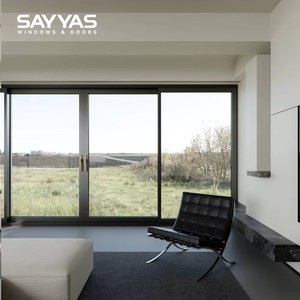
Sourced globally by commercial general contractors, developers, and facade engineers. Fully customizable cladding, thermal break wrapping frames, and tested hurricane-impact specifications.
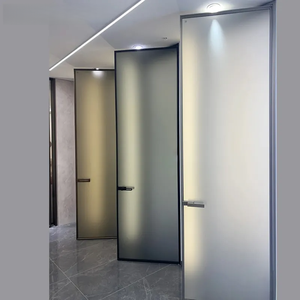
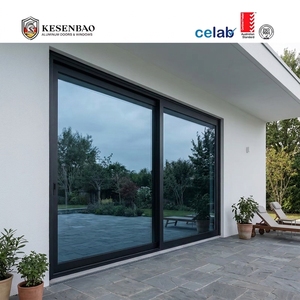
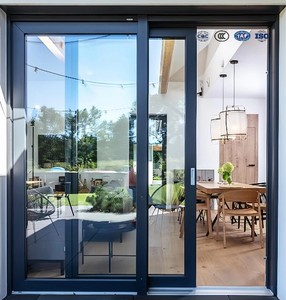
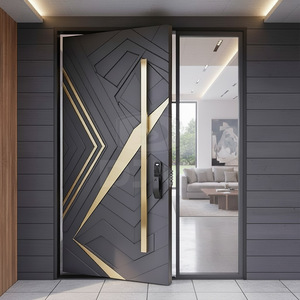
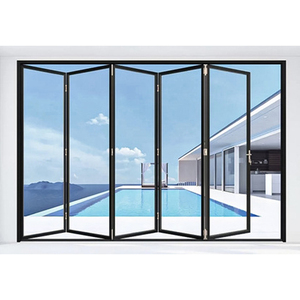
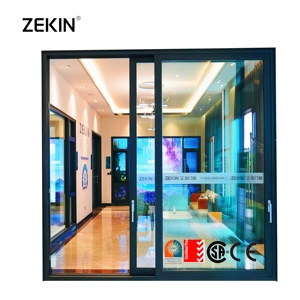
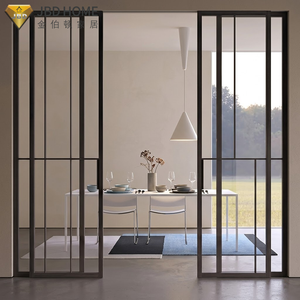
Comprehensive analysis on thermal envelope integration, extruded aluminum wrapping tolerances, and structural performance criteria for international supply chains.
Aluminum wrapping—often designated within architectural fenestration as continuous exterior aluminum cladding or heavy-duty sub-frame wrapping—has evolved from simple aesthetic trim to a mission-critical line of defence in the building envelope. Modern envelope engineering integrates exterior 6063-T6 or 6061-T5 extrusions seamlessly interlocking with interior engineered composite or timber members.
This dynamic architecture provides unmatched protection against accelerated ultraviolet degradation, coastal saline corrosion, and thermal cycling stress. By pairing architectural wrapping profiles with multi-chamber polyamide (PA66 GF25) thermal breaks, Chinese master fabricators now eliminate exterior condensation channels, achieving overall envelope U-values down to < 1.2 W/(m²·K).
International procurement departments across Oceania, North America, and Europe are transitioning from off-the-shelf unit acquisition to end-to-end engineered shop-drawing fabrication. Key procurement metrics now heavily weigh third-party structural certifications including Australian AS 2047 (with N6 extreme cyclonic ratings) and North American NFRC/AAMA ratings.
Furthermore, developers are consolidating multi-unit orders (combining large-format pivot entrance systems, thermally broken lift-and-slide doors, and matching wrapping windows) under one audited facility to ensure anodizing and fluorocarbon (PVDF) color consistency, unified lead-times, and container freight cubic meter optimization.
Direct-from-manufacturer control over metallurgy, CNC profile milling, automated assembly lines, and pre-cleared maritime logistics.
Our aluminum door and window systems have successfully completed destructive static pressure, cycling water penetration, and operating force testing to AS 2047, achieving an outstanding N6 wind pressure benchmark for high-wind and oceanic cyclone regions.
Consolidate your entire fenestration package: heavy aluminum wrapping windows, thermal broken bifold systems, oversized pivot entry doors, cast aluminum gates, and motorized garage portals directly from a single Tier-1 manufacturer.
Our dedicated structural engineering desk operates synchronized with AEST, NZST, and EST business schedules, providing rapid 24-hour CAD shop drawing turnarounds, thermal calculations, and BIM schedule integration.
Coastal and beachfront installations demand superior coatings. We supply AkzoNobel fluorocarbon (PVDF) 3-coat spraying and 25-micron architectural anodizing that rigorously resists salt-spray fogging up to 3,000 continuous hours.
Every fenestration bundle is enclosed in fully fumigated, steel-strapped plywood crating with corner edge impact guards, moisture vapor barriers, and desiccants—guaranteeing arrival without container scratching or customs clearance delays.
Verify manufacturing infrastructure transparently prior to wire transfers. Global clients can remotely inspect precision CNC cutting hubs, corner-crimping equipment, automated insulated glass lines, and QA chambers via 360-degree immersive VR.

From aluminum ingot heating and alloy billet extrusion to custom wrapping profile die-making and hardware installation, every production stage is controlled within our ISO 9001 quality framework.
Eliminating cross-border dimensional errors and certification rejection through systematic pre-production validation.
Architectural plans, rough openings, structural wind load mandates (Pa), and acoustic Rw targets are ingested by our engineering estimators.
We generate 1:1 scale cross-sectional shop drawings detailing thermal break joints, wrapping jamb returns, glass edge clearance, and anchor points.
Extrusions are precision-milled on 5-axis CNC machines, crimped with high-strength structural corner keys, sealed, and subjected to hydraulic pressure tests.
Crated units ship FCL or LCL directly to international ports (Sydney, Melbourne, Auckland, Long Beach, etc.) with video installation guides provided.
Comprehensive answers addressing Australian AS 2047, North American testing, wrapping sub-frames, and maritime logistics.
Whether you have a complete architectural schedule ready for tendering or require engineering consultation on profile thickness, wind loads, and thermal breaks, our bilingual project engineers respond within 24 business hours.
Send an Inquiry