High-Performance Architectural Security Door & Window Systems
Engineered by Foshan's premier manufacturing specialists to satisfy stringent global standards including AS 2047 (cyclonic N6 wind pressures), European EN 1627 RC3/RC4 forced-entry resistance, and North American hurricane protocols. Direct manufacturer pricing with complete CAD shop drawing verification.
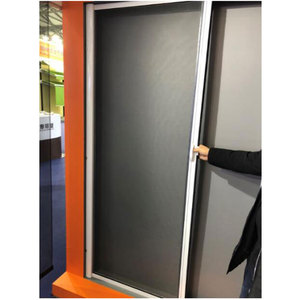
High Performance Seal Roll Mosquito Net Doors Retractable Mosquito Repellent Roller Screen Door
High-tensile aerodynamic track extrusion with spring tension dampeners, high-density weather sealing, and anti-unwind windproof edge locking.
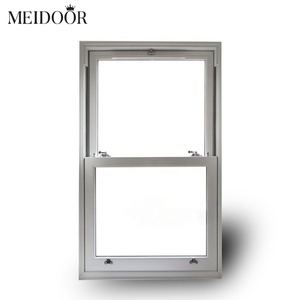
Energy Efficient Anti-Theft Aluminum Bedroom Internal Vertical Lift Sliding Double Hung Glass Windows Made of Aluminium
Reinforced internal vertical counterbalances, multi-point interlocks, thermal break profiles, and precision anti-pry security locks.
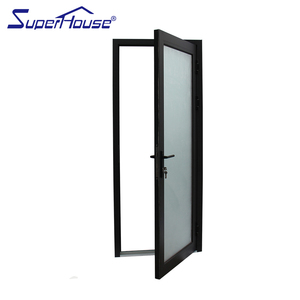
Superhouse Used Storm Doors Commercial Aluminum Storm Double Tempered Glass Swing Door
Commercial-spec reinforced aluminium sub-frame, double-laminated tempered impact glazing, and multi-tier perimeter EPDM gasket seals.
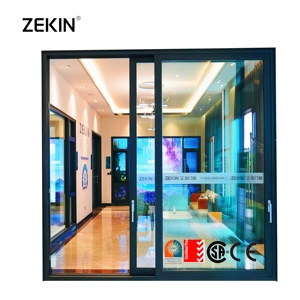
Manufacture Designed Sliding Doors As2047 Certified Modern Aluminium Alloy Frame Sliding Doors Low E Glass Other Doors
Heavy-duty stainless steel rollers (300kg capacity), thermal-break multi-chamber extrusions, Low-E insulated argon double glazing.
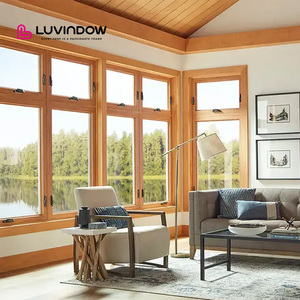
High Quality Hand Crank Aluminum Clad Wood Window Weatherproof Performance For Luxury Villas
Seamless composite fusion of architectural grade exterior aluminium with interior timber, precision crank mechanics, and storm locking.
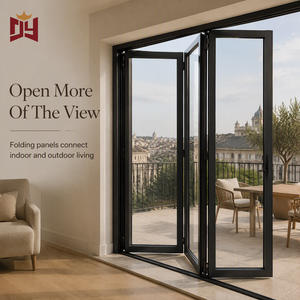
CE Certified Aluminium Slim Frame Bifold Door with Custom Size for Villa Patios and Balconies OEM ODM, Space-Saving Operation
Minimalist sightlines (under 38mm interlock profile), bottom-hung heavy duty carriage bearings, and concealed flush sill drain technology.
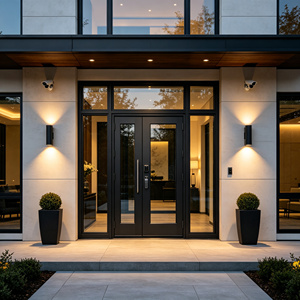
Thermal Break Aluminum Security Entry Door Glazed Ballistic Glass Waterproof Exterior Front Door
Bullet-resistant BR4/NIJ IIIA certified composite glazing, 3.0mm primary wall extrusion, thermal polyamide barrier, and 7-point locking.
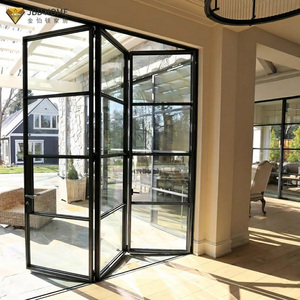
Custom Outdoor Patios Heat Insulation Aluminum Folding Door Glass Door Fold Moisture Resistant Exterior Bi Folding Sliding Door
High-efficiency PA66 thermal insulator bars, argon warm-edge spacers, multi-point compression handles, and moisture barrier thresholds.
Engineered Prowess Behind China’s Premier Security Door Exporter
Guangdong Dejiyoupin Doors and Windows Co., Ltd. (DERCHI) represents the pinnacle of Chinese high-end fenestration manufacturing. Operating from our state-of-the-art Foshan production campus, we provide end-to-end engineering, precision extrusion anodizing, robotic assembly, and certified international export services to over 60 countries across Australasia, North America, Europe, and the Middle East.
Integrated intelligent extrusion, CNC milling, and robotic assembly plants.
Quarter-century of structural window and door R&D expertise.
Certified structural engineers, QA inspectors, and bilingual project consultants.
Validated compliance with AS 2047, CE, ISO 9001, UL, and AAMA standards.

Engineering Anatomy of Commercial Aluminium Security Doors
High-performance security fenestration demands significantly more than decorative surface treatments. When evaluating China's leading factories, procurement managers must evaluate alloy metallurgy, thermal performance physics, locking mechanics, and multi-tier weather barrier design.
Alloy Metallurgy & Structural Wall Extrusion
We utilize virgin primary billet 6063-T6 and 6061-T6 architectural aluminum alloys, avoiding recycled scraps that compromise molecular integrity. Extrusion profiles feature structural primary wall thicknesses ranging from 2.0mm to 3.5mm, far exceeding conventional residential standards (1.2mm–1.4mm). Internal cross-sectional web designs absorb concentrated lateral mechanical impacts up to 15,000 Joules without frame distortion.
Polyamide Thermal Break (PA66 GF25) Insulation
Thermal bridging represents a critical vulnerability in standard metallic frames. Our security doors feature imported German Technoform PA66 GF25 (polyamide reinforced with 25% structural glass fiber). This barrier decouples exterior and interior aluminum profiles, dramatically curtailing conductive thermal dissipation, lowering whole-system U-values down to 1.2 W/m²·K, and suppressing interior condensation in extreme climates.
Multi-Point Kinematic Anti-Pry Lock Assemblies
Structural security depends entirely upon perimeter locking engagement. Our security systems incorporate high-torque German Siegenia, Hoppe, or proprietary multipoint locksets featuring 3 to 7 solid 304 stainless steel locking hooks and shootbolts. Coupled with anti-drill manganese steel striker plates and Grade 6 European profile cylinders, frames withstand extreme crowbar and hydraulic jack leverage tests (EN 1627 RC3/RC4).
Corrosion-Resistant Surface Engineering (Qualicoat 2)
For coastal installations facing aggressive saline mist, DERCHI applies automotive-grade pre-treatments followed by AkzoNobel Interpon D2525 fluorocarbon (PVDF) 3-coat electro-deposition or Qualicoat Class 2 hyper-durable architectural powder coatings. Tested under ASTM B117 salt spray protocols exceeding 3,500 hours with zero film blistering, profile chalking, or delamination—ensuring a 30-year operational design life.
Heavy-Duty 3D Load-Bearing Concealed Hinges
Heavy architectural security sashes (often weighing between 250kg and 600kg due to armored cores and triple glazing) will sag without industrial hardware. We engineer internal 3D adjustable stainless steel hinges and heavy hydraulic bottom pivots featuring self-lubricating Teflon-bronze bushings. Rated for over 500,000 continuous operating cycles without structural deflection or alignment drift.
Ballistic Glass & High-Tensile 316 Marine Mesh
Security fenestration demands glazing materials engineered to withstand severe physical trauma. We integrate multi-layer PVB/SGP laminated security safety glass, bullet-resistant glass (UL 752 Levels 1-3), or 0.8mm–1.0mm high-tensile 316 marine-grade stainless steel security mesh with an anti-shear tensile strength surpassing 900 MPa. Sashes resist sledgehammer impacts, knife penetrations, and dynamic missile impact tests.
Comparative Performance Matrix of Export Door Types
Reference quantitative engineering data when preparing project schedules, tender submittals, or bill of quantities (BOQ) documentation.
| System Category | Alloy & Frame Depth | Glazing / Core Matrix | Wind Pressure (AS 2047) | Security Rating | Thermal U-Value | Recommended Projects |
|---|---|---|---|---|---|---|
| AS2047 Sliding & Stacking | 6063-T6 (120mm–190mm) | 6mm + 12Ar + 6mm Low-E Tempered | N6 Rating (4500 Pa) | Multi-Point Hook Latch | 1.6 – 2.0 W/m²·K | Oceanfront Villas, High-Rise Patios |
| Thermal Break Armored Entry | 6063-T6 (85mm–105mm) | Solid Cast Plate + Rockwool Core | Serviceability 3000 Pa | EN 1627 RC3 / RC4 | 1.1 – 1.4 W/m²·K | Luxury Residences, Estates, Embassies |
| Architectural Pivot Entry | Reinforced 6061 (100mm–150mm) | Armored Composite + SGP Glass | Serviceability 3500 Pa | 7-Point Motorized Deadbolt | 1.3 – 1.7 W/m²·K | Monumental Villa Entrances, HQs |
| Ballistic Impact Front Door | Dual Extrusion Box (120mm) | BR3 / BR4 Polycarbonate Laminate | Ultimate ≥ 6000 Pa | NIJ IIIA / EN 1063 BR4 | 1.5 – 1.8 W/m²·K | Diplomatic Facilities, Safe Rooms |
| Slim-Frame Bi-Fold Patio Door | 6063-T5 (75mm–80mm) | 5mm + 16Ar + 5mm Double Glazed | Water Resistance 600 Pa | Concealed Shootbolt Rods | 1.7 – 2.1 W/m²·K | Resort Terraces, Indoor-Outdoor Spaces |
Strategic Sourcing & Fenestration Trends (2026–2030)
The global fenestration sector is undergoing a massive evolutionary shift driven by high-velocity climate events, building energy decarbonization mandates, and smart building integration. Forward-thinking buyers prioritize the following key engineering vector trends when selecting Chinese supply chain partners.
1. Convergence of Smart Mechatronic Access & Hidden Actuators
Traditional keys are becoming obsolete in the luxury architectural sector. High-end aluminum security doors now integrate mechatronic multipoint locks engineered into the profile rebate. Embedded 3D facial recognition scanners, fingerprint biometric readers concealed within flush pull handles, and seamless integration with IoT building management systems (via Zigbee, Matter, and KNX protocols) are now standard specifications. High-end models feature concealed motorized opening actuators enabling zero-touch threshold access.
2. Stringent Whole-Building Decarbonization & Low-Carbon Aluminum
Regulatory frameworks such as the European Union's EPBD, the US ASHRAE 90.1 energy standards, and Australia's NCC 2022 mandates demand rigorous carbon lifecycle tracing. Importers are rejecting high-carbon smelter profiles in favor of low-carbon aluminum extruded via hydro-powered green electrolytic processes (with carbon footprints < 4.0 kg CO₂/kg Al). Combined with aerogel-insulated thermal breaks and argon-filled warm-edge spacers, modern doors meet strict Passive House standards without sacrificing structural rigidity.
3. Extreme Cyclonic Weather & Severe Storm Hardening
Intensifying superstorms have made hurricane-proof and cyclone-rated fenestration a baseline necessity rather than a niche luxury. Australian AS 2047 (N6 ratings exceeding 4,500 Pa) and North American Florida Building Code (HVHZ / Miami-Dade impact standards) demand assemblies that resist windward pressures alongside large missile impacts (9-pound 2x4 lumber fired at 50 ft/s). Leading Chinese exporters utilize interlock-reinforced mullions and structural silicone bonding (Dow Corning 983) to lock glass securely into frames under extreme lateral cyclonic flex.
4. Monumental Oversized Pivot Engineering
Modern architectural trends heavily favor grand, sweeping entry portals. Luxury residential and commercial developments increasingly specify monolithic single-panel pivot doors measuring up to 4.5 meters in height and 2.5 meters in width. Engineering these monumental assemblies requires specialized anti-warping thermal extrusions, internal tensioning rods to correct temperature deflection, and floor-recessed hydraulic damping pivots that allow a 500kg door to open smoothly with one-finger effort.
International Certification & Testing Evidence
Building certifiers, municipal inspectors, and commercial developers require verified proof, not mere marketing promises. DERCHI subjects every profile line to exhaustive testing in independent laboratories and maintaining comprehensive quality tracking data.
Fully Certified for Global Building Code Clearances


Standard Operating Procedure: From CAD Drawing to Jobsite Delivery
Cross-border procurement demands rigorous execution. Our standardized 5-stage export procedure eliminates miscommunications, guarantees millimetric dimensional accuracy, and provides complete shipment visibility.
Consultation & BOQ Analysis
Review architectural elevations, door schedules, wind exposure criteria, thermal U-value targets, and hardware specifications.
Free CAD Shop Drawings
Our in-house structural engineers generate millimetric 2D/3D fabrication shop drawings, flashing details, and anchor point calculations for sign-off.
CNC Precision Machining
Profiles are processed on German 5-axis CNC machining centers, guaranteeing corner crimping tolerances within ±0.5mm, followed by PA66 thermal break rolling.
Multi-Tier QC & Pre-Fit
Every security door undergoes a 100% factory dry-fit assembly check, laser diagonal inspection, hardware test, and water-tightness chamber testing with video reporting.
Export Crating & Logistics
Units are wrapped in protective polyethylene, foam-buffered, and encased inside heavy ISPM-15 fumigated plywood crates for secure FCL/LCL ocean freight.
Frequently Asked Questions for Importers & Specifiers
Essential technical answers regarding building compliance, alloy verification, quality inspections, and international logistics.
1. How does your factory ensure compliance with Australian AS 2047 and NZ building standards?
2. What surface coatings are recommended for beachfront installations to prevent corrosion?
3. How do you handle custom dimensions, opening types, and architectural shop drawings?
4. What forced-entry security ratings do your aluminum entry systems meet?
5. What packaging protections do you use to ensure zero transit damage during sea freight?
6. Can you accommodate oversized pivot doors, and what hardware allows them to operate smoothly?
7. What is your standard production lead time and Minimum Order Quantity (MOQ)?
8. What remote engineering and installation support is provided to overseas contractors?
9. How do you guarantee acoustic isolation (STC ratings) on security entry systems?
10. What warranties are provided on profiles, hardware, and surface finishes?
Initiate Your Fenestration Project With China's Leading Exporter
Submit your architectural floor plans, door schedules, or window tender specifications. Our technical engineering desk will review your structural requirements, verify regional code compliance, and return a comprehensive technical proposal complete with preliminary CAD shop drawings within 24 hours.