Featured Commercial & Residential Fenestration Systems
Explore our precision-machined aluminum bi-folding, sliding, entrance, and architectural facade solutions certified for strict international building compliance across North America, Europe, Australia, and Oceania.
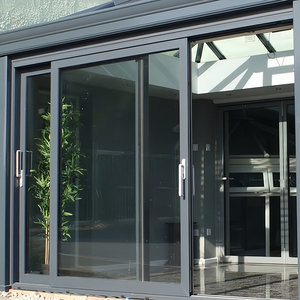
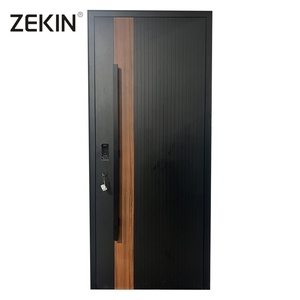
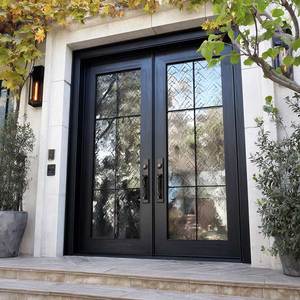
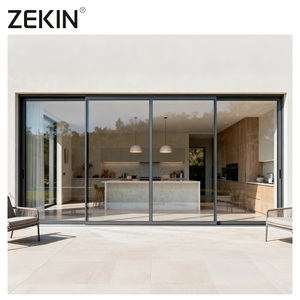
Architectural Engineering of High-Performance Aluminum Folding Systems
An exhaustive structural, thermal, and meteorological assessment for commercial project specifiers, façade consultants, and bulk window importers sourcing from China.
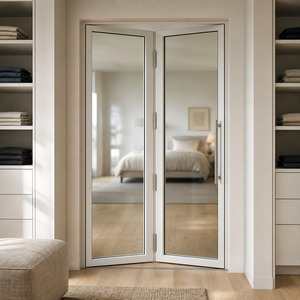
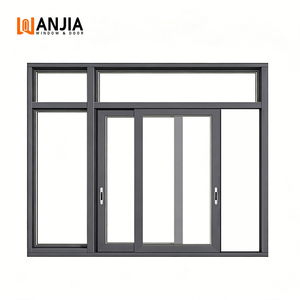
In modern architectural design, the demand for expansive spatial permeability has propelled aluminum folding windows (also commercially designated as bi-fold windows, concertina fenestration, or accordion sash systems) into the center of luxury residential development, hospitality, and mixed-use commercial projects. As an engineered boundary element, an aluminum folding window system must reconcile two diametrically opposed structural demands: the physical lightness and fluid kinematics required for effortless daily operation, versus the uncompromising structural rigidity needed to withstand extreme cyclic wind pressures, driving monsoonal rains, and aggressive thermal expansion.
1. Extrusion Metallurgical Profile & Cavity Architecture
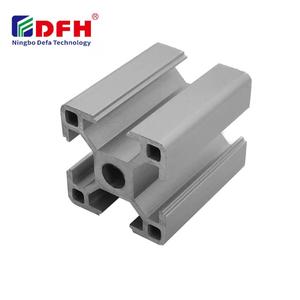
The structural backbone of any high-tier folding window resides in its extrusion composition. Low-cost fabricators routinely utilize remelted secondary scrap aluminum prone to zinc and iron impurities, which leads to microscopic intergranular stress corrosion, premature embrittlement, and localized surface blistering under salt-mist exposure. In contrast, DERCHI utilizes 100% virgin electrolytic aluminum billets conforming to ASTM B221 and GB 5237 standards.
Our multi-chamber profile designs integrate reinforced interior webs to counteract deflection under positive and negative atmospheric wind loads. By incorporating continuous dual-extrusion polyamide thermal barriers (PA66 reinforced with 25% chopped structural glass fiber), our systems interrupt internal-to-external conductive pathways. This reduces overall window U-values to less than 1.6 W/(m²·K) with standard low-emissivity double-glazed units, and down to 1.1 W/(m²·K) in argon-charged triple-glazed configurations—fully conforming to the stringent energy conservation mandates of the US NFRC, European EnEV, and Australian NCC/BCA (Section J).
2. Kinematic Hardware Engineering: The Mechanics of Frictionless Gliding
The longevity of a folding window is governed entirely by its suspension and guide track engineering. A folding sash array distributes dynamic loads across eccentric points. DERCHI addresses mechanical fatigue through a proprietary heavy-duty bottom-rolling carriage system featuring four to eight CNC-machined SUS316 marine-grade stainless steel rollers per bogie assembly, operating within an extruded, hardened track liner.
Each roller assembly is encased in self-lubricating, dust-sealed high-precision bearings capable of carrying over 150 kg per individual sash pane without micro-flaking or dimensional warping. By balancing top-hung stabilizing pivot pins with bottom-loaded support mechanics, our folding systems neutralize sash sag, binding, and hinge dislocation—issues commonly encountered in entry-tier aluminum assemblies after several seasonal cycles.
3. Air-Water Tightness & The Hydrostatic Sill Geometry
The Achilles' heel of conventional folding windows has historically been water penetration at the vertical interlocks and horizontal bottom threshold junctions under driven wind pressures. DERCHI resolves this through a three-stage compression barrier combining continuous EPDM vulcanized gaskets, co-extruded Santoprene acoustic fin seals, and our patented stepped hydrostatic drainage threshold.
Equipped with internal pressure-equalization chambers and concealed non-return baffle flappers, the sill prevents wind-driven back-siphoning during typhoons and cyclones. Tested in NATA-accredited laboratories in accordance with AS 2047 and ASTM E331 protocols, DERCHI systems comfortably withstand water penetration pressures up to 700 Pa, with total air leakage suppressed to less than 0.3 L/s·m²—achieving the top-bracket AS 2047 N6 cyclonic rating.
Technical Engineering & Compliance Specification Matrix
Comparative performance parameters between standard market folding windows and DERCHI heavy-duty architectural export systems:
| Performance Criterion | Generic Commodity Windows | DERCHI Architectural Heavy-Duty | Compliance Standards Tested |
|---|---|---|---|
| Alloy Composition | Secondary remelted scrap (6063-T5) | 100% Primary Billet 6063-T6 / 6061-T6 | ASTM B221 / EN 755 / GB 5237 |
| Profile Wall Thickness | 1.2mm – 1.4mm nominal | 2.0mm – 3.0mm Structural Reinforcement | AS 2047 / AAMA/WDMA 101/I.S.2 |
| Thermal Insulation (U-Factor) | Unbroken or PVC strip (U: 3.2 - 4.5 W/m²K) | Polyamide PA66 GF25 (U: 1.1 - 1.8 W/m²K) | NFRC 100/200 / ISO 10077-2 / AS 4055 |
| Water Penetration Resistance | 150 Pa – 250 Pa (Prone to leakage) | Up to 700 Pa Stepped Sill Sub-Drainage | ASTM E331 / AS 2047 Tested |
| Cyclonic Wind Resistance | Serviceability: 1200 Pa; Ultimate: 2000 Pa | N6 Cyclonic (Service: 3000 Pa; Ultimate: 4500+ Pa) | AS 4055 / ASTM E330 Wind Load |
| Roller & Track Carriage | Nylon wheels on exposed aluminum track | Quad SUS316 Stainless Steel on Hardened Liner | EN 13126-15 Cycle Durability (100k) |
| Surface Treatment Longevity | Standard industrial powder coat (5 yrs) | Qualicoat Seaside / PPG PVDF Fluorocarbon (20+ yrs) | AAMA 2605 / ISO 2810 / C5-M Marine |
Future Procurement & Architectural Trends (2025–2030)
Anticipating regulatory updates, energy code overhauls, and structural advancements in commercial and multi-residential folding fenestration.
1. Ultra-Minimalist Sightlines & Concealed Hardware
Architectural demand is moving towards zero-interruption views. By 2026, premier commercial developments require folding sash mullion widths to drop below 100mm while maintaining high structural inertia. Specifiers now prefer concealed pivot hinges and flush recessed bottom tracks that seamlessly bridge interior flooring with exterior decks in line with ADA and barrier-free living regulations.
2. Decarbonization & Circular EPD Compliance
Global developers and Tier-1 contractors are enforcing strict Embodied Carbon caps. Procurement contracts now demand certified Environmental Product Declarations (EPD). Chinese manufacturers are switching to hydroelectricity-smelted low-carbon primary aluminum billets (under 4.0 kg CO2e/kg Al) and cradle-to-cradle recyclable structural packaging, helping projects achieve LEED Platinum, BREEAM Outstanding, and Green Star certifications.
3. Smart Sensor Arrays & Motorized Kinematics
Commercial luxury developments increasingly specify automated building management integration (BMS). Modern folding windows now integrate low-voltage concealed brushless DC servomotors, concealed magnetic contact reed switches, and rain-wind automated closing sensors, enabling automated atmospheric regulation without compromising manual emergency override capabilities.
4. Extreme Coastal & Cyclonic Resilience
With extreme weather events intensifying along coastal regions in Australia, Florida, and Southeast Asia, procurement schedules require verified impact-glazing compliance. Sourcing contracts require certified large missile impact testing (ASTM E1886/E1996) and cyclonic AS/NZS 1170.2 design criteria, pairing structural PVB/SGP interlayers with C5-M rated seaside powder coatings resistant to 3,000+ hours of continuous salt-spray testing.
5. Complete Building-Envelope Consolidation
Importers, façade consultants, and general contractors are moving away from piecemeal sourcing across separate vendors. Procurement strategies favor single-source tier-1 manufacturers capable of engineering and fabricating matching aluminum folding windows, oversized pivot entrance doors, commercial curtain walls, and exterior louvers within a unified anodized or powder-coated finish batch.
Guangdong Dejiyoupin Doors & Windows Co., Ltd. (DERCHI)
Headquartered in the global aluminum capital of Shishan Town, Foshan, DERCHI operates one of Asia's most advanced fenestration manufacturing bases. Over 25 years of engineering mastery enable us to handle high-volume institutional orders and fully customized architectural projects with equal precision.
- 180,000 m² Mega Industrial Park: Fully integrated profile extruding, CNC double-head cutting, robotic corner crimping, and automated insulating glass processing lines.
- End-to-End In-House Verification: Proprietary meteorological and structural testing laboratory equipped with calibrated air-water-structural chambers up to 8,000 Pa wind test capability.
- Engineering BIM / CAD Shop Drawings: English-speaking façade engineering team providing parametric CAD shop drawings, wind load calculations, and anchorage schedules within 24 hours.
- Global Export Compliance: Fully certified for AS 2047 (Australia), CE (EN 14351-1, Europe), ISO 9001, and UL Fire-rated commercial entries.

Frequently Asked Questions for Window Importers & Contractors
Essential answers regarding manufacturing lead times, seaworthy crating, structural certifications, and technical engineering support.
What structural and thermal standards do DERCHI aluminum folding windows satisfy?
How does your factory prevent sash sagging over prolonged usage in multi-panel spans?
What surface finishing options are available for coastal or high-salinity marine environments?
Can DERCHI supply custom architectural glazing configurations including acoustic and bullet-resistant laminates?
What is the standard manufacturing lead time and FOB/CIF shipping protocol for overseas projects?
How are oversized folding windows packaged to prevent ocean-transit vibration damage?
Do you provide engineering support for local council permits, certifier approvals, and site installation?
Ready to Engineer Your Architectural Fenestration Package?
Send us your window schedules, architectural elevations, or structural CAD files. Our engineering team will review your specifications and supply a comprehensive quote with free shop drawings within 24 hours.