Precision Engineering Portfolio
Engineered Aluminum & Clad Fenestration Systems
Precision-milled structural profiles, German multi-point hardware integration, and tested architectural barrier performance engineered for high-end residential, hotel lobby, and coastal estate construction schedules.
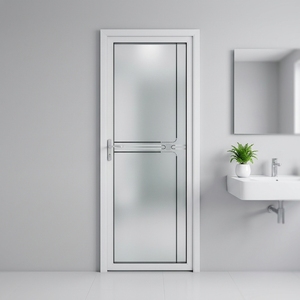
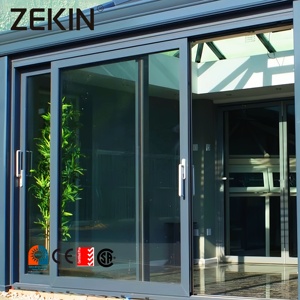
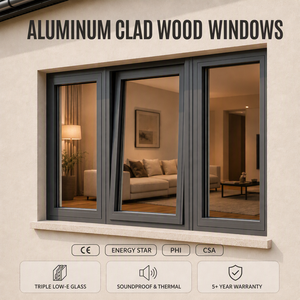
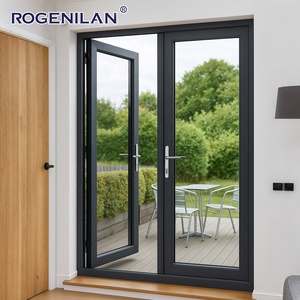
The Structural Dynamics of Aluminum Clad French Doors: Thermal Break vs. Composite Matrix
When selecting a qualified China aluminum clad French doors supplier, commercial general contractors, façade specifiers, and procurement directors must evaluate thermal movement, water penetration resistance, and boundary layer thermodynamics. Modern aluminum-clad French door systems bridge the tactile luxury of interior hardwood finishes (FAS-grade White Oak, Larch, or Pine) with an exterior armor of high-tensile 6063-T6 or 6060 extruded aluminum alloys.
The structural challenge in dual-material fenestration lies in differential coefficients of linear thermal expansion. Aluminum expands at approximately 23 × 10⁻⁶ /K, whereas timber expands along the grain at roughly 5 × 10⁻⁶ /K. Low-tier manufacturers attempt rigid bonding, resulting in seasonal warping, interior delamination, and seal degradation. Premium suppliers like DERCHI employ engineered sliding nylon clips (polyamide PA66 GF25) that decouple exterior thermal shear forces from the interior timber core, ensuring a 50+ year service life under extreme microclimates ranging from Australian coastal cyclonic regions to North American sub-zero winters.
| Performance Parameter | Standard Commercial Grade | DERCHI Architectural Clad French Door | Compliance Test Benchmark |
|---|---|---|---|
| Structural Wind Load (Uls) | 1500 Pa – 2200 Pa | Up to 4500 Pa (N6 Cyclonic Rating) | AS 2047 / ASTM E330 |
| Overall U-Factor (W/m²·K) | 1.8 – 2.4 W/m²·K | 0.85 – 1.20 W/m²·K (Triple Low-E Argon) | NFRC 100 / EN ISO 10077-1 |
| Air Infiltration Resistance | 1.5 L/s·m² @ 75 Pa | < 0.1 L/s·m² (Acoustic EPDM Tri-Sealing) | AS/NZS 4420.4 / ASTM E283 |
| Hardware Integration | Local Single-point latch | German Siegenia / HOPPE Multi-point Locking | PAS 24 / RC2 Security Standard |
| Exterior Finish Protection | Standard Powder Coated 40µm | AkzoNobel Interpon D2525 / PVDF Fluorocarbon 3-Coat | AAMA 2604 / AAMA 2605 Marine Grade |
*Certified independent laboratory testing records provided alongside shop drawings for developer compliance review, structural engineer sign-off, and municipal building certifier verification.
Strategic Market Intelligence
Future Sourcing & Procurement Trends for French Doors (2025–2030)
The global luxury architectural fenestration sector is moving rapidly away from pure transactional profile purchases toward value-engineered, digitally integrated, and certified composite solutions.
Passivhaus Thermal Envelope Integration
Stringent updates in regional energy codes (NCC 2022 in Australia, Title 24 in California, and European EPBD) require whole-of-window U-factors below 1.0. Modern suppliers must integrate warm-edge composite spacers, triple-glazing with Argon krypton fills, and aero-gel core thermal barriers inside French door stiles.
Hidden Biometric & Smart Security Systems
Traditional lever-operated flush bolts are being displaced by fully concealed motorized multi-point lock mechanisms. B2B developers demand integrated wiring channels for facial recognition, dry-contact automation (Control4, KNX, Crestron), and perimeter access verification directly embedded during factory assembly.
Ultra-Slim Sightlines with Massive Glazing
Architects increasingly specify structural clad French door leafs exceeding 3200mm in clear opening height with minimal stile widths (sub-65mm visible frame). This evolution mandates high-modulus structural silicone bonding (Dow Corning 983) and heavy-duty 3D adjustable 200kg-load concealed pivot hinges.
Innovation Roadmap
The Evolutionary Trajectory of Clad French Door Engineering
How cutting-edge composite processing in Chinese industrial centers is outperforming legacy domestic fenestration fabricators.
From Solid Timber to Aluminum-Clad Structural Composites
Early-generation French doors relied purely on solid hardwoods, which inherently twisted under UV exposure and rain absorption. Aluminum-clad innovation encapsulates the interior structural timber against ambient moisture while transferring exterior environmental loads to corrosion-immune extruded aluminum alloy shells.
Seamless Corner Joint Fusion & Marine-Grade Finishes
Traditional mechanical cleating creates hairline gaps that allow capillary water entry in wind-driven storms. State-of-the-art Chinese manufacturing now implements seamless laser-welded aluminum exterior corners combined with fluorocarbon (PVDF) powder coatings, eliminating seam corrosion in aggressive salt-spray environments.
Integrated Digital Twin & BIM Parametric Modeling
Suppliers no longer just ship physical units; tier-one Chinese factories provide detailed IFC and Revit BIM families with embedded physical thermal coefficients, acoustic decibel ratings (Rw values up to 45dB), and exact installation detailing for rapid approval by engineering certifiers.
Enterprise Manufacturing Authority
Guangdong Dejiyoupin Doors & Windows: Direct Manufacturing Powerhouse
Ranked among China's top 10 premium architectural window and door brands, Guangdong Dejiyoupin Doors and Windows Co., Ltd. (DERCHI) operates an advanced 180,000 m² smart manufacturing campus in Foshan, Guangdong. Backed by over 600 skilled technicians and 25+ years of fenestration R&D, we engineer complete door and window envelopes for premier builders, commercial specifiers, and architects across Australia, New Zealand, North America, and Europe.
By maintaining complete vertical ownership over profile CNC extrusion, automated surface coating, timber kiln-drying, insulated glass unit (IGU) assembly, and rigorous pre-shipment quality control, DERCHI removes trading-company margins and ensures direct manufacturer accountability for every shipment.

B2B Sourcing Guide
Frequently Asked Questions for Aluminum Clad French Door Procurement
Direct technical and logistical answers addressing wind loading, structural certifications, container packaging, and international customs clearance.
How do aluminum clad French doors compare to standard thermal break aluminum doors?
While thermal break aluminum doors utilize a polyamide strip to disrupt interior-to-exterior heat transfer, aluminum clad doors incorporate a structural solid wood timber interior (such as European Larch or American Oak) paired with an exterior heavy-gauge aluminum shell. This provides unmatched natural interior thermal absorption, superior acoustic insulation (typically 3–5 dB higher damping compared to hollow aluminum profiles), and luxury architectural warmth, while the exterior aluminum cladding eliminates the repainting, rot, and moisture degradation common to all-wood doors.
What international standards do your French doors comply with for import clearance?
Our fenestration systems are engineered and tested in accordance with major international building codes:
• Oceania: Certified to AS 2047 (achieving an N6 wind rating), AS 1288 glass standards, and AS/NZS 4420.
• North America: Compliant with NFRC 100/200/500 thermal testing, AAMA/WDMA/CSA 101/I.S.2/A440 standards, and Florida Building Code (FBC) impact criteria.
• Europe: Full CE declaration, EN 14351-1 product standards, and ISO 9001 certified quality batch management. Traceable mill certificates and accredited lab reports accompany every commercial bill of lading.
What wood species are utilized in the clad interior, and how is moisture content stabilized?
We source high-grade timber options including American White Oak, Siberian Larch, Radiata Pine, and Black Walnut. All raw timber undergoes computer-controlled kiln drying to maintain an optimal moisture content of 8%–12%, matching interior HVAC equilibrium conditions. The timber is micro-finger-jointed and multi-layer laminated under high-pressure polyurethane D4 waterproof resin to eliminate structural warping, cupping, or internal stress cracking over decades of usage.
How does the factory prevent biosecurity and timber pest issues during export to Australia & NZ?
DERCHI strictly enforces international export phytosanitary regulations. All timber utilized in our aluminum clad systems receives anti-fungal, insect-resistant deep immersion treatments and is certified bark-free and pest-free. All ocean freight crating is constructed using non-timber manufactured plywood or ISPM 15 heat-treated stamped timber, fully clearing Department of Agriculture, Fisheries and Forestry (DAFF) biosecurity inspections in Australia and MPI inspections in New Zealand.
What are the hardware and threshold configurations for ADA compliance and water ingress?
We supply multiple architectural threshold profiles: ultra-low flush floor sills (12mm–15mm height) for barrier-free and ADA-compliant indoor-outdoor transitions, as well as high-performance step-down drainage sills featuring hidden multi-chamber sub-sill check valves designed to resist wind-driven water ingress up to 700 Pa. Locking mechanisms utilize premium German-imported hardware lines (Siegenia, Roto, GU, or HOPPE) featuring multi-point perimeter hooks, anti-lift security pins, and concealed heavy-duty 3D adjustable pivots.
What is the production lead time, and what packaging protection is applied for ocean freight?
Standard custom fabrication lead time is 25 to 35 business days following formal client sign-off on shop drawings and hardware schedules. Because shipping architectural glass demands zero flex tolerance, each door frame and leaf is wrapped in a multi-layer protective PE film, shielded with 20mm corner edge guards, and crated inside fully enclosed, fumigated, high-strength plywood crates with built-in steel lifting channels suitable for forklift handling at site.
Ready to Source Architectural Aluminum Clad French Doors Direct from the Manufacturer?
Submit your architectural elevations, door schedules, or tender drawings. Our bilingual fenestration engineering specialists will prepare complete CAD submittals, glass U-factor calculations, and factory-direct project pricing within 24 hours.
Get Catalog