High-Performance Aluminium House Windows & Entry Envelopes
Direct from Foshan's 180,000 m² high-precision extrusion and assembly facility. Each unit combines multi-cavity thermal break extrusions, automotive-grade EPDM continuous sealing, and precision hardware integration tested against international building codes.
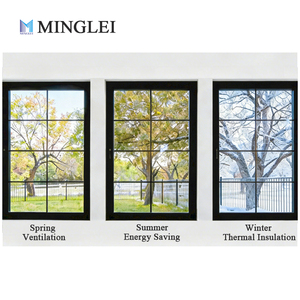
High Heat Insulation Energy Saving Black Aluminum Window Thin Profile Aluminium Windows and Doors Casement Windows for USA
- Profile Width: 65mm Slim Sightline
- Thermal Barrier: Polyamide PA66 GF25
- Glass Spec: 5mm+16Ar+5mm Low-E
- U-Factor: 0.28 BTU/h·ft²·°F
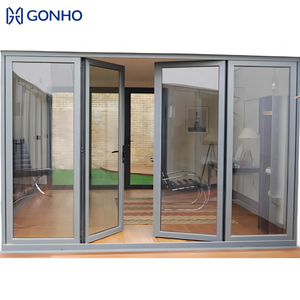
North American Hot Sale Modern Exterior Double Glazed Commercial French Push-Pull Doors Fiberglass Screen Aluminum Windows Doors
- Mechanism: Heavy-Duty Push-Pull
- Screening: Integrated Fiberglass
- Glazing: Double Toughened Low-E
- Air Permeance: ASTM E283 Level A3
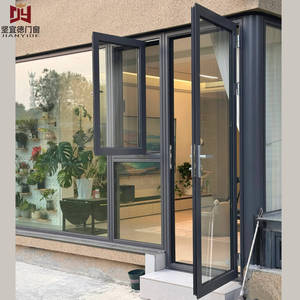
Aluminum Swing Door For Apartment/Hotel Use-High Durability Soundproof & Weatherproof Modern Design Powder Coated Surface
- Sound Insulation: STC 38dB / Rw 39dB
- Surface: AkzoNobel Powder Coat
- Hardware: German Multi-Lock System
- Durability: 100,000 Cycle Testing
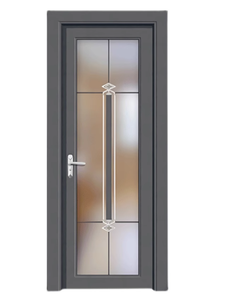
Stylish Aluminum Casement Door Indoor Aluminum Alloy Glass Swing Doors for Kitchens Bathrooms and Toilets
- Alloy Grade: 6063-T5 High Purity
- Application: Moisture Barrier Interior
- Glass Finish: Frosted / Fluted / Ultra-Clear
- Hinge Type: Concealed 3D Adjustable
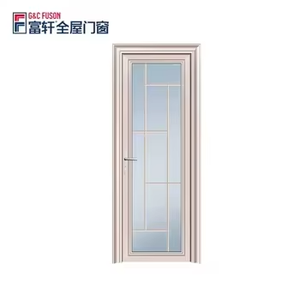
Fuson Brand New High Quality Factory Price Security Entry Door Hurricane Proof Windproof Aluminum Frame Glass Casement Door
- Impact Standard: ASTM E1886 / E1996
- Wind Resistance: AS 2047 Class N6 (4500Pa)
- Glazing Unit: Laminated SGP Interlayer
- Reinforcement: Titanium-Magnesium Core
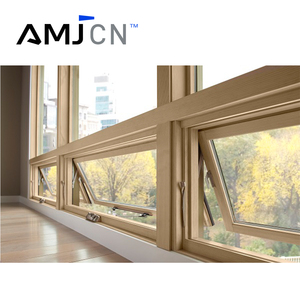
Pitched Aluminium Roof Windows Aluminum Skylight Awning Casement Metal Roof Swing Window Awning Windows With AMJ CN
- Water Penetration: 700 Pa Static Head
- Flashing Kit: Continuous Extruded Alloy
- Operation: Manual / Concealed Motor
- Glass Protection: Self-Cleaning Ceramic Coat
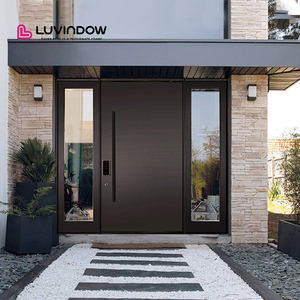
Modern Residential Villa Thermal Insulation Aluminum Entrance Doors With Smart Lock
- Security Protocol: Biometric / RFID / Zigbee
- Core Insulation: Polyurethane Aero-Foam
- Thermal Value: Ud 1.1 W/(m²·K)
- Multi-Point Lock: Automatic Electronic Bolt
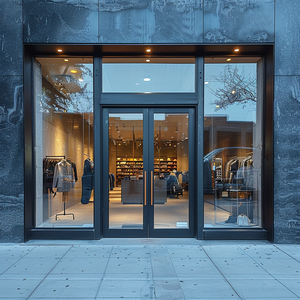
Store Front Door Factory Price Commercial Doors Slidng System Aluminum Frame Tempered Glass Storefront Door
- Extrusion Wall: 2.5mm Heavy Duty 6063
- Roller System: Stainless Steel Dual Bogie
- Load Capacity: Up to 400 kg Per Sash
- Certification: CE / AS 2047 Commercial
The Foshan Manufacturing Complex: Industrial Scale & Strict Compliance
Operating from the global epicenter of precision aluminium extrusion in Foshan, Guangdong, our infrastructure bridges the gap between cost-effective direct-source manufacturing and stringent western regulatory frameworks.
AS 2047 & N6 Cyclone Proofing
Our window assemblies are physically tested and accredited to AS 2047 / AS 1288 standards, achieving verifiable N6 structural wind pressure resistance exceeding 4,500 Pa. Complete laboratory reports are supplied directly to project certifiers to guarantee council sign-off in Australia, New Zealand, and North American hurricane zones.
End-to-End Extrusion Control
By governing raw alloy billet heating, multi-cavity extrusion dies, automated surface fluorocarbon (PVDF) treatments, thermal barrier knurling, and robotic glass lamination under one roof, we eliminate intermediate handling markups and provide absolute batch-to-batch metallurgical consistency.
Full-Spectrum CAD & BIM Data
We provide complimentary, project-tailored shop drawings, Revit BIM families, and structural wind deflection engineering calculations (L/175 and L/250 criteria) prior to line tooling, mitigating installation discrepancies between architectural drawings and on-site sub-frame dimensions.
Thermal Thermodynamics, Fenestration Metallurgy & Glazing Mechanics
Modern high-performance architectural envelopes demand rigorous thermal de-bridging. Raw aluminium exhibits a thermal conductivity of approximately 160 to 200 W/(m·K). Without high-performance composite insulation, standard fenestration profiles act as severe thermal bridges.
PA66 GF25 Polyamide Barriers
Our systems utilize 24mm to 34mm techno-polymer insulating struts composed of polyamide 6.6 reinforced with 25% glass fiber. With a thermal conductivity of merely 0.21 W/(m·K), these struts replicate the thermal expansion coefficient of aluminium alloys (2.3 × 10⁻⁵ K⁻¹), eliminating internal structural shear fatigue under extreme thermal differentials.
Warm-Edge Spacer & Gas Retention
Traditional aluminium perimeter spacers create critical edge-of-glass thermal condensation. We implement stainless steel composite warm-edge spacers combined with high-density polyisobutylene primary seals and silicone secondary seals, sustaining a 90%+ Argon gas retention rate for over 25 years according to EN 1279-3 standards.
Multi-Chamber Acoustic Damping
Acoustic attenuation requires structural mass decoupling and disparate interlayer frequencies. Combining asymmetrical laminated glass configurations (e.g., 6mm Low-E + 16Ar + 4mm Float + 0.76mm PVB + 4mm Float) with three-point cellular EPDM compression seals yields field-verified Sound Transmission Class (STC) ratings exceeding 42 dB.
| Profile System Type | Overall Uw [W/(m²·K)] | SHGC Range | Acoustic Damping (Rw) | Max Wind Deflection Limit | Ideal Application |
|---|---|---|---|---|---|
| Non-Thermal Architectural Alloy | 5.2 – 5.8 | 0.55 – 0.68 | 28 – 31 dB | 1,200 Pa (Standard) | Internal Partitions / Tropical Climates |
| Commercial Double Thermal Break | 1.8 – 2.4 | 0.30 – 0.42 | 35 – 38 dB | 3,000 Pa (N4/N5 Class) | Coastal Subdivisions & Mixed-Use Commercial |
| Triple-Glazed Multi-Chamber Ultra | 0.9 – 1.3 | 0.22 – 0.35 | 40 – 44 dB | 4,500+ Pa (N6 Cyclone) | Luxury Residential Villas / High Exposure Zones |
| Passive House Certified Aerogel Hybrid | 0.75 – 0.85 | 0.18 – 0.28 | 42 – 46 dB | 4,000 Pa (High Altitude) | Net-Zero Carbon Envelopes & Cold Climates |
Future Procurement Trends in Global Fenestration Sourcing
International trade regulations, carbon border policies, and digitalized project delivery are transforming how property developers, general contractors, and distributors engage with Chinese manufacturing powerhouses.
1. Low-Carbon Aluminum & CBAM
With the implementation of the European Union’s Carbon Border Adjustment Mechanism (CBAM) and North American Buy Clean standards, suppliers must verify the carbon footprint of primary aluminium smelters. Leading Chinese exporters are actively converting to hydro-powered green aluminum billets, lowering embodied emissions from 16 kg CO₂/kg Al down to under 4 kg CO₂/kg Al with traceable Environmental Product Declarations (EPD).
2. Prefabricated Unitized Systems
Rising on-site installation labor costs across Australia, the USA, and the UK have generated immense demand for off-site pre-glazed, unitized window and wall assemblies. Procuring completely assembled sub-frame and master-frame modules ready for crane hoisting compresses building dry-in schedules by over 45%, while reducing on-site weather-delay risks.
3. Digital Twin & QR Code Traceability
Modern commercial procurement mandates granular digital documentation. Each fabricated window sash now incorporates laser-etched matrix data codes linking to digital warranty repositories, structural test records, hardware replacement schemas, and exact glass batch stress test certifications for ongoing facility management.
Product Development & Architectural Engineering Trends
Fenestration architecture is shifting from bulky profiles toward minimalist visual profiles with high structural glass integration, motorized automation, and extreme weather resilience.
Ultra-Slim Panoramic Interlocks
Architects are specifying interlock sightlines as narrow as 18mm to 21mm. Engineering these minimal profiles requires aircraft-grade 6063-T6 or 6061-T6 structural alloys reinforced internally with carbon steel or carbon fiber ribs to resist localized high-altitude wind deflections without structural failure.
Marine-Grade Coastal Finishes
Standard powder coating fails within 24 to 36 months in C4 and C5 coastal marine environments. Forward-thinking manufacturers implement Qualicoat Class 2 / AAMA 2605 3-coat 70% PVDF fluorocarbon coatings that survive 4,000+ hours of continuous salt-spray testing without chalking, blistering, or micro-cracking.
Smart Building Envelope Automation
Automated awning skylights and sliding systems now integrate concealed 24V DC brushless servo motors driven by KNX, BACnet, or Matter home automation protocols. Built-in rain and anemometer sensors autonomously secure windows during storm occurrences to prevent envelope ingress.
Frequently Asked Sourcing & Technical Questions
Direct, engineer-verified answers to common technical queries raised by architects, structural certifiers, general contractors, and foreign trade procurement directors.