Featured Industrial & Crittall-Style Door Systems
As contemporary architecture embraces the industrial aesthetic, heritage Bauhaus geometry, and light-filled spatial zoning, Aluminium Crittall-style internal doors have emerged as the primary architectural element for high-end residential estates, commercial suites, and hospitality interiors. Sourcing directly from verified Chinese extrusion and fabrication facilities delivers structural consistency, bespoke grid personalization, and substantial margin advantages. Below are eight export-tested architectural door models engineered for global residential and commercial integration.
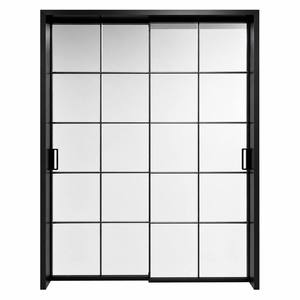 Sliding Partition
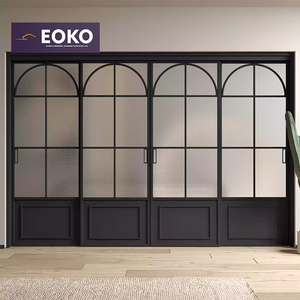 Arch Top Loft
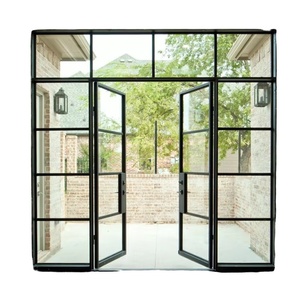 French Multi-System
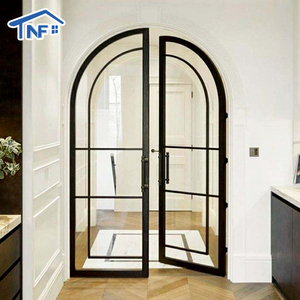 Slim Arch Swing
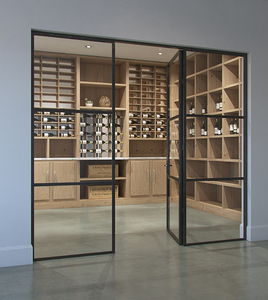 Acoustic Partition
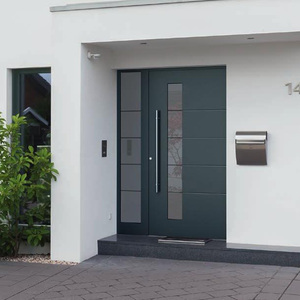 Cast Aluminium Security
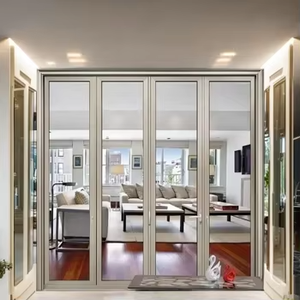 Bifold Patio System
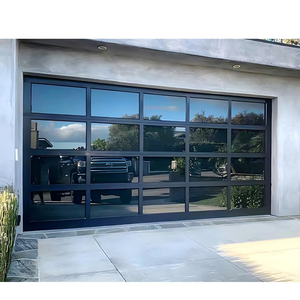
Aluminium vs. Traditional Hot-Rolled Steel Crittall Doors: The Structural Evolution
Historically, the iconic "Crittall" aesthetic was forged from hot-rolled carbon steel sections. While traditional steel provides undeniable historic authenticity, its severe thermal bridging, vulnerability to corrosion in maritime air, substantial structural dead-weight, and exorbitant fabrication costs have accelerated the shift toward high-precision architectural 6063-T5 and 6063-T6 virgin aluminium alloys.
China’s tier-one fenestration clusters, centered in Foshan, Guangdong, have re-engineered the narrow-profile Crittall vernacular. By leveraging micro-extrusion dies, laser-mitred multi-chamber framing, and concealed mechanical jointing, Chinese export manufacturers deliver sightlines as narrow as 15mm to 28mm while eliminating weld seam distortion. Below is an empirical specification matrix comparing architectural aluminium Crittall assemblies against vintage steel and generic retail glass doors.
| Engineering Attribute | Architectural Aluminium Crittall (DERCHI System) | Traditional Hot-Rolled Steel | Standard Commercial Aluminium |
|---|---|---|---|
| Alloy / Composition | 6063-T5 / 6063-T6 Precision Virgin Ingot | Mild Low-Carbon Hot-Rolled Steel | Recycled Secondary Scrap Aluminium |
| Profile Sightline (Stile/Rail) | 18mm – 32mm Ultra-Narrow Sightline | 25mm – 45mm Heavy Industrial Edge | 50mm – 75mm Bulky Frame Profile |
| Corrosion Resistance & Salt Spray | Qualicoat Class 2 Powder / 1000h+ ASTM B117 | Requires Galvanizing; Prone to Edge Rust | Standard Anodized / Thin 40µm Paint |
| Acoustic Attenuation (Glass Matched) | Rw 32 dB to 42 dB (Laminated Acoustic Core) | Rw 28 dB to 34 dB (Single Glaze Standard) | Rw 25 dB to 30 dB (Unsealed Tracks) |
| Structural Deflection Tolerance | Span/250 under high-traffic cyclical impact | Rigid but excessive hinge hinge sag risk | Span/175 prone to flex over 2700mm height |
| Lead Time & Dimensional Flex | 20–25 Days with Parametric CNC CAD/BIM | 60–90 Days (Labour-Intensive Hand Welding) | Off-the-shelf fixed standard sizes only |
Critical Structural Parameters for International Specifiers
When evaluating top China aluminium Crittall internal door exporters, foreign project managers must scrutinize four mechanical and architectural benchmarks to ensure seamless job-site integration.
True Divided Lites (TDL) vs. SDL
DERCHI provides both simulated divided lites (SDL with high-adhesion 3M structural VHB tape over uninterrupted monolithic/double glass) and True Divided Lites (TDL) using precision-extruded interlocking astragal bars for tactile historical depth.
Acoustic Decoupling & Perimeter Gaskets
Internal Crittall systems frequently serve executive boardrooms and primary master suites. Our systems incorporate dual-durometer EPDM co-extruded gaskets and drop-down mechanical bottom sweeps to minimize cross-room transmission.
Concealed Heavy-Duty German Hardware
Equipped with concealed 3D adjustable pivot systems, soft-dampening magnetic latching cassettes, and German Dorma/Hafele hardware rated for over 250,000 continuous operation cycles without frame sag or hinge squeak.
Future Procurement Trends in Crittall-Style Internal Glazing (2025–2030)
Global door procurement is rapidly pivoting from off-the-shelf commodity cataloging toward industrialized parametric customization. Specifiers, real estate developers, and hospitality brand directors are focusing on four primary trends.
1. Acoustic Zoning & "Broken-Plan" Living
Open-concept living is giving way to "broken-plan" interiors. Crittall doors serve as visual bridges while functioning as acoustic barriers, utilizing 10.76mm acoustic laminated glass (Rw 38dB+) for dedicated home offices and media suites.
2. Fluted, Reeded & Switchable Smart Glass
Procurement volumes for Moru, fluted, and reeded glass infills have increased over 45% year-on-year. Furthermore, low-voltage PDLC switchable smart glass integration allows instant privacy transitions via home automation systems.
3. Circular Aluminum & Low-Carbon Billets
International environmental ratings (LEED v4, Green Star, BREEAM) now mandate Environmental Product Declarations (EPD). Tier-one Chinese mills use certified low-carbon hydroelectric aluminium smelting to reduce embodied emissions.
4. Minimalist Ceiling-Concealed Track Systems
Eliminating bottom floor tracks preserves seamless floor transitions. Advanced overhead carrier carriages with internal damping absorbers handle door sash leaves up to 180kg without requiring invasive structural floor trenching.
5. Curvilinear Arches & Gothic Revival Geometry
Modern CNC 4-axis profile-bending machinery now allows architectural door leaves to incorporate arch-top transitions, soft radius shoulders, and intricate transom grillwork without sacrificing dimensional tolerances.
6. Smart Access Control Integration
Commercial workspace requirements increasingly specify biometric mortise latches, Bluetooth BLE access modules, and architectural magnetic card readers integrated flush into slim 38mm backset stiles.
Why International Buyers Choose DERCHI Oceania & Global
Operating from China's architectural metalwork capital, Guangdong Dejiyoupin Doors and Windows Co., Ltd. (DERCHI) represents the pinnacle of intelligent door fabrication, quality verification, and direct factory distribution.
Complete Vertical Manufacturing Integration
Recognized among China’s top 10 premium door and window brands, DERCHI operates an expansive 180,000 square-meter smart production base in Foshan, Guangdong. Backed by more than 25 years of specialized engineering and a workforce of 600+ skilled craftsmen, we control every phase of manufacturing—from raw billet extrusion checking and automated electrostatic fluorocarbon coating to five-axis CNC profile machining and final clean-room glazing.
- Structural Wind & Safety Compliance: Engineered and tested to AS 2047 standards, achieving an N6 wind load rating alongside full CE, ISO 9001, and UL fire-rating verifications.
- Free Parametric CAD & BIM Services: Our in-house structural engineering group provides millimetre-accurate shop drawings and 3D models matching your door schedule before manufacturing begins.
- Consolidated Freight & Full Architectural Scope: One-stop sourcing across interior Crittall doors, heavy cast-aluminium entry pivot doors, bifold walls, and residential garage systems.
- Dedicated Time-Zone Engineering Support: English-speaking technical sales teams work aligned with Australian (AEST), New Zealand (NZST), European, and North American business hours.

Frequently Asked Questions (FAQ) for Global Buyers
Clear answers regarding technical specifications, minimum order quantities (MOQ), international logistics, and testing standards for sourcing Crittall-style doors from China.