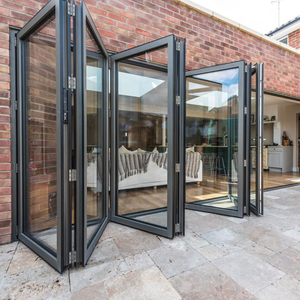
 Bi-Fold System
Engineered Portfolio
Featured Aluminium Slat, Louver & Architectural Enclosure Systems
Explore factory-direct architectural door assemblies tested to AS 2047, CE, and international wind-load standards. Precision manufactured with 6063-T5/T6 structural alloys and custom surface engineering.
Bi-Fold System
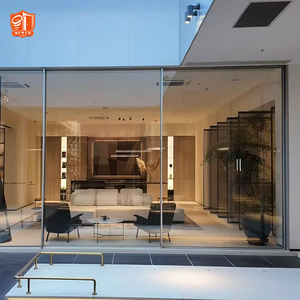 Slimline Slider
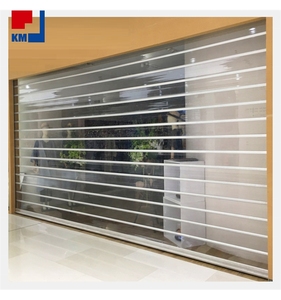 Security Slat
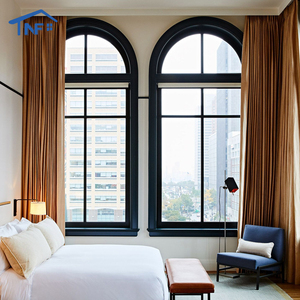 Arched Glazing
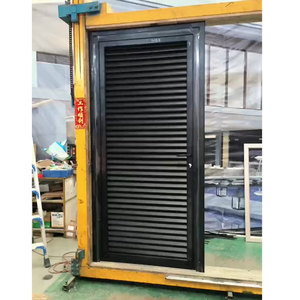 Slat Louver Door
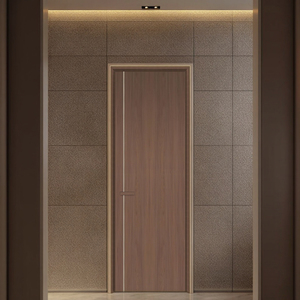 Composite Slat
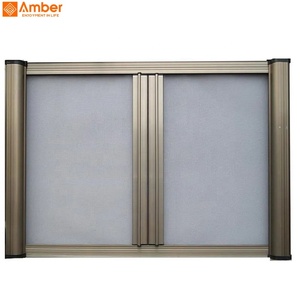 Metal Mesh Screen
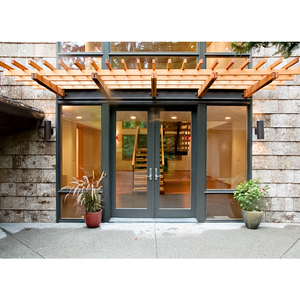 Double Swing Slat
Executive Summary: The Strategic Rise of Architectural Aluminium Slat Systems
In contemporary architectural design and commercial facility planning, aluminium slat doors—encompassing ventilated louvered doors, rolling slat shutters, acoustic insulated roll-up systems, and horizontal privacy facades—have transitioned from utilitarian service barriers to mission-critical architectural envelopes. Driven by rigorous structural performance standards such as AS 2047 (Australian Standard for Windows and External Glazed Doors), European EN 13241-1, and North American ASTM E330 structural wind loading, the global demand for precision-extruded aluminium slat assemblies has expanded at a Compound Annual Growth Rate (CAGR) exceeding 6.8%.
Architects, general contractors, and tier-one real estate developers are shifting capital expenditure toward high-grade 6063-T5 and 6063-T6 architectural aluminium alloys. Unlike conventional galvanized steel doors that succumb to premature electrolytic oxidation in coastal maritime microclimates, engineered aluminium slats combine high strength-to-weight ratios with intrinsic galvanic passivity. When fortified with architectural powder coatings compliant with Qualicoat Class 2 or fluoropolymer PVDF systems resisting 3,000+ hours of continuous neutral salt spray (ISO 9227), aluminium slat doors provide a lifecycle exceeding 30 years with nominal maintenance overhead.
Information Gain Insight: The primary differentiator separating commercial-grade aluminium slat doors from commodity residential alternatives lies in the extrusion wall thickness, dual-wall thermal-cavity design, and mechanical interlocking knuckle geometry. High-wind zones (such as Australia's AS 4055 Wind Class N6/C4 and Florida Building Code High-Velocity Hurricane Zones) mandate extruded profiles with minimum wall thicknesses of 1.4mm to 2.2mm, complemented by high-density polyolefin or polyurethane thermal cores to halt convective energy transfer.
Comparative Matrix: Top 10 Aluminium Slat Door Suppliers & Exporters
Navigating international procurement requires evaluating not merely nominal unit pricing, but engineering verification, factory automation, metallurgical traceability, and compliance documentation. Below is the definitive global evaluation of the top 10 aluminium slat door manufacturers and exporters benchmarked for commercial and luxury residential execution.
| Rank & Manufacturer | Operational HQ | Core Slat Specialization | Standards & Testing | Extrusion Alloy & Finish | Primary Export Markets |
|---|---|---|---|---|---|
| #1 DERCHI (Guangdong Dejiyoupin) | Foshan, China | Heavy-duty extruded slats, louvered privacy doors, thermal pivot doors | AS 2047 (N6 Rating), CE, ISO 9001, UL Fire-Rated | Alloy 6063-T5/T6; AkzoNobel Powder, Fluorocarbon PVDF | Australia, New Zealand, USA, Canada, Pacific Islands |
| #2 Hörmann Group | Steinhagen, Germany | Industrial double-skinned insulated rolling slats, high-speed spirals | EN 13241-1, ISO 9001, TÜV Certified | Anodized E6/EV1, Hardened PU foam insulated profiles | Europe, North America, Middle East |
| #3 Alulux GmbH | Verl, Germany | Residential aluminium rolling shutters, extruded CD 400 slats | DIN EN 13659, CE compliant | Dual-layer roll-formed & extruded aluminium, stove-enameled | European Union, Scandinavia, UK |
| #4 heroal Systems | Verl, Germany | Mini-slat hurricane shutters, extruded commercial rolling barriers | ift Rosenheim, CE, DIN EN ISO 14001 | heroal hwr powder coating, high-strength alloy cores | Global / 40+ Destination Countries |
| #5 Rytec Corporation | Wisconsin, USA | High-performance rigid aluminium spiral slat doors for commercial logistics | UL Listed, ISO 9001, ASTM Windload Certified | Structural heavy-gauge mill and clear anodized profiles | North America, Latin America |
| #6 Overhead Door Corp. | Texas, USA | Commercial storm-rated coiling doors, fenestrated slat grilles | ANSI/DASMA 108, Miami-Dade NOA | Extruded aluminium 6063, polyester powder coat | USA, Canada, Mexico |
| #7 B&D Doors | Sydney, Australia | Custom aluminium louvered and slat garage doors (Design-A-Door) | AS/NZS 4505, Cyclonic Region C/D compliant | Architectural grade powder-coated horizontal slats | Australia, New Zealand, Oceania |
| #8 Aluroll Ltd | Shropshire, UK | Security rolling shutters, vented aluminium louvered profiles | LPS 1175 Issue 7 (Security Rating SR1-SR4), Secured by Design | Twin-wall extruded aluminium, marine powder-coated | United Kingdom, Ireland, EMEA |
| #9 Novoferm Group | Isselburg, Germany | Automated industrial sectional and horizontal slat shutter solutions | EN 12604, ISO 9001, ISO 50001 | Composite core insulated aluminium profiles, coil-coated | Pan-European, Asia-Pacific |
| #10 Gliderol Garage Doors | Adelaide, Australia | Continuous curtain and horizontal aluminium slatted residential systems | AS/NZS ISO 9001, Australian Wind Code AS 4055 | Corrosion-inhibited aluminium alloy, Colorbond matching | Australia, UK, South Africa, Southeast Asia |
Engineering Blueprint: Metallurgical Specifications & Structural Mechanics
To achieve structural compliance in demanding architectural environments, commercial aluminium slat assemblies must undergo rigorous mechanical stress analysis. Standard roll-formed coil stock (typically 0.4mm to 0.6mm thickness) fails to provide adequate torsional rigidity over expansive structural spans exceeding 4,500mm. Premier exporters utilize heavy-gauge hot-extruded profiles fabricated through multi-stage hydraulic extrusion presses.
Alloy Metallurgy & Temper
Utilizing virgin 6063 aluminium billets subjected to artificial aging (T5 to T6 temper) yields ultimate tensile strengths exceeding 205 MPa (29,700 psi) and yield strengths above 170 MPa. This metallurgical base prevents permanent deflection under dynamic cyclonic gusts.
AS 2047 & N6 Wind Loading
Structural testing according to AS 2047 verifies that intermediate slat joints, mullions, and perimeter guide tracks withstand deflection limits of span/250 under ultimate wind pressures surpassing 4,500 Pa (N6 Wind Classification for cyclonic or exposed coastal elevations).
Thermal Decoupling & Acoustics
Dual-chamber extruded slat configurations integrate high-density closed-cell polyurethane (PU) foam or polyamide thermal barrier strips. This structural design achieves heat transfer coefficients (U-values) as low as 1.4 W/m²K while reducing acoustic airborne transmission by 28 to 32 dB (Rw).
Direct-From-Manufacturer Engineering Strength: DERCHI
Guangdong Dejiyoupin Doors and Windows Co., Ltd. (operating internationally under the DERCHI brand) stands as a foundational powerhouse in global aluminium fenestration and architectural slat engineering. Operating from an expansive 180,000 square meter industrial park in Shishan Town, Foshan—the epicenter of the world's precision aluminium extrusion industry—DERCHI integrates end-to-end design, robotic extrusion milling, fluorocarbon surface lines, and structural testing.
Recognized among China’s top 10 premium door and window brands, DERCHI has maintained over 25 years of specialized export excellence. Every door system destined for Oceania, North America, or Europe is modeled via custom CAD shop drawings, pre-assembled for dimensional tolerance verification, and crated in fumigated export-grade sea freight cases compliant with biosecurity standards.
180,000m²
Production Campus
25+ Years
Export Engineering
600+
Skilled Specialists
100+
Patents & Certifications

Production Transparency
End-to-End Vertical Quality Control
By consolidating billet casting, precision extrusion die cutting, vertical automated powder coating lines, and computerized assembly stations, DERCHI eliminates subcontracting variances. Specifiers and builders receive continuous project photographic updates, serialized material test mill reports, and dedicated engineering consultation aligned with AEST, NZST, and EST operating hours.
Systems comply with international quality assurance protocols including ISO 9001, CE Marking, UL Fire Retardant Standards, and rigorous AS 2047 structural water penetration and air infiltration verifications.
Future Procurement Trends: What Global Importers & Specifiers Must Anticipate (2026–2030)
Procurement directors and commercial developers must look beyond immediate line-item quotes to evaluate the systemic technological transitions impacting the architectural door sector. The next decade will reshape how aluminium slat systems interface with building automation, energy grids, and green building environmental scoring (such as LEED v4.1 and Green Star Australia).
Low-Carbon Recycled Billets
Tier-one institutional tenders increasingly stipulate maximum embodied carbon limits (< 4.0 kg CO₂e per kg of aluminium). Manufacturers are migrating to hydroelectric-smelted billets and post-consumer scrap alloys without degrading tensile properties.
Micro-Perforated Airflow Louvers
Combining subterranean car park and utility room ventilation requirements with vermin protection, laser-cut micro-perforated slats deliver 42% free-air flow ratios while preventing weather infiltration and insect ingress without requiring separate mesh screens.
BACnet & Smart BMS Integration
Standard 24V DC tubular or side-mount servo drive motors are being replaced with brushless smart drives feeding telemetry (cycle count, operating resistance, thermal overload) directly into central Building Management Systems via Modbus or KNX protocols.
Self-Locking Anti-Intrusion Louvers
To combat commercial forced entry without the bulk of exterior padlocks, new-generation interlocking knuckle profiles automatically activate concealed mechanical down-locks when horizontal force is applied from the exterior, satisfying RC3/RC4 burglar resistance.
Technical Q&A
Procurement & Engineering Frequently Asked Questions
Essential technical, logistics, and certification clarity for project specifiers, builders, and direct importers.
How do extruded aluminium slat doors compare to galvanized steel roll-up shutters in coastal locations?
Extruded 6063-T5 aluminium profiles provide substantial corrosion resistance advantages over galvanized steel in maritime atmospheres (ISO 12944 Corrosivity Categories C4 and C5-M). While galvanized steel relies on a sacrificial zinc coating that deteriorates when scratched or continuously exposed to airborne chlorides, aluminium forms an inert, self-healing aluminium oxide film. When paired with marine-grade architectural powder coating (complying with AAMA 2604/2605 or Qualicoat Seaside specifications) and 316 stainless steel fasteners, aluminium slat assemblies avoid red rust pitting and offer an operational lifespan exceeding 25 to 30 years with minimal maintenance.
What documentation is required to clear Australian and New Zealand building compliance for commercial entry doors?
In Australia and New Zealand, external glazed doors, louvered closures, and residential/commercial entry doors must comply with AS 2047 (external doorsets in buildings) and AS 1288 (glass in buildings). DERCHI supplies accredited laboratory test reports establishing positive and negative structural wind pressures, ultimate limit state (ULS) performance, water penetration resistance (typically 300 Pa to 450 Pa+), air infiltration limits (AS 4420.4), and operating force tests. These reports, combined with bespoke CAD elevation shop drawings, structural computations, and manufacturer warranties, allow project certifiers, building surveyors, and municipal councils to sign off without compliance delays.
What is the maximum structural span achievable for motorized aluminium slat doors without intermediate mullions?
The maximum unsupported opening width depends heavily on the local design wind pressure and slat profile depth. Utilizing heavy-duty double-wall extruded 77mm or 100mm aluminium slats with wall thicknesses between 1.6mm and 2.2mm, clear spans of up to 6,000mm (width) by 5,000mm (height) can be engineered to withstand standard wind loads. For high-wind cyclonic regions (such as AS 4055 Class C3/C4), heavy wind-lock end clips and deep structural guide tracks (80mm to 120mm channel depth) are mechanically secured to prevent the curtain slats from disengaging from the vertical side jambs under extreme negative pressure.
How does DERCHI ensure cargo protection and biosecurity clearance for sea freight to Oceania and North America?
Every shipment exported by DERCHI undergoes strict packaging protocols designed to prevent transit abrasion and pass stringent agricultural/biosecurity inspections (such as Australia’s DAFF and US Customs Border Protection). Aluminium slats and finished door assemblies are wrapped in multi-layer protective PE film, edge-guarded with high-density EVA shock absorbers, and sealed inside fully enclosed non-coniferous OSB or ISPM-15 heat-treated plywood crates. Complete moisture desiccants are positioned inside every crate to mitigate maritime container condensation ("container rain") during transpacific or equatorial voyages.
Can horizontal aluminium slats be configured for thermal break and acoustic attenuation performance?
Yes. Premium architectural slat doors achieve thermal decoupling by inserting continuous structural polyamide (PA66 GF25) thermal breaks between exterior and interior profile segments, or by pressure-injecting high-density (45 to 55 kg/m³) zero-ODP rigid polyurethane foam directly into the slat cavity. Combined with perimeter co-extruded EPDM weatherstripping and brush seals within the vertical guide tracks, thermal transmission is dramatically arrested, reducing U-values to between 1.4 and 2.1 W/m²K while achieving sound reduction indexes of Rw 28 to 32 dB.
What drive mechanisms and automation systems are compatible with commercial-grade aluminium slat doors?
Depending on physical door mass and daily duty cycles, doors can be integrated with compact tubular motors (internal to the winding barrel for clean aesthetic reveals in residential/retail applications) or heavy-duty external side-mount industrial drives (three-phase 415V or single-phase 230V with integrated spring-break and chain hoist manual overrides). Systems support fail-safe optical safety edges, infrared photocells, radar motion detection, loop detectors, and dry-contact interfaces with building access systems (keycards, biometric scanners, and smart phone apps).
Launch Your Architectural Slat Project With Engineering Confidence
Whether specifying cyclone-resistant rolling slat shutters, bespoke louvered entrance doors, or whole-development residential facade packages, consult directly with DERCHI's technical sales engineers. Receive free CAD shop drawings, compliance reviews, and comprehensive container-direct quotations within 24 hours.