Engineered Aluminum Storm Windows, Glazing Systems & Architectural Enclosures
Precision-fabricated using architectural grade 6063-T5/T6 alloy extrusions, fluorocarbon marine-grade finishes, and multi-point perimeter compression seals. Explore custom OEM configurations designed for extreme wind loads, water barrier integrity, and high-efficiency thermal envelopes.
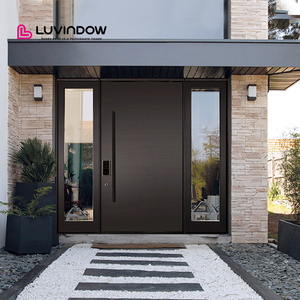 Heavy-Duty Pivot
Modern Design Villas Black Profile Aluminum Frame Front Entry Pivoting Doors for Houses
Structural 3.0mm wall thickness, integrated German Dorma pivot hinges, magnetic weatherstripping, and high wind resistance.
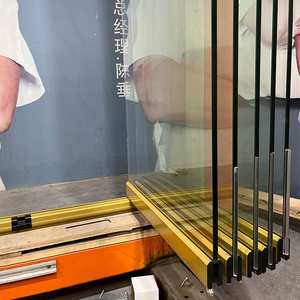 Acoustic & Storm
Partition Wall Stack Exterior Frameless Sliding Door Movable Glass Aluminum Folding Waterproof Graphic Design Commercial Modern
EPDM gasket pressure barrier, heavy load stainless steel rollers, interlocking windproof stiles, and custom acoustic interlayer.
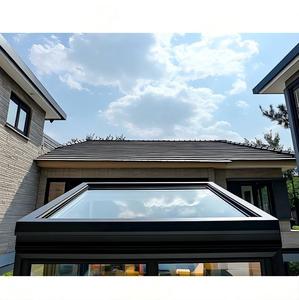 Impact Skylight
Sunnysky Tempered Glass Balcony Transparent Aluminium Sunshine Room Electric Sunroof Motorized Roof Window Skylight
Electric motor linear actuators, laminated storm glazing, concealed multi-tier condensation drainage channels, and wind sensors.
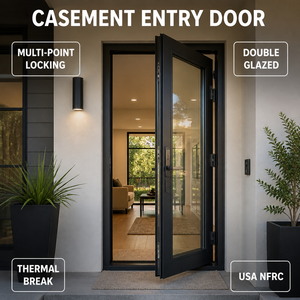 Thermal Break
Multi Point Locking Aluminum Casement Entry Door Double Glazed Security Swing Door Thermal Break Patio
Polyamide PA66 GF25 thermal isolators, multi-point perimeter shoot-bolts, cyclone impact double glazing, and airtight rebated sashes.
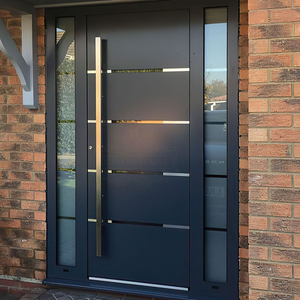 Coastal Armor
Luxury Modern Design Anti-Theft Outdoor Exterior Villa Aluminum Entry Front Door
Cast aluminum armor facings, 316 stainless lock mechanisms, AAMA 2605 fluorocarbon salt spray protection, and N6 wind rating.
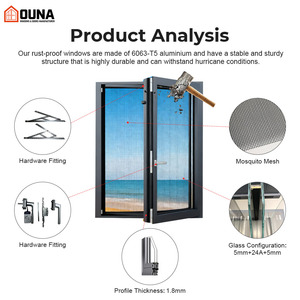 NFRC Certified
OUNA NFRC Thermal Break Double Glass Energy Efficient Swing Aluminum Casement windows for House Villa Tilt and Turn Window
NFRC certified low U-factors (≤1.4 W/m²K), dual-action tilt and turn ventilation, concealed perimeter locking, and argon-filled IGUs.
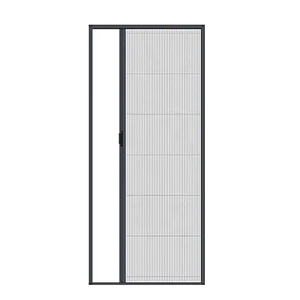 Screen Integration
High Quality Aluminium Alloy Frame Sliding Door and windows Polyester Plisse Pleated Folded Mosquito Net Fly Screen Mesh
Integrated sliding storm screen tracks, high-tensile mesh resistant to storm debris, UV-stabilized polyester plisse, and low threshold.
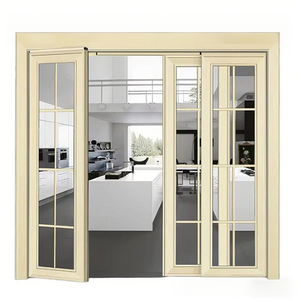 Slide & Swing PT
Top Manufacturer High Quality Simple Push and Pull Aluminum Pt PD Door Sliding and Swing Pt Door for Toilet Kitchen
Hybrid slide-and-swing mechanism, space-saving architectural design, dual perimeter water seals, and anodized aluminum profiles.
1. The Evolution of Aluminum Storm Windows in High-Performance Building Envelopes
In modern architecture and structural fenestration engineering, the traditional concept of an auxiliary "storm window" has undergone a profound paradigm shift. Historically regarded merely as a temporary, lightweight exterior barrier to shield single-pane heritage glazing during winter months, the modern storm window manufactured via precision OEM/ODM processes has transformed into a high-performance secondary envelope system. Today, these systems are engineered to withstand Category 5 cyclonic gale forces, block extreme solar radiative flux, dramatically dampen low-frequency acoustic transmission in urban epicenters, and prevent microscopic moisture intrusion.
Global climate volatility has catalyzed building regulatory bodies across North America (AAMA/WDMA/CSA 101/I.S.2/A440, ASTM E1886/E1996), Australia and New Zealand (AS 2047, AS 1288, NZS 4211), and the European Union (EN 14351-1) to enforce rigorous standards for structural wind resistance, water penetration, and overall fenestration U-factors. Aluminum alloy profiles—specifically custom extruded 6063-T5 and structural 6063-T6—have emerged as the undisputed material of choice for high-specification storm fenestration. Unlike uPVC, which is prone to thermal embrittlement, UV degradation, and plastic deformation under severe negative wind pressure, or timber, which suffers from fungal rot, moisture expansion, and labor-intensive maintenance cycles, structural aluminum offers an unparalleled strength-to-weight ratio, millimetric dimensional stability, and infinite recyclability.
From an OEM/ODM procurement perspective, architects, developers, and facade contractors require customized fenestration profiles that integrate seamlessly with existing building elevations. Whether deployed as an exterior sacrificial armor layer against marine salt spray and airborne storm debris or mounted internally as an invisible acoustic and thermal retrofit in protected heritage buildings, precision aluminum storm systems deliver quantifiable building lifecycle value.
2. Engineering Matrix: Architectural Aluminum Storm Windows vs. Alternate Materialities
To assist commercial procurement officers and fenestration specifiers, the following engineering matrix demonstrates the material performance boundaries across key structural and environmental parameters:
| Engineering Metric | OEM/ODM Heavy-Duty Aluminum (6063-T6) | Standard Vinyl / uPVC Systems | Traditional Timber Storm Windows | Composite / Pultruded Fiberglass |
|---|---|---|---|---|
| Structural Wind Load (AS 2047 Rating) | N6 Rating (>4500 Pa Serviceability / 6000 Pa Ultimate) | N1 - N3 Max (≤1500 Pa before profile bowing) | N2 - N3 (Dependent on species and joint condition) | N4 - N5 (High strength but high joint stress) |
| Impact Debris Resistance (ASTM E1996) | Large Missile Rating D & E (Structural Lami Glazing) | Fails Missile D without heavy internal steel tubes | Splinters under high-velocity projectile impact | High impact resistance; prone to cosmetic cracking |
| Thermal Conductivity (Profile U-factor) | Uf ≤ 1.4 W/m²K (with PA66 GF25 Polyamide Thermal Break) | Uf ≈ 1.8 - 2.2 W/m²K (Multi-chamber hollow core) | Uf ≈ 1.9 - 2.4 W/m²K (Natural cellular timber) | Uf ≈ 1.3 - 1.6 W/m²K (Pultruded resin core) |
| Corrosion Resistance in Marine Zones | Superior (AAMA 2605 70% PVDF / 25μm Anodized Finish) | High corrosion resistance; prone to chalking & yellowing | Poor (Rapid degradation from salt humidity and rot) | High chemical resistance; surface resin oxidation |
| Acoustic Attenuation (STC / OITC) | STC 42 - 48 dB (with asymmetric acoustic laminated glass) | STC 28 - 34 dB (Limited profile frame mass) | STC 30 - 36 dB (Acoustic flanking via sash air leakage) | STC 35 - 40 dB (Acceptable dampening characteristics) |
| Dimensional Tolerances & Customization | Ultra-precise (±0.5mm CNC tolerance; custom dies available) | Moderate (±2.0mm thermal movement expansion) | Poor (Substantial hygrothermal dimensional expansion) | High tooling cost; limited complex die shapes |
3. Future Procurement Trends in the Global Storm Fenestration Sector
As commercial buyers, facade contractors, and tier-1 builders plan multi-year capital projects, several critical procurement trends are fundamentally reshaping how aluminum storm windows are sourced globally:
Pre-Glazed Modular Unitization
Procurement schedules increasingly disfavor knock-down (KD) field assembly due to escalating on-site skilled labor costs in Australia, New Zealand, and North America. Global developers demand factory-unitized, pre-glazed storm window cassettes that drop directly into rough openings with clip-fixing anchors, slashing project site timelines by up to 65%.
Embodied Carbon Transparency & EPDs
Institutional property developers and municipal green building standards (LEED v4.1, Green Star, BREEAM) now mandate Environmental Product Declarations (EPDs). OEM suppliers must demonstrate renewable-powered smelting, high recycled aluminum billet content (minimum 60% post-consumer billet), and zero-VOC powder coating facilities.
Dual-Threat Security & Ballistic Hybridization
Modern luxury villas, government diplomatic quarters, and high-risk commercial developments no longer specify storm protection alone. The contemporary procurement mandate merges AS 2047 cyclonic storm impact protection with anti-burglary forced-entry ratings (RC3 / PAS 24) and multi-point perimeter steel shoot-bolt locking hardware.
4. Technological & Structural Development Trends: The Engineering Horizon
The engineering frontier of aluminum storm window manufacturing is propelled by material science breakthroughs, automation, and aerospace-derived fabrication methodologies:
1. Polyamide Isothermal Cavity Alignment: Early generations of aluminum storm windows relied on uninsulated extruded aluminum frames that acted as severe thermal bridges, precipitating condensation and indoor microbial growth. Advanced OEM engineering incorporates 24mm to 34mm wide glass-fiber reinforced polyamide (PA66 GF25) thermal insulating strips. By aligning these thermal breaks with the double-glazed low-emissivity insulated glass units (IGUs), modern storm window assemblies achieve whole-window Uw values below 1.2 W/m²K, matching the stringent requirements of Passive House retrofit standards.
2. Structural Silicone Glazing (SSG) & SentryGlas® Interlayers: To pass cyclic pressure testing (ASTM E1886) exceeding 9,000 cycles without structural failure, leading manufacturers have abandoned dry mechanical glazing gaskets for exterior impact lites. High-modulus structural silicone (such as Dow Corning 983) chemically bonds the glass lite directly into the extruded aluminum pocket, transforming the glass and aluminum into a unified composite structural diaphragm capable of withstanding extreme positive and negative hurricane gusts.
3. Advanced Marine-Grade Surface Metallurgy: Salt-laden air in coastal zones (such as coastal Queensland, Florida, or the Mediterranean) can initiate filiform corrosion beneath inferior coatings within 18 months. Leading tier-1 suppliers utilize automated pre-treatment baths featuring chrome-free zirconium chemical conversion coatings, followed by robotic electrostatic application of AAMA 2605-compliant 70% Polyvinylidene Fluoride (PVDF) fluorocarbon systems or 25-micron architectural Class I anodizing, backed by verified 4,000-hour neutral salt spray (ASTM B117) certifications.
5. Enterprise Strengths: Why Global Specifiers Partner with DERCHI
Guangdong Dejiyoupin Doors and Windows Co., Ltd. (DERCHI) stands among the premier fenestration and architectural enclosure manufacturers, operating from a modern 180,000-square-meter intelligent manufacturing campus in Foshan, Guangdong. Backed by 25+ years of engineering mastery, a workforce of over 600 skilled technicians, and an extensive array of 100+ global patents and testing certifications, DERCHI delivers an end-to-end OEM/ODM manufacturing capability tailored for demanding international construction projects.

180,000 m² Intelligent Production Base
Housing automated precision aluminum extrusion cutting, high-speed 5-axis CNC machining centers, and climate-controlled cleanrooms for IGU assembly, our industrial infrastructure produces over 350,000 square meters of precision architectural fenestration annually.

AS 2047 N6 & Global Certifications
Our aluminum systems have undergone exhaustive physical testing by accredited third-party laboratories, achieving Australia's highest AS 2047 N6 cyclonic rating, alongside CE, ISO 9001, FCC, and UL certifications, ensuring seamless certifier approvals.

Engineering Shop Drawings & Dedicated Support
Our in-house facade engineering team prepares free custom CAD shop drawings, wind load calculations, and BIM models for every client schedule, while our bilingual project engineers operate directly across Australian (AEST) and North American time zones.
From initial design consultation, custom aluminum extrusion die fabrication, and color-matched powder coating to complete 100% dry-fit pre-assembly in our quality inspection bays, DERCHI eliminates project risk. Each unit is wrapped in multi-layered protective film, corner-guarded, and secured inside export-grade fumigated plywood crating engineered for long-haul maritime transport to major ports across Australia, New Zealand, North America, and the Pacific Islands.
Frequently Asked Questions: Sourcing OEM/ODM Aluminum Storm Windows
Detailed technical answers for architects, general contractors, developers, and import distributors evaluating factory-direct fenestration suppliers.
Accelerate Your Fenestration Project with Factory-Direct Engineering
Send us your architectural window schedules, tender specifications, or CAD drawings today. Our senior facade engineering team will generate detailed shop drawings, structural wind load analysis, and an all-inclusive FOB/CIF price quotation within 24 business hours.
Get Catalog