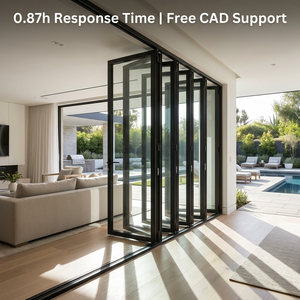
Heavy Impact / Bi-Fold
Explore our certified exterior systems built to protect high-exposure facades against cyclical coastal gusts, wind-borne projectiles, moisture intrusion, and severe thermal differentials.
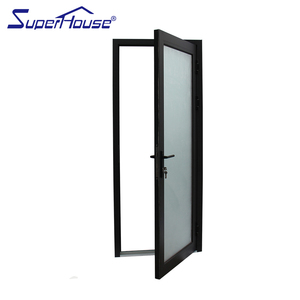
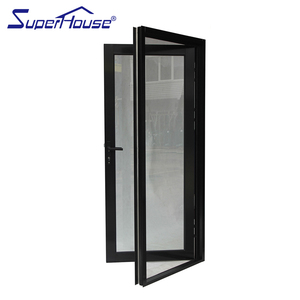
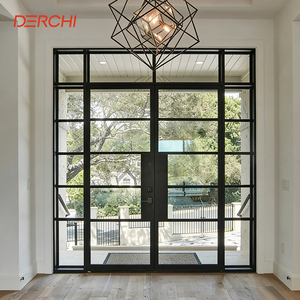
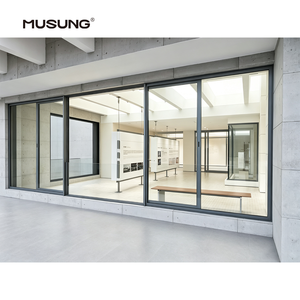
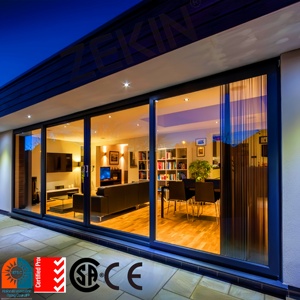
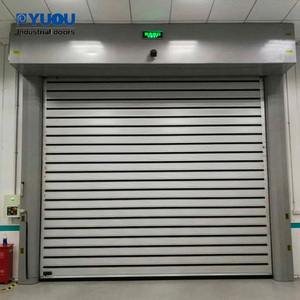
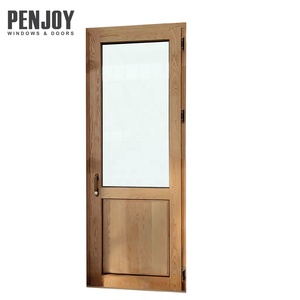
Operating from our integrated manufacturing base in Foshan, China, DERCHI controls every stage of storm door fabrication—from profile extrusion and precision CNC tooling to automated surface treatment and international container crating.
Fabricated using aircraft-grade 6063-T5 or 6061-T6 structural aluminum alloys with wall thicknesses up to 3.0mm, our storm doors are laboratory-tested to withstand cyclical static pressures, water penetration, and missile impact testing under AS 2047, ASTM E1886/E1996, and Miami-Dade protocols.
For coastal building projects across Australia, New Zealand, Florida, and the Pacific Islands, our profiles undergo multi-stage chromate conversion pretreatment followed by AkzoNobel or PPG certified fluorocarbon (PVDF) or Qualicoat Class 2 marine-grade powder coating capable of withstanding 3,000+ hours of continuous salt spray testing.
Every commercial OEM/ODM project is supported by in-house structural engineers. We provide comprehensive CAD drawings, BIM models, elevation sections, and anchor schedule engineering, guaranteeing zero dimensional mismatch between architectural opening schedules and factory assembly lines.
A technical guide for project managers, structural specifiers, and volume importers navigating shifting global building envelope codes and extreme weather adaptation.
Historically, residential storm doors served merely as secondary lightweight seasonal barriers designed to preserve primary timber doors from direct rain contact while providing interchangeable flyscreen ventilation during temperate summer months. However, the intensification of coastal hurricane patterns, coupled with the rigorous enforcement of energy efficiency standards such as the National Construction Code (NCC) in Australia and Title 24 in North America, has transformed the storm door into a structurally integrated primary envelope defense.
Modern architectural storm doors are no longer secondary additions; they are precision-engineered mechanical assemblies designed to maintain perimeter envelope integrity under structural design pressures reaching up to 4500 Pa (equivalent to AS 2047 N6 ratings and Florida High Velocity Hurricane Zones). A failure in door latching, hinge pinning, or corner sash joins during an extreme meteorological event triggers rapid internal pressurization, frequently blowing out ceiling diaphragms and unseating structural roof trusses.
As a vertically integrated OEM/ODM manufacturer, Guangdong Dejiyoupin utilizes virgin architectural-grade aluminum billets rather than remelted scrap ingots. Our baseline extrusions use 6063-T5 alloy, renowned for its superior surface finish receptivity, complex multi-cavity thermal profile extrudability, and balanced tensile strength (yield strength ≥ 110 MPa). For ultra-oversized pivot configurations and high-traffic commercial storm entryways exposed to open ocean winds, we deploy 6061-T6 structural alloy, delivering ultimate tensile strengths exceeding 260 MPa.
Corner joints represent the ultimate point of failure during cyclic positive/negative gust cycles. Whereas lightweight retail storm doors rely on crimped plastic or light zinc internal corner stakes, DERCHI implements hydraulic-crimped 6mm solid extruded corner cleats injected with structural two-component epoxy adhesive. This monolithic mechanical joinery prevents diagonal sag over decades of operational cycles and withstands repeated impact forces from wind-borne debris.
| Technical Dimension | Standard Retail Storm Door | DERCHI Architectural Commercial Grade |
|---|---|---|
| Aluminum Alloy & Temper | Recycled 6063-T4 (Thin-wall < 1.2 mm) | Primary 6063-T5 / 6061-T6 (Heavy-gauge 2.0 mm - 3.0 mm) |
| Impact Debris Capability | None (Shatters under dynamic missile strike) | Meets AS 2047, ASTM E1886/1996 Large Missile Level D |
| Glazing Specification | Single sheet annealed or 3mm float glass | Double/Triple Tempered Laminated with 1.52mm / 2.28mm SentryGlas (SGP) |
| Corrosion Resistance (Salt Spray) | Standard polyester powder (200-400 hrs) | Qualicoat Class 2 / PVDF 3-Coat System (3,000+ hrs salt fog) |
| Locking & Perimeter Compression | Single latch mechanical deadbolt | Multi-point hook-and-shoot bolt system with continuous EPDM gaskets |
For storm doors incorporating architectural vision panels or full glass expanses, glazing integrity dictates structural survival. DERCHI utilizes SentryGlas® (SGP) ionoplast interlayers rather than conventional PVB sheets for hurricane-rated door portfolios. SGP interlayers are up to five times tear-resistant and one hundred times stiffer than standard PVB materials. In the event of outer glass fracture from high-velocity projectile strikes, the composite laminate maintains rigid structural orientation within the aluminum pocket, continuing to resist cyclical hurricane wind loads without falling out of the rebate.
To comply with escalating net-zero carbon mandates and stringent U-value targets, our impact storm units utilize warm-edge spacer bars filled with molecular sieve desiccant, argon-gas-filled chambers, and triple-silver soft-coat Low-E coatings. This delivers thermal performance ratings as low as U ≤ 1.4 W/(m²·K) / SHGC ≤ 0.22, effectively blocking tropical solar radiation while preventing internal winter condensation.
How progressive building envelope specifiers and regional importers are adapting procurement roadmaps to meet rising climatic, architectural, and supply-chain pressures.
Non-thermally broken exterior storm doors are being phased out in temperate zones across North America, Europe, and Southern Australasia. Buyers are standardizing on multi-cavity polyimide (PA66 GF25) thermal barrier strips that eliminate condensation issues and stop aluminum conduction losses.
Procurement demands are shifting from traditional mechanical keyed hardware toward concealed smart-entry locking. Modern storm doors now feature factory-integrated motorized multi-point latches compatible with biometric recognition, Zigbee/Matter protocols, and commercial building management systems (BMS).
Architects are specifying larger entrance spans, moving past traditional 3-foot widths toward 4-to-5-foot wide pivot assemblies reaching heights of 3 meters. These systems require bottom-floor mounted hydraulic self-closing pivot pivots engineered to support panel weights exceeding 350 kg while maintaining full air-tight seals.
High-volume distribution centers and commercial contractors are cutting intermediary trading tiers, sourcing complete door systems direct from accredited Chinese manufacturers. Factory-direct purchasing allows companies to secure full testing compliance, tailored extrusion dies, and cost efficiencies that preserve operational margins.
Builders are seeking one-stop suppliers capable of bundling storm doors, commercial pivot entryways, interior aluminum-clad wood doors, and automated garage portals in consolidated FCL shipping containers, significantly reducing logistical and customs handling overhead.
Essential answers covering compliance documentation, custom tooling, lead times, and oceanic freight protections for bulk door imports.