Engineered Timber-Aluminium Composite Fenestration Systems
Precision-manufactured across our 180,000 m² automated production facility. Our systems integrate warm architectural interiors with heavy-gauge, weather-resistant exterior aluminum cladding designed for oceanic storms, extreme thermal variance, and passive building envelopes.
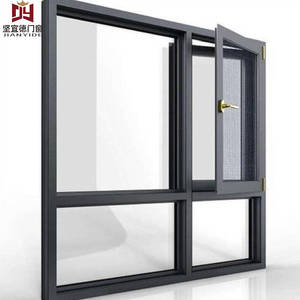
European Hurricane-Resistant Slim Clad Window
View System Specs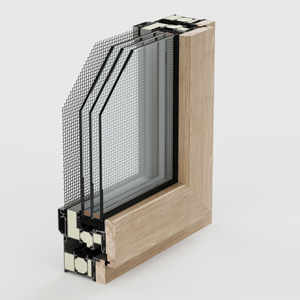
LEAWOD Wood-Aluminium Smart System
View System Specs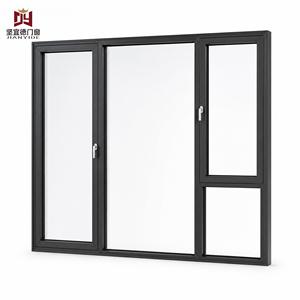
Tilt & Turn Composite with Integrated Mesh
View System Specs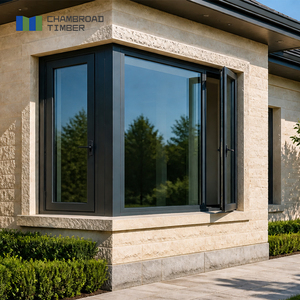
Passive House Triple-Glazed Clad Window
View System Specs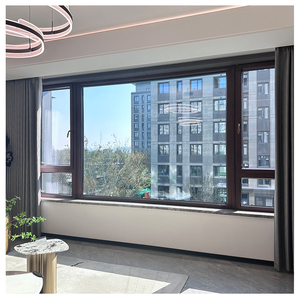
PHI EnerPHit Ready Uw≤0.8 W/m²K Timber Clad
View System Specs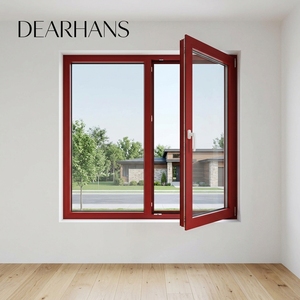
Custom Acoustic Architectural Arch Windows
View System Specs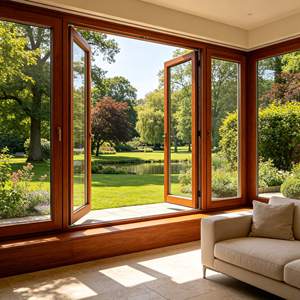
High-Performance Outswing Clad Window
View System Specs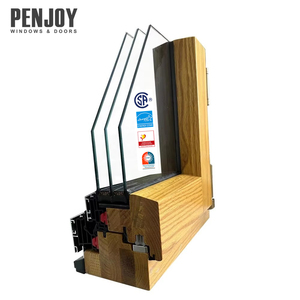
Super Energy-Efficient Passive Timber Window
View System SpecsStrategic Global Procurement Dynamics for Timber-Alloy Windows
Procuring high-performance architectural envelope systems requires balancing regional compliance, life-cycle costs, and building physics.
Total Cost of Ownership vs. Initial Capex
Commercial developers and institutional builders are pivoting from all-aluminum thermal-break systems toward composite timber-alloy profiles. While composite fenestration commands a marginal premium at initial procurement, life-cycle operational metrics reveal up to 32% reductions in HVAC loads, eliminating interstitial condensation liabilities and internal repaint cycles over 40-year horizons.
Supply Chain Traceability & Chain-of-Custody
Stringent decarbonization benchmarks in Oceania (NCC/NZBC) and the European Union mandate verified chain-of-custody timber. Strategic volume procurement now depends entirely on mill-direct supply lines supporting FSC/PEFC certified European White Oak, Larch, and Knotless Pine, bonded with multi-layer finger-jointing to guarantee dimensional stasis across variable humidity profiles.
Engineering Validation & Testing Protocols
Tier-1 procurement mandates comprehensive engineering shop drawing documentation prior to extrusion tooling. Derchi provides complete structural deflection calculations, localized wind-pressure simulation reports (up to N6 cyclonic testing under AS 2047), and thermodynamic isothermal boundary-condition maps directly verified by in-house facade engineers.
Engineering Evolution: The Next Generation of Composite Systems
The architectural convergence of biological materials and non-ferrous engineering alloys requires addressing differing linear thermal expansion coefficients. Unengineered mechanical bonding risks frame warping, air-seal degradation, and internal condensation.
Floating Mechanical Nylon Fasteners
Eliminating direct chemical adhesives, our profiles utilize German-engineered composite nylon connecting clips. This allows independent thermal expansion between exterior 6063-T6 aluminum (expansion coefficient 23×10⁻⁶/K) and interior timber (5×10⁻⁶/K), maintaining zero stress on internal mortise-tenon joinery.
Continuous Multi-Stage EPDM Vulcanization
Integrating continuous co-extruded EPDM marine-grade gaskets ensures triple-barrier protection. Systems easily achieve over 600 Pa water tightness and Class 4 air permeability, preventing oceanic salt mist from penetrating internal timber structural cores.
Structural Warm-Edge Glass Assemblies
Standard configurations support up to 52mm triple-glazed IGUs with Argon infill (90%+ gas retention rate) and composite warm-edge spacers (e.g., Technoform). The resulting whole-window thermal transmittance achieves PHI EnerPHit targets: Uw ≤ 0.8 W/m²K.
Enterprise Rigor: Guangdong Dejiyoupin (DERCHI)
Recognized among China's Top 10 fenestration manufacturers, our Foshan smart-manufacturing facility bridges architectural design intent with industrial execution.
End-to-End Manufacturing
Operating across 180,000 square meters with over 600 skilled technicians, we integrate CNC machining centers, precision Italian lumber drying kilns, automatic AkzoNobel waterborne electrostatic paint lines, and robotic insulated glass lines under ISO 9001 quality supervision.
Certified for Critical Markets
Our complete window and structural door lines are verified to AS 2047 (N6 wind load and cyclonic water limits), CE EN 14351-1 architectural directives, UL fire ratings, and global acoustic isolation criteria (Rw up to 45dB with tailored laminated acoustic interlayers).
Full-Scope OEM/ODM Support
From initial design sketches and structural engineering reviews to full-size parametric BIM objects and custom extrusion development, our technical team provides dedicated, English-speaking engineering coordination throughout ocean delivery and installation.
Technical & Procurement FAQ
Straight answers to complex engineering, compliance, and logistical inquiries from global project stakeholders.