Folding & Casement
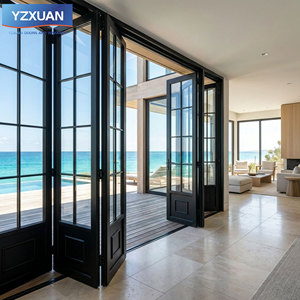
Engineered for high-wind resistance, supreme water tightness, and continuous thermal comfort across Oceania, North America, and European building envelope standards.
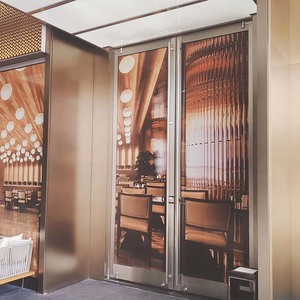
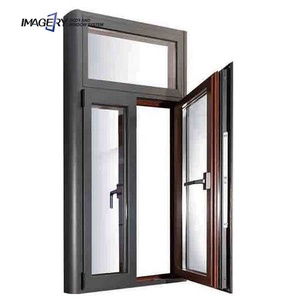
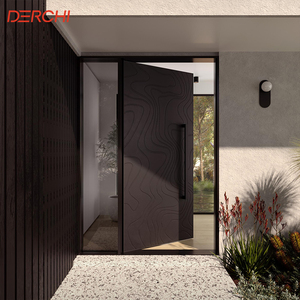
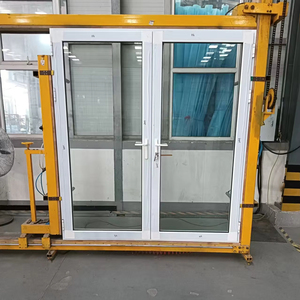
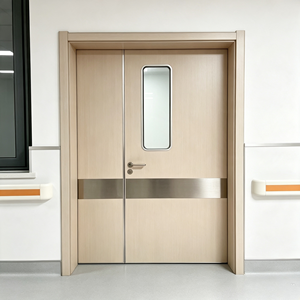
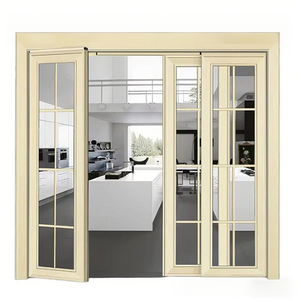
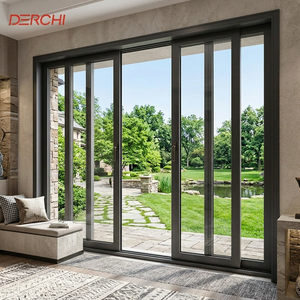
In contemporary commercial facade design and high-end residential master developments, the aluminium casement window stands out as the ultimate fenestration baseline for acoustic decoupling, negative wind load endurance, and airtight envelope integrity. Unlike lateral sliding systems that depend on variable-friction brush seals, an outward or inward swing casement operates on a compression-gasket mechanism. When engaged by multi-point peripheral gear locks, the casement sash pulls flush against the outer perimeter extrusion frame with uniform force, compressing triple-fin co-extruded EPDM (Ethylene Propylene Diene Monomer) weatherstrips down to exact tolerances.
As a global OEM/ODM aluminium casement windows exporter, our engineering framework begins at the metallurgical molecular level. We utilize high-purity virgin primary aluminium billet alloys—specifically 6063-T5 and structural 6060-T6. These architectural profiles deliver an ultimate tensile strength exceeding 205 MPa and yield strength beyond 170 MPa. By strictly controlling the magnesium-silicon stoichiometric ratios, our profiles resist stress corrosion cracking, withstand continuous inter-story structural deflection, and accept precision CNC multi-axis milling without micro-fracturing along the glazing rebates.
Acoustic & Thermal Synergy: Incorporating glass configurations up to 42mm triple-glazed IGUs with asymmetric laminated panes (e.g., 6mm Low-E + 16Ar + 4mm + 12Ar + 33.2 Acoustic PVB) achieves Sound Transmission Class (STC) ratings above 42 dB and overall U-values beneath 1.1 W/(m²·K).
ODM customization empowers structural architects, commercial developers, and regional distributors to adapt frame extrusion depths (ranging from slimline 50mm up to heavy-duty 120mm architectural curtain-wall adaptors) to project-specific wind pressures. Whether confronting coastal cyclonic conditions in Northern Australia requiring an AS 2047 N6 rating (wind pressure resistance exceeding 4400 Pa) or hurricane zones in the Caribbean and Florida panhandle, every casement extrusion die is custom-modeled in finite element analysis (FEA) software before physical extrusion tooling begins.
Standard architectural parameters deployed across our OEM/ODM casement window manufacturing lines:
The global window market has transitioned from basic utilitarian envelope closures to hyper-engineered, multi-functional energy conservation systems. Discover the technical developments dominating modern project specifications.
Architectural demand has shifted decisively toward minimalist industrial aesthetics. Traditional casement frames with bulky 80mm-to-100mm face profiles are being supplanted by ultra-narrow visible sightlines (as slim as 38mm to 48mm). By recessing the operable sash entirely within the outer sub-frame extrusion, our concealed-sash ODM configurations produce a clean, uniform exterior appearance where fixed picture windows and operable casements are indistinguishable from outside elevations.
Net-zero building mandates and updated energy conservation frameworks (such as Australia's NCC 2022 7-star NatHERS, California Title 24, and Europe’s EPBD) necessitate continuous thermal insulation barriers. Modern ODM casement window profiles incorporate multi-chambered Polyamide 6.6 insulating struts reinforced with 25% cross-strand glass fiber. These composite bridges decouple the exterior and interior aluminium profile sections, mitigating condensation formation while delivering superior structural shear resistance.
Modern commercial office blocks, luxury residences, and institutional developments increasingly mandate automated natural ventilation routines synced with building management systems (BMS). Our OEM manufacturing lines integrate concealed 24V DC chain-drive actuators directly into the casement profile rebate. Operating in silent synchronicity, these mechatronic window drives respond dynamically to indoor carbon dioxide thresholds, interior ambient temperature spikes, and external rain or wind velocity sensors.
Procurement Strategic Insight: Sourcing direct from tier-one integrated extrusion fabricators reduces landed cost variations by 22% while providing cradle-to-gate Environmental Product Declarations (EPDs) required for LEED v4.1 and Green Star ratings.
Between 2025 and 2030, procurement directors, commercial facade consultants, and master developers face unprecedented supply chain transformation. The traditional procurement methodology—relying exclusively on localized fabricators who assemble imported extrusions with heavy domestic markups—is being outcompeted by direct-to-source OEM/ODM factory alliances. Leading global contractors are actively disintermediating middle-tier supply chains to gain full transparency over raw ingot pricing, extrusion dies ownership, and factory-certified quality controls.
A primary driver is the institutional mandate for decarbonized construction products. Major real estate investment trusts (REITs) and institutional developers across the EU, the United States, and Australia are requiring third-party verified Type III Environmental Product Declarations (EPDs). OEM exporters must trace the carbon footprint of every extruded kilogram back to the smelting source. By partnering with DERCHI, overseas importers access verifiable low-carbon 6063 alloys processed utilizing clean solar and hydroelectric energy, directly addressing Scope 3 embodied carbon targets.
Simultaneously, modular construction and off-site prefabrication require windows to arrive on project sites fully assembled, dry-glazed, pre-fitted with perimeter fixing brackets, and structurally bonded with structural silicones (two-part silicone structural glazing, SSG). By transitioning assembly and pressure chamber testing into our precision Foshan industrial park, construction teams trim on-site labor overheads by up to 65%, completely eliminating weather-induced assembly defects.
Every OEM/ODM aluminium casement window assembly is subject to rigorous physical testing in certified wind tunnel and pressure chamber facilities to ensure compliance with global structural building codes.
| Performance Criterion | Australian Standards (AS 2047) | American Standards (AAMA / WDMA / CSA) | European Standards (EN 14351-1) |
|---|---|---|---|
| Structural Wind Load (Deflection) | Serviceability: 1500 Pa to 3000 Pa Rating: N4 to N6 Achieved |
Design Pressure (DP): Class CW-PG50 to AW-PG80 | Class 4 to Class 5 (>2000 Pa) EN 12210 Deflection < L/300 |
| Ultimate Wind Pressure Strength | Ultimate Limit State: > 4400 Pa Cyclone Tested to AS 4055 |
Structural Test Pressure (STP): 150% of Design Pressure | Class C5 (> 3000 Pa safety load) |
| Air Infiltration Resistance | Air Leakage < 0.5 L/(s·m²) at 75 Pa Air-Conditioned Rating Pass |
Air Infiltration < 0.10 cfm/ft² at 1.57 psf (75 Pa) per ASTM E283 | Class 4 (< 3 m³/(h·m²) at 100 Pa) EN 12207 Maximum Airtightness |
| Static Water Penetration | Static Pressure: 450 Pa to 700 Pa Zero Ingress Observed |
Water Resistance Test: 15% of DP (8.0 to 12.0 psf) per ASTM E331 | Class E750 to Class E1050 (750 Pa - 1050 Pa) EN 12208 Severe Weather |
| Acoustic Attenuation (Rw / STC) | Rw + Ctr: 34 dB to 44 dB Acoustic IGU Glass |
STC: 36 to 43 / OITC: 30 to 36 per ASTM E90 / E413 | Rw (C; Ctr): up to 45 (-1; -4) dB per ISO 10140 |
| Surface Corrosion Durability | AS 3715 Powder Coating / AS 1231 Anodizing (25μm Marine Grade) | AAMA 2605 Superior Fluoropolymer Coating (>4000 Hrs Salt Spray) | Qualicoat Seaside Class 2 Approved & Qualanod Certified |
Operating from Foshan, Guangdong—the recognized epicenter of the global aluminium extrusion ecosystem—DERCHI represents 25+ years of continuous engineering excellence and export leadership.
Our integrated manufacturing base in Shenke Chuangzhi Park, Foshan, integrates fully automated CNC double-head precision cutting saws, 4-axis digital milling centers, and automatic polyurethane corner injection crimping units. With over 600 skilled master fabricators and engineers, our scalable factory lines deliver an annual fenestration capacity exceeding 300,000 square meters with microscopic repeatable tolerances (<0.5mm).
DERCHI casement systems undergo destructive pressure testing in accredited NATA/ILAC partner laboratories. We maintain complete certified test documentation for AS 2047 (tested to extreme N6 wind conditions), AS 1288 architectural safety glazing, CE marking per EN 14351-1, and UL fire classifications. Importers and certifiers receive full compliance packets, structural engineering calculations, and thermal modeling data to ensure rapid building permit approvals.
Our dedicated technical engineering department supports architects and quantity surveyors from schematic concepts to final handover. We draft comprehensive AutoCAD shop drawings, develop custom extrusion die profiles in 15 days, and provide parametric BIM models for clashing detection. Fluent, technical English-speaking facade engineers align with AEST, NZST, GMT, and EST business hours to resolve detailing questions instantly.
Addressing the fundamental engineering, logistic, and contractual parameters evaluated by foreign buyers, general contractors, and facade consultants.
Partner directly with Guangdong Dejiyoupin Doors and Windows Co., Ltd. (DERCHI). Transmit your architectural elevation drawings, window schedules, or custom profile sketches to our engineering team for a comprehensive structural review, BIM coordination, and factory-direct project quotation within 24 hours.