High-Performance Custom Aluminium Hinged Window Portfolio
Explore our certified series engineered for heavy wind-load resilience, passive thermal envelope compliance, sound suppression, and bespoke architectural fenestration.
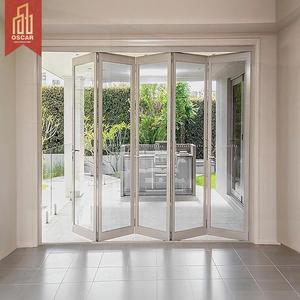
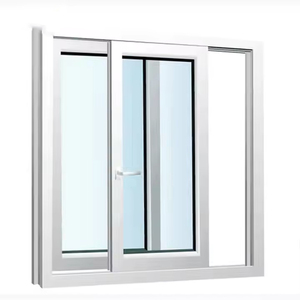
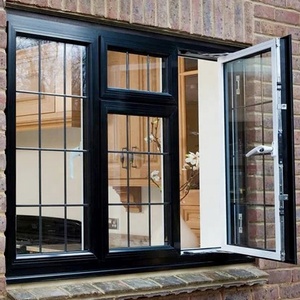
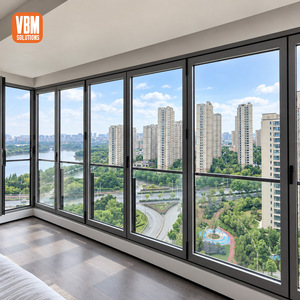
Engineering Anatomy of Custom OEM Aluminium Hinged Windows
A rigorous examination of alloy metallurgy, thermal performance mechanics, mechanical load dissipation, and hardware kinematics for commercial and luxury residential envelopes.
In modern architectural fenestration, the custom aluminium hinged window (encompassing traditional side-hung casements, top-hung awning configurations, inward/outward opening transoms, and European dual-action tilt-and-turn assemblies) serves as a primary barrier against atmospheric stress, acoustic intrusion, and thermal bridging. Unlike sliding apertures that rely on perimeter brush strips vulnerable to gradual friction wear, a precision-machined hinged window engages uniform compression gaskets across three distinct perimeter barriers. This mechanical design delivers air infiltration rates below 0.05 L/s·m², rendering it the ideal architectural element for projects adhering to ASHRAE 90.1, the International Energy Conservation Code (IECC), and European EN 14351-1 harmonised standards.
The structural core of every DERCHI custom OEM system utilizes virgin 6063-T6 or structural-grade 6061-T6 architectural aluminium extrusions. Engineered with minimum wall thicknesses extending from 1.6mm to 3.0mm depending on site-specific wind pressure requirements, our multichamber profiles integrate polyamide (PA66 GF25) thermal breaks reinforced with 25% transverse glass fibre. This structural composite exhibits an identical thermal expansion coefficient to aluminium (2.3 × 10⁻⁵ K⁻¹), completely eliminating inner-outer profile separation across ambient thermal cycles spanning from -40°C to +80°C. By dissecting conductive heat pathways across the window sash and frame, whole-assembly thermal transmittance (U-factors) can be reduced to as low as 0.79 W/m²·K (0.14 BTU/hr·ft²·°F) when paired with krypton-filled, triple-laminated Low-E insulated glass units (IGUs).
| Performance Metric | Test Standard | DERCHI Factory Baseline | Extreme / Coastal High-Spec |
|---|---|---|---|
| Structural Wind Load (Deflection) | ASTM E330 / AS 2047 / EN 12211 | Serviceability: 2500 Pa (Class C3) | Exceeds 4500 Pa / N6 Cyclone Rated |
| Water Penetration Resistance | ASTM E331 / AAMA 501.1 / EN 12208 | Static 700 Pa (No leakage) | Dynamic 1050 Pa (Lab Verified) |
| Air Infiltration Rate | ASTM E283 / EN 12207 / AS 4420.4 | < 0.1 m³/(h·m) @ 100 Pa (Class 4) | < 0.02 m³/(h·m) Ultra-Airtight (Passive House) |
| Acoustic Attenuation (STC / OITC) | ASTM E90 / ISO 10140-2 / ASTM E1332 | STC 38 dB (Double Glazed Acoustic PVB) | STC 48 dB (Asymmetric Triple Glazed Argon) |
| Overall U-Factor (Uw) | NFRC 100 / ISO 10077-1 / EN 673 | 1.2 - 1.4 W/m²·K (Warm-Edge Double Low-E) | 0.79 W/m²·K (Triple Low-E with Aerogel Infusion) |
| Operating Hardware Lifecycle | AAMA 910 / EN 13126-8 / AS 4145 | 25,000 Continuous Open/Close Cycles | 50,000 Cycles (German Siegenia / Roto Hardware) |
Future Procurement Trends in Aluminium Hinged Windows (2025–2030)
Strategic insights for project developers, façade contractors, and commercial importers evaluating global supply chains and emerging building codes.
1. Direct Factory Sourcing & CAD Integration
Developers are bypassing intermediate trading agents in favour of tier-one OEM manufacturers capable of direct BIM and Revit integration. By providing parametric 3D models and native CAD shop drawings aligned to custom door and window schedules, lead times shrink from 16 weeks to under 6 weeks, eliminating site re-work and dimensional discrepancies.
2. Decarbonization & Low-Carbon Aluminium
Global carbon border mechanisms (such as the EU CBAM) are compelling corporate real estate firms to procure fenestration profiles manufactured via hydro-powered smelting. Demand for certified recycled content (minimum 60% post-consumer billet) is now a central tender prerequisite for BREEAM and LEED v4.1 architectural credits.
3. Single-Source Building Envelope Packages
Contractors avoid multi-vendor disputes by procuring harmonized systems—matching hinged casements, oversized pivot doors, interior timber frames, and curtain walls from a unified OEM vendor. This ensures identical exterior powder coat batches, synchronized hardware keying, and consolidated container logistics that lower ocean freight risks.
Emerging Technology Vectors Reshaping Hinged Window Engineering
From concealed hardware kinematics to nano-engineered coatings, review the modern industrial developments driving next-generation window manufacturing.
Concealed Heavy-Duty Kinematics
Standard surface-mounted butt hinges disrupt sightlines and compress gaskets unevenly over decades. We engineer fully concealed European-groove friction stays and four-bar hinges machined from 304/316 austenitic stainless steel, rated for sash weights up to 300 kg while maintaining a pure flush exterior facade.
Multi-Cavity Co-Extruded EPDM Gaskets
DERCHI replaces traditional vinyl and single-lip rubbers with automotive-grade, vulcanized cellular EPDM gaskets co-extruded with magnetic or closed-cell sponge cores. This prevents micro-air leakage under severe dynamic wind loads and ensures rapid elastic recovery after 200,000 compressive cycles.
Fluorocarbon (PVDF) & Marine Finishes
For coastal and industrial regions with high salt spray and atmospheric sulfur, our automated finishing lines apply three-coat, two-bake Kynar 500® 70% PVDF fluorocarbon coatings or 25-micron class 1 anodization, passing 4,000-hour neutral salt spray (ASTM B117) and AAMA 2605 weathering evaluations.
Smart BMS Actuation & Concealed Sensors
Modern commercial and residential automation demands seamless integration. We embed concealed chain actuators and hidden magnetic reed contacts directly inside the Euro-groove profile channel, providing automated smoke clearance, night purge ventilation, and remote building management system monitoring.
Why Tier-1 Developers & Builders Partner with DERCHI
Combining 25+ years of specialized industrial manufacturing in Foshan with rigorous international testing certifications and custom OEM/ODM production scalability.
Integrated Smart Manufacturing & Full Chain Traceability
Operated by Guangdong Dejiyoupin Doors and Windows Co., Ltd. (DERCHI), our expansive 180,000 square meter intelligent industrial campus in Shishan Town, Foshan represents the pinnacle of fenestration processing capability. Utilizing 5-axis CNC double-headed precision miter saws, automated crimping centers, and robotic assembly stations, we guarantee sash-to-frame diagonal tolerances within ±0.5 mm on openings exceeding 3.5 meters in height.
By holding direct control over precision profile extrusion, thermal break assembly, robotic powder-coating lines, CNC milling, and multi-stage cleanroom glass lamination, our clients avoid multi-tiered subcontractor markups. Furthermore, each unit undergoes laser-measured water pressure containment, mechanical squareness validation, and hardware torque verification before receiving export crating.

Frequently Asked Questions on OEM Aluminium Hinged Windows
Authoritative technical, commercial, and shipping answers to facilitate seamless cross-border architectural window procurement.
What are the key technical differences between casement and tilt-and-turn hinged systems?
How does DERCHI ensure thermal break stability under extreme climate differentials?
What documentation and shop drawings are provided prior to mass production?
How do you protect oversized and heavy triple-glazed hinged units during ocean transport?
Can DERCHI match specific architectural RAL colors and wood-grain interior textures?
Accelerate Your Project with Factory-Direct Engineering
Connect with our senior fenestration engineers to obtain free CAD shop drawings, acoustic and thermal performance modeling, structural calculation reports, and transparent OEM price proposals.
Get Catalog