Architectural Stacking & Folding Door Collections
Engineered for expansive openings, heavy wind-load resistance, acoustic isolation, and ultra-smooth glide operations in high-end developments.
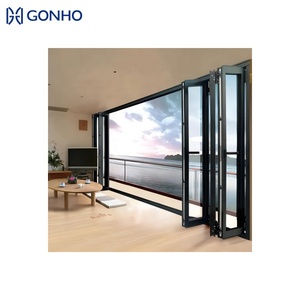
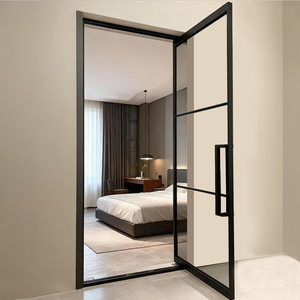
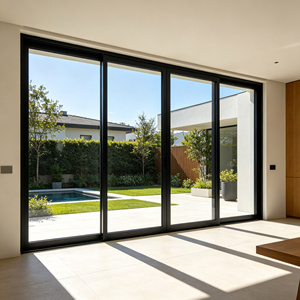
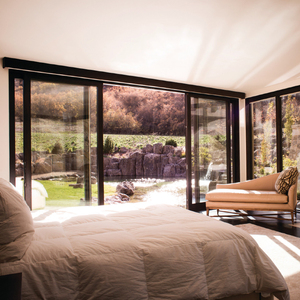
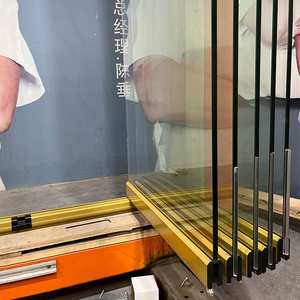
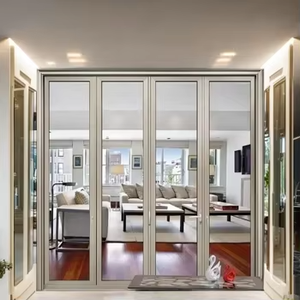
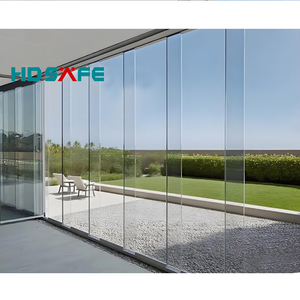
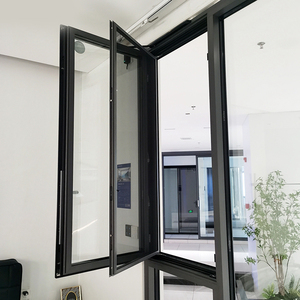
Structural Anatomy of High-Performance Aluminum Stacking Doors
Beyond traditional sliding configurations, architectural aluminum stacking door systems (multi-slide pocket and telescopic systems) function under heavy structural loads. Every assembly is designed for high cyclonic pressure, maximum water-resistance, and thermal barrier efficiency.
Alloy Extrusion & Polyamide Thermal Break
Fabricated using virgin 6063-T6 architectural grade aluminum extrusions with minimum profile wall thicknesses of 2.0mm to 3.0mm. Integrated with European-imported PA66GF25 (polyamide 66 reinforced with 25% glass fiber) thermal break isolators, effectively decoupling interior and exterior thermal bridges to deliver low overall U-factors compliant with rigorous Energy Star and NCC (National Construction Code) standards.
Heavy-Duty Stainless Steel Roller Carriages
Equipped with quad and tandem stainless steel 316 bogie rollers with sealed high-precision needle bearings. Each sash is engineered to support moving glass loads of up to 450 kg (990 lbs) per panel with minimal rolling resistance (operating push-force under 20 N). Track systems feature monolithic CNC-machined marine-grade stainless inserts to eliminate aluminum-on-steel friction and prevent tracking fatigue over decades of continuous cycling.
Multi-Stage Water Drainage & Weather Barrier
Stacking configurations encounter severe rain-penetration challenges. Our systems employ cascaded multi-track drainage designs with concealed pressure-relief weeping valves, stepped sub-sills, and continuous continuous vulcanized EPDM or Santoprene co-extruded compression gaskets. Validated to resist water penetration up to 600 Pa and cyclone wind pressures under AS 2047 N6 criteria.
Built for Builders, Architects, and Global Specifiers
As a verified Foshan manufacturing exporter operating with an expansive 180,000 m² infrastructure, Guangdong Dejiyoupin Doors and Windows Co., Ltd. (DERCHI) bridges the gap between cost-effective Chinese direct fabrication and strict Western building code compliance.
Whether projects require expansive 6-panel stacking walls for beachfront villas in Australia, luxury resort partitions across New Zealand, or multi-residential commercial towers, our shop engineering department supplies comprehensive BIM files, parametric CAD cross-sections, and verified NATA/AS 2047/CE structural test certifications.
| Performance Criterion | Test Standard | DERCHI Stacking Spec |
|---|---|---|
| Structural Wind Capacity | AS 2047 / ASTM E330 | N6 Rating (Exceeding 4500 Pa) |
| Water Tightness | AAMA 501.1 / AS 4420.4 | 600 Pa Hydrostatic Head |
| Thermal Performance | NFRC / ISO 10077-2 | U-value down to 1.4 W/m²·K |
| Acoustic Isolation | ASTM E90 / ISO 140-3 | Rw / STC 38 dB to 44 dB |
| Surface Corrosion Defense | Qualicoat Class 2 / AAMA 2605 | Fluorocarbon (PVDF) / 25μm Anodized |
Future Trends in Aluminum Stacking Door Procurement
Key architectural and manufacturing shifts influencing international project procurement over the next decade.
1. Ultra-Slim Interlock Sightlines (18mm to 25mm)
Modern luxury architecture prioritizes structural transparency. Traditional stacking door mullions with 80mm-100mm faces are rapidly yielding to minimalist structural interlocks ranging between 18mm and 25mm. By leveraging hidden high-modulus steel reinforcements inside hollow aluminum extrusions, exporters can guarantee immense wind resistance while delivering uninterrupted floor-to-ceiling glass sightlines.
2. Hidden Pocket Recessing & Zero-Step Thresholds
Seamless transition between interior living areas and exterior alfresco entertaining spaces is a mandatory specification across modern residential builds. The global supply chain has shifted toward flush-recessed sub-sills integrated with linear stainless drainage channels, coupled with multi-track pocketing layouts where all stacking panels stow entirely inside wall cavities.
3. Low-Carbon Aluminum & Advanced Glazing Coatings
International environmental mandates (including LEED v4.1 and Australian NCC energy regulations) demand traceable carbon footprints for imported fenestration. Procurement managers increasingly require billet traceability (hydropower-smelted low-carbon green aluminum), warm-edge IGUs with warm-edge spacers, and double/triple silver Low-E insulated coatings tuned to local Solar Heat Gain Coefficients (SHGC).

Why Direct Foshan Manufacturing Ensures Export Reliability
Operating out of our 180,000 m² state-of-the-art facility in Shishan Town, Nanhai District, Foshan, Guangdong—the worldwide epicenter of precision architectural aluminum extrusion—DERCHI eliminates trading intermediaries to deliver authentic factory pricing, uncompromised structural integrity, and accountable warranties.
With more than 25 years of specialized door and window fabrication, over 600 skilled technicians, and 100+ structural patents, we enforce strict multi-stage QC regimes spanning billet spectrum analysis, anodizing layer micron verification, hardware cyclic stress testing, and dry pre-assembly of complete stacking frames prior to crating.
Export packaging complies with strict biosecurity standards across Australasia and North America, utilizing fumigated steel-reinforced timber crates, protective foam wrapping, and desiccants to ensure defect-free port arrivals.
Frequently Asked Questions About Aluminum Stacking Doors
Direct technical answers addressing the most critical procurement, compliance, and logistics inquiries.
How do aluminum stacking doors differ from traditional sliding and bifold doors?
Stacking doors operate on parallel multi-track profiles where multiple sliding panels cascade behind a single stationary panel or disappear entirely into an engineered wall pocket. Unlike bifold systems, stacking doors do not project into usable interior or outdoor patio floor space, and they support significantly larger individual panel widths (up to 3.5m wide and 4.5m tall per sash) without sag or hinge strain.
What structural wind certifications do your stacking door assemblies hold?
Our heavy-duty stacking systems are tested and certified in accordance with Australian standard AS 2047, achieving up to an N6 rating for extreme exposed locations. We also comply with CE (EN 14351-1), ISO 9001 quality management benchmarks, and North American NFRC/AAMA thermal and structural air-water-structural criteria. Full test certificates and independent laboratory reports are furnished alongside formal shop drawings.
How is sea freight handled to prevent transit distortion and marine corrosion?
We supply either fully knocked down (CKD) outer frames with glazed panels or factory pre-glazed assembled sashes based on project logistics. All units are encased in closed fumigated plywood crates reinforced with interior corner protectors, stretch film, and vapor-phase corrosion inhibitors. Hardware components utilize 304 or 316 marine-grade stainless steel paired with fluorocarbon-coated extrusions resilient against salt spray environments.
Can DERCHI accommodate bespoke opening dimensions and unique door schedules?
Yes. 100% of our architectural stacking door exports are custom engineered. Our internal team of structural CAD/BIM facade draftsmen generates project-specific shop drawings based on your architectural schedules, detailing head, jamb, and sill transitions, flashing integrations, glazing makeups (laminated, double-glazed, or low-iron glass), and motorization access.
Collaborate with an Expert Chinese Door Exporter
Consult with our bilingual architectural engineering staff today. Receive itemized container quotes, technical specification data, and free custom CAD shop drawings within 24 hours.
Inquire Now