Featured Double Glazed Systems & High-Performance Fenestration
Explore our precision-crafted double and triple glazed window suites, commercial storefronts, and architectural entrance solutions engineered to meet rigorous international envelope standards.
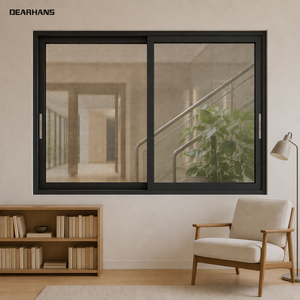
Exterior Aluminum Sliding Window Double Glazing Soundproof Good Air Tightness
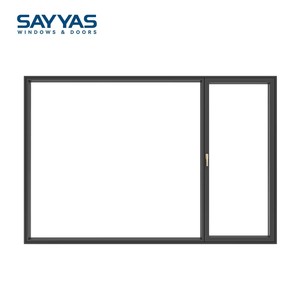
SAYYAS Windows Luxury Aluminum-Clad Triple Glazed Casement Windows
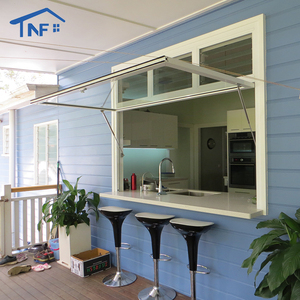
Aluminum Gas Strut Awning Window Double Glazed Glass for Kitchen Servery
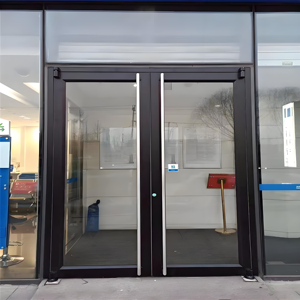
Commercial Double Doors Waterproof Supermarket Storefront Glass Entry
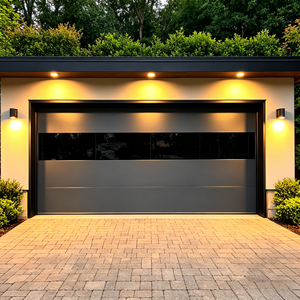
Sunnysky Thicker Aluminum Frame Corrosion-Resistant Glass Garage Door
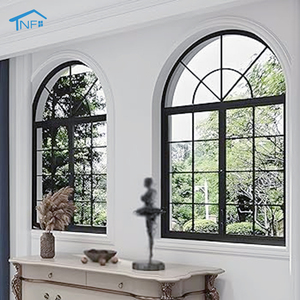
Modern Aluminium Arched Windows With Integrated Horizontal Roller Blind
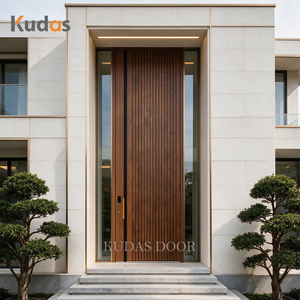
Luxury Extra Tall Fluted Cast Aluminum Pivot Exterior Security Main Door
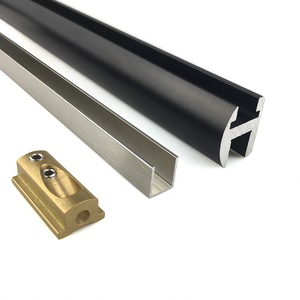
Customized CR L Aluminum Shower Room Glass Door Deluxe Header Enclosure
Guangdong Dejiyoupin (DERCHI) Industrial Benchmark
Operating from the fenestration manufacturing core of Foshan, Guangdong, DERCHI integrates raw billet extrusion, PA66 thermal barrier insertion, automated CNC four-axis machining, and automated insulating glass unit (IGU) assembly under one roof.
Whitepaper: Engineering High-Performance Aluminum Double Glazed Windows for International Procurement
In modern commercial and high-end residential architecture, the building envelope represents the most critical thermodynamic boundary. For real estate developers, structural engineers, facade consultants, and general contractors sourcing fenestration from China, selecting an aluminum double glazed window supplier requires moving past superficial aesthetics to evaluate metallurgical purity, thermal break engineering, gas-retention sealing integrity, and verified structural deflection limits.
Information Gain Insight: The true thermal efficiency of an aluminum window is governed not merely by the glass center-of-glass (Ug) value, but by the combined frame-to-edge calculation (Uw) according to ISO 10077-1. A poorly engineered thermal barrier or cold-bridged aluminum reveal can eliminate up to 45% of an insulating glass unit's thermal performance, triggering condensation failure and high lifecycle HVAC costs.
1. Metallurgy, Extrusion Tolerances, and Alloy Tempering (6063-T6 & 6060-T66)
Precision manufacturing begins with the chemical formulation of raw aluminum billets. Guangdong Dejiyoupin (DERCHI) utilizes strictly primary, virgin A00 aluminum ingots to extrude profiles according to architectural alloy grade 6063-T6 or 6060-T66. Secondary scrap-recycled aluminum alloys often contain unregulated inclusions of iron, zinc, and silicon impurities that cause micro-fissures along high-stress extrusion ribs and lead to premature anodizing pitting or powder coating delamination under harsh coastal UV and marine environments.
Our extrusions are engineered with nominal wall thicknesses exceeding 1.8mm for operable residential casements and 2.2mm to 3.0mm for high-span sliding and commercial storefront assemblies, comfortably surpassing both Chinese GB/T 8814 and Australian AS 2047 structural requirements. Through computerized quenching and continuous artificial aging furnaces, DERCHI ensures a consistent Webster hardness reading (≥12 HW) across entire extrusion runs, ensuring resistance to wind load deformation under cyclonic conditions.
2. Polyamide Thermal Break Technology: The PA66 GF25 Benchmark
Thermal transmission through standard structural aluminum is exceptionally rapid, possessing an uninsulated thermal conductivity (λ) of approximately 160 to 200 W/(m·K). To arrest continuous conductive heat loss and gain, our high-performance double glazed windows integrate continuous multi-cavity thermal break strips manufactured from Polyamide 6.6 reinforced with 25% glass fiber (PA66 GF25).
Unlike budget PVC thermal barriers that degrade, soften in high solar conditions, and possess thermal expansion coefficients radically different from aluminum, PA66 GF25 mirrors the expansion behavior of aluminum alloy (2.3 to 2.8 × 10⁻⁵/K). This prevents shearing, delamination, and air filtration failures across seasonal temperature swings ranging from -30°C in North American/Northern European winters to +55°C in Australian or Middle Eastern solar peaks.
| Thermal Break Profile Depth | Typical Uw Value (W/m²·K) | Center Glazing Build (IGU) | Acoustic Rating (Rw / STC) | Optimal Project Application |
|---|---|---|---|---|
| Non-Thermal Commercial (Standard) | 5.2 - 5.8 | 6mm + 12A + 6mm Clear | Rw 31 dB | Interior Partitions, Warehouses |
| 14.8mm Polyamide Barrier | 2.6 - 3.1 | 5mm Low-E + 12A + 5mm Clr | Rw 35 dB | Moderate Climates, High-Rise Retrofits |
| 24.0mm Multi-Chamber PA66 | 1.7 - 2.1 | 6mm Low-E + 16Ar + 6mm Clr | Rw 39 dB | AS 2047 High Wind, NCC 2022 Class 1/2 |
| 35.3mm Foam-Filled Aerogel Break | 1.1 - 1.4 | 5mm Low-E + 12Ar + 4mm + 12Ar + 5mm | Rw 43 dB | Passive House (Passivhaus), Sub-Zero Cold |
3. Insulating Glass Unit (IGU) Engineering: Gas Retention & Low-E Sputtering
The performance of an aluminum double glazed window depends heavily on the hermetic durability of its glass unit. DERCHI double glazed assemblies are produced inside automated dust-free cleanrooms utilizing computerized CNC glass cutting, automated desiccant filling, and dual-seal edge containment:
Primary Seal: Polyisobutylene (PIB) extrusion applied robotically to achieve zero moisture vapor transmission (MVTR) and arrest molecular escape of pressurized inert gas.
Secondary Seal: Two-component structural silicone or polysulfide sealant maintaining elastic bonding under intense thermal cycling and wind deflections.
Cavity Optimization: Spacers calibrated between 12mm and 18mm filled with 90% dry argon gas, preventing internal convection currents while optimizing thermal resistance.
Warm-Edge Technology: Stainless steel or composite polymer warm-edge spacers replacing traditional raw conductive aluminum spacers, reducing thermal bridging along sightline perimeters by up to 65%.
Future B2B Procurement Trends in Global Fenestration
How progressive developers, contractors, and import distributors are repositioning their supply chains to balance regulatory decarbonization, freight resilience, and digital quality auditing.
Embodied Carbon Transparency (EPDs)
Global procurement directives (EU CBAM, Australia Green Star, US LEED v4.1) mandate rigorous Environmental Product Declarations (EPDs). Specifiers favor Chinese manufacturers operating hydroelectric-powered aluminum smelting loops with documented scrap reclaim streams.
Direct Digital Shop Drawing Integration
Bypassing multi-tier brokerage markups, Tier-1 builders integrate Revit, BIM, and CAD schedules straight into Chinese factory CNC systems. DERCHI delivers automated 3D parametric shop drawings, validating anchors, sill flashings, and structural spans before metal cutting begins.
Stringent Third-Party Compliance Auditing
Procurement teams require verifiable testing reports (AS 2047, NATA accredited facilities, CE EN 14351-1, AAMA/WDMA/CSA 101/I.S.2/A440). Self-certification no longer clears customs or structural certifier audits without certified batch traceability.
Technological Trajectories Reshaping Aluminum Fenestration
Next-generation envelope designs demand narrower sightlines, larger glazed openings, and automated building intelligence integration without compromising airtightness or acoustic dampening.
Concealed Hardware & Ultra-Slim Sashes
Architectural demand focuses on concealed tilt-and-turn gearing, flush sash alignments, and structural silicon bonding. DERCHI systems maximize solar aperture through slim 45mm frame profiles capable of supporting heavy laminated IGUs up to 180kg per sash.
Smart Motorization & Building Automation
Integrating concealed 24V linear chain actuators directly inside extruded thermal chambers. Window units interface natively with KNX, BACnet, and residential smart protocols for rain-sensor shutoff, passive nighttime cooling purge, and HVAC interlocking.
Advanced Surface Nanotechnology
Transitioning from basic powder coatings to marine-grade Qualicoat Class 2/3 fluorocarbon (PVDF) and automated 25-micron hard anodizing. These surface treatments withstand corrosive coastal salt fog, abrasive dust, and intense solar radiation beyond 3,000 hours of ASTM B117 salt spray testing.
Frequently Asked Questions for B2B Importers & Contractors
Critical technical, logistics, and compliance factors addressed by DERCHI’s structural engineering and overseas project export teams.