Featured Architectural Aluminium Systems
Standardized single window systems, high-performance thermal envelopes, and architectural door units engineered for coastal resilience, acoustic dampening, and rigorous commercial compliance.
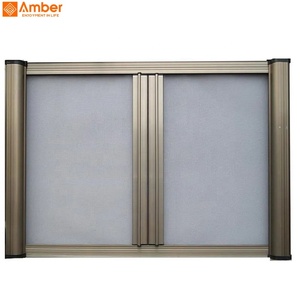
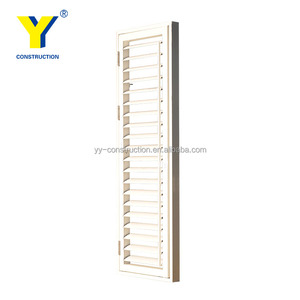
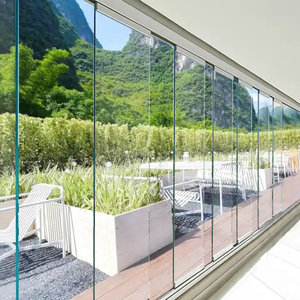
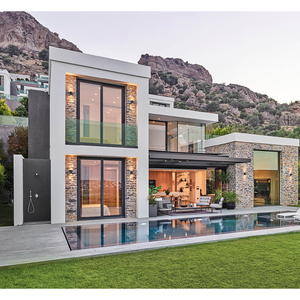
Engineering Excellence in Single Window & Envelope Export
In modern architectural engineering, sourcing fenestration systems requires a granular balance of structural integrity, thermal physics, lifecycle coatings, and localized standard compliance. As a premier China Top Aluminium Single Window Supplier & Exporter, Guangdong Dejiyoupin Doors and Windows Co., Ltd. (DERCHI) operates over 180,000 square meters of specialized manufacturing infrastructure in Foshan, Guangdong. Backed by 25+ years of production expertise, our structural engineering team delivers high-precision single window units, multi-panel curtain wall intersections, and bespoke door configurations that meet the strict requirements of tier-one building contractors across Australia, North America, Europe, and Oceania.
1. Critical Selection Criteria for Aluminium Single Windows
When selecting single-hung, single-sash casement, awning, or fixed aluminium single windows for commercial and residential developments, procurement teams must go beyond surface aesthetics. The operational performance of an aluminium window system relies directly on metallurgical composition, thermal separation technology, multi-barrier weatherstripping, and glass configuration.
Primary Alloy Grade: Premium single window systems utilize structural 6063-T5 or 6063-T6 architectural aluminium extrusions. The profile wall thickness must strictly comply with structural building codes (minimum 1.4 mm for standard residential windows and 2.0 mm to 3.0 mm for heavy-duty commercial projects or cyclone-prone zones). Virgin billets are non-negotiable; low-grade scrap melts compromise structural tensile strength, lead to premature deformation under high wind loads, and ruin precision joinery tolerances.
Thermal Barrier Engineering: Uninsulated aluminium frames act as direct thermal conductors, resulting in rapid heat gain or catastrophic interior condensation. Advanced systems incorporate Polyamide PA66 GF25 (25% glass fiber-reinforced) multi-cavity thermal break struts. This mechanical disconnection limits thermal bridging, allowing projects to achieve compliant overall fenestration U-values (U-factor ≤ 1.4–1.8 W/m²·K depending on inert gas and Low-E glass specs).
| Performance Characteristic | Commercial Grade (DERCHI Spec) | Standard Market Generic | Compliance Test Standard |
|---|---|---|---|
| Aluminium Alloy / Temper | Primary 6063-T5 / 6063-T6 Pure Billet | Recycled Blend / Scrap Aluminium | GB/T 5237 / ASTM B221 |
| Wind Pressure Rating | Serviceability up to 4500 Pa (N6 Cyclonic) | 1200 - 1800 Pa (Standard low-rise) | AS 2047 / ASTM E330 |
| Water Penetration Resistance | Static 700 Pa / Cyclic Pressure Tested | 150 - 300 Pa | AS 4420.4 / EN 12208 |
| Thermal Insulation (U-Factor) | 1.4 - 1.9 W/m²·K (Polyamide PA66 Breaks) | 3.8 - 5.8 W/m²·K (Non-thermal break) | ISO 10077-2 / NFRC 100 |
| Acoustic Attenuation | Rw 38 dB to 44 dB (Laminated Acoustic IGU) | Rw 25 dB to 28 dB (Monolithic float) | ISO 717-1 / ASTM E413 |
| Surface Coating Longevity | AkzoNobel / PPG Fluorocarbon PVDF ≥ 25 Yrs | Standard Mill / Basic Powder Coating | AAMA 2604 / AAMA 2605 |
2. Future Procurement Trends in Aluminium Architectural Systems
Global procurement metrics are undergoing a permanent shift driven by rigorous carbon accounting, climate-induced severe weather events, and industrialized off-site construction:
Decarbonization and Low-Carbon Aluminium Sourcing: Commercial developers increasingly calculate upfront embodied carbon (Scope 3 emissions) across exterior façades. International buyers now mandate verifiable Environmental Product Declarations (EPDs) demonstrating that raw aluminium profiles were refined using hydroelectric, solar, or verified renewable power sources, capping emissions below 4.0 kg CO2e per kg of aluminium extruded.
Prefinished Unitized Integration: Escalating on-site labor rates in Australia, New Zealand, Canada, and the United Kingdom make field glazing inefficient. The global procurement vector strongly favors fully factory-assembled, factory-glazed, and pressure-equalized single window packages delivered in custom-crating batches ready for rapid crane placement and dry-joint fastening.
Standardization of Extreme Weather & Acoustic Engineering: With global climate models showing increased cyclone activity and coastal microbursts, window specifications are converging around unified standards: AS 2047 N6 ratings, Miami-Dade Hurricane Impact certifications, and acoustic laminates (STC 38+) engineered to insulate high-density urban developments from transit infrastructure noise.
3. Long-Term Architectural & Manufacturing Trends
Over the next decade, the convergence of building intelligence, thin-film photovoltaics, and advanced robotic manufacturing will transform the aluminium window landscape:
Ultra-Slim Profiles with Massive Structural Moments: Driven by contemporary architectural preferences for uninterrupted site lines and maximum daylighting, aluminium engineering is leaning toward micro-bezel profiles. By engineering deep structural cavities and integrating high-modulus steel stiffeners inside the hollow thermal chambers, single window units can achieve heights exceeding 3,500 mm while maintaining deflection margins within L/250.
Vacuum Insulated Glazing (VIG) Adaptation: The next paradigm in energy modeling replaces bulky triple-glazed configurations with lightweight Vacuum Insulated Glass units. Featuring an internal 0.1 mm vacuum layer supported by microscopic ceramic pillars, VIG delivers center-of-glass thermal performance down to Ug 0.4 W/m²·K with a fraction of the structural load on perimeter aluminium extrusions and pivot hardware.
Integrated Automation and Building Management Interfacing: Single window assemblies are no longer static barriers; they are active components of building ventilation loops. Concealed 24V linear actuators, magnetic position sensors, and rain/wind automated feedback systems are integrated directly within the sash profiles, interfacing via BACnet or KNX commercial building protocols.
Enterprise Scale, Engineering Authority & Certifications
Guangdong Dejiyoupin Doors and Windows Co., Ltd. combines heavy manufacturing scale with meticulous engineering oversight to de-risk high-volume offshore procurement.
180,000 m² Integrated Manufacturing
We own and control every phase of manufacturing in Foshan—from precision extrusion, automated CNC routing, and corner-crimping to dual-component polyurethane sealing and automated testing.
AS 2047 N6 Wind Certified & CE
Our systems hold rigorous third-party certifications including AS 2047, ISO 9001, CE, FCC, and UL fire-ratings, supported by fully traceable QA inspection documents for local certifiers and councils.
Complimentary BIM & CAD Shop Drawings
Our in-house technical department supplies complimentary, precise CAD architectural drawings, section details, and structural wind-load deflection calculations matched to your door and window schedule.
Complete Architectural Fenestration Range
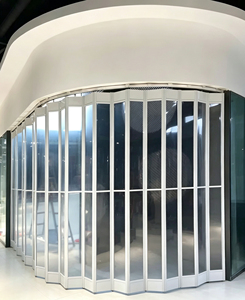
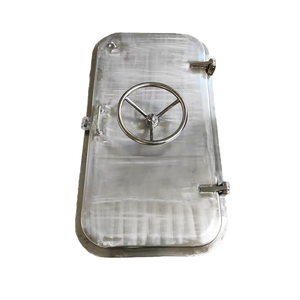
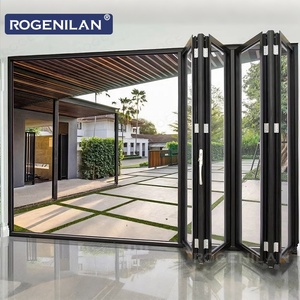
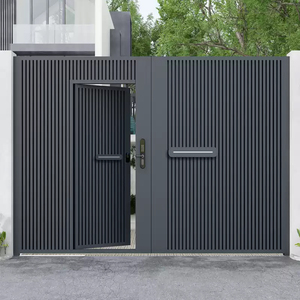
Streamline logistics and supplier governance by consolidating single windows, oversized pivot doors, cast aluminium villa gates, acoustic folding doors, and marine hatches into unified container loads.
Time-Zone Aligned Engineering Support
Dedicated English-speaking technical sales engineers operate on overlapping AEST, NZST, and European business hours, providing responsive communication and swift revisions.
Export-Grade Protective Packaging
Every shipment is protected by heavy polyethylene wrap, shock-absorbent edge guards, and heat-treated, fumigated plywood crating engineered to withstand international sea transport and moisture exposure.