Precision Export Fenestration Systems
Direct factory-manufactured window and door systems built to comply with strict international building codes across the Americas, Oceania, and Western Europe.
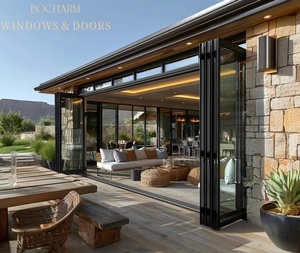
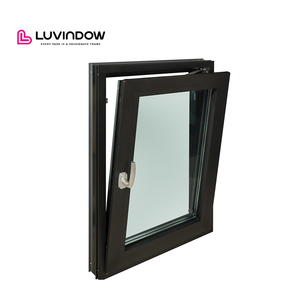
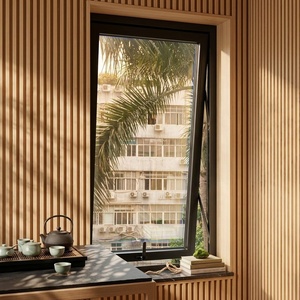
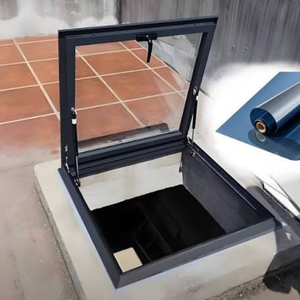
Structural Standards & Fenestration Verification Protocols
A rigorous industrial perspective on how leading Chinese aluminum window manufacturers bridge the gap between architectural aesthetic demands and regional building regulatory mandates.
Oceania AS 2047 & AS 1288
Tested strictly in NATA-accredited test rigs, our facade and window assemblies sustain extreme ultimate limit state (ULS) wind pressures up to N6 (over 4400 Pa). Glazing systems are fully compliant with human-impact criteria under AS 1288, utilizing marine-grade structural silicone that withstands severe Australasian UV radiation indices.
North American NFRC & AAMA
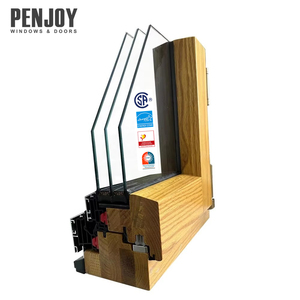
Whole-window thermal simulations verified through NFRC 100/200 algorithms deliver tested U-factors ranging from 0.18 to 0.28 BTU/hr·ft²·°F. Units feature multi-cavity polyamide PA66GF25 thermal struts, warm-edge silicone matrix spacers, and triple-silver Low-E coatings to satisfy IECC climate zones 1 through 7.
European CE / EN 14351-1
Fabricated around standardized Euro-groove dimensions, our systems integrate multi-point shootbolt locking gearing from Siegenia, Roto, and HOPPE. Certified under EN 12207 (Class 4 Air Permeability) and EN 12208 (Class 9A Watertightness up to 600 Pa head pressure) ensuring lifetime mechanical endurance.
| System Configuration | Thermal Transmittance (Uw) | Design Wind Pressure | Water Tightness | Acoustic Rating (STC / Rw) | Primary Compliance Target |
|---|---|---|---|---|---|
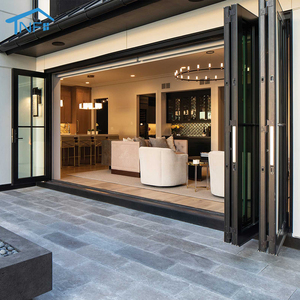
| Ultra-Slim Minimalist Sliding | 1.4 - 1.8 W/m²·K | Serviceability: 2500 Pa / ULS: 3800 Pa | 450 Pa (Static Head) | 34 - 36 dB | AS 2047 / CE EN 14351 |
| Architectural Thermal Break Casement | 1.1 - 1.4 W/m²·K | Serviceability: 3000 Pa / ULS: 4500 Pa (N6) | 700 Pa (Severe Storm) | 38 - 42 dB | NFRC / AS 2047 N6 |
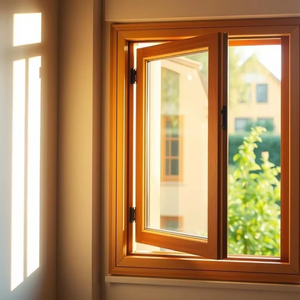
| Alu-Clad Wood Passive Window | 0.72 - 0.85 W/m²·K | Serviceability: 2000 Pa / ULS: 3200 Pa | 600 Pa (Class 9A) | 44 - 47 dB | PHI Passivhaus / IECC Zone 7 |
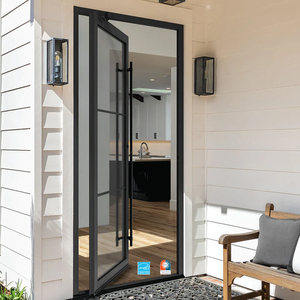
| Heavy-Duty Commercial Pivot System | 1.5 - 1.9 W/m²·K | Serviceability: 3200 Pa / ULS: 4800 Pa | 500 Pa (Internal Threshold) | 36 - 39 dB | AAMA / WDMA / CSA |
Future Sourcing & Technological Trends in Aluminum Windows
How progressive commercial developers, real estate investment trusts, and general contractors are adapting their supply chain specifications to hedge cost and ensure ESG compliance.
1. Shift to Polyamide Isothermal Planes & Aerogel Barriers
Traditional non-thermal or pour-and-debridge aluminum profiles have been completely phased out in high-performance cross-border specifications. Tier-1 Chinese exporters are standardizing on 34mm to 54mm complex hollow-chamber polyamide PA66 GF25 thermal struts, frequently integrated with localized aerogel blankets and low-density EPDM multi-chamber gaskets. This drops window frame conductance (Uf) below 1.2 W/m²K without escalating visual sash bulk.
2. Ultra-Narrow Sightlines with Concealed Structural Sashes
Architectural preference has decisively moved toward frameless facades with sash profiles concealed fully within outer masonry reveals. Chinese extrusion precision now permits interlock stiles as slim as 20mm while accommodating double and triple-glazed units exceeding 450 kg in total deadweight, utilizing structural steel-reinforced core stiffeners (high Ixx inertia moment) that prevent dynamic deflection under cyclic wind gusts.
3. Decarbonized Aluminum Sourcing & Low-Carbon Billets
Driven by the European Union's Carbon Border Adjustment Mechanism (CBAM) and North American LEED v4.1 certifications, enterprise window fabricators in Guangdong are adopting certified low-carbon recycled scrap billets and hydropower-smelted primary aluminum (<4.0 kg CO²/kg Al). Verified third-party Environmental Product Declarations (EPD) are becoming mandatory components of international bid tenders.
4. Off-Site BIM Coordination & Fully Unitized Crating
To curb rising jobsite installation costs across Australia, the UK, and North America, international procurement has pivoted from knock-down (KD) field assembly to complete, pre-glazed unitized delivery. Chinese manufacturing hubs now supply comprehensive Level of Development (LOD) 400 BIM models and custom structural anchors, pre-tested to fit precise steel, tilt-up concrete, and timber framing openings.
The Global Specifier’s Quality Assurance & Fabrication Blueprint
Inside Guangdong Dejiyoupin Doors and Windows (DERCHI): An institutional look at critical manufacturing milestones that separate elite exporters from commercial trading houses.
Billet Chemistry & Extrusion Tolerance
Fabrication begins with primary 6063-T5/T6 metallurgical ingots strictly constrained for silicon, magnesium, and iron balance. Controlled CNC machining stations maintain diagonal squareness tolerances within ±0.5mm across spans up to 4.5 meters, ensuring continuous perimeter weatherstrip compression without localized micro-gaps.
Surface Pre-treatment & Coating Integrity
Automated vertical powder-coating processes employ chromate-free chemical conversion coatings and fluorocarbon (PVDF) or Qualicoat Class 2 powder coats. Tested against ASTM B117 salt spray parameters for 3,000 continuous hours, finishes demonstrate zero bubbling, peel, or color fading along corrosive oceanfront perimeters.
Hydrostatic Testing & Export Crating
Every fabrication batch undergoes random pressurized water-chamber testing. Sashes receive cast-aluminum corner brackets injected with two-part structural polyurethane sealant. Final export packages utilize fumigated ISPM 15 solid timber crates, desiccants, heavy plastic hermetic wrapping, and corner shock guards to resist open-sea humidity and intermodal transit shock.
Frequently Asked Questions: Sourcing Windows from China
Direct technical answers to common queries raised by international project developers, general contractors, and facade engineers.
How do Chinese aluminum window factories guarantee compliance with Australian AS 2047 and N6 wind loading?
What are the realistic whole-window U-factors (Uw) achievable for export systems?
How is the "bimetal effect" (thermal bowing) prevented on large dark anthracite gray doors and windows?
What engineering documentation and shop drawings are provided prior to mass fabrication?
How does the factory prevent glass breakage and sea container moisture corrosion during long-distance transit?
Can custom European architectural hardware (HOPPE, Siegenia, Roto) be integrated seamlessly?
Initiate Your Architectural Facade Consultation
Send your door and window schedule, architectural elevations, or structural specifications. Our facade engineering team provides complete CAD proposals, glass structural calculations, and competitive factory-direct export quotations within 24 hours.