Precision Engineering for Demanding Global Architectural Envelopes
In contemporary architectural engineering, the aluminium swing window (casement configuration) serves as the primary barrier against atmospheric exposure, seismic shifts, acoustic pollution, and thermal transfer. Specifying high-performance fenestration manufactured in Foshan, China has shifted from a pure cost-arbitrage model to an engineering-driven strategy. International project developers, facade consultants, and general contractors prioritize systems engineered with verified thermal barrier profiles, multi-point compression locking hardware, and rigorous compliance certificates including AS 2047, NFRC, and CE.
Featured Fenestration & Entrance Systems
Engineered for extreme cyclical loading, residential luxury, and commercial high-traffic storefronts.
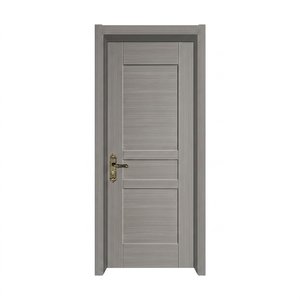
Silent Aluminum Wood Door with Bespoke Wood Grain Color Customization
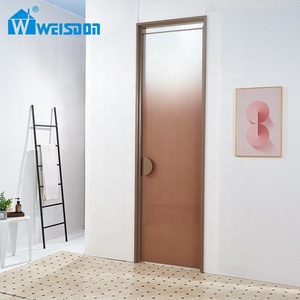
SGCC Certified Matte Black Bronze 4mm+4mm Laminated Safety Glass Pivot Door
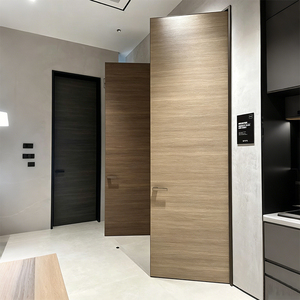
Modern Interior Aluminum Wooden Frame Swing Door Custom Solution
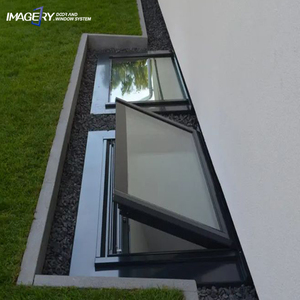
Automatic Remote Control Aluminum Alloy Glass Skylight Roof Window
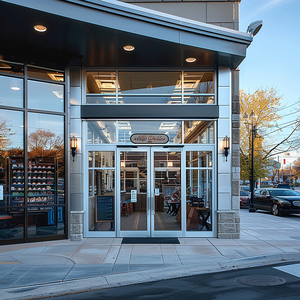
Commercial Store Electric Automatic Aluminium Glass Storefront Doors
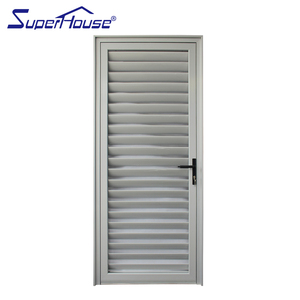
AS 2047 NFRC Standard Heavy Duty Aluminum Louver Hinged Door System
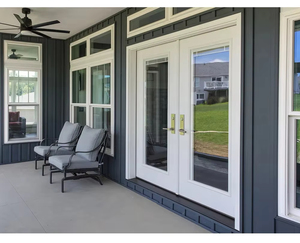
Crittall Style Double Flat French Doors with Narrow Sightline Profiles
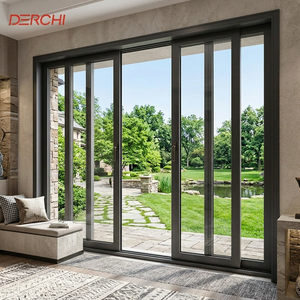
DERCHI Multi Panel Hurricane Proof Security Sliding Patio Door
Future B2B Procurement Trends in Aluminium Swing Windows (2025–2030)
The global facade and fenestration industry is undergoing an unprecedented technological and regulatory evolution. International procurement teams, architectural firms, and high-volume developers can no longer rely on superficial pricing metrics. Instead, total lifecycle cost (TCO), operational carbon emissions, structural resiliency under extreme weather volatility, and stringent regional certification enforcement dominate procurement criteria.
Low-Carbon Aluminium
Procurement mandates increasingly dictate primary billets smelted using renewable hydro-power, yielding verified low embodied carbon (<4.0 kg CO2e/kg Al) compliant with EU CBAM mechanisms.
Multi-Cavity Thermal Breaks
Transition from standard 14.8mm polyamide strips to 34mm–45mm multi-cavity PA66 GF25 barriers injected with continuous aerogel or warm-edge spacers for Passivhaus certification.
RC3 / PAS 24 Security
Integration of concealed perimeter gear drives, European standard groove 16mm hardware, and laminated anti-intruder glass to satisfy commercial anti-burglary specifications.
BIM & Modular Prefabrication
Supply agreements now demand Level-of-Detail (LOD) 350+ BIM families and factory-assembled sub-frames with integrated weather membranes to minimize costly on-site labor.
Regulatory Impact Warning: Projects targeting zero-net-energy buildings in North America, Australasia, and the EU now systematically disqualify suppliers lacking thermal simulation models (THERM/WINDOW) verified against ISO 10077-2 or NFRC 100/200 procedures. DERCHI engineers provide calibrated U-factor documentation tailored to project-specific latitude and wind classifications.
Engineering Evolution: Structural Integrity and Thermal Barrier Mechanics
An aluminium swing window (casement system) inherently provides superior weather sealing over sliding profiles because the operating sash exerts continuous perpendicular compression against elastic perimeter gaskets upon multi-point lever activation. However, achieving superior energy retention and cyclonic wind resistance requires sophisticated structural profile design.
1. Polyamide Thermal Barrier Technology (PA66 GF25)
Conventional non-thermal profiles possess excessive thermal conductivity (λ ≈ 160 W/m·K), causing rapid indoor heat dissipation in winter and radiant solar overheating in summer, alongside condensation risks. DERCHI utilizes polyamide strips reinforced with 25% glass fiber (PA66 GF25), exhibiting an identical thermal expansion coefficient to 6063-T6 architectural aluminium (2.3 × 10⁻⁵ K⁻¹). This precise metallurgical matching prevents internal shearing and delamination across annual temperature swings of -30°C to +80°C.
2. Three-Stage EPDM Compression Gasketing
Air permeability and water intrusion are mitigated through a tri-barrier sealing methodology: an external deflection lip to channel stormwater, an oversized vulcanized EPDM central rubber fin creating an internal isobaric decompression chamber (rainscreen principle), and an interior continuous air-tight gasket stopping vapor transmission. Water is drained outwards through offset, baffled weep holes equipped with anti-backdraft gravity valves.
| Performance Characteristic | Commercial Grade (Standard) | DERCHI Thermal Break Swing System | Cyclonic / Severe Impact System | Test Standard |
|---|---|---|---|---|
| Profile Wall Thickness | 1.4 mm - 1.6 mm | 2.0 mm - 2.5 mm Primary Structural | 3.0 mm Reinforced Mullions | GB 5237 / AS 2047 |
| Thermal Transmittance (U-Value) | 3.5 - 4.8 W/m²K | 1.2 - 1.8 W/m²K (Low-E Argon DGU) | 1.4 - 2.0 W/m²K | ISO 10077-2 / NFRC |
| Water Penetration Resistance | 300 Pa | 600 Pa - 900 Pa | 1200 Pa (Severe Storm) | ASTM E331 / AS 4420.4 |
| Acoustic Attenuation (Rw / STC) | 28 - 32 dB | 38 - 44 dB (Asymmetric Laminate) | 42 - 46 dB | ISO 717-1 / ASTM E413 |
| Structural Wind Load (Ultimate) | 2500 Pa | 4500 Pa (N6 Cyclonic Standard) | 6500+ Pa Heavy Coastal | AS 2047 / ASTM E330 |
| Air Infiltration Rating | Level 4 (<1.5 m³/m·h) | Level 8 / High Performance (<0.5) | Airtight / Pressure Sealed | EN 12207 / AS 4420.3 |
| Surface Finish Durability | Standard Anodized (15µm) | Qualicoat Class 2 / PVDF (3-Coat) | Marine Grade AAMA 2605 / 25-Year | Qualicoat / AAMA |
Enterprise Capability: Why DERCHI Dominates Global Fenestration Exports
Originating in Foshan, Guangdong—the world's foremost epicenter for high-precision architectural aluminium extrusion—Guangdong Dejiyoupin Doors and Windows Co., Ltd. (DERCHI) represents the pinnacle of Chinese high-end manufacturing. Spanning over 180,000 square meters of specialized production space, our facility integrates every stage of window engineering under one rigorous quality assurance regime.
Single-Source Quality Accountability: From Billet to Container
Unlike assembly-only workshops that outsource extrusion machining, DERCHI manages its own metallurgical controls, precision multi-axis CNC milling, automatic corner-crimping, silicone vulcanization, and robotic electrostatic powder coating. This prevents thermal distortion, misaligned corner miters, and micro-cracking of powder-coat films, delivering windows that fit on-site tolerances with sub-millimeter precision.
- Extrusion Purity: 100% virgin 6063-T5/T6 architectural aluminium ingots without contaminated scrap fillers.
- Corner Integrity: Dual-component injected structural epoxy glue with pneumatic corner-cleat crimping.
- Full Pre-Assembly: Every custom window schedule undergoes pre-hanging testing prior to container stuffing.


Full CAD / BIM Engineering Support
We eliminate shop-drawing ambiguity. Our in-house fenestration engineering department translates architectural door & window schedules into complete shop drawings, anchor detail sections, mullion deflection calculations, and 3D Revit models prior to profile extrusion.
Tested Compliance: AS 2047 & N6 Rating
DERCHI products have passed the demanding Australian Standard AS 2047 tests for air infiltration, water penetration resistance up to cyclonic pressures, and ultimate strength. Test certificates and engineering reports are furnished directly to certifiers and structural auditors.
Export-Grade Crating & Global Logistics
Protecting precision powder-coated surfaces and insulated glass units requires rigorous packaging. Every order is encased in non-fumigation plywood crates with internal EPE foam shock buffers, moisture-absorbing desiccant packs, and structural corner guards for containerized transit.
Frequently Asked Questions by Professional Importers
Clear technical, logistical, and warranty answers for architects, facade contractors, and institutional buyers.
We extrude exclusively from certified 6063-T5 and 6063-T6 virgin billets. Mill test certificates (MTC) documenting chemical spectrometry (Si, Mg, Fe ratios) and tensile mechanical properties (yield strength ≥160 MPa) accompany each production run, ensuring conformity to GB/T 5237 and ASTM B221 specifications.
Yes. Our cyclone-rated swing and casement models utilize heavy-wall 2.5mm profiles, internal steel reinforcement sleeves, and laminated SentryGlas (SGP) or 1.52mm PVB interlayers tested against large missile impact criteria (ASTM E1886/E1996 and AS 1170.2 cyclonic region C & D wind loads up to 4500Pa).
For installations within 1,000 meters of the coastline or in high-salinity marine environments, we recommend PVDF (fluorocarbon) 3-coat finishes or Qualicoat Class 2 hyper-durable architectural powder coatings with a pre-anodized chrome-free conversion base, backed by a 20 to 25-year anti-chalking warranty.
We partner with global hardware leaders including German Siegenia, Roto Frank, and HOPPE, alongside premium customized Asian brands like CMECH and Kinlong. Mechanisms feature standard 16mm European groove compatibility, concealed heavy-duty 4-bar friction stays, and multi-point perimeter compression locking cams.
Standard bespoke production cycles average 25 to 35 business days following final CAD shop drawing sign-off and color chip approval. For commercial project schedules, our flexible factory capacity accommodates orders ranging from private luxury villa packages (MOQ: 50 m²) to full multi-container mixed developments (FCL/LCL).
All double and triple-glazed insulated units (IGUs) are stamped with traceable certification marks adhering to AS/NZS 2208, ANSI Z97.1, and SGCC standards. Warm-edge techno-spacers, argon gas infill (≥90% concentration), and high-performance dual Low-E coatings (Solarban 60 / AGC) provide verifiable U-factors.
Plan Your Project with DERCHI Fenestration Engineers
Direct factory communication ensures zero technical discrepancies between your architectural intent and final site delivery. Submit your elevation drawings, window schedules, or tender dossiers for an engineering feasibility review and certified quotation.
Contact Us