Featured High-Security Aluminium Windows & Protective Fenestration
Engineered for extreme structural resistance, coastal anti-corrosion, and anti-intrusion deterrence. Each engineered system integrates multi-point locking geometries, impact-resistant security glazing, and high-tensile 316 marine-grade stainless mesh.
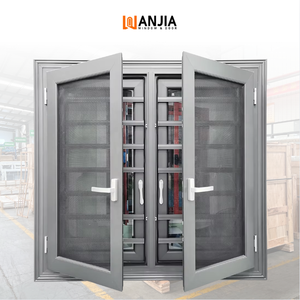
Customizable Double Glazed Aluminium Casement Windows With Screen
- Multi-point perimeter mushroom cam locks
- Integrated high-tensile 304/316 insect & burglar mesh
- Polyamide PA66 thermal barrier strip
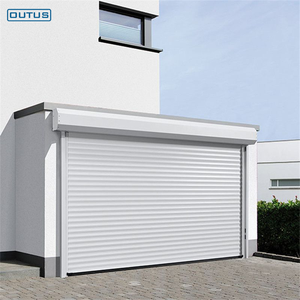
OUTUS Modern Design Aluminum Roller Shutter Door With Powder Coated Finish
- Extruded double-wall interlocking alloy slats
- Anti-lift locking track mechanism
- AkzoNobel marine powder-coated finish
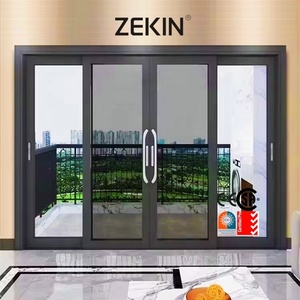
Modern Design NFRC AS2047 Sliding Patio Door with Mesh Screen
- Tested to AS 2047 N6 cyclonic wind resistance
- Anti-jemmy interlockers and heavy-duty stile
- Concealed multi-point mortise hook bolts
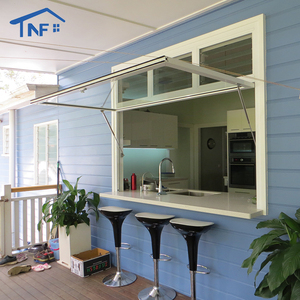
Aluminum Gas Strut Awning Window Double Glazed Glass
- German-engineered dual gas compression stays
- Internal glazed rebate preventing external de-beading
- Heavy-duty continuous top security hinge
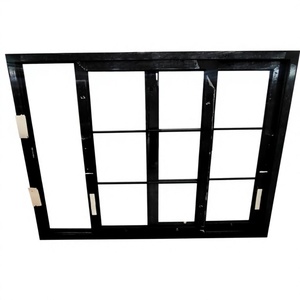
Commercial Aluminum Sliding Window Storefront Building Entrance
- Structural 6063-T6 profiles with 2.0-3.0mm thickness
- Anti-lift guide blocks & anti-drill strike plates
- Laminated safety glazing compliant with AS 1288
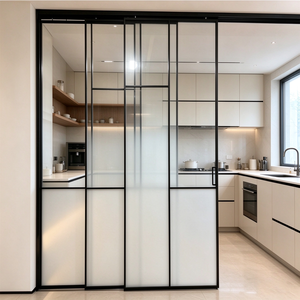
HDSAFE Aluminum Frame Glass Sliding Door 8mm Frosted Glass
- Suspended top-hung track with no trip hazard
- Dual hydraulic dampener soft-close mechanism
- Concealed anti-jump track interlocks
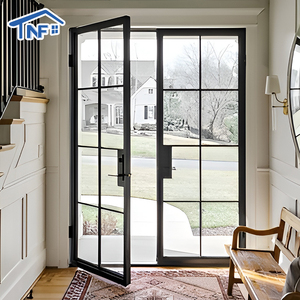
Waterproof Crittall Style French Double Tempered Glass Casement Doors
- Internalized architectural security muntin grilles
- Double tempered structural argon-filled IGU
- Continuous multi-point shootbolt top & bottom lock
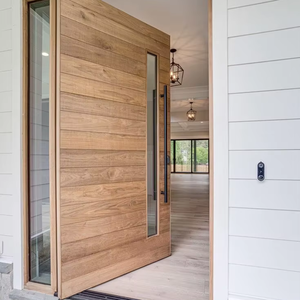
Customized Direct Factory Price Frame Pivot Front Entry Door
- Heavy-duty concealed floor spring supporting up to 500kg
- Motorized 5-point smart biometric security deadbolts
- Reinforced internal steel truss against lever deflection
Engineering Principles of Modern Aluminium Burglar-Resistant Windows
Understanding the transition from passive decorative grilles to active, integral structural fenestration engineered to withstand crowbars, battery-powered cutters, high-velocity projectile impacts, and static pressure loads.
In contemporary architectural fenestration, the specification of aluminium burglar windows has evolved past the historical reliance on unreinforced external iron bars, which frequently created severe fire-egress hazards and suffered from accelerated galvanic corrosion. Modern structural security fenestration blends high-tensile metallurgical science, advanced multi-chamber extrusion engineering, concealed multipoint active hardware, and polymeric interlayer lamination to formulate an impenetrable envelope that retains pristine sightlines and high thermodynamic efficiency.
When international developers, institutional general contractors, and tier-1 procurement managers evaluate Chinese fenestration manufacturing partners, structural compliance rests on five critical engineering pillars: alloy wall thicknesses, internal reinforcing chambers, tamper-proof internal bead designs, anti-jemmy locking gearboxes, and ballistic/impact-grade laminates. As China’s premium architectural manufacturing hub in Foshan, Guangdong, companies like Guangdong Dejiyoupin Doors and Windows Co., Ltd. (DERCHI) have set global benchmarks for combining EN 1627-1630 (RC2/RC3 European burglary resistance) and Australian AS 2047 / AS 5039 security fenestration standards into unified export systems.
6063-T6 & 6060-T66 Extrusions
Utilizing aerospace-grade virgin aluminum billets with strict magnesium and silicon tolerances, achieving Rockwell hardness exceeding 12-14 Web. Heavy-duty outer wall profiles ranging from 1.6mm to 3.0mm provide the mechanical tensile strength required to resist crowbar prying forces exceeding 6,000 Newtons without permanent plastic deformation.
Mushroom Cam Perimeter Hardware
Security is only as strong as its weakest locking node. Our burglar-resistant window lines incorporate heavy-duty European groove (Euro-groove) hardware containing 8 to 14 distributed mushroom-head locking cams constructed from micro-cast stainless steel. These cams lock bilaterally into hardened steel keeps, neutralizing forced levering attacks.
Internal Glazing & SGP Laminates
Windows cannot be compromised by external glass extraction. All high-security systems feature internal snap-in glazing beads with high-shore EPDM gaskets and structural silicone adhesive bonding. Glazing configurations incorporate PVB or SentryGlas (SGP) ionoplast interlayers that remain impenetrable even after repetitive blunt sledgehammer impacts.
Burglar Resistance Testing Standards Comparison Matrix
To eliminate supply chain ambiguity, architectural specifications must clarify the testing regime. Below is an engineering overview of performance parameters across Australian, European, and North American testing protocols.
| Standard & Rating | Simulated Attack Methodology | Testing Tool Classification | Resistance / Contact Time | Target Engineering Application |
|---|---|---|---|---|
| AS 5039 / AS 5041 (Australia) | Dynamic impact (100J sandbag), knife shear test, jemmy lever test, pull test | Levering chisels, utility blade shear rig, mechanical pull clamps | Continuous cyclic impacts + 5-minute manual levering resistance | Luxury coastal villas, outback bushfire/security zones, suburban residential |
| EN 1627 RC2 (Europe) | Static loading (3kN), dynamic pendulum (50kg), manual levering | Screwdrivers, pliers, wedges, pipe wrenches | 3 minutes active manual contact attack (overall test 15 min) | Standard residential apartments, suburban housing developments |
| EN 1627 RC3 (Europe) | Static loading (6kN), steel drop weight, aggressive manual prying | Heavy crowbars (710mm), mechanical drills, punches, hammer | 5 minutes sustained destructive attack using extended crowbars | Commercial bank branches, diplomatic compounds, isolated high-value estates |
| ASTM F588 Grade 40 (USA) | Static force application at 300 lbf along lock and sash joints | Hydraulic ram force gauges, specialized jemmy blades | Sustained deflection below 1/16 inch at maximum hydraulic load | North American high-density residential and hurricane-security envelopes |
| AS 2047 N6 Cyclonic (AU/NZ) | Extreme wind pressure (+/- 4500Pa serviceability, 6000Pa ultimate) | Pneumatic pressure chambers, high-volume water nozzles | Zero structural displacement, zero water ingress at high pressure | Tropical cyclone zones (Queensland, NT, Western Australia, Pacific Islands) |
Future Sourcing Trends in High-Security Fenestration (2025–2030)
Global procurement is shifting from standalone window units to intelligent, low-carbon building envelopes that integrate micro-sensors, concealed hardware, and biophilic ergonomics.
Concealed Smart IoT Integration
B2B buyers are demanding factory-embedded inductive reed sensors and hidden wiring conduits inside the polyamide thermal bridge. Rather than mounting unsightly aftermarket sensors on frames, modern Chinese suppliers build internal security sensors compatible with KNX, Zigbee, and Control4 building automation systems directly into the frame rebate.
Ultra-Narrow Sightlines with RC3 Integrity
Architectural minimalism previously compromised structural intrusion resistance due to slender profiles. The next generation of aluminium burglar windows leverages titanium-aluminum composites and high-modulus structural carbon inserts, achieving frame face widths under 45mm while successfully withstanding 6kN destructive mechanical prying forces.
Carbon Accounting & Circular Metallurgy
With the European Carbon Border Adjustment Mechanism (CBAM) and green star building ratings in Australasia, procurement managers require Environmental Product Declarations (EPDs). China's leading manufacturers are adopting low-carbon hydropower-smelted aluminum billets with 40%+ post-consumer recycled content, drastically lowering embodied carbon metrics.
Dual Threat Fenestration (Blast + Cyclone)
Global climate volatility coupled with urban safety concerns has driven demand for unified dual-rated systems. Importers in the South Pacific, the Caribbean, and Southeast Asia now routinely source single-unit solutions that satisfy both ASTM E1886/1996 hurricane missile impact tests and ASTM F588 forced-entry intrusion ratings without requiring external storm grates.
Why Top Global Specifiers Partner with DERCHI (Guangdong Dejiyoupin)
Headquartered in Foshan, Guangdong—the world’s epicentre of advanced architectural aluminium processing—DERCHI combines 25+ years of craft with industrial-scale CNC automation to deliver zero-defect window and door systems worldwide.
Complete Vertical Integration Under One Roof
Unlike trade brokers or regional assembly shops, Guangdong Dejiyoupin Doors and Windows Co., Ltd. (DERCHI) controls every stage of fenestration manufacturing within our 180,000 m² high-tech facility in Foshan. From raw extrusion billet alloy inspection and 5-axis CNC profile milling to automated robotic glass silicone sealing and four-corner hardware crimping, our manufacturing loop guarantees consistent micron-level dimensional tolerances.
Recognized among China’s Top 10 Door & Window Brands, DERCHI provides an airtight supply chain for developers across Australia, New Zealand, the United States, Canada, and the Pacific Islands. Our export engineering team supplies complementary CAD shop drawings, BIM families, structural wind calculations, and comprehensive ocean freight crating engineered to resist maritime container moisture and salt spray.
- AS 2047 & N6 Cyclonic Tested: Complete testing certification for high wind, positive/negative structural deflection, water tightness, and acoustic performance.
- Marine-Grade Surface Treatment: AkzoNobel Interpon D2525 fluorocarbon and powder coatings with 20-year colorfast warranties against salt degradation.
- In-House R&D Testing Laboratory: Dedicated cycle-testing rigs verifying 100,000 smooth opening actions, forced-lever resistance, and water leakage simulation.
- Biosecurity Export Crating: Non-timber or heat-treated fumigated plywood encasements with desiccant protection ensuring damage-free container arrivals.


Frequently Asked Questions (FAQ) for B2B Importers & Specifiers
Technical, logistical, and compliance answers addressing the primary concerns of contractors, architects, and quantity surveyors sourcing security fenestration from China.
How do Chinese aluminium burglar windows achieve genuine anti-jemmy performance without heavy external bars?
What is the difference between standard flyscreen mesh and certified 316 stainless security screen mesh?
How do you guarantee coastal corrosion resistance for projects located within 1 kilometer of ocean surf?
Can DERCHI customize window profiles to match existing architectural drawings and door schedules?
What documentation and certifications are provided for local building certifier or council sign-off?
What is the standard production lead time and ocean logistics protocol for full container loads (FCL)?
Connect Directly with DERCHI Fenestration Engineers
Accelerate your commercial or residential project with factory-direct pricing, certified burglar protection, and complimentary CAD shop drawings. Upload your window schedule or floor plans to receive a detailed technical proposal within 24 business hours.