Global Architectural Fenestration Report

China Best Aluminium Bifold Exterior Doors Suppliers & Exporter

A comprehensive engineering analysis and global supply-chain procurement white paper covering architectural thermal breaks, heavy-duty rolling hardware, N6 cyclone ratings, and factory-direct export protocols.

Factory-Engineered Fenestration

Featured Commercial & Residential Fenestration Systems

Precision-extruded T6063-T5 aluminum profiles, multi-cavity thermal break structures, and high-performance architectural glass engineered for demanding climatic exposures across Australasia, North America, and Europe.
180,000 m²
Automated Production Base
25+ Years
Engineering & Export Mastery
600+
Certified Technicians & Staff
100+
Patents & Global Certifications
Procurement Intelligence

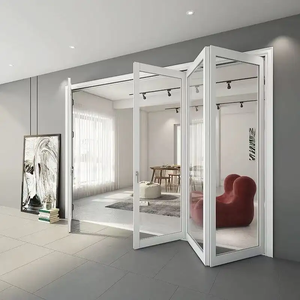
Engineering Anatomy of Premium China-Manufactured Bifold Doors

Understanding the critical performance metrics, alloy compositions, thermal isolations, and mechanical hardware assemblies that separate export-grade bifold fenestration from standard domestic offerings.

Alloy Metallurgy: T6063-T5 vs. Secondary Billets

DERCHI incorporates strictly virgin 6063-T5 primary billet extrusions with a minimum profile wall thickness of 2.0mm to 3.0mm for structural stiles and bottom rails. Secondary remelted aluminum scrap is systematically excluded to prevent tensile weakness, internal pitting, and surface micro-fissures during high wind deflection loads.

Polyamide PA66 GF25 Thermal Barriers

To satisfy rigorous international U-value thresholds (U-factor < 1.6 W/m²K), our exterior folding systems employ 24mm to 34mm reinforced Polyamide 6.6 thermal struts infused with 25% glass fiber. This isolates heat transmission between interior and exterior aluminum chambers while matching aluminum's structural thermal expansion rate.

Stainless Steel Quad-Roller Carriage Design

Large bifold systems bear substantial glass weight (up to 150kg per sash). We utilize top-hung or bottom-rolling quad-wheel assemblies fabricated with 316-grade stainless steel bearings and self-lubricating POM tires, ensuring whisper-quiet movement tested for over 100,000 smooth continuous duty cycles without track rutting.

Architectural Verification

Engineering Benchmarks: Architectural Bifold Systems

Direct comparison of performance indices across AS 2047, European CE, and North American NAFS testing matrices for export compliance.

Performance Metric DERCHI Heavy-Duty Bifold Specification Standard Industry Export Baseline Applicable Compliance Standards
Aluminium Extrusion Alloy Primary 6063-T5 / 6061-T6 Structural Profile (2.0–3.0mm wall) 1.4–1.6mm Profile / Recycled Billet Blend AS/NZS 1866, ASTM B221, EN 755
Structural Wind Load (ULS) N6 Rating / Serviceability Wind Pressure > 4500 Pa Standard N3–N4 (1500–2500 Pa) AS 2047, ASTM E330, BS EN 12211
Water Penetration Resistance Up to 750 Pa Static Pressure (Sub-sill drainage) 150–300 Pa Standard Lip Track AS 2047 (Clause 2.3.2), AAMA 501.1
Air Infiltration Performance < 0.3 L/s·m² at 75 Pa (Triple EPDM Gasket System) 1.0–2.0 L/s·m² (Dual PVC Co-extrusion) AS 2047, EN 12207 (Class 4)
Glazing Cavity & Spec 28mm–42mm DGU/TGU (Argon, Warm Edge, Low-E Coatings) 18mm–24mm Standard Air Gap Clear IGUs AS 1288, AS/NZS 2208, EN 1279
Coastal Surface Protection AkzoNobel Interpon D2525 / PVDF Fluorocarbon (25-Year Guarantee) Standard Polyester Powder Coat (< 40 microns) Qualicoat Class 2, AAMA 2604 / 2605
Strategic Sourcing Insights

Future Sourcing & Procurement Trends (2025–2030)

As international energy codes tighten and architectural design mandates expand, global sourcing directors must align procurement frameworks with four accelerating industry developments.

1. Ultra-Slim Sightline Maximization

Architectural demand is moving toward ultra-narrow stile profiles (≤ 45mm face width). Engineering high-wind resistance within slim interlocks necessitates internal steel stiffener bars and high-modulus structural silicone glazing that bonds the glass directly to the profile frame.

2. Embodied Carbon & Recycled Ingot Audits

Leading developers in the EU and Oceania require documented Environmental Product Declarations (EPDs). Sourcing from China now prioritizes certified green-energy aluminum smelters utilizing hydroelectric power to lower cradle-to-gate carbon footprints.

3. Full BIM Integration & Digital Twin Shop Drawings

Tier-1 commercial procurement no longer tolerates manual cut-sheets. B2B exporters must provide parametric Revit BIM families and automated CNC tooling code generated directly from client CAD schedules to eliminate shop floor translation errors.

4. Smart Building Automation & Concealed Motorization

Large exterior concertina systems are increasingly integrated into building management systems (BMS). Procurement trends demonstrate high growth for concealed 24V linear actuator drives, anti-pinch infrared safety curtains, and automated electronic lock synchronizers.

Factory Innovations

Manufacturing Technology Evolution in Foshan Hub

How cutting-edge intelligent automation and CNC 5-axis profile machining centers in Guangdong are redefining accuracy, structural rigidity, and weathering lifespans for export projects.

5-Axis CNC Precision Profile Machining

Manual drilling and routing are replaced with computer-controlled 5-axis machining stations. Hardware lock pockets, hinge recesses, and drainage slots are milled within a ±0.1mm tolerance threshold, guaranteeing airtight gasket compression and smooth sash folding.

Cast-Corner Joint Corner Injection Technology

Structural frame corners use cast-aluminum brackets combined with dual-component anaerobic polyurethane injection glue. This chemically bonds aluminum corner miters, eliminating joint cracking and water ingress under severe cyclonic wind racking.

Continuous Automated Vulcanized Gasketing

Instead of manual cut-and-push rubber strips, our manufacturing plant adopts continuous molded vulcanized EPDM corner components. This eliminates corner shrinkage gaps caused by extreme temperature fluctuations from winter sub-zero freezes to intense summer heat.

Factory Heritage & E-E-A-T Authority

DERCHI Corporate Advantages: Why Global Buyers Trust Our Direct Supply Chain

Operating out of Foshan, Guangdong—the heart of international door manufacturing—Guangdong Dejiyoupin Doors and Windows Co., Ltd. combines quarter-century industrial heritage with rigorous engineering verification.

180,000 m² Direct Manufacturing Scale

Ranked among China's top 10 premium door and window brands, our comprehensive production base maintains dedicated workshops for precision extrusion processing, fluorocarbon spray coating, insulated glass assembly, and final pre-export dry-fit staging. By cutting out domestic trading intermediaries, overseas buyers obtain genuine factory-direct cost efficiency with full QA traceability.

AS 2047 (N6 Rating) & CE Independent Laboratory Testing

Our exterior door systems are fully certified to Australian Standard AS 2047, successfully achieving the highest N6 cyclonic wind resistance rating alongside European CE, ISO 9001, FCC, and RoHS certifications. Complete physical test reports are issued for certifier, surveyor, and building inspector sign-off in major international markets.

Zero-Risk Pre-Shipment Assembly & Heavy-Duty Crating

Every custom bifold exterior door undergo 100% trial assembly on factory testing racks prior to packing. Glass fit, roller glide, lock latching, and gasket compression are verified via photographic and video reports. Consignments are packed with foam-interleaving, moisture-barrier wrapping, and fumigated steel-reinforced plywood crates compliant with ISPM 15.

Dedicated English Engineering Support (Oceania/Americas Hours)

Our sales engineering team provides complimentary CAD shop drawing generation, wind deflection calculations, and structural schedule cross-checking. Sales engineers operate on overlapping shifts aligning with Australian Eastern Standard Time (AEST), New Zealand Standard Time (NZST), and US Pacific Time to accelerate project coordination.

Send an Inquiry
Procurement Knowledge Base

Frequently Asked Questions on Importing Bifold Exterior Doors

Actionable guidance compiled by senior technical engineers to streamline quoting, engineering schedules, compliance reviews, and international ocean logistics.

How do DERCHI exterior bifold doors prevent rainwater leaks during high-wind storms?
Water tightness is achieved via our triple-barrier decompression design. Unlike low-cost bifold tracks that let rainwater sit against the bottom seal, DERCHI features a stepped sub-sill system with internal baffled weep holes and gravity check valves. Even under 750 Pa cyclonic driving rain (AS 2047 test standard), air pressure equalizes inside the internal profile chamber, draining water outward before it reaches the interior threshold. Continuous vulcanized EPDM gaskets complete the airtight perimeter barrier.
Can you provide certified engineering drawings and structural calculations for local council approval?
Yes. Once you supply the door schedule, architectural elevations, and regional design parameters (such as wind exposure class or coastal proximity), our engineering office creates comprehensive 2D CAD shop drawings and 3D elevation sections. We provide sectional glass deflection values, structural wind pressure calculations, and formal AS 2047 / CE compliance test certificates ready for direct submission to local private certifiers, building surveyors, or city building councils.
What surface treatment is best suited for coastal and beachfront installations?
For sites located within 5 kilometers of open marine environments, standard architectural powder coating is insufficient. We apply AkzoNobel Interpon D2525 fluorocarbon powder or 3-coat PPG Duranar PVDF fluoropolymer finishes complying with AAMA 2605 specifications. This maintains an 80+ micron protective layer with exceptional resistance to saltwater corrosion, acid rain, and intense UV exposure. Furthermore, all exposed carriage rollers, pivots, hinges, and fastening screws are upgraded to AISI 316 marine-grade stainless steel.
What is the typical production lead time, and how do you protect large glass doors during sea transit?
Standard manufacturing cycles for custom bifold systems range from 25 to 35 calendar days following client approval of CAD shop drawings. To prevent glass breakage or profile abrasion across open ocean transit, panels are individually wrapped with thick PE protective films, perimeter-guarded with high-density foam corners, and crated inside fully enclosed, fumigated solid plywood cases. We support both Full Container Load (FCL) consolidation and Less than Container Load (LCL) shipments to ports in Sydney, Melbourne, Brisbane, Auckland, Long Beach, and Felixstowe.
Are DERCHI bifold doors compatible with smart automation and motorized operators?
Yes. Our heavy-duty architectural bifold extrusions are engineered with specialized top-track hollows capable of accommodating integrated concealed motorization tracks. These systems can be configured with wall-mounted touch switches, remote RF controllers, or wireless relays interfacing with standard Control4, Tuya, KNX, or Crestron smart home building automation networks. Integrated safety features include sensitive obstacle rebound sensors and emergency manual push-pull releases during power outages.
Send an Inquiry