High-Performance Architectural Fenestration Portfolio
Explore our laboratory-tested, CE-certified aluminum system windows and doors. Precision-extruded with primary 6063-T6 architectural alloys and integrated with multi-cavity polyamide thermal breaks to satisfy strict low-U building codes.
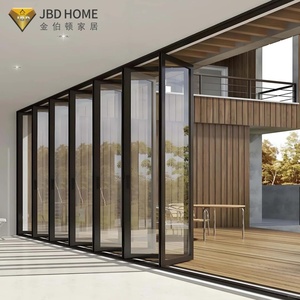
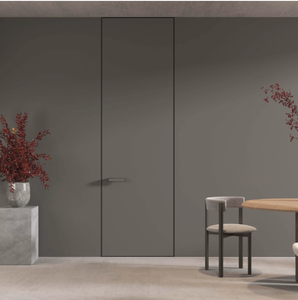
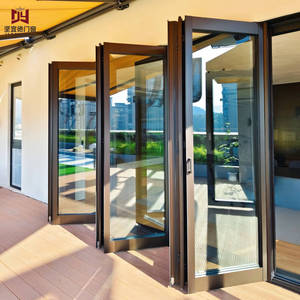
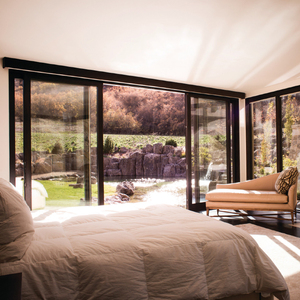
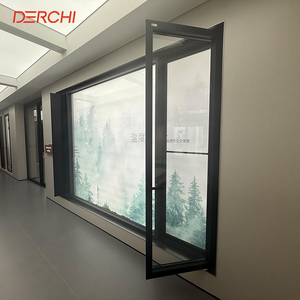
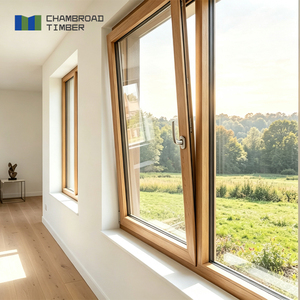
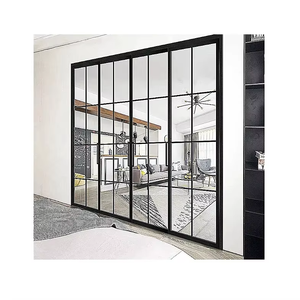
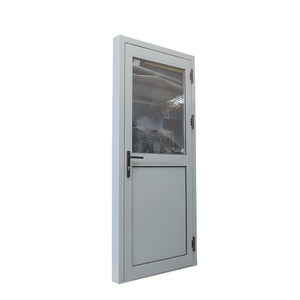
CE Marking & Structural Fenestration Rigor: EN 14351-1 Technical Matrix
In high-specification commercial architecture and residential building envelopes, CE marking is not merely an administrative declaration; it is an uncompromising standard governed by the European Union Construction Products Regulation (CPR 305/2011). Under the harmonized European standard EN 14351-1, windows and external pedestrian doorsets must satisfy rigorous Initial Type Testing (ITT) and maintain strict Factory Production Control (FPC) audit trails. Specifying an authentic CE certified aluminum system windows manufacturer ensures that thermal, structural, and acoustic calculations are supported by verifiable physical test reports issued by accredited notified bodies.
Our engineered aluminum systems implement prime architectural extrusions (EN AW-6063-T6) yielding tensile yield strengths exceeding 160 MPa. Structural stability against cyclic wind loading is engineered through high-moment inertia frame geometries and precision-extruded corner cleat joinery. The barrier system features technopolymer polyamides (PA66 GF25, reinforced with 25% continuous glass fiber) mechanically crimped into serrated aluminum extrusion chambers. This structural separation prevents the bi-material stress shearing known as the bimetallic effect, maintaining structural integrity across external and internal temperature differentials spanning from -30°C to +80°C.
Thermal Performance (EN ISO 10077-1/2)
Whole-window overall heat transfer coefficients (Uw) engineered down to 0.80 – 1.2 W/m²K. Triple-glazed insulated glass units (IGU) incorporate double soft-coat silver Low-E sputtering, 90% Argon gas cavities, and warm-edge structural composite spacers to eliminate condensation and thermal perimeter bridging.
Air, Wind & Water Watertightness
Certified to EN 12207 Class 4 Air Permeability (≤ 3 m³/h·m² at 100 Pa) and EN 12208 Class E1200 Watertightness (1200 Pa zero water penetration). Wind resistance surpasses EN 12210 Class C5 / AS 2047 N6 ratings under dynamic cyclic pressures exceeding 3000 Pa.
Acoustic Attenuation (EN ISO 717-1)
Acoustic performance rated up to Rw (C; Ctr) = 44 (-1; -4) dB. Multi-chamber framing configurations integrated with acoustic PVB laminated safety glass panels attenuate high-frequency environmental noise, urban transport rumble, and industrial acoustic resonance.
Macro Fenestration Sourcing Trends: Transforming Direct Factory Procurement
Architectural procurement paradigms are undergoing a transformative evolution driven by carbon tracking metrics, digitalization, and tier-one supply chain integration.
Embodied Carbon & Circular Billets
With the European Union Carbon Border Adjustment Mechanism (CBAM) entering full enforceability, international contractors require verified Environmental Product Declarations (EPDs). Forward-thinking manufacturers are adopting hydro-powered smelting billets, scrap re-melting processes, and closed-loop anodizing lines to reduce carbon footprints to less than 4.0 kg CO2e/kg primary aluminum.
BIM-Driven DfMA Methodologies
Design for Manufacture and Assembly (DfMA) protocols now link architect 3D Revit models directly with CNC double-head profile machining centers. Direct digital fabrication eliminates shop floor drawing interpretations, compressing lead times, reducing metal waste, and guaranteeing precise facade installation alignment with millimetric tolerances.
Complete System Sourcing Over Aggregation
Developers are bypassing fractured local component fabricators in favor of integrated original system manufacturers. Sourcing cohesive assemblies—where framing extrusions, thermal barrier crimping, insulated glass units, EPDM vulcanized sealing gaskets, and German hardware mechanisms are assembled under single-roof ISO 9001 governance—eliminates cross-warranty disputes.
System Architecture Evolutions: Engineering the Future Building Envelope
The architectural demand for expansive daylight apertures has fueled a paradigm shift toward minimalist slim-profile system windows with concealed outer frames. Achieving minimal visual sightlines without sacrificing structural moment-of-inertia values requires high-strength aluminum alloys, structurally glazed bonded panels, and integrated concealed multi-point locking gear.
Simultaneously, building automation is converging with fenestration technology. Modern fenestration systems integrate concealed brushless linear electric actuators, magnetic sensor contacts, and centralized building management systems (BMS). Micro-ventilation positions can be triggered by automated CO2 and humidity sensors, while heavy triple-glazed sliding leaves exceeding 600 kg move smoothly across stainless steel tracks using magnetic levitation or low-friction tandem steel rollers.
Concealed Hardware Architecture
Zero-exposure tilt-and-turn pivot hinges and recessed operators completely eliminate hardware visibility when the sash is closed, preventing gasket pinches and preserving air barrier continuity.
Marine-Grade Surface Finishes
Ultra-durable Qualicoat Class 2/3 powder coatings and 25-micron architectural anodized treatments tested under 3,000-hour acetic acid salt spray (AASS) to withstand harsh coastal atmospheric salt exposure.
Solar Thermal Energy Optimization
Low Solar Heat Gain Coefficients (SHGC ≤ 0.22) calibrated for sunny climates, or high passive solar heat gain coatings (g-value ≥ 0.55) engineered for sub-zero alpine and northern heating climates.
Guangdong Dejiyoupin Doors & Windows (DERCHI): Industrial Scale & Engineering Governance
Ranked among China's premier fenestration systems engineering brands, our state-of-the-art intelligent manufacturing facility in Foshan offers complete industrial control—from raw billet extrusions to export-ready crating.
International Validation
DERCHI systems are tested to CE EN 14351-1 standards and certified for compliance across major international markets, including AS 2047 (achieving N6 wind resistance ratings), NFRC, and ISO 9001 quality management standards.
Frequently Asked Questions: Technical Sourcing & Compliance
Essential guidance for facade consultants, commercial developers, and procurement directors evaluating CE certified aluminum system window manufacturers.