Featured CE-Marked Aluminum Alloy Door & Architectural Window Systems
Engineered to conform strictly with European Harmonized Standard EN 14351-1:2006+A2:2016, our precision-extruded 6063-T6 aluminum alloy door assemblies undergo accredited factory production control (FPC) to guarantee structural wind loading, hydrostatic watertightness, and thermal envelope compliance.
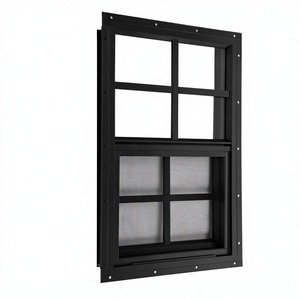 Slimline Profile
12" W x 18" H Sliding Shed Window Aluminum Flush Mount Tempered Glass
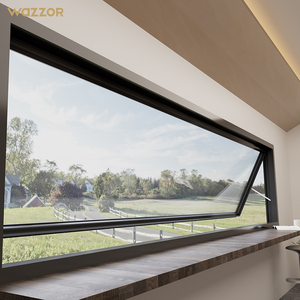 AS 2047 / N6 Cyclone
Wazzor AS2047 Hurricane Impact Aluminium Electric Skylight Awning Window
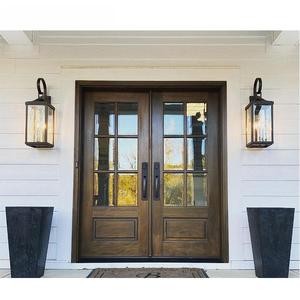 Thermal Barrier
Sunnysky Villa Architectural Aluminum Casement Swing Entry Door
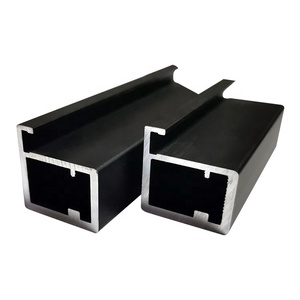 Hard Anodized
Anodized Brushed Custom Architectural Glass Door Aluminum Profiles
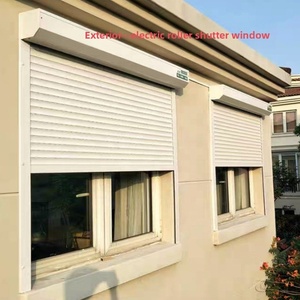 Solar Shading
European-Style Aluminum Alloy Folding Sliding Louver Doors & Shutters
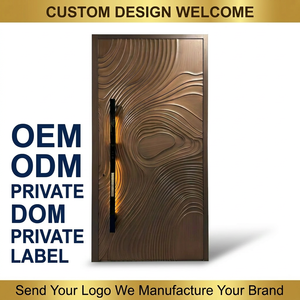 RC3 / RC4 Security
Luxury Cast Aluminum Armored Exterior Swing Security Entry Door
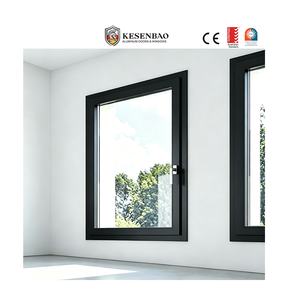 Acoustic & Thermal
High-Acoustic Double Glazed Aluminum Casement & French Door Systems
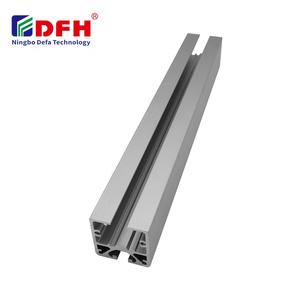 Custom Extrusion
Structural Sand-Blasted Groove Architectural Aluminum Profiles & Framing
1. Regulatory Compliance & Harmonized European Standards: The Realities of CE Marking
For international developers, general contractors, and structural engineers, procuring aluminum alloy doors for jurisdictions governed by the Construction Products Regulation (CPR 305/2011/EU) requires far more than aesthetic evaluation. A legitimate CE mark is not merely a promotional seal; it is a legally binding assertion backed by a verifiable Declaration of Performance (DoP) issued in compliance with EN 14351-1:2006+A2:2016 (Windows and doors - Product standard, performance characteristics).
When selecting a CE certified aluminum alloy door supplier, institutional buyers must rigorously audit third-party initial type testing (ITT) reports verified by accredited European Notified Bodies. Our manufacturing infrastructure in Foshan operates under continuous System 3 and System 1 Factory Production Control (FPC), ensuring that every extruded billet of virgin 6063-T6 or 6061-T6 aluminum alloy meets critical mechanical tolerances. Below is the mandatory structural and thermal framework verified under our DoP documentation:
| Performance Characteristic | European Harmonized Standard | Certified Performance Level | Engineering Specification Significance |
|---|---|---|---|
| Air Permeability | EN 12207 / EN 1026 | Class 4 (600 Pa) | Eliminates draft air infiltration, maximizing HVAC operational efficiency in low-energy buildings. |
| Watertightness | EN 12208 / EN 1027 | Class E900 (900 Pa) | Resists severe torrential rains without internal gasket bypass or drainage chamber overflow. |
| Resistance to Wind Load | EN 12210 / EN 12211 | Class C5 (2000 Pa, <1/300) | Guarantees structural mullion deflection limits under violent negative and positive wind gusts. |
| Thermal Transmittance (Uw) | EN ISO 10077-1 / EN ISO 10077-2 | 0.85 – 1.4 W/(m²·K) | Achieved via continuous 24mm–34mm PA66 GF25 thermal breaks and argon-filled Low-E double/triple IGUs. |
| Acoustic Performance (Rw) | EN ISO 717-1 / EN ISO 10140 | Up to 44 dB (-1; -4) | Dampens low-frequency urban traffic noise utilizing acoustic PVB laminated architectural glazing. |
| Burglar Resistance | EN 1627 to EN 1630 | RC2 / RC3 / RC4 | Multi-point kinetic locking hardware, anti-jemmy pins, and cast security infill panels. |
Crucially, for coastal and extreme-weather markets such as Australia, New Zealand, and the Pacific Rim, our engineering department harmonizes CE requirements with AS 2047 (Windows in buildings - Selection and installation) and AS/NZS 1170.2, delivering proven N6 wind ratings and cyclonic resistance up to 4500 Pa ultimate limit state (ULS).
2. Forward Procurement Trends: What Global Architects & Specifiers Require by 2026–2030
The global aluminum door and fenestration market is undergoing an aggressive structural shift driven by decarbonization mandates, building automation, and architectural minimalism. Procurement directors are migrating away from fragmented middle-tier traders toward vertically integrated manufacturers capable of delivering end-to-end parametric shop drawings, environmental product declarations (EPD), and extreme-format pivot systems.
Circularity & Low-Carbon Metallurgy
Strict European carbon border adjustments (CBAM) require verified low-carbon aluminum billets. Our supply chain utilizes hydro-powered smelting and post-consumer recycled extrusion, significantly lowering embodied carbon per square meter.
Oversized Pivot & Slimline Sightlines
Demand is surging for monumentally proportioned pivot doors up to 4 meters high and 2 meters wide. Advanced concealed bottom-bearing systems support sash weights exceeding 500 kg while maintaining fingertip operating force (<20 N).
Smart Mechatronic Integration
Modern commercial and residential entry designs require full integration of hidden multi-point motorized solenoid locks, biometric fingerprint access, facial recognition scanners, and building management system (BMS) telemetry.
BIM & Direct Digital Sourcing
B2B procurement teams bypass layers of middlemen. Direct factory collaboration through parametric Revit/IFC models and detailed CAD shop-drawing submittals prevents dimensional errors before extrusion lines are queued.
3. Technological Innovations in Aluminum Metallurgy, Thermal Breakage, & Surface Longevity
Aluminum's primary vulnerability in harsh architectural environments has historically been high thermal conductivity and saline surface oxidation. Today, precision engineering resolves both challenges through structural polyamide barriers and electrochemically bonded fluoropolymer coatings.
Polyamide Thermal Barriers
Our door systems utilize German Technoform PA66 GF25 polyamide insulation strips inserted into extruded profile cavities before mechanical rolling and shear-testing (EN 14024). This severs thermal bridging, eliminating condensation risks and drastically lowering U-values.
Marine-Grade PVDF & Anodizing
Profiles destined for coastal properties receive triple-coat polyvinylidene fluoride (PVDF) fluorocarbon spray or Class 1 (25-micron) architectural hard-anodizing certified under Qualicoat Seaside protocols, resisting over 3,000 hours of neutral salt spray (ISO 9227).
Structural Corner Crimping
Rather than relying on mechanical screws that loosen over time, our frames incorporate solid extruded aluminum corner cleats injected with two-component polyurethane bonding adhesives (Henkel/Weiss) under automated high-tonnage hydraulic corner crimpers.
Guangdong Dejiyoupin Doors and Windows Co., Ltd. (DERCHI)
Recognized among the Top 10 High-End Door & Window Brands in China. Operating our proprietary 180,000 square meter intelligent manufacturing park in Foshan, we control every single phase of development: R&D, precision profile extrusion, thermal break assembly, surface coating, and rigorous quality inspection.
Direct Factory Control Across 180,000m² of Advanced Production
With over 25 years of engineering heritage and a workforce of 600+ skilled technicians, DERCHI serves international architects, commercial developers, and high-end residential builders across Australia, New Zealand, Europe, and North America.
Our in-house design studio produces full parametric CAD shop drawings for every unique project schedule, verifying rough openings, structural sub-frame tie-ins, glass loads, and threshold water weeping channels before cutting a single profile.

Frequently Asked Technical & Sourcing Questions
Real answers compiled by our senior fenestration engineers to resolve compliance, engineering submittals, testing verification, and ocean logistics concerns.
How can an international buyer verify that a CE certificate from an aluminum door supplier is authentic?
What is the practical difference between standard aluminum doors and AS 2047 / Cyclone-rated assemblies?
How does DERCHI ensure thermal break durability and prevent differential thermal bowing?
What surface treatment is best suited for coastal and marine environments?
How does your factory handle custom sizes, CAD shop drawings, and BIM coordination?
What export packaging protocols are used to prevent transit damage during ocean freight?
Accelerate Your Project with Certified Engineering Precision
Submit your architectural elevations, door schedules, or tender drawings. Our senior fenestration engineers will provide custom CAD shop drawings, structural wind-load evaluations, and a competitive factory-direct quote within 24 hours.