Precision-Engineered Architectural Fenestration Systems
Designed for multi-residential, high-end private villas, and commercial facades. Explore our precision product series manufactured with advanced thermal break technology, cyclone resistance, and multi-laminate acoustic security.
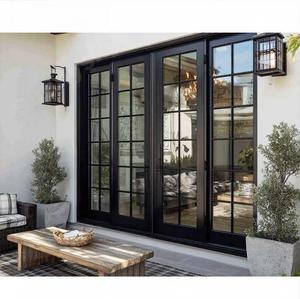
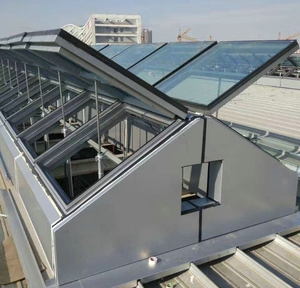
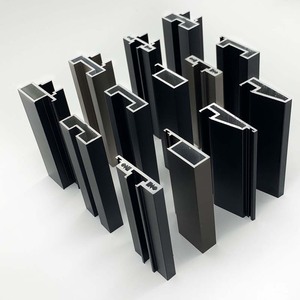
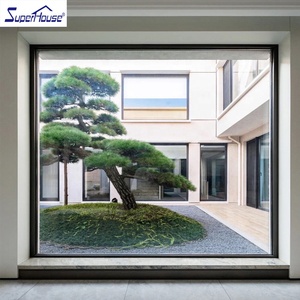
Whitepaper Analysis: CE Marking Compliance & Structural Engineering
In global architectural fenestration, achieving the CE Certification (Conformité Européenne) under harmonised standard EN 14351-1:2006+A2:2016 is not merely a regulatory prerequisite—it serves as the baseline benchmark for structural safety, environmental control, and human life safety. As a certified manufacturer, Guangdong Dejiyoupin Doors and Windows Co., Ltd. (DERCHI) subjects every glass and aluminium extrusion assembly to rigorous Initial Type Testing (ITT) and factory production control (FPC).
CE compliance for aluminium glass doors verifies mandatory performance metrics: wind load resistance (EN 12210), watertightness (EN 12208), air permeability (EN 12207), and acoustic insulation (EN ISO 717-1). Our profiles leverage premium 6063-T5 and 6063-T6 virgin aluminium alloy extrusions paired with continuous polyamide 6.6 glass fiber reinforced (PA66 GF25) thermal barrier strips. This dual-chamber separation neutralises thermal conductivity, depressing overall window-to-wall heat transmission (U-values) below 1.4 W/(m²·K), while preventing condensation in extreme microclimates.
Furthermore, structural glazing adheres strictly to CE Class 1 safety criteria (EN 12600 and EN 12150). Whether specifying impact laminated glass for coastal high-velocity hurricane zones or double/triple low-emissivity argon gas insulated units, our doors ensure zero catastrophic fragmentation upon impact, giving tier-1 contractors, architects, and government developers absolute compliance clarity.
Why Global Specifiers Source Factory-Direct From DERCHI
Recognised among China's premier architectural fenestration manufacturers, we bridge the gap between high-precision customization and scalable industrial production.
Consolidated One-Stop Sourcing
Eliminate multiple supplier markups. Source complete structural door and window schedules—including aluminium entry doors, panoramic pivot doors, fire-rated skylights, and interior wood-aluminium systems—from a unified single facility to lower freight and overhead expenses.
Triple International Compliance
Beyond our CE marking, our door assemblies have successfully verified AS 2047 testing achieving the highest N6 Wind Rating, ISO 9001 certified batch tracking, RoHS compliance, and UL fire-rated integrity for heavy-traffic public and hospitality infrastructure.
Free CAD & BIM Engineering Support
Zero ambiguity from design to execution. Our in-house engineering studio provides turnkey architectural CAD shop drawings, glass stress analysis, and thermal load simulations aligned with project schedules prior to extrusion slicing and assembly cutting.
180,000 m² Integrated Manufacturing Hub
We maintain full ownership over R&D, precision extrusion processing, AkzoNobel powder coating, thermal crimping, and pre-shipment structural testing under rigorous ISO 9001 quality supervision.

Future Procurement & Engineering Trends in Aluminium Glass Doors
As architectural expectations evolve towards decarbonisation and sensory design, commercial developers and fenestration buyers must track these high-velocity product transformations.
Passivhaus & Near-Zero Energy (NZEB)
Tightening European Energy Performance of Buildings Directives (EPBD) are pushing demand toward triple-glazed, warm-edge spacers with U-values under 0.8 W/(m²·K). Procurement schedules are transitioning from standard aluminium to multi-cavity thermal profiles.
Ultra-Slim Sightlines & Oversized Spans
Architects demand floor-to-ceiling glass spanning up to 6 meters with invisible profiles. High-moment inertia aluminium framing with concealed bottom-bearing stainless rollers allows massive payloads exceeding 800 kg per panel without sagging.
Smart Façade & Electronic Hardware
Contractors increasingly source pre-milled doors integrated with concealed multi-point motorized locking, automated weather sensors, RFID entry, and dry contact relays compatible with Zigbee and KNX home automation building management systems.
Marine-Grade Surface Protections
Salt spray and aggressive chemical atmospheric corrosion along global coasts are making standard 40µm anodising obsolete. Strategic procurement is favoring high-durability fluorocarbon (PVDF) and 80µm architectural powder coatings carrying AAMA 2605 certifications.
Multi-Laminate Decibel Attenuation
Rapid urbanisation demands noise reduction doors achieving Rw ratings exceeding 42 dB. Incorporating asymmetrical glass thickness (e.g., 6mm + 12A + 8.76PVB acoustic) dampens resonant frequencies near highways and urban railway infrastructure.
Digitised Shop Drawing & FPC Tracking
Large-scale construction developments require complete digital twins. Importers prioritize manufacturers offering BIM models, transparent factory batch auditing, material inspection test records, and comprehensive export testing documentation upfront.
Low-Carbon Recycled Extrusions & Cradle-to-Cradle Manufacturing
Major institutional developers now stipulate Environmental Product Declarations (EPDs). The industry is pivoting rapidly to aluminium billets smelted using hydroelectric energy with a certified minimum of 75% post-consumer recycled scrap, dramatically lowering embodied carbon across global facade installations.
Frequently Asked Questions on Aluminium Glass Door Procurement
Engineering clarifications regarding testing certifications, shipping safety, customization parameters, and site installation.