High-Performance Architectural Openings & Composite Systems
Manufactured under strict ISO 9001 and CE compliance criteria, engineered with multichamber thermal break alloy extrusions, solid structural cores, and high-precision CNC hardware fabrication.
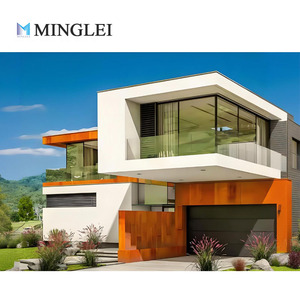
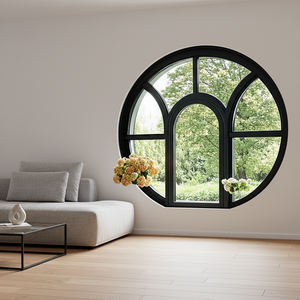
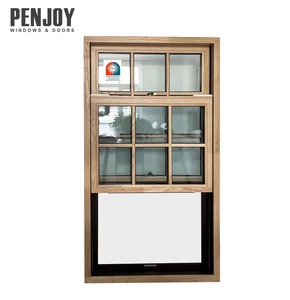
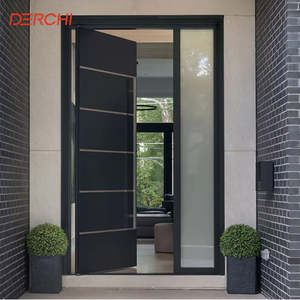
Industrial Production Infrastructure & Technical Assets
Operating out of Foshan, Guangdong—China’s global heart of precision aluminium processing—DERCHI delivers full vertically integrated door envelope manufacturing for multi-unit developers, civil contractors, and commercial architects.
Vertical In-House Metallurgy
Unlike assembly-only suppliers, we supervise prime 6063-T5 and 6060-T6 architectural billet extrusion, precision multi-axis CNC routing, and robotic thermal bridge polyamide bar assembly under continuous ultrasonic testing.
- Tolerances calibrated within ±0.3mm across 3.8-meter pivot sash formats
- In-house anodizing, electrophoretic dipping, and fluorocarbon (PVDF) powder coating
- Zero subcontracting risk for core architectural structural integrity
Global Certification Audits
Full conformance with the European Union Construction Products Regulation (CPR 305/2011/EU) via Harmonized Standard EN 14351-1:2006+A2:2016, supplemented by independent testing for AS 2047 (N6 cyclone rating) and UL fire endurance.
- Continuous Factory Production Control (FPC) system certified by notified bodies
- Factory batch tracking with barcode-lasered structural sub-assemblies
- Declarations of Performance (DoP) and full material traceability dossiers
BIM & Engineering Support
Our dedicated B2B commercial liaison department includes over 30 English-fluent fenestration engineers providing rapid CAD shop-drawing generation, wind-load deflection calculations, and thermal modelling.
- Autodesk Revit families with parametric thermal and acoustic metadata
- Co-engineered sill interfaces for disabled access (DIN 18040 zero-threshold)
- Turnaround of comprehensive tender shop drawings within 48 business hours
Technical Architecture of CE Certified Aluminium Composite Doors
In contemporary commercial and high-end residential building envelopes, entrance systems must satisfy conflicting physical criteria: massive aesthetic stature, absolute thermal separation, high cyclic mechanical endurance, and impenetrable intrusion resistance.
Multi-Layer Composite Core Metallurgy
True commercial-grade aluminium composite doors diverge radically from standard residential infill panels. The composite door leaf engineered by our factory utilizes an aerospace-inspired sandwich matrix. The external skins consist of heavy-gauge 2.5mm to 3.0mm structural aluminium alloy sheets (EN AW-6063 T6), enclosing a high-density, closed-cell extruded polyurethane (PUR) or fire-retardant mineral-wool phenolic core, fortified with an internal continuous carbon-steel anti-distortion perimeter cage.
This multi-layered integration overcomes the infamous "bimetallic deflection effect"—a common point of failure where solar radiation heats an outer aluminium face to upwards of 80°C while the conditioned interior remains at 21°C, causing structural sash bowing, gasket decompression, and air leakage.
Key Architectural Parameters:
- Thermal Transmittance: Ud values achieved down to 0.72 W/(m²·K) (Passive House Compliant)
- Air Permeability: Class 4 verified in accordance with EN 12207
- Water Tightness: Class E900 (900 Pa static pressure) per EN 12208
- Wind Load Resistance: Class C5 (2000 Pa design, 3000 Pa safety) via EN 12210
- Acoustic Attenuation: Sound transmission reduction of Rw 40 dB to 45 dB per EN ISO 717-1
Technical Specification & European Standard Validation
| Performance Characteristic | Harmonized European Norm (EN) | Test Methodology & Threshold | DERCHI Factory Achieved Specification |
|---|---|---|---|
| Air Infiltration Rating | EN 12207 / EN 1026 | Pressure up to 600 Pa, measuring m³/(h·m²) | Class 4 (Maximum air tightness, leakage < 3 m³/h·m²) |
| Watertight Seal Under Wind | EN 12208 / EN 1027 | Continuous spray rack testing under stepped pressure | Class E900 (No water penetration up to 900 Pascals) |
| Wind Pressure Resistance | EN 12210 / EN 12211 | Frontal deflection ratio < 1/300 at max load | Class C5 / N6 Cyclone (Structural safety tested > 3.0 kPa) |
| Overall Thermal Transmittance (Ud) | EN ISO 10077-1 / EN ISO 10077-2 | Hot-box chamber calculation & physical finite element | Ud = 0.72 - 0.95 W/(m²·K) (Triple-chamber polyamide breaks) |
| Acoustic Isolation (Rw) | EN ISO 10140-2 / EN ISO 717-1 | Sound chamber 100 Hz - 3150 Hz pink noise | Rw = 42 dB (-1; -4) with heavy acoustic composite core |
| Burglary Security Rating | EN 1627 to EN 1630 | Manual crowbar, chisel, and mechanical hydraulic jack load | RC2 & RC3 Certified (Multi-point hook-bolts, anti-drill cylinder) |
| Mechanical Durability / Operating Life | EN 1191 / EN 12400 | Automated pneumatic arm cycle testing | Class 8 (1,000,000 cycles) with heavy-duty ball-bearing pivots |
Future Procurement Trends in the Global B2B Composite Door Market (2025–2030)
Procurement directors, general contractors, and developers face evolving regulatory mandates and shifting architectural demands. Sourcing strategies are actively transitioning from lowest-unit-cost paradigms to holistic lifecycle value calculations.
Embodied Carbon & EPD Mandates
European and Australasian construction codes now demand Environmental Product Declarations (EPDs). Sourcing is pivoting toward low-carbon primary aluminium processed with hydropower, combined with bio-polyurethane core infills and closed-loop scrap recycling.
Seamless Smart Building Integration
Developers are discarding post-installation smart-lock add-ons. Future procurement requires factory-embedded, concealed biometric scanners, 3D facial recognition, motorized multi-point locks, and CAN-bus/RS485 home automation interfaces pre-wired in the frame.
Supply Chain Decoupling & DDP
Tier-1 contractors demand door manufacturers take operational ownership beyond FOB shipping. The standard of the future is full DDP (Delivered Duty Paid) project logistics, including fumigated plywood crating, local customs clearance, and direct-to-site delivery scheduling.
Extreme Envelope Formats
Residential and commercial projects are standardizing on monumental 3,000mm to 3,800mm clear-opening heights. Suppliers without in-house high-tonnage structural presses and specialized concealed hydraulic pivot hinge development are systematically excluded from premium tenders.
Technological & Material Evolution in Composite Door Systems
How cutting-edge surface nanotechnology, composite kinematics, and advanced glass chemistry are redefining building access systems.
Hyper-Durable Powder & Ceramic Coatings
Traditional liquid paints degrade rapidly under coastal UV radiation and saline mist. Modern composite systems deploy Qualicoat Class 2 and Class 3 fluorocarbon (PVDF) powder systems, sintered at 230°C, offering a 30-year resistance against chalking, micro-cracking, and salt corrosion.
Novel architectural finishes include textured ceramic-infused powder coatings and ultra-realistic 3D anodized wood grain that resist abrasive micro-scratches and fingerprint oils.
Self-Regulating Anti-Warp Thermal Bridges
By implementing split-insulator polyamide PA66 GF25 thermal breaks with flexible gliding structural ribs, the inner and outer halves of the aluminium leaf can expand and contract independently under extreme solar heat loads.
This breakthrough completely mitigates perimeter binding in high-solar-gain orientations, maintaining effortless pneumatic closer latching throughout shifting seasonal extremes.
Aerogel & Vacuum Glazing Inserts
Vision lites within composite door systems are notorious points of thermal and acoustic compromise. Next-generation composite doors incorporate hybrid warm-edge triple glazing infused with silica aerogel perimeter spacers or vacuum insulated glass (VIG) units.
These advanced glazing packages deliver center-of-glass thermal performance of Ug 0.40 W/(m²·K), matching the performance of a thick insulated masonry cavity wall.
Frequently Asked Questions: Sourcing & Compliance Guide
Essential technical, regulatory, and commercial insights for international procurement teams, architects, and building contractors importing directly from China.
What specific documentation proves a factory’s CE certification for composite doors is authentic?
1. Type Testing Report (ITT): Issued by an officially recognized, accredited European Notified Body (NB) verifying laboratory tests for air permeability (EN 1026), water tightness (EN 1027), wind load resistance (EN 12211), and thermal simulation (EN ISO 10077).
2. Declaration of Performance (DoP): Issued under the direct legal liability of the manufacturer, citing the specific product type, unique serial ranges, and the declared performance ratings against each essential characteristic.
3. Factory Production Control (FPC) Manual: Audited records demonstrating that subsequent production batches maintain identical material specifications, tolerances, and adhesive bond strengths as the test specimen.
How do aluminium composite doors prevent bimetal bowing in high-temperature climates?
Our factory counters this through a dual-action anti-warp system: First, we deploy proprietary sliding/floating polyamide thermal break profiles (PA66 GF25) that absorb axial shear expansion between the internal and external aluminum skins. Second, an internal tensioning rod (turnbuckle system) is integrated within the core of the leaf, allowing post-installation micro-adjustment of leaf straightness if structural building settlement or unusual localized thermal conditions occur.
Can your CE certified composite doors also satisfy Australian AS 2047 and AS 1288 standards?
Under AS 2047 physical test protocols, our systems have satisfied the rigorous N6 / Cyclonic Wind Rating requirements, withstanding ultimate structural test pressures exceeding 4,500 Pascals and water penetration limits above 450 Pascals. Full test certificates and engineering appraisal documentation are provided for submission to local private certifiers and Australian municipal building authorities.
What locking configurations are required to meet European RC2 or RC3 security levels?
• Multi-Point Locking: Minimum 5-point locking system incorporating hardened steel motorized or mechanical hooks and anti-lift bolts anchoring deeply into reinforced frame keeps.
• Cylinder Defense: Euro-profile security cylinders certified to EN 1303 (Class 6 key-related security, Grade 2 attack resistance) with integrated drill, pick, and snap protection plates.
• Glazing Security: Any glazed insert must integrate P4A (for RC2) or P5A (for RC3) laminated security glass according to EN 356, securely bedded with internal safety glazing beads to prevent exterior removal.
What are the packaging and moisture preservation protocols for overseas sea freight?
1. Surface Barrier: 80-micron static protective film on all lacquered aluminum faces, followed by closed-cell EPE foam edge protectors on all four corners and perimeter sashes.
2. Hermetic Sealing: Complete vacuum-wrapped moisture barrier film containing industrial silica gel desiccant packs to prevent condensation damage.
3. Structural Crate: Heavy-duty non-coniferous OSB/plywood fully enclosed export crates (exempt from ISPM-15 phytosanitary heat-treatment regulations), reinforced with internal steel perimeter strapping and fork-pocket runners for safe container devanning.
What is the standard production lead time and minimum order quantity (MOQ) for custom project schedules?
Our 180,000 m² production facility supports both flexible custom boutique architectural projects and large commercial contracts. The minimum order quantity (MOQ) for bespoke architectural entrance doors is 1 set (for high-end villa or prototype validation), whereas for repetitive commercial fenestration schedules (apartments, hotel suites), we offer optimized tier pricing for 20-foot and 40-foot full container loads (FCL).
Connect Directly with Our Fenestration Engineering Team
Submit your door schedules, architectural floor plans, or tender specifications. Our technical engineering office will provide a comprehensive performance analysis, CAD shop drawings, and competitive factory-direct pricing within 24 to 48 hours.