Q: Folding, sliding or hinged door — which is better?
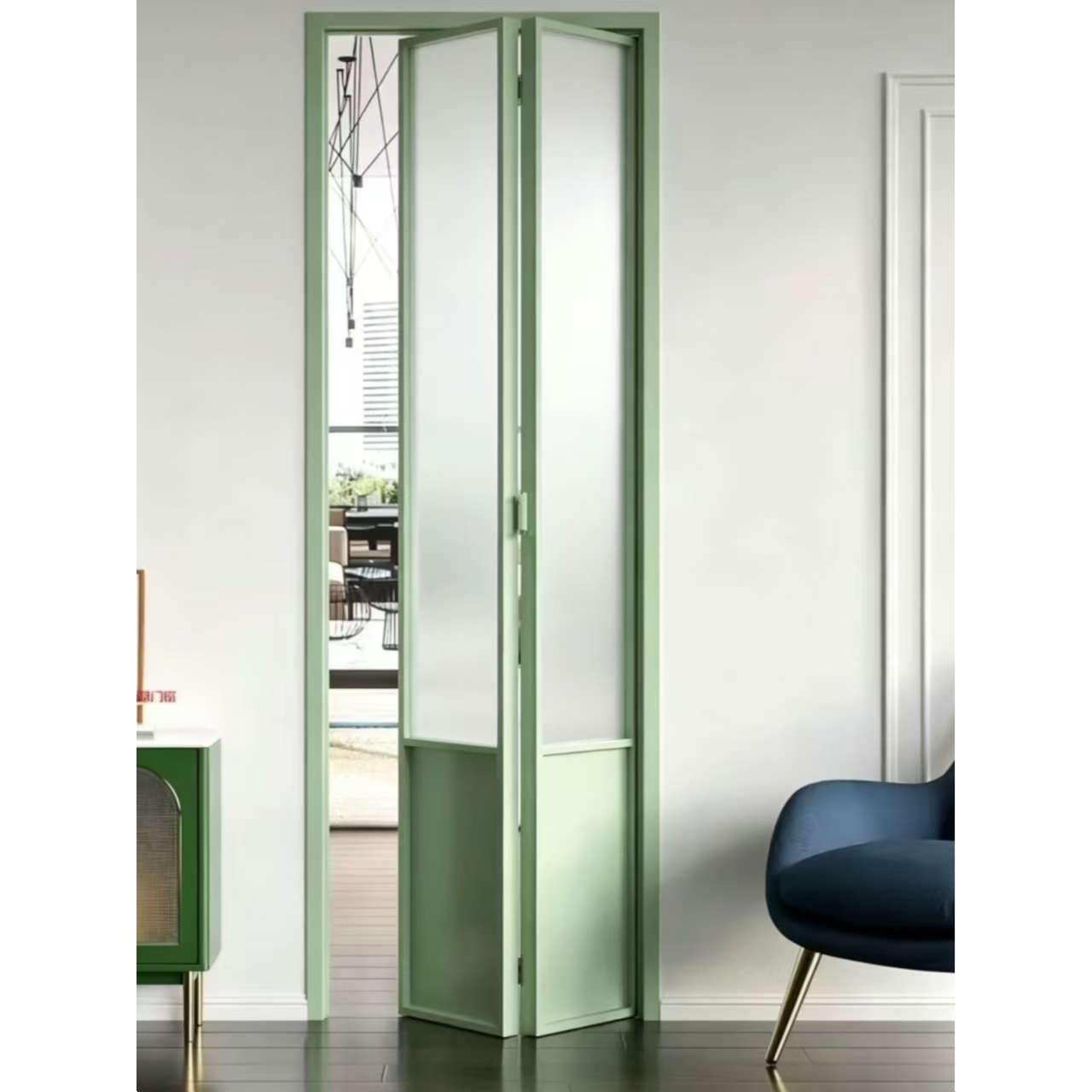
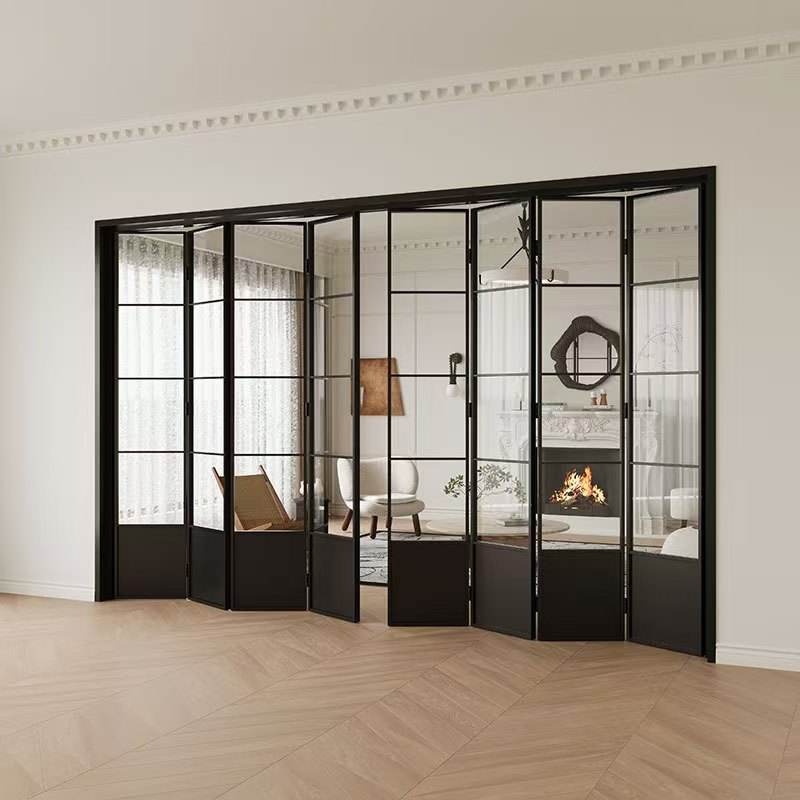
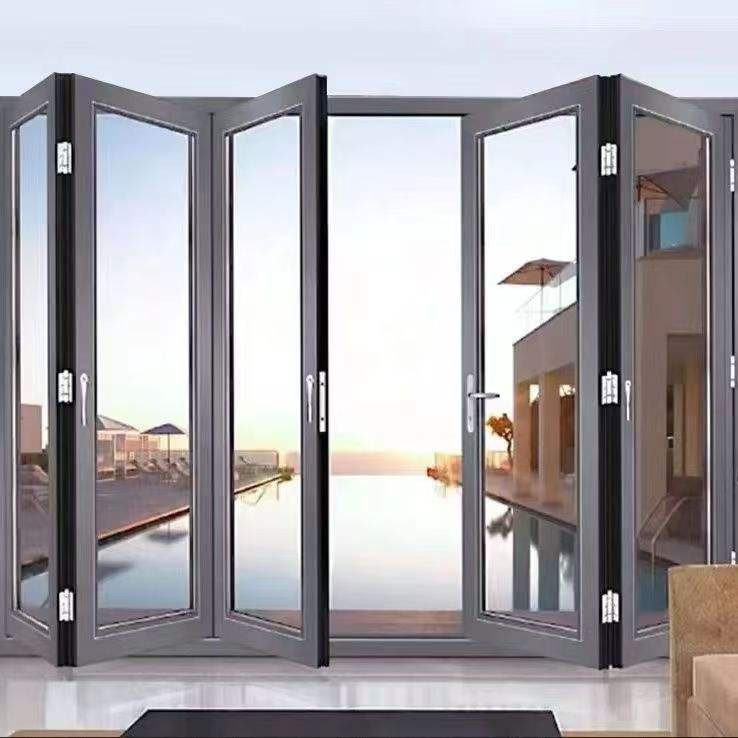
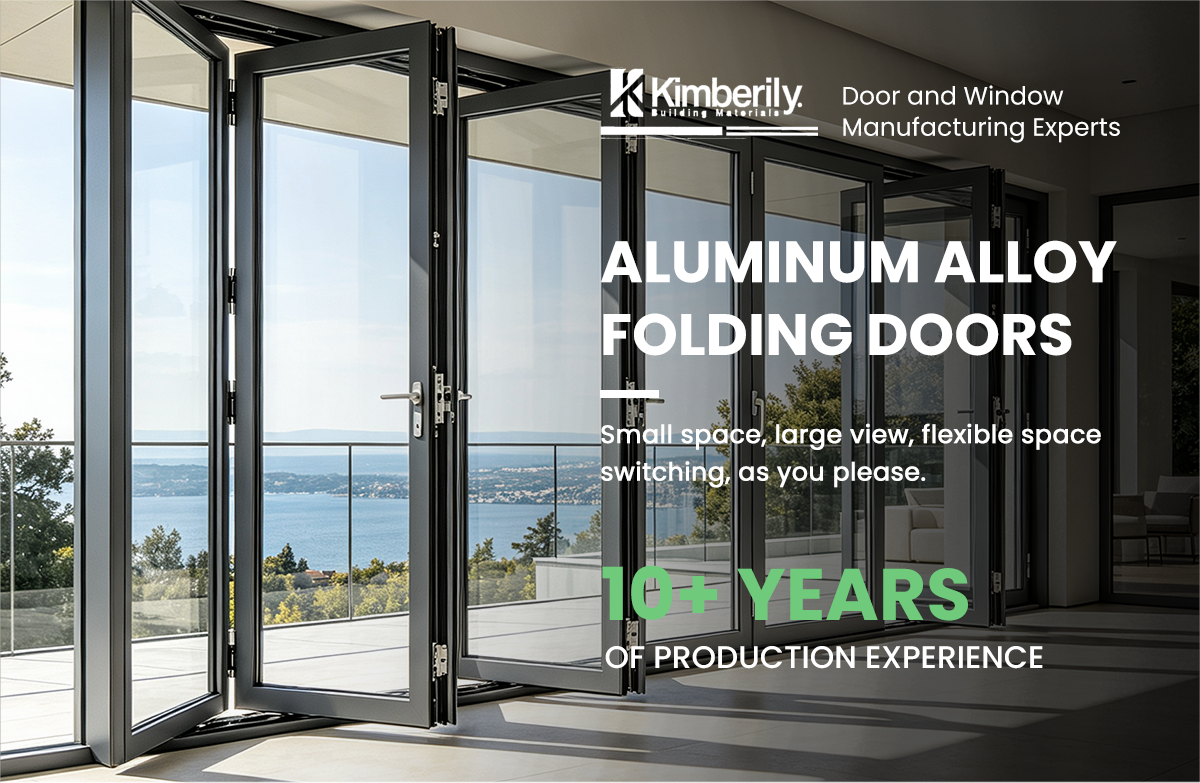
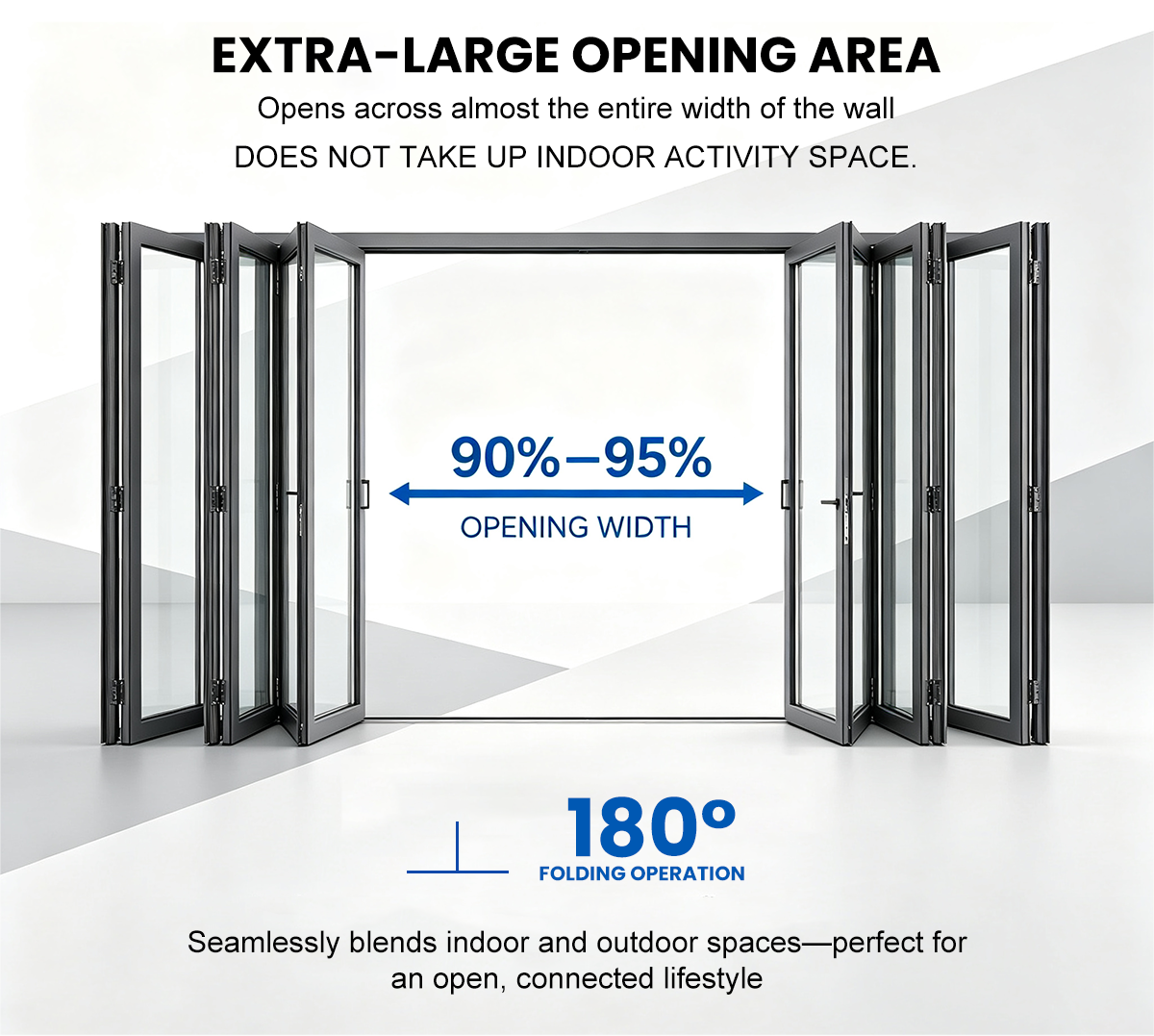
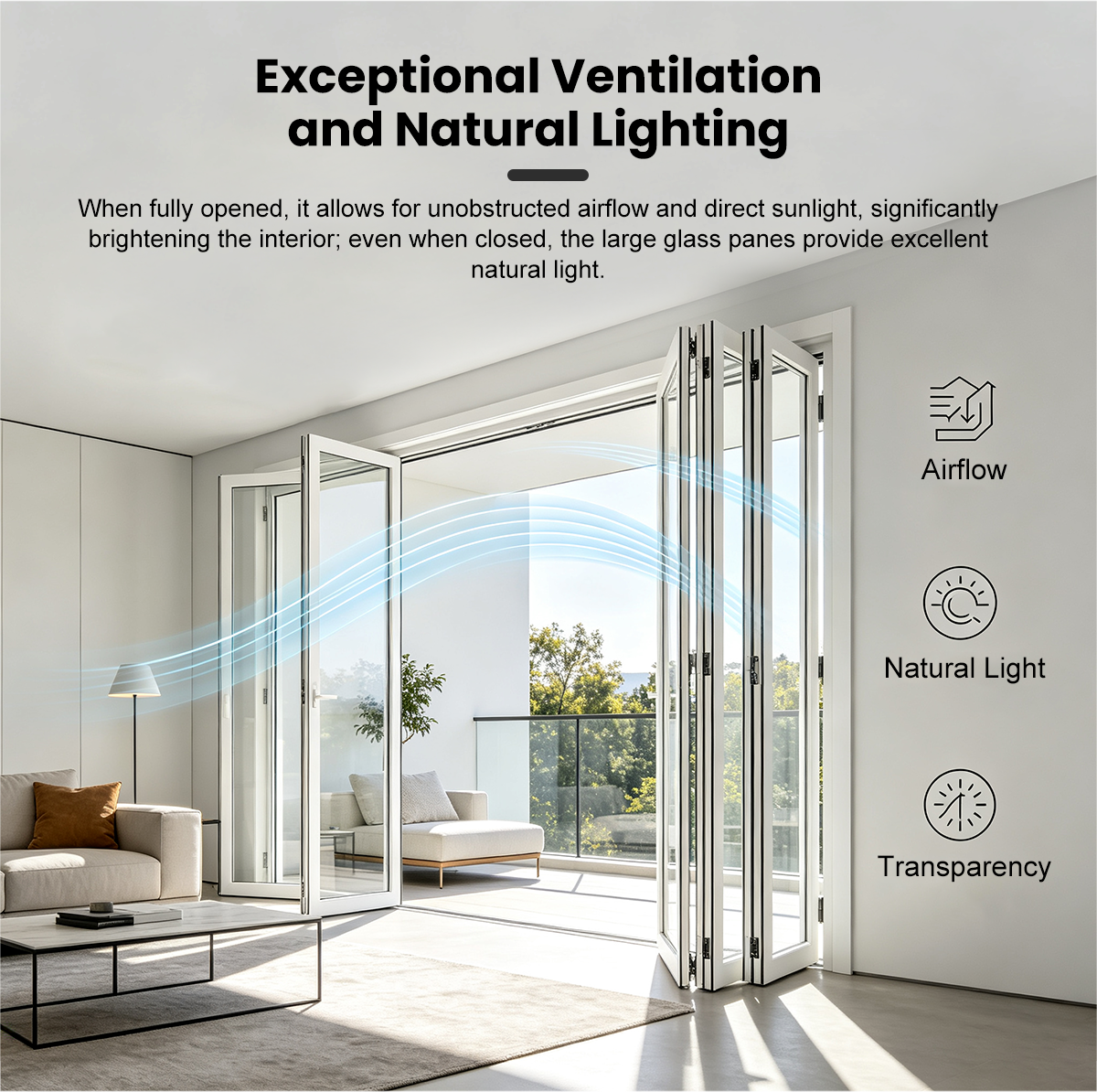
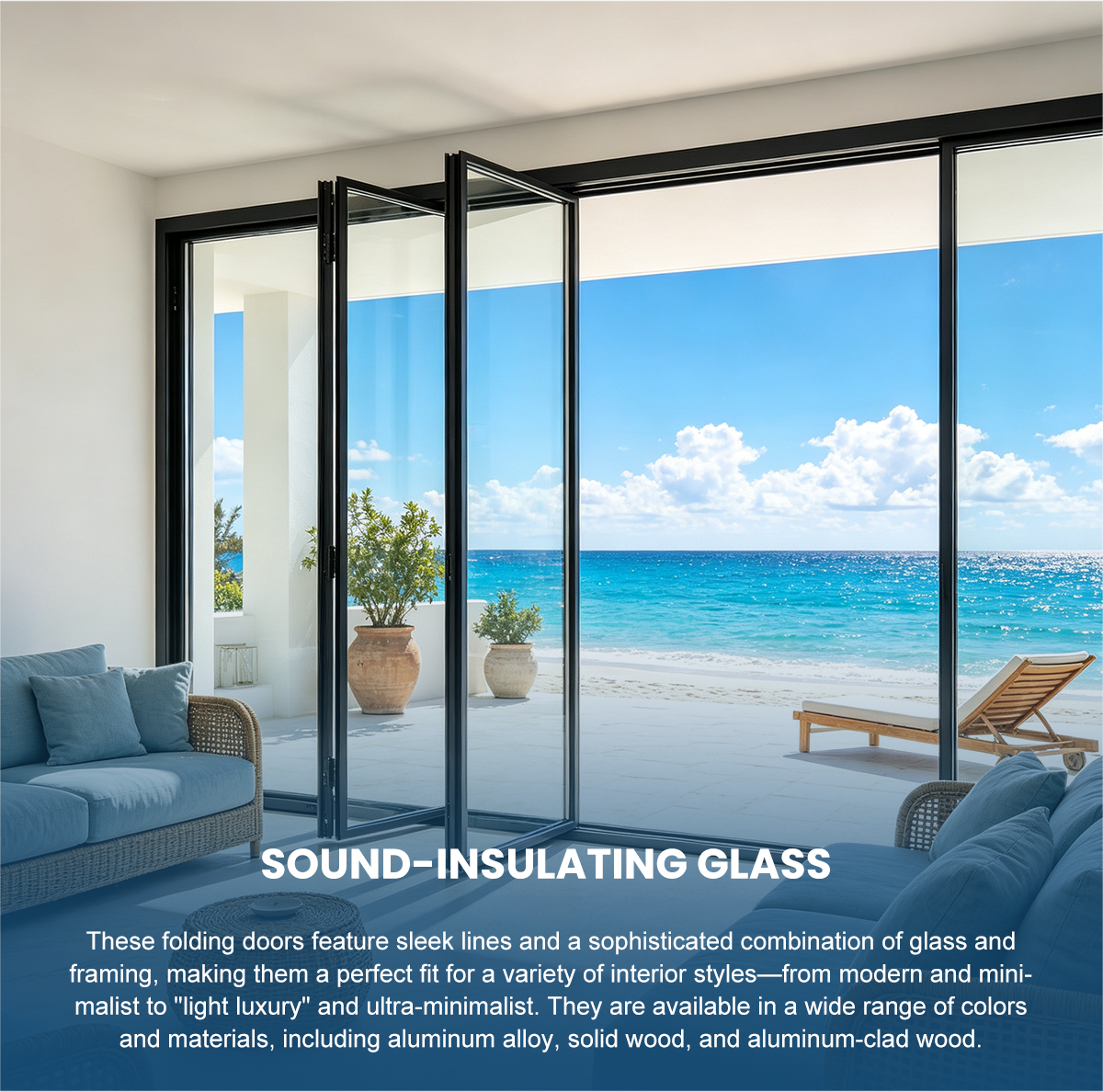
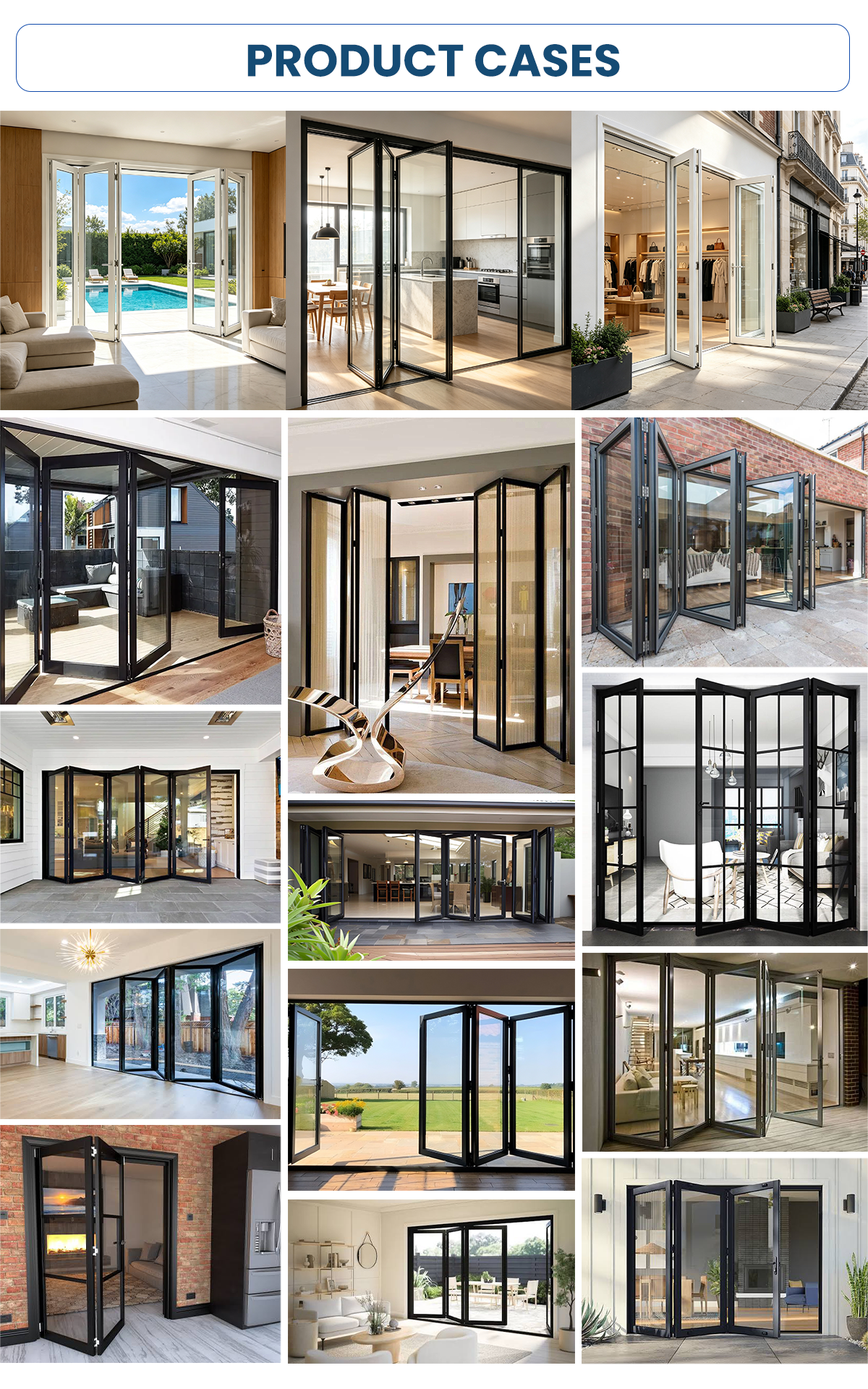
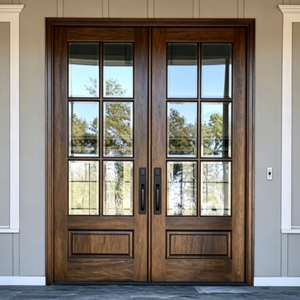
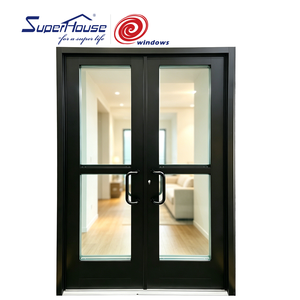
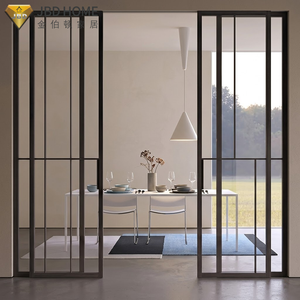
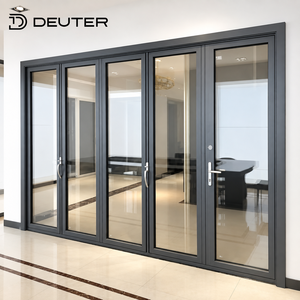
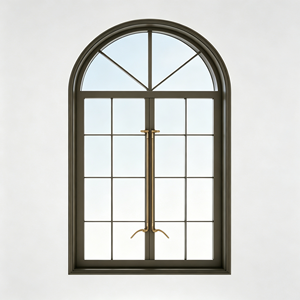
Depends on your needs. Folding doors: widest opening (panels stack to one side), panoramic views, seamless indoor-outdoor connection — ideal for terraces, patios, restaurants and villas. Sliding doors space-saving and simple operation. Hinged doors: best sealing, insulation and security — ideal for main entrances.
Q: How large can folding doors open?
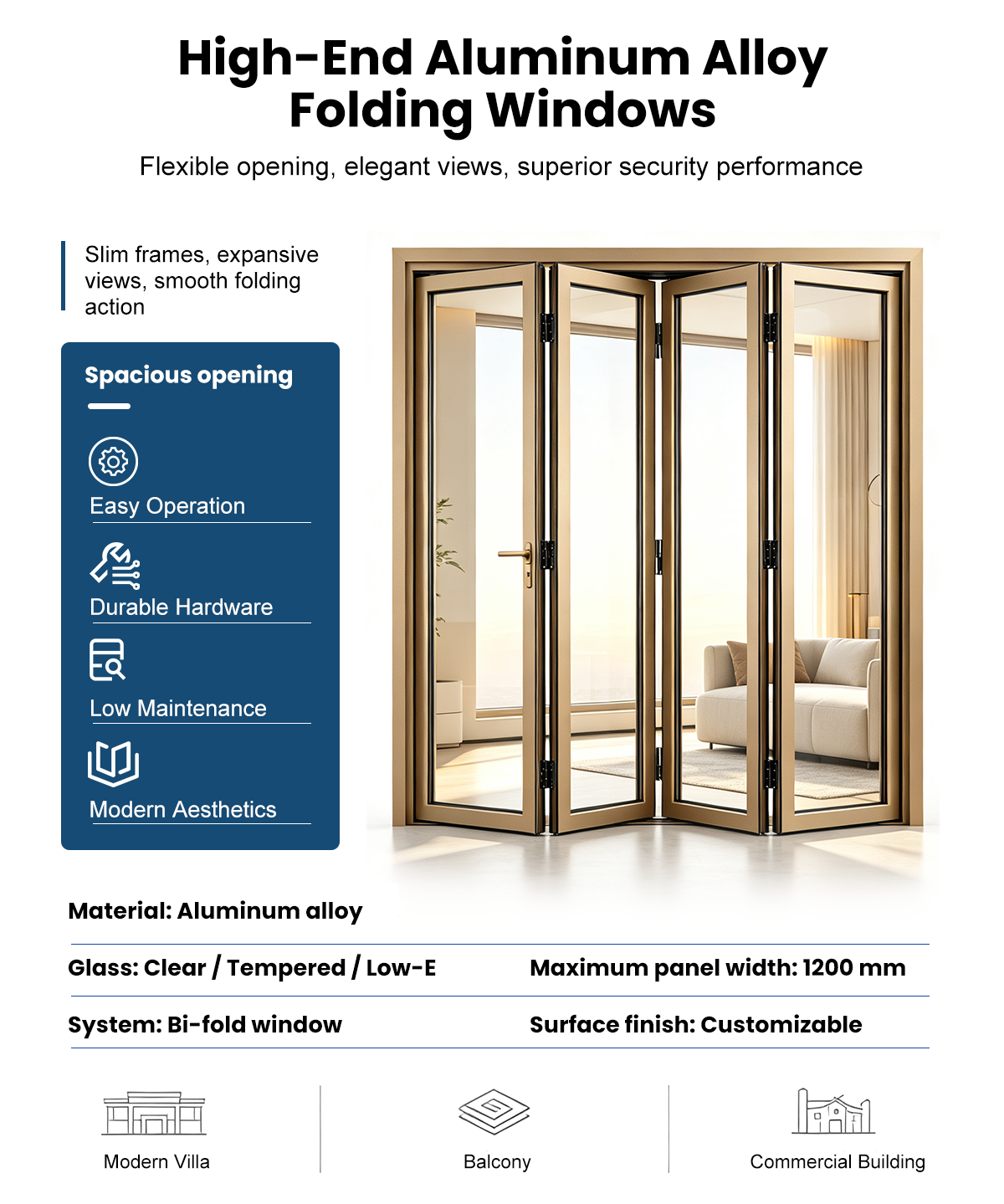
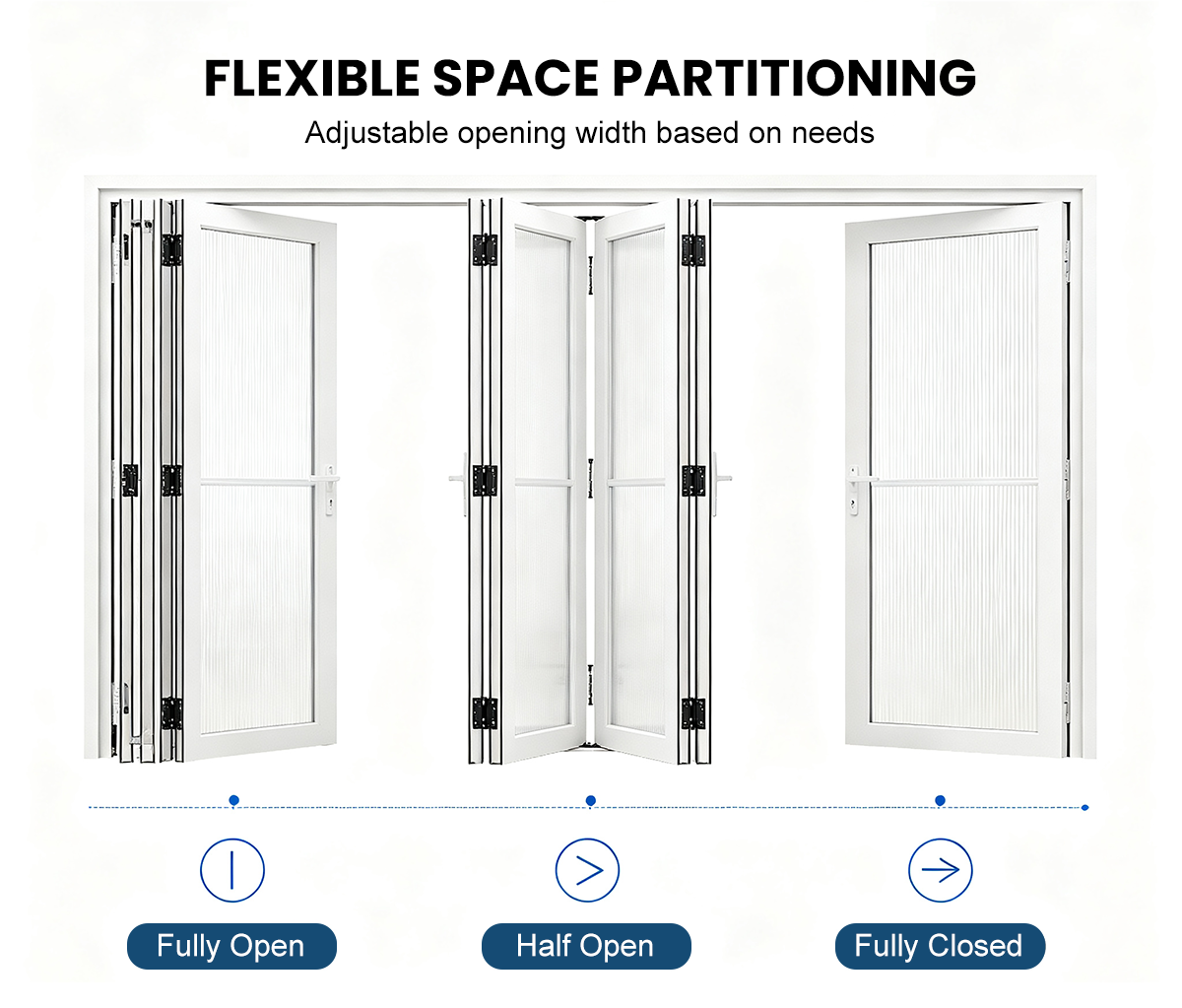
Folding doors deliver the largest opening among all styles — panels fold and stack to one side to expose nearly the full opening width. Panel count and size are customizable; larger openings require thicker profiles and heavy-duty hardware. Confirm the maximum span and panel load with our engineers for your project.
Q: Do folding doors seal well against weather?
Yes. Full-perimeter high-density EPDM gaskets and a multi-seal system block wind, rain and dust, while hidden drainage channels prevent water pooling and backflow along the track — keeping interiors dry and draft-free even during heavy rainstorms.
Q: What about thermal and acoustic performance?
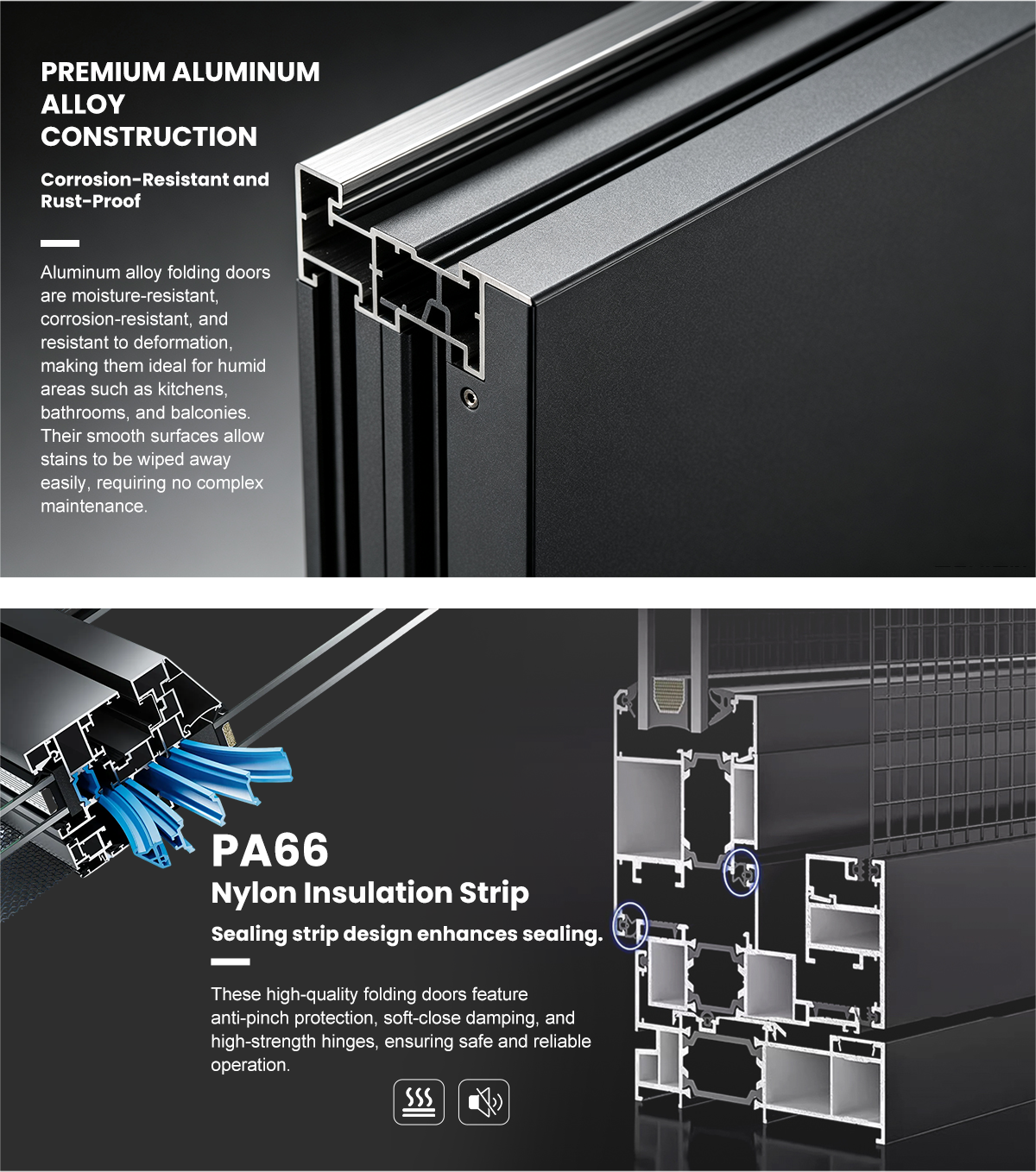
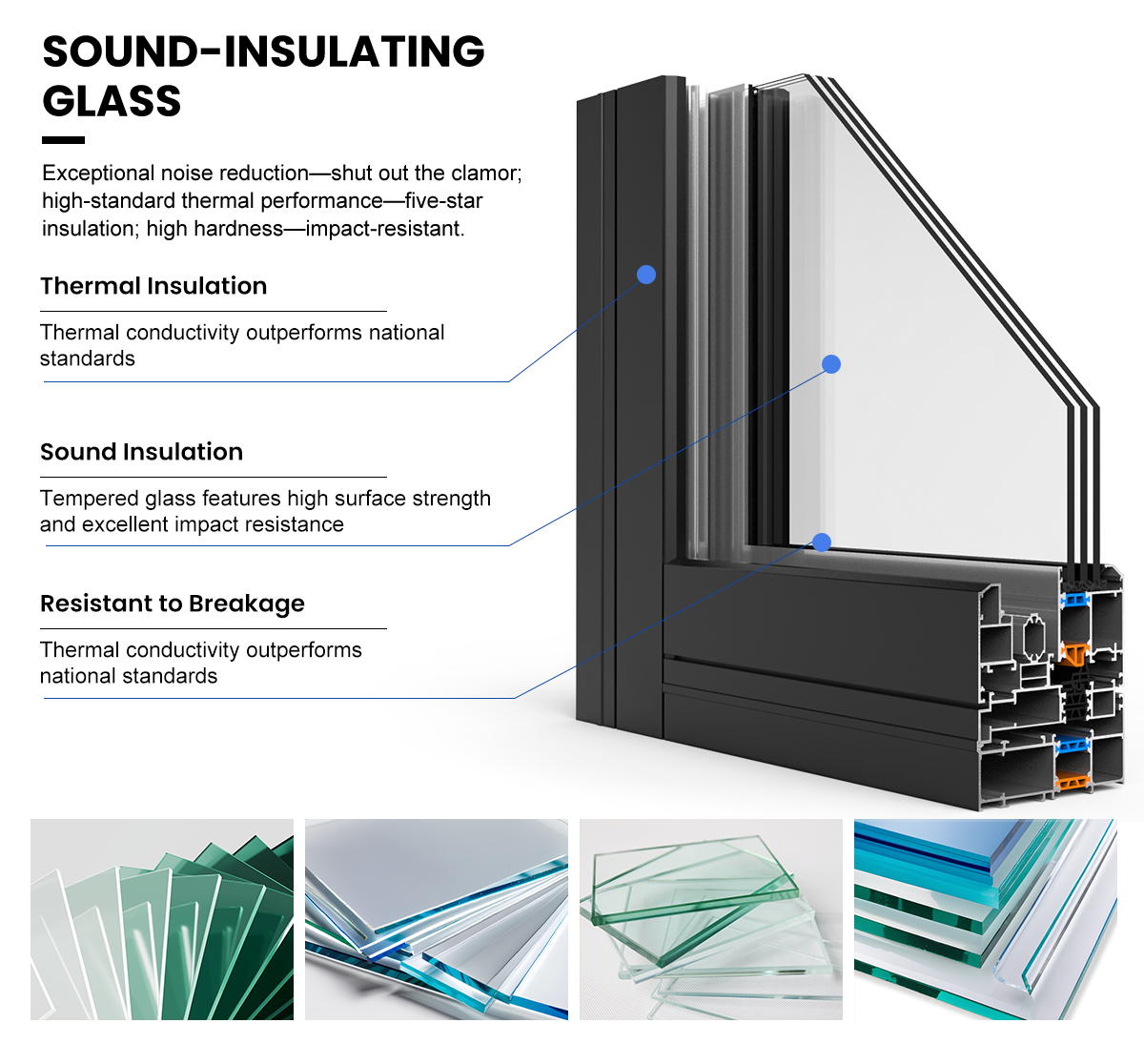
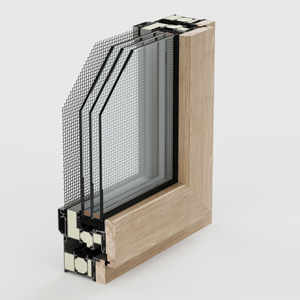
PA66 thermal-break profiles with multi-layer insulated or laminated glass minimize heat transfer, stabilizing indoor temperature and cutting HVAC costs. The airtight sealing combined with insulated glazing significantly reduces external noise — refer to the tested performance data for your chosen configuration.
Q: Are folding doors stable under strong wind loads?
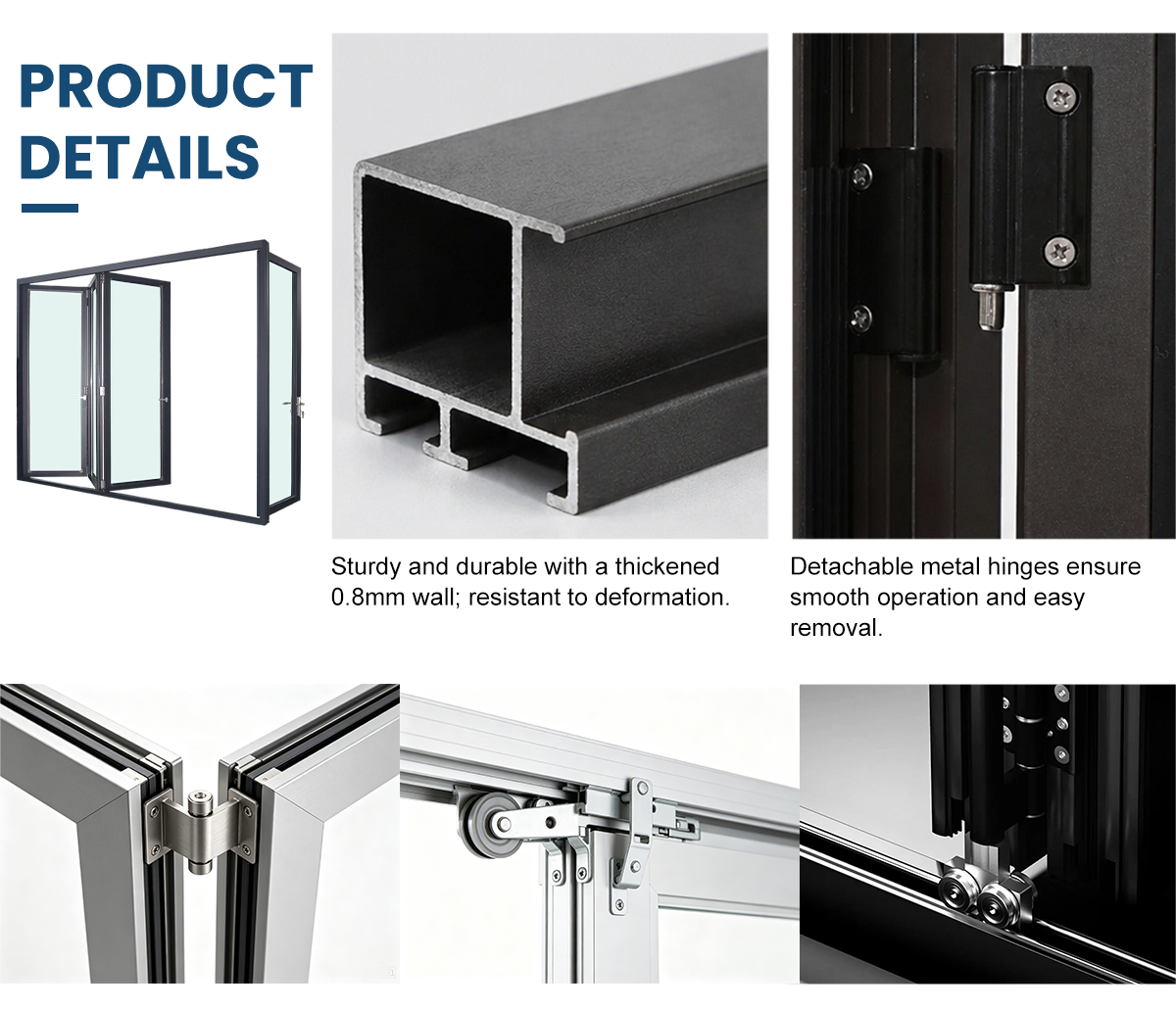
Yes, with proper specification. High-strength profiles (main load-bearing walls ≥1.8 mm) combined with anti-derailment guides and heavy-duty hinges keep panels aligned and stable under wind loads. For large-span or coastal projects, confirm the wind-pressure rating for your local requirements.
Q: Can sizes and panel configurations be customized?
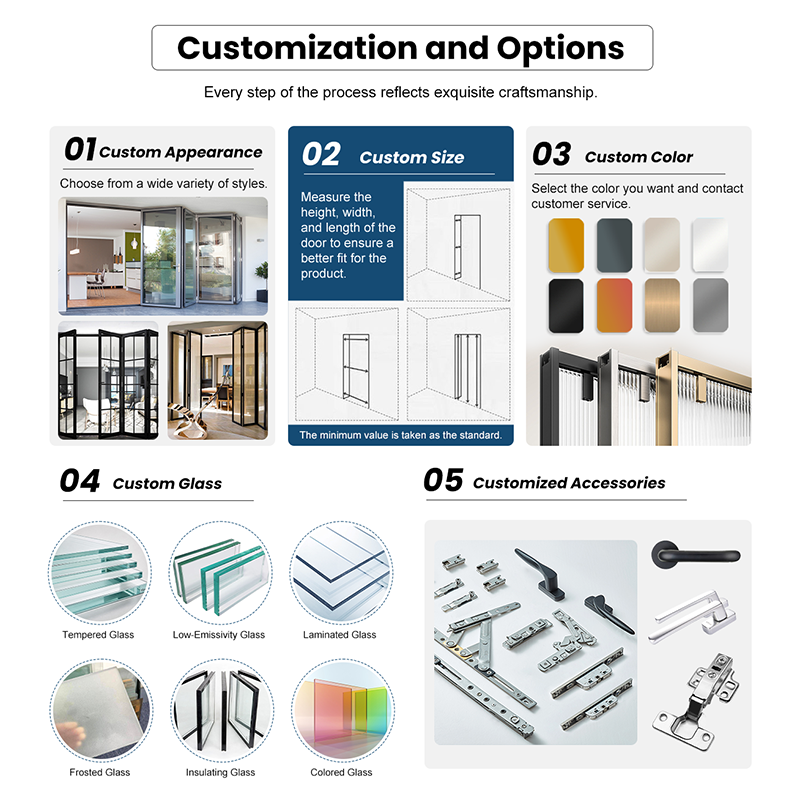
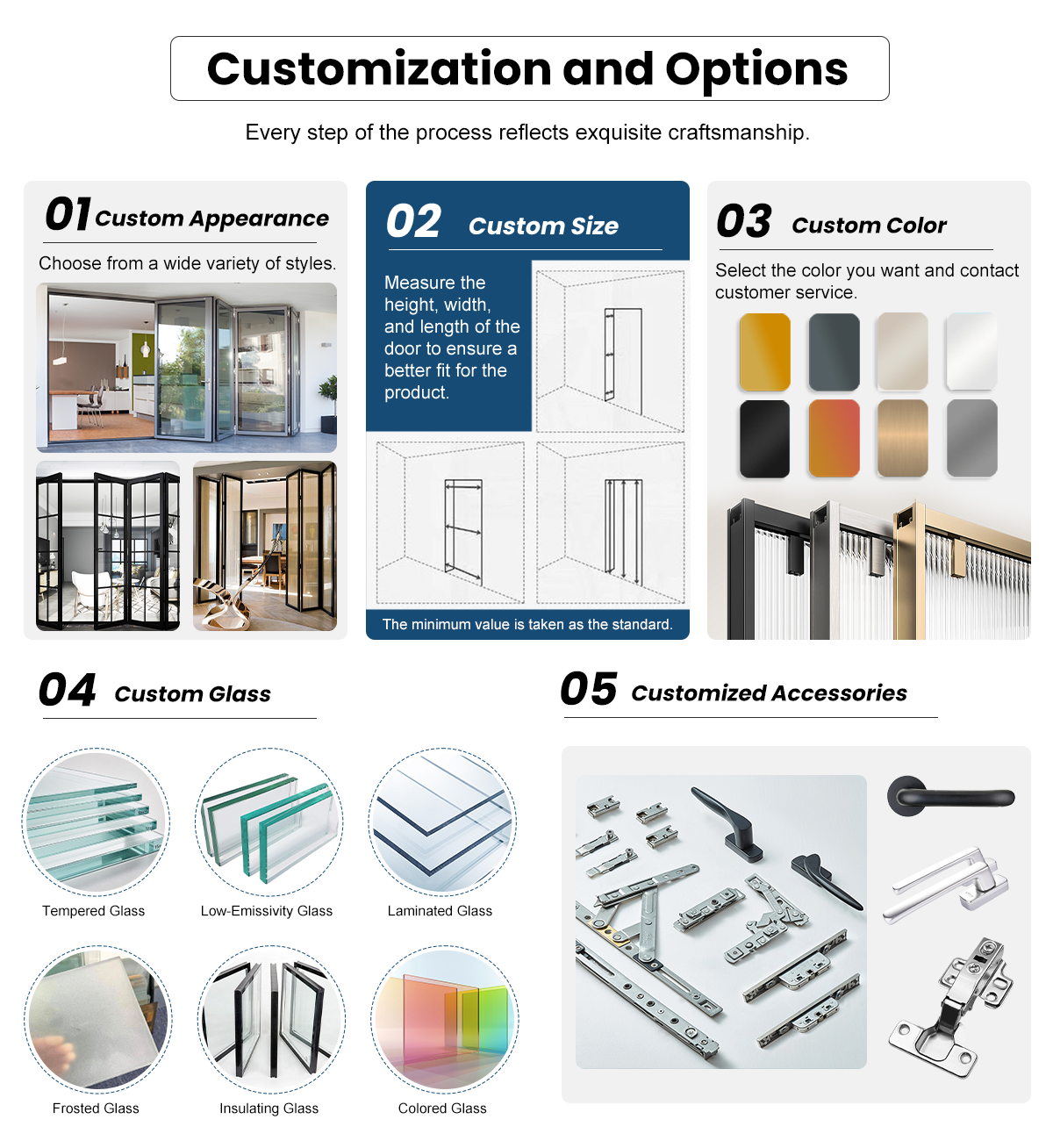
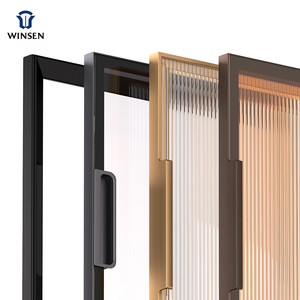
Yes, fully customizable — width, height, panel count, folding direction, glass options and surface colors. For large openings, upgrade to thicker profiles and heavy-duty hardware, and consider the building opening's load capacity.