Engineered Commercial Glazing for the Polish Architectural Sector
As Poland positions itself as the core logistics, manufacturing, and commercial hub of Central and Eastern Europe, modern architectural developments across Warsaw, Kraków, Wrocław, and Poznań demand exterior facade solutions that balance structural resilience, rigorous thermal performance, and contemporary European industrial design. DERCHI (Guangdong Dejiyoupin Doors and Windows Co., Ltd.) delivers commercial-grade, factory-direct aluminium storefront configurations optimized to meet the European Union's strict building mandates.
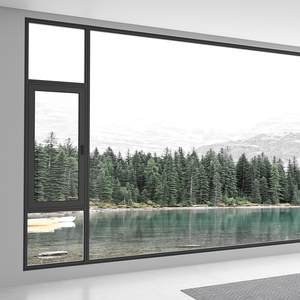
DERCHI Waterproof Hurricane Impact Aluminum Casement System
Product Details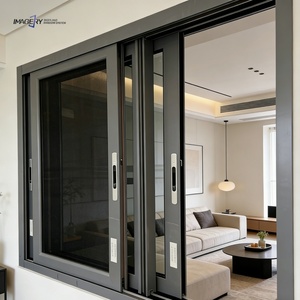
Imagery Heavy-Duty Acoustic Sliding Glass Enclosure System
Product Details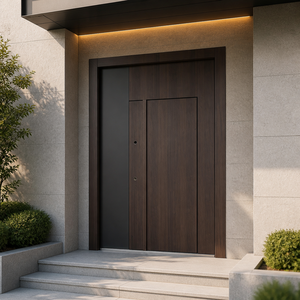
Executive Cast Aluminum Double Leaf Reinforced Entry Door
Product Details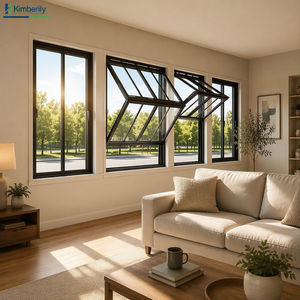
Commercial Motorized Bi-Fold Pass-Through Storefront System
Product Details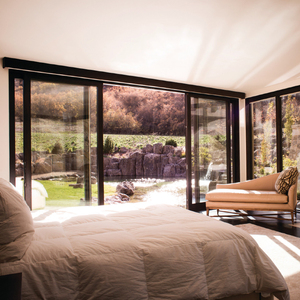
Architectural Multi-Panel Folding Storefront & Patio Assembly
Product Details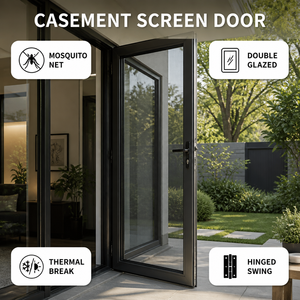
High-Efficiency Thermal Break Storefront Casement Entrance
Product Details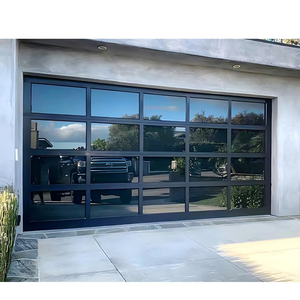
Automated Full-View Commercial Overhead Sectional Door
Product Details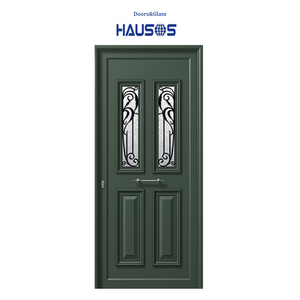
Fortified Neoclassical Security Commercial Entry System
Product DetailsMeeting Polish Climatic Extremes & Technical Mandates
Navigating Poland’s building codes requires precise mechanical calculations and materials capable of withstanding continental-maritime transitional temperatures.
Warunki Techniczne (WT) Compliance
In accordance with Poland's latest energy efficiency codes (WT standard), exterior entry systems require overall heat transfer coefficients (U-values) under strict operational thresholds. DERCHI incorporates multi-chambered polyamide (PA66) thermal breaks and argon-filled triple-glazed warm edge IGUs achieving Ud ratings down to 0.85 W/(m²·K), preventing condensation during Baltic winter cycles.
High-Traffic Resistance (C5 Class)
Urban retail storefronts and office centers in metropolitan centers encounter relentless mechanical cycling. We employ aerospace-grade 6063-T6 architectural aluminium alloys with wall thicknesses reaching 2.5mm to 3.0mm, paired with heavy-duty concealed German pivot systems and institutional overhead door closers tested to EN 1154 and EN 12400 Class 8 durability levels.
Anti-Intrusion (RC2/RC3 Security)
Security remains a primary specification for high-value logistics facilities, automobile showrooms, and street-level retail along major Polish arteries. Our assemblies integrate multipoint locking mechanisms, anti-lever interlocks, and laminated P4A/P5A safety glass configurations evaluated under European EN 1627-1630 intrusion resistance benchmarks.
Localized Architectural Deployments Across Poland
1. Pomeranian & Seaside Zones (Gdańsk, Gdynia, Szczecin): Commercial properties in the Baltic littoral region face continuous coastal salinity, damp cold, and elevated wind-load pressures. DERCHI utilizes marine-grade fluorocarbon (PVDF) and Qualicoat-certified architectural electrostatic powder coatings (minimum 60-80 microns) resisting C4/C5 corrosive classes, accompanied by EPDM co-extruded perimeter gaskets providing Class 4 air permeability (PN-EN 12207).
2. Urban Mixed-Use & Retail Parks (Warsaw, Łódź, Silesian Agglomeration): Modern Polish logistics centers and "parki handlowe" (retail strip parks) require monumental glass openings with narrow frame sightlines to optimize product presentation and natural day-lighting. Our minimalist thermal storefront systems ensure high visible light transmittance (VLT) while controlling solar heat gain (g-value) during continental summer heatwaves.
3. Historic Facade Modernization & Revitalization (Kraków Old Town, Wrocław Nadodrze): Urban preservation directives frequently require new structural commercial shopfronts to respect heritage masonry profiles while adhering to modern acoustic (Rw up to 45 dB) and insulation metrics. We supply customized structural mullions and bespoke anodized finishes that meet conservation compliance without performance compromise.
Trends Reshaping the Polish Commercial Storefront Market
A forward-looking perspective on how sustainability mandates, automation, and supply chain strategies are evolving Polish commercial design.
Decarbonization & Low-Carbon Aluminium
With corporate developers in Poland adhering to BREEAM and LEED green building benchmarks, demand for verified Environmental Product Declarations (EPDs) has accelerated. Modern manufacturing utilizes high percentages of circular post-consumer recycled billet processed with clean hydropower, driving embodied carbon metrics below 4.0 kg CO2e/kg aluminium.
BIM Integration & Automation
Automated building management systems (BMS) in Class-A Warsaw office spaces require storefronts configured with electro-mechanical concealed latching, digital access readers, and optical radar sensors. Supplying native Autodesk Revit BIM models accelerates architectural coordination, cutting lead friction during technical tendering.
Direct Factory Procurement Models
In response to domestic European labor bottlenecks and high processing markups, general contractors (Generalni Wykonawcy) increasingly bypass multi-tier local distributors. Sourcing completely assembled, precision-machined modular storefront systems directly from audited Chinese tier-1 factories drives cost efficiencies of 25% to 35% without sacrificing CE conformity.
Factory Strengths Behind Direct China-to-Poland Logistics
From robotic extrusion processing to seamless maritime delivery to Gdańsk or rail freight via the New Silk Road (Małaszewicze).
Full Vertical Integration
Our Foshan manufacturing campus manages the complete production continuum: die design, extrusion, anodizing, thermal break assembly, CNC 5-axis robotic milling, and robotic structural glazing assembly, ensuring zero quality divergence between batches.
CE & EN 14351-1 Certification
Every commercial door and window batch manufactured for European delivery is tested for initial type testing (ITT) and factory production control (FPC) compliance. CE declarations of performance (DoP) and comprehensive laboratory test metrics accompany all commercial dispatch documents.
Bespoke CAD/Shop Drawings
Our structural engineering department converts your architectural tender schedules into fabrication-ready CAD submittals, glass static deflection analysis, and installation anchor details, eliminating spatial collisions prior to CNC tooling initialization.
Multimodal Logistics Routes
We provide flexible shipping directly to major logistics points: ocean freight container discharge at Port of Gdańsk or expedited intermodal China-Europe Railway Express (CRE) arriving in Małaszewicze within 14–18 transit days for mission-critical project deadlines.
Frequently Asked Questions for B2B Sourcing in Poland
Clear, technical, and regulatory clarity to streamline your cross-border commercial facade procurement.
How do DERCHI storefront assemblies conform to Polish Warunki Techniczne (WT) thermal standards?
Our thermal break profiles feature polyamide multi-cavity insulating bars (PA66 GF25) filled with expanded aerogel or polyurethane foams. When integrated with double-chamber Low-E argon insulated glazing units with warm composite edge spacers (Swissspacer), our systems achieve overall Ud values below the mandatory 0.9 W/(m²·K) benchmark demanded across Poland’s climatic zones.
What documentation is provided to satisfy Polish building site inspectors (Kierownik Budowy)?
Every commercial delivery includes a comprehensive documentation pack: CE marking conformity certificates according to harmonized standard EN 14351-1:2006+A2:2016, Declaration of Performance (DoP), mechanical and thermal test reports from accredited notified testing bodies, mill certificates for 6063-T6 alloy, and dual-language (Polish/English) installation and maintenance guides.
Can you incorporate European hardware brands such as Siegenia, GU, or Geze?
Yes. Our CNC milling centers run automated profile routing configured to standard European hardware grooves (Euro-groove 16mm/20mm). We directly integrate authentic European-manufactured panic exit devices, automatic swing drives, floor springs, and multi-point security locks from recognized brands (Geze, Dormakaba, GU, Roto, or Siegenia) or high-grade certified factory equivalents based on specification demands.
What transit modes and packing specifications protect glass products across long-distance transit?
Shipments destined for Poland are secured in heat-treated, fumigated export plywood crates (ISPM 15 certified) lined with moisture-barrier film and desiccant packs to prevent moisture condensation during maritime or rail voyages. Corner protectors, EPDM rubber spacers, and custom steel stillages ensure shock absorption during multimodal container handling.
What are the typical lead times for custom architectural storefront production?
Standard fabrication spans 25 to 35 business days following formal client sign-off on detailed CAD shop drawings. Multimodal rail transit to Central Poland via the New Silk Road averages 14 to 18 days, while maritime shipping to the Deepwater Container Terminal (DCT) Gdańsk typically requires 32 to 38 ocean days.