Engineered Aluminium Sliding & Patio Door Systems for Northern Latitudes
Precision-engineered extrusions fabricated from primary 6063-T6 architectural alloy, integrated with advanced multi-chamber thermal breaks and heavy-duty load-bearing carriage hardware.
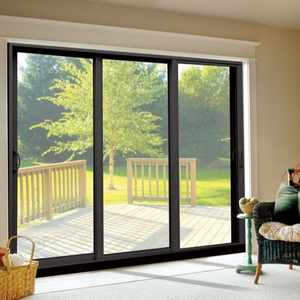
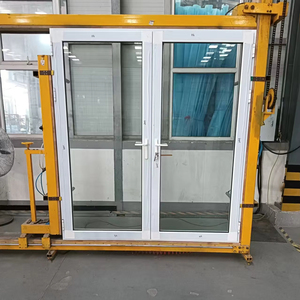
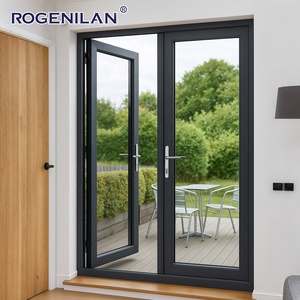
Executive Summary: The Structural Landscape for Aluminium Fenestration in the Russian Federation
The Russian commercial and upscale residential fenestration market represents one of the world's most technically demanding environments. Operating across extreme continental temperature differentials ranging from +38°C during peak summer to -45°C during prolonged Siberian and Central European winters, exterior aluminium sliding doors must transcend conventional aesthetic roles to function as high-performance thermal barriers and structural shields.
Specifying engineers, general contractors, and development firms operating in key Russian economic metropolises—such as Moscow, Saint Petersburg, Kazan, Yekaterinburg, and Novosibirsk—routinely face a bifurcated market. On one hand, historical European Tier-1 extruders (such as German and Italian systems) have seen restricted direct availability, extended procurement cycles, and soaring raw-material premiums. On the other hand, domestic extruders often face extrusion capacity constraints when dealing with complex, ultra-wide panoramic sliding profiles with integrated heavy-duty thermal insulation.
As a result, leading global Tier-1 manufacturers centered in state-of-the-art Chinese manufacturing clusters—most notably Guangdong Dejiyoupin Doors and Windows Co., Ltd. (operating the internationally recognized brand DERCHI)—have established direct supply bridges to Russia. Delivering ISO 9001, CE, and AS 2047 validated architectural solutions, these manufacturers combine 180,000 m² automated production infrastructure with targeted engineering adaptations capable of meeting stringent Russian federal building regulations (SNiP 23-02-2003 "Thermal Protection of Buildings" and GOST 30971-2012).
| Manufacturer / Supplier Classification | Primary Production Base | Thermal Break Spec (PA66-GF25) | Max Glass Unit Thickness | Hardware Load Rating | Direct Russian Logistics Lead Time |
|---|---|---|---|---|---|
| DERCHI (Guangdong Dejiyoupin) | Foshan, Guangdong (180,000m²) | 34mm – 42mm Multi-Chamber | Triple Glazed (Up to 52mm) | 400 kg – 600 kg Lift & Slide | 18-28 Days (Direct Rail / Sea) |
| Alutech Systems | Minsk / Regional Depots | 24mm – 34mm Standard | Double / Triple (Up to 44mm) | 300 kg – 400 kg | 3-10 Days (Regional Stock) |
| Schüco International (Historical Depots) | Germany / Third-Party Hubs | 34mm Isolating Core | Triple Glazed (Up to 50mm) | 300 kg – 400 kg | 45-75 Days (Transit Delays) |
| Reynaers Aluminium | Belgium / European Hubs | Hi-Finity Multi-Chamber | Triple Glazed (Up to 52mm) | 350 kg – 500 kg | 50-80 Days (Cross-Border Indirect) |
| Tatprof Fenestration | Tatarstan, Russia | 24mm Standard Polyamide | Double / Triple (Up to 40mm) | 250 kg – 350 kg | 7-14 Days (Domestic) |
Tailored Engineering for Russia's Diverse Microclimatic Environments
From snowbound dacha estates in the Moscow Ring to coastal humidity in Krasnodar Krai, door engineering must align with localized microclimatic loads.
Suburban Moscow Estates & Dachas
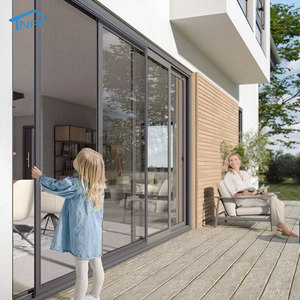
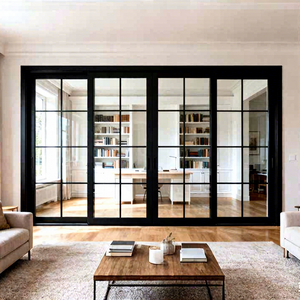
Luxury residential communities along Rublyovo-Uspenskoye and Novorizhskoye Shosse favor floor-to-ceiling panoramic lift-and-slide doors. These installations demand zero-threshold flush integration without sacrificing wind-driven rain seals, paired with low-emissivity argon-filled triple glass to mitigate massive heat loss during prolonged sub-zero winters.
Saint Petersburg Baltic High-Rises
Waterfront developments along the Gulf of Finland face violent, cyclonic wind gusts and persistent maritime humidity. Systems in this zone require high wind load structural resistance (exceeding Class A per GOST 23166-99) and marine-grade fluorocarbon (PVDF) surface treatments to prevent pitting corrosion caused by saline mist and industrial air pollutants.
Sochi & Black Sea Subtropical Villas
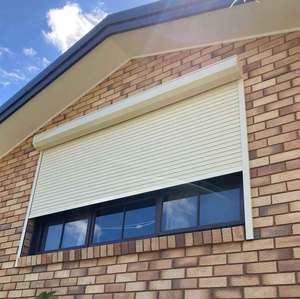
In contrast to the Siberian interior, the Black Sea Riviera features intense solar irradiance and heavy downpours. In this region, sliding systems prioritize solar heat gain reduction via pyrolytic solar-control selective coatings, integrated automated roller shutters for storm defense, and smooth-gliding anti-sand carriage tracks.
Next-Generation Fenestration Trends across the Russian Federation (2025–2030)
Modern Russian architectural doctrine is undergoing a structural transformation toward minimalism and environmental resilience. The historical preference for bulky, heavy PVC multi-chamber profiles is rapidly eroding in premium residential and commercial sectors. High-net-worth consumers and commercial developers now mandate ultra-narrow visual sightlines under 25mm without compromising structural rigidity.
Three core evolutionary paradigms define modern Russian procurement schedules:
- Thermal Isolation Depths Exceeding 38mm: Standard 24mm polyamide strips are no longer sufficient to fulfill Class 1 thermal transmittance requirements under updated Russian federal energy directives. Specifiers require techno-polymer multi-cavity thermal break bars combined with cellular aerogel insulation within profile voids.
- Lift-and-Slide (Hebe-Schiebe) Dominance: Traditional sliding doors rely on brush seals that degrade rapidly in sub-zero ice buildup. In contrast, modern Russian developments specify Lift-and-Slide configurations where the sash drops onto continuous double-lipped EPDM rubber gaskets under its own deadweight (up to 400 kg), establishing hermetic airtightness.
- Anti-Icing Track Engineering: External sliding doors in regions experiencing freeze-thaw thermal cycling require integrated electrical heating cables beneath the anodized stainless steel guide rails to prevent meltwater from freezing and blocking roller mechanisms during spring thaws.
Why Major Russian Specifiers Partner with DERCHI
A 180,000 m² smart fabrication ecosystem providing direct industrial-scale support, custom CAD/BIM drafting, and accredited testing validation.
Massive Scale & Capacity
Over 180,000 m² of automated workshops, 600+ specialized technicians, and a production capacity exceeding 500,000 m² of premium architectural doors and windows annually.
Sub-Zero Engineering
Proprietary PA66-GF25 thermal bridge profiles combined with heavy-duty German hardware lines (Siegenia, GU, Hoppe) engineered to operate friction-free at -40°C.
Free CAD & BIM Coordination
In-house architectural engineers deliver custom structural calculations, static wind load models, and Russian-language shop drawings tailored to municipal approvals.
Direct Eurasian Logistics
Seamless export logistics utilizing China-Europe Railway Express (CR Express) via Manzhouli and maritime shipping routes to Vladivostok and St. Petersburg.
Frequently Asked Questions by Russian Fenestration Buyers
Essential technical, regulatory, and logistics intelligence for professional developers, architects, and procurement managers.
Plan Your Commercial or Residential Fenestration Project
Consult with our structural engineering team today to review your window schedules, obtain CAD/BIM shop drawings, and receive a transparent factory-direct pricing quote tailored for Russian delivery.