Architectural Specification Whitepaper: Aluminum Bi-Fold Systems in Kenya
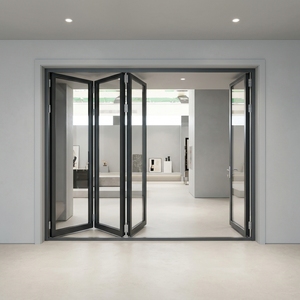
The architectural landscape across the Republic of Kenya has experienced an unprecedented structural evolution over the past decade. From the sophisticated urban mansions of Nairobi's Karen, Runda, Muthaiga, and Kitisuru neighborhoods to the sprawling coastal hospitality retreats of Diani, Watamu, and Nyali in Mombasa, contemporary design prioritizes expansive spatial transparency. As property developers and private homeowners seek to merge expansive internal living spaces with outdoor verandas, manicured gardens, and panoramic ocean vistas, CE Certified Aluminum Folding Doors have emerged as the premier fenestration solution over traditional sliding leaves or restrictive French swing casements.
However, East African environmental dynamics present aggressive operational challenges that conventional fenestration fails to withstand. Specifying systems requires rigorous engineering consideration of equatorial solar irradiance, diurnal temperature extremes, wind-driven torrential rains during monsoonal cycles, and extreme marine salinity along the Indian Ocean seaboard. Sourcing certified systems engineered from 6063-T5 virgin aluminum alloys with verified thermal break technology, multi-point perimeter compression seals, and heavy-duty stainless steel carriage hardware is essential to avoid premature structural sagging, air infiltration, profile warping, and rapid finish degradation.
Microclimatic Engineering: Tailoring Fenestration Across Kenyan Regions
Kenya is defined by remarkably diverse geographical zones, each asserting distinct thermal, structural, and atmospheric demands on building envelopes. A single window or door profile specification cannot universally satisfy regional building science requirements. Our manufacturing engineering team applies localized optimizations to address the distinct microclimates of Kenya:
Nairobi & Central Highlands (Uplands Clime)
Areas such as Nairobi, Kiambu, and Nakuru sit at elevations above 1,600 meters, experiencing severe diurnal temperature swings. Daytime solar heat gain often exceeds 28°C, while nighttime temperatures plunge significantly. Uninsulated aluminum profiles lead to heavy indoor heat dissipation and excessive condensation. We recommend our Polyamide PA66 Thermal Break Systems equipped with 5mm+12A+5mm or 6mm+16A+6mm Double Low-E Argon-filled insulated glazing units (IGUs) to lower overall U-values below 1.8 W/m²K, maintaining thermal equilibrium and slashing cooling and heating energy expenditure.
Mombasa & Coastal Strip (Marine Corrosive Zone)
Projects along the Kenyan coastline encounter high relative humidity, constant airborne chlorides (salt fog), and aggressive monsoonal gusts. Standard hardware and low-grade powder coating blister and corrode within 18 to 24 months. For coastal villas in Diani, Malindi, and Kilifi, we fabricate folding systems using Qualicoat-certified fluorocarbon (PVDF) architectural finishes with coating thicknesses exceeding 40μm, paired exclusively with Grade 316 Marine Stainless Steel carriage rollers, tracks, hinges, and lock cylinders that endure cyclic ASTM B117 salt spray testing beyond 1,000 hours without oxidation.
Rift Valley & Western Plains (Wind & Dust Ingress)
In regions such as Eldoret, Kisumu, and Naivasha, open topography creates strong sustained gusts alongside micro-fine dust suspension. Folding doors require high structural inertia and tight perimeter sealing to prevent dust penetration during dry periods and water leakage during intense downpours. Our systems integrate heavy structural wall thicknesses (2.0mm to 2.5mm primary extrusion profiles) and dual-gasket multi-point vulcanized EPDM seals, securing dynamic water tightness up to 450 Pa and wind pressure resistance compliant with CE Class 4 performance ratings.
Performance Matrix: DERCHI Commercial Grade vs. Common Local Fabrications
Specifiers, architects, and quantity surveyors in Kenya face frequent quality variations when procuring fenestration products. Local artisanal workshops frequently assemble systems from recycled aluminum extrusions using basic single glass panels and non-certified Chinese hardware. The table below delineates the structural, thermal, and mechanical variances between cheap marketplace assemblies and DERCHI's CE-certified architectural folding systems:
| Performance / Material Parameter | DERCHI CE Certified Bi-Fold System | Generic / Local Fabricated Folding Doors |
|---|---|---|
| Aluminum Alloy Specification | Primary Virgin T6063-T5 Structural Billet (High Tensile) | Recycled / Secondary Ingot Aluminum (Brittle, Impure) |
| Structural Profile Wall Thickness | 2.0mm – 3.0mm Structural Reinforcement at stress nodes | 1.2mm – 1.4mm (High deflection under heavy wind load) |
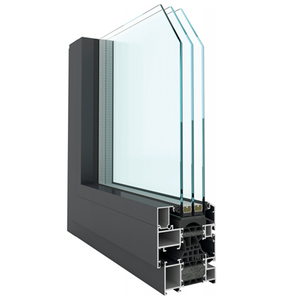
| Thermal Barrier Technology | Technoform Polyamide PA66 GF25 Thermal Break Strip | Non-thermal break (Cold-bridging profile design) |
| Glazing Configuration | Double/Triple Tempered Safety Glass (Low-E / Argon Gas) | Single 5mm/6mm Float Glass or non-certified tempered |
| Carriage Rollers & Hinges | SUS316 / Heavy-duty quad-bearing rollers (Load 150kg/leaf) | Zinc alloy / Carbon steel rollers (Prone to jamming & rust) |
| Surface Treatment Integrity | Qualicoat Class 2 Powder Coat / AkzoNobel PVDF (20-Yr Guarantee) | Basic uncertified industrial spray paint (Fades in 1-2 years) |
| Security Mechanism | Continuous multi-point shootbolt locking (Top & Bottom) | Single-point central latch or surface-mounted manual bolt |
Emerging Architectural Trends Shaping Kenya's Facade Sector
The construction sector in Kenya, guided by visionary developments such as Konza Technopolis, Vision 2030, and high-density luxury developments spearheaded by foreign and institutional capital, is adopting sophisticated architectural standards. We observe four significant design trends directly impacting folding door demands across Nairobi and Mombasa:
1. Over-Height & Maximum Glass-to-Frame Ratios: Standard residential ceiling heights of 2.4 meters are increasingly being replaced in high-end developments by dramatic 3.0 to 3.6-meter openings. Achieving floor-to-ceiling folding glass walls without massive, sightline-blocking vertical mullions requires specialized structural physics. DERCHI's slim-profile bi-fold systems utilize high-moment-of-inertia extruded frames capable of supporting panels up to 1.2 meters wide and 3.5 meters high per leaf without frame sagging.
2. Seamless Indoor-Outdoor Transitions (Zero-Threshold Engineering): Kenya's temperate highland climate and coastal warmth encourage an outdoor-centric lifestyle. Discerning clients reject high step-over bottom frames that create tripping hazards. Our engineered recessed and flush threshold profiles sit flush with interior porcelain tile or exterior decking, incorporating hidden sub-drainage channels that evacuate wind-driven rain while maintaining barrier-free ADA accessibility.
3. Advanced Thermal & Acoustic Decoupling: As urban expansion accelerates in areas like Kilimani, Westlands, and Upper Hill, noise pollution from thoroughfares has intensified homeowner interest in acoustic fenestration. Double-glazed folding doors insulated with asymmetric glass configurations (e.g., 6mm outer tempered + 12A + 8mm acoustic laminated inner) yield an Rw acoustic attenuation rating of over 38 dB, silencing outdoor disturbances.
4. Smart-Access & Multi-Tier Security Integration: Security remains a foundational consideration for residential architecture across East Africa. Modern homeowners demand entrance security without relying on unsightly burglar bars. DERCHI integrates flush multi-point structural locking bars that secure the door leaf into head and sill tracks simultaneously, compatible with European biometric fingerprint, RFID, and smart automation modules.
Factory-Direct Manufacturing Mastery & Global Export Credibility
Headquartered in the premier industrial manufacturing center of Foshan, Guangdong, Guangdong Dejiyoupin Doors and Windows Co., Ltd. (DERCHI) operates as an internationally validated fenestration enterprise. Recognized among China's top 10 door and window brands, our comprehensive operational footprint spans a modern 180,000 m² production base supported by more than 600 skilled technicians, CAD design engineers, and QA inspectors.
For over 25 years, our engineering team has fulfilled demanding structural door schedules across Australia, North America, the United Kingdom, and the African continent. Unlike regional trading intermediaries who outsource assembly to small fabrication units, DERCHI exercises end-to-end quality control across extrusion surface pre-treatment, CNC thermal break crimping, four-corner structural corner crimping, and automated robotic glass assembly.
Our complete fenestration product collections carry official CE certification under EN 14351-1, rigorous AS 2047 Australian testing credentials (achieving top-tier N6 cyclonic wind load resistance ratings), ISO 9001 quality management verification, and UL fire ratings. Every bi-fold unit dispatched to Kenya is thoroughly pre-hung, balanced, and test-cycled in our factory test racks prior to disassembly and export crating.
To eliminate shipping hazards during sea freight transit across the Indian Ocean to the Port of Mombasa, our doors receive multi-layer protective packaging: scratch-resistant polyethylene protective film, foam edge corner guards, moisture-resistant thermal wrapping, and fully reinforced, fumigated solid timber export crates that comply strictly with international phytosanitary import guidelines.
Frequently Asked Questions: Importing Aluminum Bi-Fold Doors to Kenya
How does DERCHI ensure compliance with KEBS and PVoC standards?
We provide full project documentation, including CE factory certificates, mill test reports, and glass safety credentials required by the Kenya Bureau of Standards (KEBS). We coordinate Pre-Export Verification of Conformity (PVoC) inspections via accredited agencies (SGS, Intertek, or Bureau Veritas) prior to container loading, ensuring swift customs clearance at Mombasa.
Can the doors withstand the coastal salt air in Mombasa and Diani?
Yes. For coastal projects, we specify marine-grade AkzoNobel PVDF (Fluorocarbon) surface treatments or high-micron powder coating certified by Qualicoat. Combined with SUS316 stainless steel hinges, rollers, and fasteners, our doors exhibit exceptional resistance to atmospheric salt spray, preventing pitting and corrosion.
What is the typical shipping timeline from your Foshan factory to Kenya?
Manufacturing typically requires 20 to 30 days depending on custom finish options and schedule volumes. Ocean transit from Shenzhen/Guangzhou ports to the Port of Mombasa averages 18 to 25 days. Goods can then be transported directly to site via road freight or the Standard Gauge Railway (SGR) to the Nairobi Inland Container Depot (ICD).
Do you provide installation support for Kenyan building contractors?
Every system ships with labeled hardware, exploded-assembly structural CAD shop drawings, and step-by-step installation manuals. Our English-speaking fenestration engineers provide remote video guidance and live technical consults to guide local site installation teams through track leveling, anchoring, and panel adjustment.
What configuration options are available for folding door panels?
We engineer custom folding door arrangements ranging from 2-leaf configurations up to 10+ leaf spans spanning over 12 meters. Panels can stack entirely to one side or split to both sides (e.g., 3+3, 5+1, or 4+0 layouts), and can feature an independent active daily swing door leaf for convenient entry without opening the full folding screen.