High-Performance Window & Architectural Door Systems
Explore our certified aluminum systems engineered for heavy wind-load resistance, acoustic isolation, and ultra-low thermal transmittance (Uw ≤ 0.8 W/m²·K) for commercial and residential developments across Denmark.
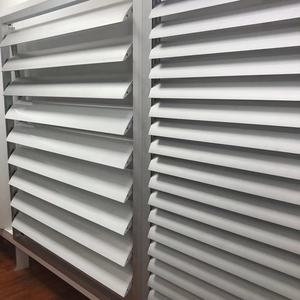
Engineering Aluminum Crank Out Windows for the Demanding Danish Built Environment
In contemporary Nordic architecture, fenestration is never merely an aesthetic closure; it is a critical energetic threshold. The Danish market operates under one of Europe's most stringent building frameworks: Bygningsreglementet 2018 (BR18). When specifiers, structural engineers, and general contractors source aluminum crank out windows (casement and awning mechanisms), they require verification that frames transcend decorative functionality to act as resilient thermal barriers capable of enduring Jutland coastal gales, Kattegat saltwater spray, and prolonged sub-zero Scandinavian winters.
As an industrial powerhouse with a 180,000 m² integrated production base, Guangdong Dejiyoupin Doors and Windows Co., Ltd. (DERCHI) bridges high-throughput precision extrusion with the bespoke engineering demanded by Denmark's architectural community. Crank out windows—often favored for deep reveals, effortless mechanical operator access, and superior gasket compression—solve the chronic weakness of sliding mechanisms in harsh northern latitudes: perimeter air leakage.
Our dedicated manufacturing lines for Scandinavian exports deploy continuous polyamide thermal break systems (PA66 GF25 reinforced with 25% fiberglass), multi-chambered internal profile geometries, and EPDM co-extruded triple-gasket seals. When combined with warm-edge spacer IGUs (Insulated Glass Units) charged with 90% Argon gas, our aluminum crank out assemblies routinely achieve an overall heat transmission coefficient of Uw ≤ 0.80 W/m²·K, matching Danish Class A Energy Window mandates.
BR18 Energy Class A Compliance
Danish regulations stipulate that replacement windows must achieve an Eref (Energy Balance) rating greater than or equal to 0 kWh/m² per annum. Our multi-chambered aluminum crank out windows capture passive solar gains (g-value ≥ 0.50) while suppressing conductive loss through multi-cavity insulation profiles.
Coastal Wind & Watertightness
With Denmark's extensive 7,300 km coastline, fenestration is subjected to severe driving rain and cyclical gale pressures. DERCHI crank out systems utilize multi-point stainless steel perimeter locks that cinch sash edges tightly against dual vulcanized EPDM gaskets, achieving EN 12208 Class 9A (600 Pa) watertightness.
Seaside Corrosion Metallurgy
Saline humidity accelerates pitting in standard architectural extrusions. We specify high-purity 6063-T5/T6 aerospace-grade virgin aluminum pre-treated with chrome-free passivation and finished with Qualicoat Class 2 or PVDF fluorocarbon coatings capable of surpassing 3,000 hours in neutral salt spray (NSS) testing.
Need Custom CAD Shop Drawings for a Danish Fenestration Schedule?
Our structural engineering department coordinates directly with Scandinavian architects, providing tailored wind load calculations, BIM models, and thermal bridge isotherm analyses within 24 hours.
Localized Applications of Aluminum Crank Out Systems Across Denmark
Fenestration requirements vary significantly across Denmark's distinct architectural zones. An envelope design suitable for an urban infill development in Copenhagen's Nordhavn will face vastly different structural and environmental parameters than an exposed coastal villa on the dunes of Skagen.
Jutland West Coast Residences
Exposed to Atlantic weather systems, single-family luxury villas throughout Esbjerg, Ringkøbing, and Blåvand demand exceptional wind load defiance (EN 12210 Class C5). Heavy-duty stainless roto-gear crank mechanisms allow controlled sash opening without dangerous wind gusts snatching the window sash outward.
Copenhagen Urban Regeneration
Multi-story adaptive reuse and residential towers in Carlsberg Byen and Sydhavnen prioritize sound attenuation alongside sleek profiles. Equipped with asymmetric laminated glass units (e.g., 6mm Sound-Control PVB + 4mm + 6mm Toughened), our systems achieve acoustic ratings up to Rw = 44 dB.
Zealand Commercial Headquarters
Corporate buildings throughout Greater Copenhagen require seamless integration with Building Management Systems (BMS). Our crank mechanisms accommodate motorized concealed chain actuators that synchronize with indoor CO₂ and temperature sensors for natural automated night-purge cooling.
Nordic Passive House Projects
Zero-emission residential communities require extreme thermal containment. Utilizing 44mm triple-glazed IGUs with double low-E coatings, warm edge silicone composite spacers, and continuous multi-chamber polyamide thermal breaks, our assemblies satisfy strict Passivhaus standard criteria.
Performance Benchmarks: Danish Building Standards vs. DERCHI Engineering
Procurement teams require verifiable test data compliant with European Harmonized Standards (EN 14351-1). Below is an engineering comparison evaluating Danish baseline code obligations versus the validated metrics of our export series aluminum crank out windows.
| Performance Criterion | EN Testing Protocol | Danish BR18 Base Requirement | DERCHI High-Spec Crank Out |
|---|---|---|---|
| Thermal Transmittance (Uw) | EN ISO 10077-1 / EN ISO 10077-2 | ≤ 1.2 W/m²·K (Class A ≤ 0.8) | 0.78 – 0.84 W/m²·K (Triple Glazed Low-E) |
| Air Permeability | EN 1026 / EN 12207 | Class 3 (600 Pa) | Class 4 (600 Pa — Maximum Airtightness) |
| Watertightness | EN 1027 / EN 12208 | Class 7A (300 Pa) | Class 9A / E1050 (Up to 1050 Pa Driving Rain) |
| Wind Load Resistance | EN 12211 / EN 12210 | Class C3 (1200 Pa) | Class C5 (2000 Pa Surface Deflection) |
| Acoustic Attenuation (Rw) | EN ISO 717-1 | Project Specific (Typically 33 dB) | 38 dB – 44 dB (Acoustic Acoustic Laminated Glass) |
| Mechanical Operating Cycles | EN 1191 / EN 12400 | 10,000 Operations | 25,000+ Cycles (Hardened Stainless Roto Gears) |
Emerging Fenestration Trends Across the Danish Construction Sector
The Danish architectural landscape is characterized by functional minimalism, daylight optimization, and ambitious decarbonization timelines. Four macro trends currently shape the selection of aluminum crank out windows among Danish developers and housing corporations:
Ultra-Slim Visible Sightlines
Traditional Scandinavian timber-aluminum composites often suffer from bulky frame widths. Danish designers are moving toward ultra-slim, flush-exterior aluminum profiles with hidden sash systems that maximize daylight penetration during dark Nordic winter months.
Life-Cycle Assessment (LCA) Transparency
From 2023 onwards, Danish law requires comprehensive LCA documentation for all new buildings exceeding 1,000 m² (capping CO₂-equivalent emissions). DERCHI leverages hydro-powered, low-carbon billet smelting and complete material recyclability, supplying project-specific EPDs (Environmental Product Declarations).
Concealed Hardware Integration
External surface-mounted hinges disrupt minimalist Nordic lines and collect condensation. Modern specifications mandate concealed 180-degree or cranked scissor hinges combined with folding operator handles that tuck neatly against the interior frame sill, maintaining pristine clean geometries.
Dual-Color Anodized & Textured Finishes
Architects commonly specify dark architectural finishes externally (such as Anthracite Grey RAL 7016 or Jet Black RAL 9005) to complement Scandinavian brickwork, while maintaining clean white or anodized warm metallic tones internally to optimize interior space lighting.
Why Major International Contractors Partner with Our 180,000 m² Manufacturing Complex
Sourcing directly from our Foshan industrial center affords European project owners decisive commercial and technological advantages. Operating with over 25 years of engineering experience, DERCHI eliminates intermediary markups while providing institutional-grade quality assurance across every phase of production.
Our infrastructure encompasses automated European CNC profile cutting and milling machining centers, high-capacity German anodizing and vertical powder-coating towers, and robotic insulating glass assembly lines. Every custom crank out window order undergoes stringent pre-shipment testing in our accredited on-site laboratory—evaluating corner-weld rupture strength, structural load deflection, air infiltration, and cyclical operator endurance.
Furthermore, we eliminate the primary friction points of cross-continental procurement: our dedicated engineering team creates exhaustive CAD shop drawings, structural anchorage details, and BIM models completely free of charge before metal cutting begins. Consignments are packed inside timber crates treated to international phytosanitary standards (ISPM 15) and delivered seamlessly via direct container freight to Aarhus, Copenhagen, or Fredericia ports.
Procurement & Technical FAQ: Aluminum Crank Out Windows for Denmark
Straightforward answers addressing the compliance, logistic, and technical queries most frequently raised by Danish architects, builders, and import specifiers.
Do your aluminum crank out windows carry full CE Marking and comply with EN 14351-1?
How does your factory guarantee compliance with Denmark's BR18 energy regulations?
What hardware mechanisms do you integrate to resist severe coastal wind pressures?
What lead times and logistical solutions do you offer for containerized shipments to Denmark?
Can you accommodate non-standard Danish architectural reveals and custom wall interfaces?
Equip Your Upcoming Danish Project with Factory-Direct Fenestration
Connect with our technical export sales team today. Forward your door and window schedule, architectural elevations, or structural requirements for a comprehensive factory-direct quotation and thermal calculation.