Architectural Product Catalog for Melbourne Infrastructure
Every extrusion series is tested against Australian wind-loading, marine salt exposure, and dynamic impact thresholds. Explore our verified structural assemblies configured for Victorian architectural schedules.
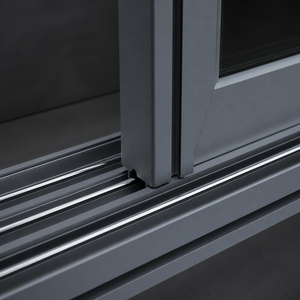
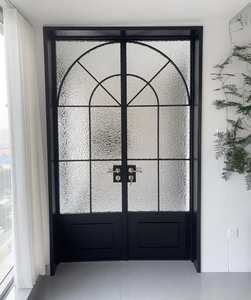
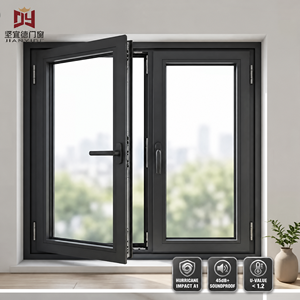
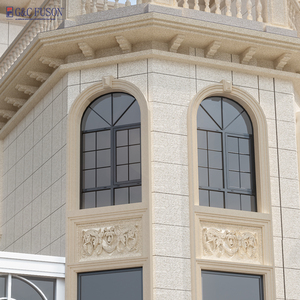
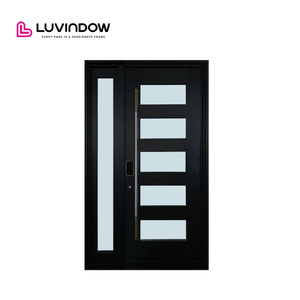
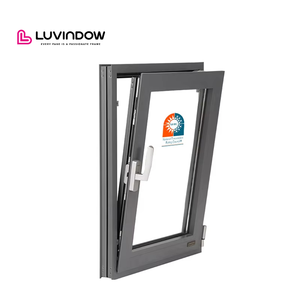
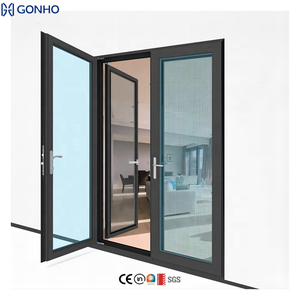
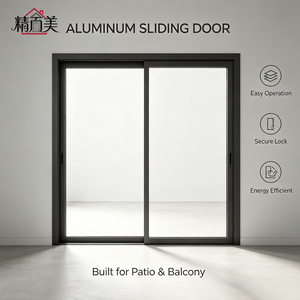
Precision-Engineered Jali Systems in Melbourne Suburbs
Melbourne presents one of the most mechanically and climatically challenging urban landscapes in Oceania. From the aggressive coastal marine mist along Port Phillip Bay to the severe thermal oscillations of the Yarra Valley, our architectural aluminium jali screen assemblies provide an uncompromising barrier of security, thermal protection, and natural ventilation.
Brighton, St Kilda & Bayside Corridors
Homes located along Beach Road require specialized marine-grade protection. Atmospheric chloride deposition rapidly degrades low-grade ferrous assemblies and sub-standard alloy screens. We engineer 6063-T6 virgin architectural alloy extrusions finished with Qualicoat Seaside Class 3 fluorocarbon (PVDF) and AkzoNobel Interpon D3020 powders to withstand C4 and C5 coastal corrosion classifications without pitting or galvanic failure.
South Yarra, Toorak & Kew Heritage Estates
Victorian-era Italianate mansions and Edwardian homes demand intricate ornamental aesthetics that comply with municipal heritage overlay constraints without introducing high-maintenance wrought iron. Our factory utilizes high-tonnage 5-axis CNC laser cutters to replicate traditional cast iron lace and filigree geometric patterns into lightweight, high-tensile 5052-H32 marine plate, marrying historical silhouettes with modern triple-point deadlocks.
Docklands, Southbank & Melbourne CBD Mid-Rise
In high-density apartment and luxury boutique hotel environments, entry systems must manage intense pedestrian cycling, structural deflection under localized wind tunnels, and strict acoustic attenuation standards. Our acoustic-damped jali frames incorporate multi-chambered thermal breaks and EPDM co-extruded acoustic seals to insulate luxury interiors from tram resonance and street-level noise up to Rw 42 dB.
AS 5039 / AS 5041 Structural Rigidity & AS 3959 BAL-40 Ember Defense
Specifying security jali screens and ornamental safety fenestrations across Greater Melbourne requires strict compliance with the National Construction Code (NCC 2022). Our products pass rigorous testing cycles at our Foshan testing center, confirmed by NATA-accredited third-party laboratory evaluations.
| Test Protocol | Standard Reference | DERCHI Factory Achieved Metrics |
|---|---|---|
| Dynamic Impact Test | AS 5041 Clause 5.3 | Passed 5 consecutive 100J impacts (Sandbag pendulum) |
| Jemmy & Leverage Test | AS 5041 Clause 5.2 | Resisted >3.0kN lever load along strike plate |
| Bushfire Ember Resistance | AS 3959:2018 (BAL-29 to BAL-40) | Woven 316 marine-grade mesh, aperture <1.8mm bronze/black |
| Wind Load Certification | AS 2047 / AS 4055 | N6 Classification achieved (Ultimate Design 4500 Pa) |
Every Melbourne-bound shipment includes individual project test certificates, verified alloy heat number documentation, and Australian Building Code Board (ABCB) conformity declarations.
Inquire Now
Emerging Fenestration Trends Across Victoria (2025–2030)
As the Victoria 7-Star NatHERS energy efficiency mandate shifts building specifications, fenestration components can no longer operate as static panels. Aluminium jali and security entries are evolving into multi-functional structural barriers.
Integration with 7-Star NatHERS Ratings
Traditional single-layer security grilles introduce thermal bridges across building envelopes. Our latest series incorporates polyamide thermal barrier strips (PA66 GF25) within the outer jali carrier frame. This allows Victorian developers to install decorative safety screens without compromising the whole-of-home U-value or solar heat gain coefficient (SHGC).
Smart Access Automation & Biometrics
High-end residential builds in Warrandyte, Brighton, and Hawthorn increasingly require seamless integration with home automation. Our jali door frames feature integrated conduits, motorized multipoint lock mortises, and flush-mounted biometric scanners (compatible with Control4, Crestron, and Apple HomeKit) concealed within hollow extruded profiles.
Custom Parametric Shadow Screens
Moving beyond utilitarian diamond grilles, Melbourne architects leverage parametric CAD designs to generate dynamic day-lighting patterns. The perforated aluminium jali acts as an external solar shading device (brise-soleil), slashing peak cooling loads by up to 34% during blistering Victorian summers while preserving natural cross-ventilation.
Why Melbourne Architects & Commercial Builders Trust DERCHI
Guangdong Dejiyoupin Doors and Windows Co., Ltd. (DERCHI) operates one of Southern China's largest advanced door and window manufacturing complexes, engineered specifically to bridge international manufacturing precision with Australasian on-site compliance.
End-to-End Vertical Control
From aluminum billet casting, precision extrusion processing, and fluorocarbon powder coating to final robotic assembly, every phase occurs within our 180,000m² facility. This avoids middleman markup and guarantees raw material traceability.
AEST Engineering Collaboration
Our bilingual fenestration engineers operate during Australian Eastern Standard Time (AEST). We convert architectural elevation schedules into detailed CAD shop drawings, shop floor cutting lists, and BIM families within 24 hours.
Direct Sea Freight to Port of Melbourne
We provide full container load (FCL) and consolidated (LCL) freight directly into the Port of Melbourne (Webb Dock / Swanson Dock). All packaging uses ISPM-15 certified non-coniferous timber crates with anti-moisture vapor barriers to satisfy strict Australian Biosecurity (DAFF) checks.
Rigorous Multi-Stage QC Protocol
Every jali door undergoes digital thickness testing (>2.0mm structural wall profiles), dry film coating thickness measurement (>65 microns), and mechanical hinge cycle testing before export crating, complete with documented photo and video reports.
Frequently Asked Questions for Melbourne Importers & Builders
Clear technical insights on structural compliance, logistics, customs clearance, and architectural specification for importing aluminium jali doors from our manufacturing base.