Industrial-Grade Aluminium Sliding Window & Glazing Systems
Precision-fabricated systems certified to AS2047, CE, and NFRC international standards, calibrated specifically for high-wind loads, extreme thermal transfers, and fine desert silica resistance across the Riyadh metropolitan territory.
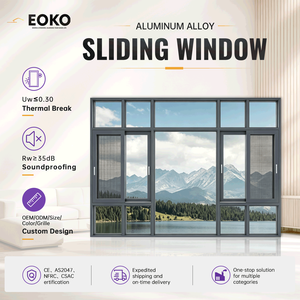
EOKO High Quality Aluminium Sliding Windows Double Glazed NFRC AS2047
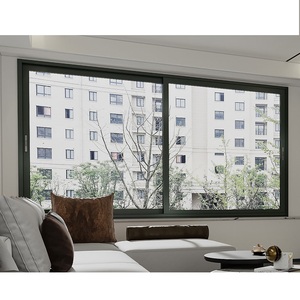
Aluminum Sliding windows and Door Aluminium Double Glass Sliding Window
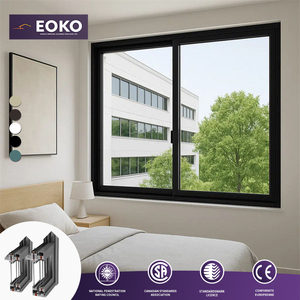
EOKO Aluminum Sliding Window CE Certified Double Glazed Thermal Break
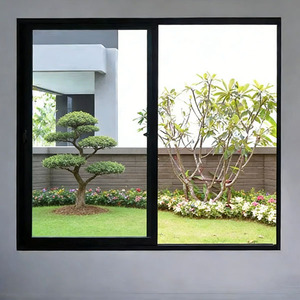
Customizable Modern Design Aluminum Alloy Frame Sliding Window Double Glazing
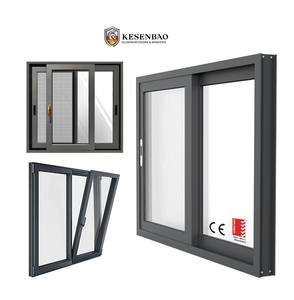
AS2047 CE Custom European Style Black Aluminum Balcony Sliding Glass Windows
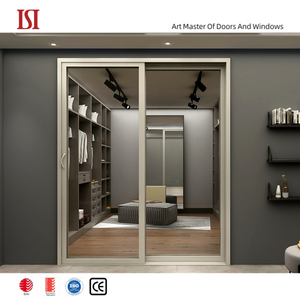
Top Brand Customized Aluminum Sliding Glass Doors Double Glazed Tempered Glass
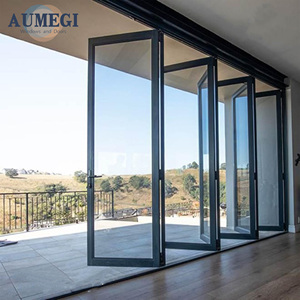
Aumegi Australian Style Vertical Folding Doors Bi Folding Aluminum Bi-fold Patio
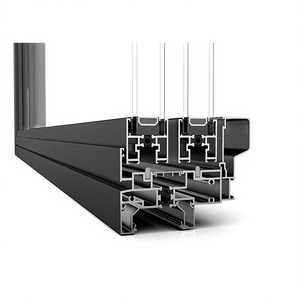
Fuson Soundproof Accordion Sliding Glass Windows and Doors Thermal Break
Sliding Window Thermal Dynamics in Riyadh’s Hyper-Arid Environment
Building fenestration systems in the central plateau of Saudi Arabia requires overcoming unique thermodynamic and atmospheric challenges: peak exterior surface temperatures exceeding 72°C, solar irradiation spikes, and abrasive silica dust storms.
Mitigating Extreme Delta-T (ΔT) Through PA66 GF25 Polyamide Thermal Barriers
In Riyadh, summer ambient air temperatures routinely surpass 48°C, while interior building air conditioning systems maintain ambient spaces at 22°C. This persistent 26°C to 30°C temperature differential generates acute thermal stress across standard non-insulated aluminium frames, triggering high convective heat gains and severe structural contraction-expansion cycles.
Our factory integrates high-precision PA66 GF25 polyamide thermal struts (24mm to 34mm width reinforced with 25% glass fiber). These barriers decouple interior and exterior 6063-T6 architectural extrusions, dropping the overall window U-value down to a stringent 1.3 to 1.6 W/m²·K. This fully satisfies the thermal transmittance thresholds mandated by the Saudi Building Code (SBC 601 and SBC 602).
- Linear Expansion Coefficient Control: Glass fiber reinforcement ensures the polyamide strut matches aluminium’s thermal expansion rate (2.3 × 10⁻⁵ /K), preventing structural delimitation under solar loading.
- Multichamber Cavity Debridgement: Hollow thermal chamber geometries filled with low-density polyolefin foam to arrest internal infrared radiation exchange.


Desert Sandstorm Defense: Triple Finned Weatherstripping & Anti-Backdraft Drainage
The Najd territory experiences persistent windblown sand, driven by regional Shamal winds loaded with fine particulate matter (PM2.5 to PM10 silica particles). Standard sliding window mohair brushes degrade quickly or allow micro-particulates to penetrate interior runners, causing roller binding and catastrophic air leakage.
To address this structural vulnerability, our export-grade sliding fenestrations implement a proprietary Triple-Barrier Sealing Architecture. We merge high-density woven polypropylene brush piles featuring a centralized impervious polyethylene fin with dual vulcanized EPDM compression gaskets along the meeting stiles and track interlocks.
- Anti-Backdraft Gravity Valves: External water weep channels are engineered with one-way counterbalanced gravity flap closures that allow pressure drainage while blocking reverse desert winds up to 600 Pa.
- SUS316 Encapsulated Track Systems: Hardened stainless steel continuous running tracks isolate roller carriages from particulate deposition, eliminating friction wear over 100,000 continuous sliding cycles.
Riyadh Architectural Applications & Spatial Requirements
Tailored fenestration engineering suited to contemporary gated communities, private modern palaces, mixed-use commercial hubs, and urban regeneration towers across Riyadh.
Contemporary Luxury Villas (Al-Malqa, Hittin, Al-Nakheel)
Ultra-slim interlock profiles (20mm visible sightline) and oversized glass lites up to 3.5 meters high. These systems seamlessly merge indoor living areas with landscaped courtyard pools and private gardens, while double-silver Low-E IGU glass shields interiors against blinding afternoon solar heat.
High-Density Multi-Residential Projects (ROSHN & New Murabba)
Standardized, high-durability sliding window modules engineered for swift modular installation. Built with integrated insect netting, heavy-duty multipoint flush latches, and optimized acoustic dampening (STC 38–42 dB) that insulates residents from bustling metropolitan thoroughfares and arterial expressways.
Commercial Lobbies & Hospitality Resorts (Diriyah Gate & KAFD)
High-traffic heavy-duty automated sliding glass systems and multifold acoustic curtain-sliding combinations. Manufactured with Class 1 (25μm) anodic oxidation or fluorocarbon PVDF finishes that resist abrasion from windblown desert sands and preserve long-term surface integrity without chalking.
Riyadh Construction Trends Under Saudi Vision 2030
The transformation of Riyadh into one of the world's top ten metropolitan economies is driving an unprecedented evolution in structural fenestration regulations and architectural design criteria.
Enforcement of SBC 601/602 Energy Codes
The Saudi Energy Efficiency Center (SEEC) and municipal authorities strictly enforce U-value limits (U_window ≤ 1.8 W/m²·K in Zone 1) on all new residential building permits. Contractors and developers can no longer deploy non-thermal break profiles without risking municipal rejection during thermal imaging inspections.
Saudi Green Initiative & Mostadam Green Building Rating
Projects seeking prestigious Mostadam, LEED, or Envision certifications require verified Environmental Product Declarations (EPD) and recycled aluminium billets. Fabricating with low-carbon aluminium extrusions drastically reduces the embedded carbon footprint across large-scale urban master plans.
Integration with Smart Building Automation
Premium residential developments across Riyadh now mandate motorized sliding systems integrated with Zigbee, KNX, or BACnet home management networks. These systems automate sliding actions based on exterior wind velocity sensors and sun position trackers to optimize natural airflow and cooling loads.
Architectural Aluminium Sliding Window Specification Matrix
Comprehensive compliance baseline comparing standard market extrusions with our specialized Saudi Arabia Heavy-Duty Thermal Break export systems.
| Performance Parameter | Common Local Fabrications | Our Factory Direct Riyadh Export Standard | Saudi / International Standard |
|---|---|---|---|
| Aluminium Alloy & Temper | Commercial 6063-T5 (Wall: 1.2–1.4mm) | Architectural 6063-T6 (Wall: 2.0–3.0mm Structural) | ASTM B221 / EN 755 |
| Thermal Barrier Insulation | Non-Thermal Break or PVC Strip | 24mm to 34mm PA66 GF25 Polyamide Bar | SBC 601 / SBC 602 |
| Overall U-Value (Uw) | 3.8 – 5.4 W/m²·K (High Thermal Loss) | 1.3 – 1.6 W/m²·K (Extreme Efficiency) | ISO 10077-1 / NFRC |
| Glazing Unit Assembly | Single Glass or 5+6A+5 Float Double | 6 Low-E + 16Ar + 6 Tempered Warm-Edge Spacer | SASO / SGCC Certified |
| Sand & Air Permeability | Class 2 (Standard Mohair Brush) | Class 4 / N6 Rating (<0.5 m³/h·m at 100Pa) | EN 12207 / AS2047 |
| Surface Finish Spec | Standard Powder Coat (40–50μm) | AAMA 2605 PVDF Fluorocarbon (3-Coat ≥75μm) | Qualicoat Class 2/3 |
| Structural Wind Load Deflection | 1200 Pa (Serviceability Failure at Spans) | 3600 to 4500 Pa (Severe Najd Storm Tested) | ASTM E330 / AS2047 |
Enterprise Strengths Powering Direct Riyadh Supply Chains
Guangdong Dejiyoupin Doors and Windows Co., Ltd. leverages over two decades of precision industrial fabrication, providing Saudi architects, engineering consultants, and general contractors with unmatched manufacturing consistency and reliable delivery.
180,000 m² Automated Hub
Our expansive manufacturing facility features automated German and Italian 5-axis CNC machining centers, automated compound sawing lines, and robotic corner-crimping cells holding fabrication tolerances within ±0.5mm.
SABER Platform & SASO Support
We provide full documentation suites: Product Certificates of Conformity (PCoC) and Shipment Certificates of Conformity (SCoC) via the Saudi SABER system, backed by accredited laboratory test reports for hassle-free customs clearance.
Direct Sea-to-Dry-Port Logistics
We coordinate comprehensive FCL container shipments routed directly to King Abdulaziz Port in Dammam or Jeddah Islamic Port, smoothly transferring in-bond to the Riyadh Dry Port with heavy-duty export-grade steel and fumigated plywood framing.
Dedicated Engineering Desk
Our facade engineers review shop drawings, wind load calculations (ASCE 7 / SBC 201), and glass stress models to deliver tailored solutions directly to procurement teams operating across Saudi Arabia’s daylight hours.

Factory-Direct QA/QC Auditing & Structural Traceability
Every profile extruded, thermal bar inserted, and double-glazed insulated unit manufactured within our lines undergoes a rigorous 14-stage quality assurance protocol. We inspect billet chemical composition via optical emission spectrometry, verify powder coating cross-hatch adhesion, and test complete sash assemblies in a calibrated four-meter weather simulation chamber.
This industrial discipline eliminates installation failures on site, cuts project timelines for Riyadh developers, and guarantees zero air infiltration along interlock junctions during heavy dust storms.
Engineered Supply Chain Architecture from Cad to Riyadh Site
A transparent, step-by-step engineering workflow built to ensure total alignment across architectural schedules, structural load specifications, and international trade compliance.
Specification & BOQ Review
We evaluate your architectural elevations, window schedules, U-value requirements (SBC 601), and wind load pressures to match optimum extrusion profiles.
Shop Drawings & Engineering
We generate comprehensive CAD details highlighting anchor placements, rough opening clearances, thermal breaks, and glass stress configurations for consultant approval.
Precision CNC Manufacturing
Extrusions are CNC machined, dual-corner crimped with structural adhesives, glazed in clean-room environments, and test-assembled before packaging.
Crating, SABER & Delivery
Units are secured inside reinforced A-frame steel crates, certified through SABER, and shipped directly to Riyadh sites with complete installation manuals.
Saudi Arabia Importer & Contractor FAQs
In-depth technical answers addressing SABER conformity, customs duties, thermal performance standards, and site handling throughout Riyadh.
How do your sliding window systems comply with SBC 601 / SBC 602 regulations?
What is the protocol for SABER platform certification when importing from your factory?
What are the import tariff rates for fabricated aluminium windows into Saudi Arabia?
How do you protect sliding window runners and rollers from fine sand accumulation?
Which surface finish best withstands the intense UV radiation and heat of Riyadh?
What are the typical sea freight transit and lead times from your factory to Riyadh?
Accelerate Your Riyadh Project Fenestration Procurement
Partner with an established manufacturer capable of meeting complex structural wind loads, stringent SBC 601 thermal codes, and the fast-track schedules demanded by Saudi Vision 2030 developments. Contact our engineering team for BOQ take-offs, custom extrusion profiles, and factory-direct pricing.