Featured Heavy-Duty Aluminium Entrance & Glazing Systems
Tested rigorously under international benchmarks (AS 2047, CE, ISO 9001), our aluminium systems offer extreme storm endurance, high acoustic isolation, and seamless aesthetic appeal tailored for luxury estates and commercial spaces across Panama.
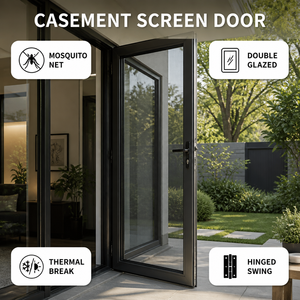
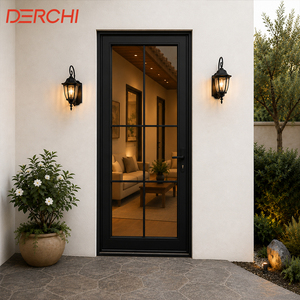
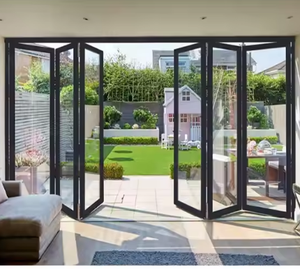
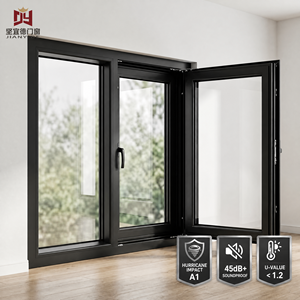
Architectural Applications: Tailoring Aluminium Entrance Systems to Panama’s Microclimates
Panama occupies a uniquely challenging geographic position. As a narrow isthmus between the Pacific Ocean and the Caribbean Sea, the territory is defined by intense humidity (consistently oscillating between 75% and 95%), salt-laden maritime breezes, heavy tropical convective downpours, and intense solar irradiance. For architects, master builders, and project managers in Panama City, Costa del Este, Santa María, and beachfront regions like Coronado or Buenaventura, standard entry doors consistently degrade through rot, profile swelling, thermal bridging, or rapid oxidation. Aluminium double front doors provide the ideal engineering alternative, provided their metallurgical and chemical surface treatments are customized for these specific environmental parameters.
High-Rise Penthouses & Coastal Condominiums
Projects along Avenida Balboa, Punta Pacífica, and Costa del Este endure sustained dynamic wind loads and saline fog. In these locations, our structural 6063-T6 multi-chambered profiles with PVDF fluorocarbon coatings prevent galvanic and filiform corrosion while resisting wind pressures exceeding 4.0 kPa.
Private Villas in Gated Communities
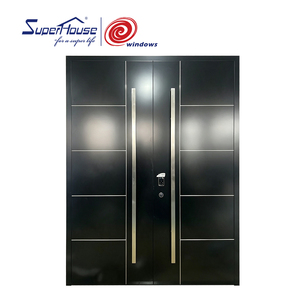
Developments in Santa María Golf & Country Club, Clayton, and Altos del María prioritize expansive entry spans, architectural symmetry, and seamless smart-home access. Oversized cast aluminium and double entrance pivots fitted with biometric locks provide exceptional structural stability without bowing under thermal deflection.
Hotels, Resorts & Diplomatic Enclaves
Boutique hotels in Casco Viejo and luxury retreats in Bocas del Toro demand systems that merge historic charm with fire-rated, acoustic, and anti-intrusion capabilities. DERCHI’s insulated profile double doors deliver an STC rating of 42 dB, sealing interiors against exterior street noise and moisture intrusion.
Macro Trends Shaping Panama's Fenestration & Door Market
The construction sector across Central America is undergoing a technological and ecological shift, driven largely by Panama's updated Reglamento de Edificación Sostenible (Sustainable Building Regulations, RES). This standard mandates substantial reductions in HVAC thermal loading for new commercial and residential developments. Architectural hardware is shifting from conventional single-pane steel or solid wood units toward advanced architectural aluminium assemblies due to the following industry trends:
1. Thermal Decoupling & Energy Conservation Metrics
Panama’s warm, humid climate demands non-stop air conditioning. Traditional aluminium frames function as heat bridges, conducting outdoor radiant heat directly into climatized spaces. Modern developers actively specify polyamide thermal breaks (PA66GF25) within double door systems. When combined with double- or triple-glazed Low-E insulated glass units (IGUs) filled with argon gas, these assemblies achieve Solar Heat Gain Coefficients (SHGC) below 0.28 and U-values under 1.6 W/m²K, decreasing overall chiller loads by up to 30%.
2. Transition to Large-Format Pivot and Double Configurations
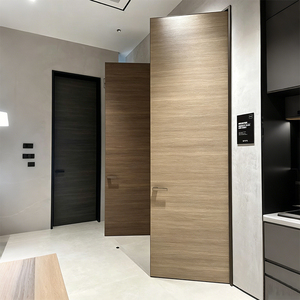
Modern Panamanian luxury architecture favors high ceilings and open sightlines. Single entrance leaves are being replaced by sweeping double-leaf assemblies and massive pivot doors measuring up to 3.5 meters in height. These designs require internal stainless-steel reinforcement, precision corner-cleat crimping, and high-capacity hydraulic floor springs capable of managing sash loads in excess of 400 kg without mechanical sagging.
3. Integration of Biometric Security and Smart Urban Infrastructure
High-end residential areas in Panama City prioritize automated, contactless entrance security. Modern aluminium double front door systems are engineered with integrated multi-point locking hardware, motor-driven concealed mortises, and digital panels offering 3D facial recognition, biometric fingerprint scanning, and encrypted protocols compatible with home automation ecosystems like Crestron and Control4.
Direct Factory Capabilities: Guangdong Dejiyoupin Doors & Windows (DERCHI)
Procuring direct from a Tier-1 Chinese manufacturer gives developers in Panama major cost efficiencies, expansive engineering customization, and stringent quality control. Headquartered in Foshan, Guangdong—the worldwide epicenter of precision aluminium extrusion—DERCHI operates an advanced 180,000-square-meter facility with end-to-end oversight across every stage of processing.
Metallurgy & Precision Extrusion
We use virgin primary aluminium ingot billets to produce premium 6063-T5 and 6063-T6 alloys with nominal profile wall thicknesses of 2.0 mm to 3.0 mm. This delivers exceptional torsional rigidity and structural anchor strength under severe wind loads.
Surface Coatings for Coastal Environments
Our automated horizontal and vertical coating lines apply Qualicoat-certified AkzoNobel fluorocarbon (PVDF) finishes and marine-grade electrostatic powder coatings. These surfaces withstand 3,000+ hours of continuous salt-spray testing without blistering, chalking, or delamination.
Pre-Engineered CAD/BIM Documentation
Our in-house technical department of 50+ structural engineers prepares complete 2D/3D CAD shop drawings, glass stress calculations, and structural anchoring schematics based on local Panamanian project submittals before manufacturing begins.