Engineering Integrity in Modern Architectural Fenestration & Stable Systems
As commercial developers, estate architects, and equestrian project directors demand longer lifecycle performance and lower maintenance overheads, traditional timber and cold-rolled mild steel doors are rapidly being decommissioned in favor of structural extruded aluminum alloy systems. Known broadly across industrial and residential applications as Dutch doors, split-leaf doors, and heavy-duty utility stable systems, aluminum stable doors represent an optimal equilibrium of corrosion mitigation, impact resistance, thermal barrier optimization, and customizable ventilation mechanics.
Guangdong Dejiyoupin Doors and Windows Co., Ltd. (DERCHI) stands at the pinnacle of international fenestration engineering. Operating an extensive 180,000 m² smart manufacturing ecosystem in Foshan, China, DERCHI integrates primary T6 temper billet extrusion, computerized thermal-break polyurethane crimping, automated CNC multi-axis milling, and precision robotic surface treating. Backed by rigorous international compliance regimes—including AS 2047 cyclic and static pressure testing (N6 Wind Rating), CE mark validations, ISO 9001 factory governance, and UL fire rating compatibility—our export supply chain delivers uncompromising performance across the Americas, Europe, Australia, New Zealand, and Pacific Island coastal regions.
Featured Architectural Doors & High-Tolerance Systems
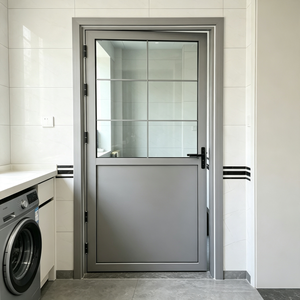
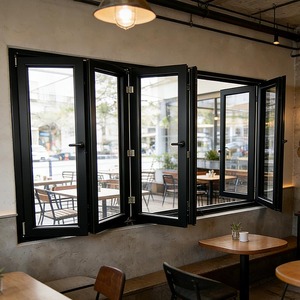
Explore our factory-direct product lines engineered to integrate seamlessly into modern residential estates, equine villas, and heavy-traffic commercial architectures.
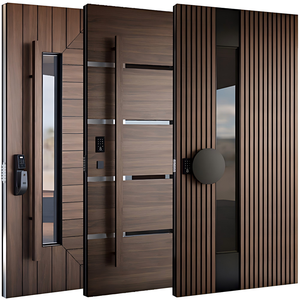
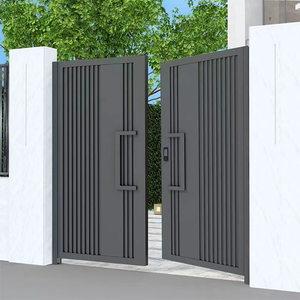
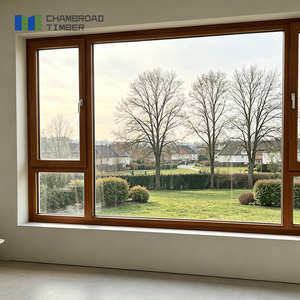
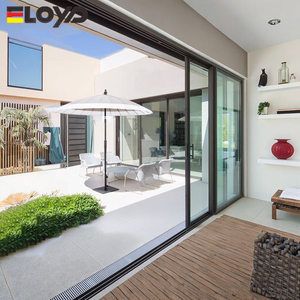
Anatomy of Heavy-Duty Aluminum Stable Doors: Metallurgy & Joinery
Unlike ordinary interior doors, stable doors (commonly specified as split Dutch doors) operate under intense kinetic stress, environmental moisture, and frequent impact. For equestrian barn facilities, utility rooms, farmhouses, and modern architectural breezeway entrances, material failure in the form of sagging hinges, galvanic rust, or frame warping is unacceptable. Our engineering matrix utilizes virgin 6063-T6 or 6061-T6 architectural aluminum billets, yielding high structural tensile strength (>205 MPa) while maintaining an optimal strength-to-weight ratio.
Heavy-Gauge Extrusions
Wall thicknesses engineered from 2.0mm to 3.5mm across primary stiles and rails. Reinforced internal webbing accommodates dynamic mechanical kick-loading up to 350 kg/m² without irreversible profile deformation.
Dual-Leaf Articulation
Precision horizontal interlock mechanisms equipped with continuous co-extruded EPDM marine-grade bulb gaskets. Top and bottom leaves swing independently or latch seamlessly into a monolithic single door.
Corrosion & UV Shield
Surface treatments engineered with Qualicoat Class 2 certified fluorocarbon PVDF finishes or 25-micron architectural anodization. Defends against ammonia fumes, manure vapors, extreme coastal salinity, and high UV indexes.
Engineering Matrix: Aluminum vs. Traditional Steel & Hardwood
Compare critical lifecycle factors across materials commonly specified for exterior utility, residential split, and commercial equestrian stable door installations:
| Evaluation Parameter | DERCHI Heavy Aluminum Stable Door | Welded Carbon Steel / Iron | Treated Hardwood / Oak |
|---|---|---|---|
| Structural Weight / Hinge Fatigue | Optimized (~22 kg/m²); Zero frame sagging over 25+ years | Excessive (>60 kg/m²); Causes hinge drooping and frame wear | Heavy (~35 kg/m²); Variable weight due to seasonal moisture absorption |
| Corrosion & Chemical Resistance | Immune to rust; Resists equine urea, coastal salt fog, & rain | Severe vulnerability to oxidation and rust if coating scratches | Prone to fungal rot, dry rot, splintering, and insect infestation |
| Thermal Insulation (Polyamide Strip) | U-value down to 1.4 W/m²K with PA66 thermal breaks | Extreme thermal bridging; U-value >5.8 W/m²K (condensation prone) | Moderate natural insulation; degrades as wood splits and checks |
| Dimensional Tolerance Stability | Zero swelling, shrinking, or warping from -40°C to +80°C | High thermal expansion; risks latch binding in direct sun | Expands up to 8% in humid conditions, binding in door jambs |
| Maintenance & TCO (10-Year Lifecycle) | Virtually zero; occasional water rinse & silicone hinge lubricate | High; recurring sandblasting, priming, and anti-rust repainting | Very high; annual oiling, chemical varnishing, and board replacement |
Future Procurement Trends for Aluminum Stable Doors (2025-2030)
Procurement directors and commercial quantity surveyors are shifting away from piecemeal local fabrication toward turn-key industrial modularization. Global B2B buyers sourcing for high-end horse stables, equestrian country clubs, luxury coastal estates, and rural resorts are prioritizing three dominant procurement paradigms:
1. Modular Off-Site Pre-Assembly
On-site labor costs across Australia, the UK, Europe, and North America have risen by over 38% since 2021. Procuring fully pre-hung aluminum stable door assemblies—where frames, sub-frames, heavy barrel hinges, drop bolts, and Dutch latches are calibrated on factory jigs—reduces site installation from 6 hours per unit down to under 45 minutes.
2. Stringent Carbon-Neutral Lifecycle Audits
Commercial project developers face rigorous ESG compliance targets. Aluminum’s virtually infinite recyclability (>95% post-consumer recovery) guarantees favorable Green Star, LEED, and BREEAM scoring. Low-carbon smelting methods ensure aluminum fenestration products boast a substantially lower lifetime embodied carbon footprint than composite plastics.
3. Integrated Multi-Hazard Engineering
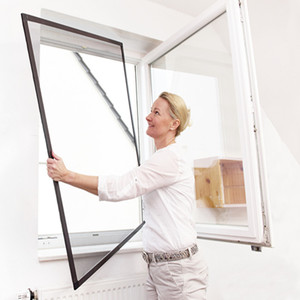
Modern coastal and rural microclimates face unprecedented weather volatility. Institutional buyers specify unified door and window packages compliant with severe wind loads (e.g., AS 2047 N6 rating / Miami-Dade hurricane standards), paired with anti-insect micro-mesh integration and sound attenuation to preserve quiet barn and home acoustics.
Technological Development Trends: The Smart Stable Door Era
The traditional stable door is undergoing profound technological evolution. At DERCHI, our R&D engineering division is actively pioneering several critical breakthroughs in fenestration mechanics:
Magnetic Auto-Latch Systems
Replacing noisy, clattering mechanical drop pins with damped neodymium magnetic alignment locks that engage smoothly and silently, preserving peace in equine stables and high-end residential suites.
Smart Biometric Interlocks
Integrating moisture-proof semiconductor fingerprint scanners and wireless remote permission protocols, allowing automated staff access control and real-time remote leaf status monitoring via IoT networks.
Active Aerogel Thermal Barriers
Incorporating ultra-thin silica aerogel insulation blankets within multi-chamber extruded panels to achieve unmatched condensation prevention and temperature control across extreme hot/cold seasonal swings.
Antimicrobial Nano-Coatings
Applying silver-ion electrostatically bonded topcoats on internal door surfaces to actively inhibit mold, bacterial colony growth, and barn pathogens, ensuring a pristine hygienic environment.
Guangdong Dejiyoupin (DERCHI): Unrivaled Production Authority
Recognized as one of China's top 10 premium door and window manufacturing groups, Guangdong Dejiyoupin Doors and Windows Co., Ltd. brings more than 25 years of proven excellence to the international fenestration export industry. Headquartered in Shishan Town, Foshan—the world’s premier aluminum extrusion epicenter—our infrastructure combines vertically integrated precision manufacturing with comprehensive engineering consulting.
- 180,000 m² Mega-Facility: Automated German and Italian CNC milling lines ensure tight machining tolerances within ±0.3mm across every door frame.
- Free CAD & BIM Coordination: In-house structural architects generate detailed shop drawings, wind load calculations, and threshold waterproofing details before production.
- Rigorous Export Crating: Full fumigation-free solid timber crating lined with moisture-barrier film and shock-damped foam corners, guaranteed ready for ocean freight.
- AEST / GMT / EST Engineering Support: Direct technical liaison with certified English-speaking engineers during your local business hours.

Tested to the World's Most Demanding Building Standards
Our doors have successfully obtained AS 2047 (N6 Cyclone Tested), CE, ISO 9001, UL Fire Rated, and Qualicoat certifications, empowering contractors to clear local municipal inspections with zero friction.

Frequently Asked Questions for Commercial Buyers & Importers
Straightforward, technical answers addressing the critical legal, logistics, and engineering inquiries received from international contractors, architects, and developers.
We utilize virgin primary 6063-T6 aluminum alloys rather than scrap remelt, minimizing iron impurities that cause subsurface pitting. For coastal or marine-adjacent exposures (within 5 km of open saltwater), we apply an AkzoNobel Interpon D2525 fluorocarbon PVDF powder coat or a 25µm class-1 architectural anodizing layer. All connection fasteners, pivots, and internal spring latches are exclusively machined from 316-grade austenitic marine stainless steel.
Yes. Every project is 100% custom-tailored to your architectural schedules. Standard stable doors typically feature a 60/40 or 50/50 vertical division, but our engineering team can fabricate any custom split ratio, up to 3.2 meters in height and 1.8 meters in clear width per leaf. Our technical team provides complimentary 2D AutoCAD and 3D Revit/BIM shop drawings for formal client sign-off before raw billet cutting begins.
We export via Full Container Load (FCL) or Less than Container Load (LCL) directly to premier ocean ports worldwide (Sydney, Melbourne, Auckland, Los Angeles, Rotterdam, Jebel Ali, etc.). Factory manufacturing takes approximately 20 to 35 calendar days following CAD sign-off, with maritime shipping ranging from 12 to 28 days depending on your destination port. All wooden crating meets ISPM 15 heat-treatment standards for seamless clearance through Australian Biosecurity (DAFF), US CBP, and European customs.
Split Dutch doors have a notorious historical weakness: the horizontal meeting stile. DERCHI solves this via a proprietary stepped interlocking profile equipped with dual multi-fin EPDM weatherstripping and concealed weep channels. Under certified AS 2047 test conditions, our systems resist water penetration under 450 Pa static water pressure and air infiltration below 0.3 L/s·m², guaranteeing complete protection against driven torrential rain.
Every shipment arrives with 3D step-by-step installation manuals, exploded component diagrams, and high-definition video walkthroughs. For commercial and estate orders, our structural engineering team hosts live video coordination calls with your local builders during local business hours. All structural aluminum profiles are protected by a comprehensive 10-year manufacturer warranty, with hardware components backed by a 5-year replacement guarantee.