Factory-Engineered Glazing & Fenestration Envelopes
From architectural vertical sliding sash assemblies to high-traffic commercial swing portals, our precision lines undergo rigorous cyclonic wind, air infiltration, and acoustic calibration.
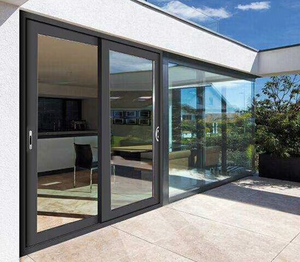
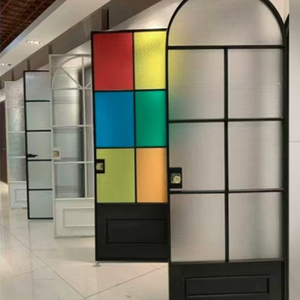
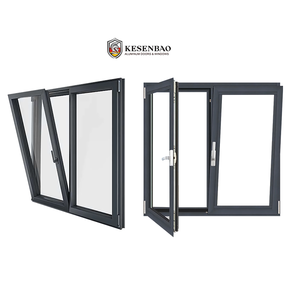
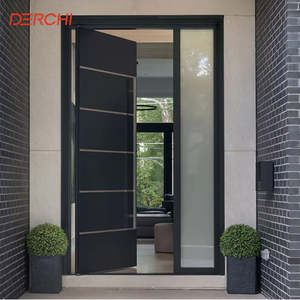
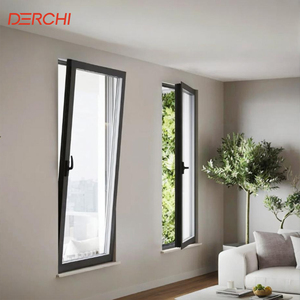
Modern Kinematics & Thermal Decoupling in Vertical Sliding Sash Architecture
The classical Georgian and Victorian hung sash window has evolved into an advanced architectural envelope system. As a leading manufacturer and supplier, our aluminium vertical sliding sash systems resolve the historical compromises of air leakage, operational friction, and thermal bridging through multi-chambered 6063-T6 extrusions and calibrated counterbalancing mechanics.
Unlike conventional timber sash configurations susceptible to hygroscopic swelling, rotational warping, and cyclical repainting, or unplasticized polyvinyl chloride (uPVC) variants vulnerable to thermal expansion distortions, structural architectural aluminium delivers an ultra-high strength-to-weight ratio. This metallurgical stability allows structural profiles to sustain expansive glass payloads while maintaining ultra-narrow sightlines down to 38mm at the interlock junction.
Critical to this performance is the integration of dual-extruded polyamide (PA66 GF25) thermal breaks reinforced with 25% transverse glass fibers. These barrier strips mechanically isolate the exterior and interior aluminium extrusions, preventing condensation nucleation, mitigating thermal transmittance, and achieving overall fenestration U-values as low as 1.3 W/m²K when combined with low-emissivity double or triple insulated glass units (IGUs).
Dual-Directional Constant Force Balances
Our sash assemblies incorporate stainless steel spiral balances and hybrid constant-force torsion mechanisms calibrated precisely to sash mass, enabling zero-drift fingertip operation across 50,000+ mechanical open-close cycles without recalibration.
Tilt-In Safety & Clean Accessibility
Both top and bottom sashes feature engineered quick-release tilt latches, enabling sashes to tilt inward at 45 and 90 degrees. This provides internal access for glass cleaning in multi-story residential and hospitality developments without requiring exterior scaffolding.
Architectural Substrate Comparative Matrix
A benchmark analysis evaluating structural rigidity, lifecycle maintenance, and compliance metrics across building façade options.
| Performance Attribute | DERCHI Engineered Aluminium Sash | Traditional Hardwood Sash | Standard uPVC Sash |
|---|---|---|---|
| Structural Deflection (Wind Load) | ✓ Tested to AS 2047 N6 (Cyclonic) | Moderate (Varies by moisture content) | Low (Prone to deflection >2400mm height) |
| Sightline Width (Meeting Stile) | 38mm - 48mm Slimline | 65mm - 90mm Heavy profile | 60mm - 85mm Multichamber bulk |
| Thermal Transmittance (U-Value) | 1.3 - 1.7 W/m²K (Polyamide Break) | 1.6 - 2.1 W/m²K | 1.4 - 1.8 W/m²K |
| Maintenance & Recoating Cycle | Zero maintenance (Fluorocarbon/Qualicoat) | Cyclical sand/stain (Every 3-5 Years) | Yellowing risk under high UV Index |
| Acoustic Attenuation (Rw / STC) | Rw 38 - 44 dB (Acoustic laminated IGU) | Rw 30 - 34 dB | Rw 32 - 36 dB |
| Embodied Circularity | 100% Infinitely Recyclable | Renewable (Requires biocides/sealers) | Complex chemical downcycling |
Strategic Sourcing Vectors & Façade Innovations (2025–2030)
Global supply chains for commercial fenestration are undergoing fundamental realignments driven by stringent carbon border adjustments, net-zero building directives, and decentralized fabrication models. For corporate buyers, quantity surveyors, and architectural partners, sourcing aluminium vertical sliding sash systems requires balancing compliance risk with scalable manufacturing capacity.
Low-Carbon Secondary Smelting
Tier-1 suppliers are transitioning toward billets cast with renewable hydropower energy and up to 75% recycled scrap content. This lowers embodied carbon metrics (A1–A3) below 4.0 kg CO₂e/kg Al, satisfying LEED Platinum, BREEAM Outstanding, and Australian Green Star standards.
Automated Concealed Balances
The market is shifting away from exposed balance channels toward concealed pre-tensioned linear tracks with integrated micro-dampers. This prevents sash-drop accidents and eliminates perimeter acoustic flanking paths.
BIM Level 3 Object Integration
Modern contract awarding relies on manufacturers providing native Revit families and IFC files that contain real thermal models, structural tolerances, and parametric schedules directly ready for automated quantity takeoffs.
Factory Direct Manufacturing Strength Built for Global Projects
Operating from an advanced 180,000 square meter industrial manufacturing base in Foshan, Guangdong Dejiyoupin Doors and Windows Co., Ltd. (DERCHI) stands among China's top 10 premier fenestration brands, bringing more than 25 years of engineering mastery to international commercial and residential construction.
Our vertical integration guarantees end-to-end quality control across every production phase. Extrusions made from 6063-T6 architectural alloy are cut and processed on 5-axis CNC machining stations, followed by automated surface treating with AkzoNobel fluorocarbon (PVDF) and Qualicoat-certified marine-grade powders designed to withstand intense maritime salt spray and high UV radiation.
To safeguard structural compliance across Australia, New Zealand, the UK, and North America, our fenestration assemblies are fully certified under AS 2047, CE, ISO 9001, and North American ASTM impact testing protocols. From free initial CAD shop drawings matching your schedule to customized ocean export crating, our engineering team manages your project supply chain with absolute accountability.
Precision Quality Control Checkpoints
- Alloy Composition Verification: Spectrometric testing of 6063-T6 aluminum billets.
- Surface Coating Gauge: Micron-level dry film thickness (DFT) testing per Qualicoat standards.
- Air & Water Infiltration Rigs: AS 2047 N6 pressure testing chamber (up to 4500Pa static/cyclic).
- Corner Tensile Strength: Hydraulic corner joint crimp integrity checks.
- Pre-Shipment Trial Assembly: 100% pre-assembly and balance balancing prior to fumigated wooden crate packing.
Frequently Asked Questions for Project Procurement
Clear answers to technical, logistical, and compliance questions asked by facade engineers, quantity surveyors, and international contractors.
Q: How do DERCHI vertical sliding sash systems achieve AS 2047 N6 Cyclonic compliance?
Our systems use heavy-wall internal structural webs, reinforced zinc-alloy interlock fasteners, and multi-point perimeter compression seals. When subjected to positive and negative cyclic pressures exceeding 4500Pa in accredited chambers, our sash profiles remain well within allowable deflection parameters without water breach or structural failure.
Q: What counterweight mechanisms are used to support oversized double or triple IGUs?
For sashes weighing between 30kg and 120kg, we use heavy-duty pre-tensioned spiral balances encased in stainless steel tubes or constant force balances made from high-tensile stainless spring steel. Each mechanism is calibrated to the precise sash dead-load and glass configuration to maintain smooth, balanced travel.
Q: How are maritime and high-salinity coastal environments addressed?
We apply marine-grade Qualicoat Class 2 or AkzoNobel fluorocarbon (PVDF) electrostatic coatings with minimum thicknesses of 60 to 80 microns. All assembly screws, pivot bars, springs, and bracket fasteners are specified in Austenitic 316-grade stainless steel to resist salt-fog corrosion.
Q: Can DERCHI deliver custom mullion profiles for historical heritage conservation projects?
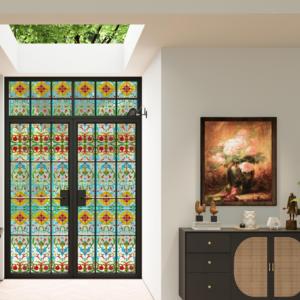
Yes. Our in-house tooling and extrusion shop designs bespoke astragal bar profiles, decorative sash horns, and putty-line ovolo profiles. This allows architects to satisfy municipal heritage preservation codes while delivering modern thermal break performance.
Q: What documentation accompanies commercial container shipments?
Every shipment includes factory QA/QC sign-off sheets, AS 2047 / CE compliance certificates, structural glass safety declarations, installation shop drawings, and ISPM-15 fumigation documentation for rapid customs clearance at major international ports.
Q: What is the standard production lead time for full container load (FCL) orders?
Standard lead times range from 25 to 35 business days following final CAD sign-off and glass configuration approval. For custom anodized or custom-extruded dies, an additional 7 to 10 days is scheduled for tooling calibration.
Request Project Engineering Schedules & Complete Catalog
Partner with an engineering-first manufacturer. Submit your structural drawings, window schedules, and performance specifications for free CAD design reviews, structural wind-load checks, and wholesale factory-direct pricing.