Featured Slimline Aluminium Windows & Architectural Door Systems
Engineered with low-emissivity double/triple glazing, thermal break multi-cavity extrusions, and minimal sightlines designed to maximize natural lux levels while upholding structural performance standards worldwide.
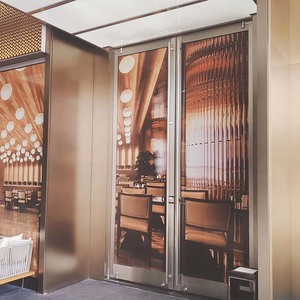 Crittall Style
Exterior Entry Crittal Doors Aluminum Alloy Tempered Glass French Double Glass Doors
- Profile Depth: 65 mm
- Glazing Unit: 5+12A+5 Tempered
- Aesthetic: Postmodern Industrial
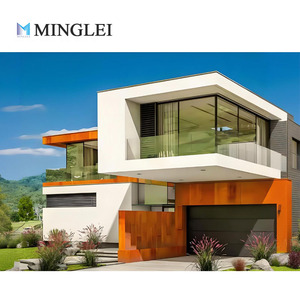 Ultra Minimal
MINGLEI New Arrival Minimal Slim Frame Aluminum Alloy Insulation Frameless Windows
- Visible Sightline: 18 mm Narrow
- Thermal Bridge: Polyamide PA66
- Application: Luxury Residential
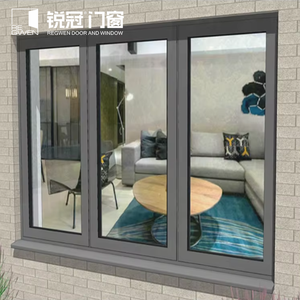 Energy Efficient
RG65 Customized Double Glazed Thermal Break Aluminum Casement Window
- U-Value (Uw): 1.4 W/m²·K
- Air Permeability: Class 4 (EN 12207)
- Hardware: Multi-point Concealed
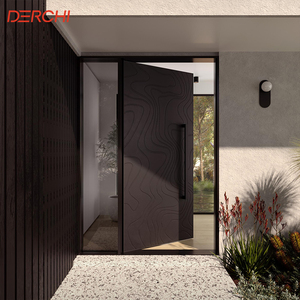 Fire & Security
Aluminum Commercial Entrance Door Fire Rated Security Front Door
- Fire Rating: 60–90 min Certified
- Core Structure: High-density Composite
- Usage: Hotels & Commercial
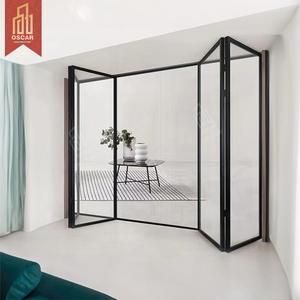 Space-Saving
Aluminium Accordion Folding Integrated Screen Mosquito Net Patio Door
- Screen Mesh: 304 Stainless / Poly
- Mechanism: Caterpillar Trackless
- Track Profile: Flush Low-threshold
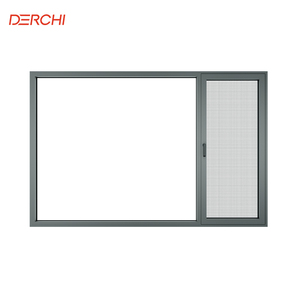 Architectural Flagship
DERCHI Modern Minimalist Slim Narrow Frame Casement Style Windows
- Sightline Width: 26 mm Slim
- Wind Load: AS 2047 N6 Standard
- Finishing: AkzoNobel Powder Coat
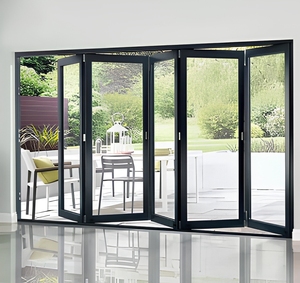 Panoramic Folding
Modern Bi-Fold Aluminum Double Tempered Glass Exterior Patio Folding Doors
- Hardware System: German Origin Top Roller
- Seal Gaskets: Continuous EPDM Triple
- Max Panel H: Up to 3500 mm
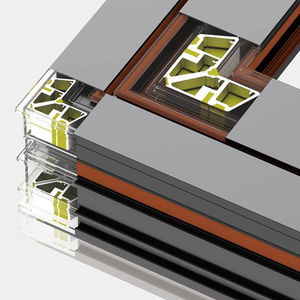 Flush Coplanar
Modern Flush Aluminum Double Tempered Glass Casement Window Energy Star
- Frame Profile: Seamless Flush Sash
- Acoustic Index: Rw 40 dB Attenuation
- Standard: Energy Star & AS 2047
The Anatomy of Slimline Aluminium Fenestration: Structural Rigidity Meets Thermal Science
Why leading developers and architects are retiring bulkier 90mm+ traditional window frames in favor of thermally broken slimline extrusions engineered with high-yield alloy profiles.
In contemporary architectural envelope design, the pursuit of maximum daylight transmission (Lux ratio) and unobstructed visual horizons has sparked a paradigm shift toward slimline aluminium fenestration systems. However, reducing the visual face width of an aluminium sash from a standard 75mm–100mm profile down to 18mm–35mm micro-sightlines introduces severe mechanical and thermal dynamics that cannot be resolved through conventional profile extrusion techniques.
From an engineering standpoint, an aluminium slimline window must balance three critical parameters: structural deflection resistance (wind load inertia $I_{xx}$), thermal transmittance boundary control ($U_w$ performance), and water tightness under severe dynamic wind driving pressures. At DERCHI, our precision-machined 6063-T6 virgin aluminium profiles incorporate multi-chamber polyamide thermal breaks (PA66 GF25 reinforced with 25% glass fiber) to ensure zero structural decoupling while arresting conductive heat paths across the indoor-outdoor barrier.
6063-T6 Aerospace-Grade Extrusion
Utilizing high-tensile 6063-T6 alloy provides 25% higher yield strength than standard T5 alloys. This allows DERCHI slim frames to maintain dimensional stability under excessive design wind pressures up to 4500 Pa (N6 cyclonic classifications).
Multi-Cavity Isothermal Shield
Integrating technoform PA66 polyamide barriers with custom-engineered multi-cavity chambers minimizes convective heat currents within the profile cavity, driving overall window U-values down to 1.1–1.4 W/m²·K when paired with Low-E IGU units.
Vulcanized Continuous EPDM Sealing
Multi-lip continuous automotive-grade EPDM gaskets with co-extruded corner vulcanization eliminate air filtration bypass paths and prevent capillary moisture penetration under severe cyclonic horizontal driving rains.
Fenestration Specifier Benchmark: Standard vs. DERCHI Architectural Slimline
Evaluating physical test performance metrics against strict AS 2047, CE, and North American NFRC certification criteria.
| Performance Engineering Parameter | Generic Non-Thermal Window | Standard Commercial Thermal Break | DERCHI Architectural Slimline System |
|---|---|---|---|
| Visible Sash Sightline (Narrowness) | 75 mm – 110 mm (Bulky) | 55 mm – 70 mm (Standard) | 18 mm – 28 mm (Micro Ultra-Slim) |
| Structural Wind Load Testing | 1200 Pa – 1800 Pa (Standard) | 2500 Pa (High Residential) | 4500 Pa+ (AS 2047 N6 Cyclonic Level) |
| Whole-Window Thermal Value ($U_w$) | 3.8 – 5.2 W/m²·K (Poor) | 2.0 – 2.6 W/m²·K (Average) | 1.1 – 1.4 W/m²·K (Passivhaus Capable) |
| Water Penetration Resistance | 150 Pa – 300 Pa | 450 Pa | 700 Pa – 900 Pa Static/Cyclic Head |
| Acoustic Attenuation Index ($R_w$) | 26 dB – 29 dB | 32 dB – 35 dB | 38 dB – 44 dB (Dual/Triple Laminated) |
| Surface Treatment Grade | Commercial Anodizing (10µm) | Standard Architectural Powder | AkzoNobel Marine-Grade Fluorocarbon (C4/C5) |
Future Procurement Trends for Aluminium Slimline Windows (2025–2035)
Key architectural trends reshaping commercial specifications, supply chain resilience, and international building compliance regulations over the coming decade.
Embodied Carbon & Recycled Billets
Global procurement directives (such as EU CBAM and Australian Green Star ratings) require low-carbon aluminium extrusions derived from renewable hydro-powered smelters and post-consumer recycled scrap metal.
Flush Sub-Sill Hidden Drainage
Architectural demand has shifted decisively away from visible external weep holes. Contemporary high-end facades specify concealed sub-sill gravity drainage chambers with continuous perimeter water-catchment troughs.
Smart Automation & Concealed Hardware
Modern building management systems (BMS) mandate slimline windows equipped with integrated concealed chain actuators, magnetic reed security sensors, and motorized multi-point mechanical perimeter deadbolts.
Pre-Engineered Prefabricated Glazing
To reduce onsite labor costs and installation variances, major developers increasingly order factory-unitized, factory-glazed slimline window modules shipped with certified installation sub-frames and shop CAD alignment brackets.
Guangdong Dejiyoupin Doors and Windows Co., Ltd. (DERCHI)
With more than 25 years of engineering manufacturing legacy in Foshan, Guangdong, DERCHI is ranked among China's top tier premium fenestration enterprises. Our integrated campus spans automated profile extrusion processing, CNC digital multi-axis milling, dust-free insulated glass sealing, and automated electrostatic powder coating.
By bypassing trading intermediaries, our global architectural, residential, and commercial development partners secure end-to-end quality assurance, comprehensive test certifications, and dedicated shop drawing drafting services customized to exact project schedules.


Why Professional Specifiers & Commercial Builders Rely on DERCHI
Streamlined procurement, direct factory pricing, certified Oceania compliance, and end-to-end technical support from shop drawings to jobsite delivery.
Free CAD & BIM Drafting
Every commercial and residential quote includes free 2D/3D shop drawings, anchor bracket calculations, and structural glass thickness verification aligned with your opening schedule.
Seaworthy Export Crating
All slimline units are packed in IPPC-certified fumigated solid timber crates, isolated with protective foam wraps, corner armor, and moisture desiccant bags for long-haul FCL/LCL ocean shipping.
Oceania Time Zone Engineering Support
Our bilingual fenestration engineers provide direct consultation during AEST/NZST working hours, ensuring instant resolution of technical clarifications, council approvals, and on-site fitting advice.
Rigorous AS 2047 & CE Quality Control
Every batch undergoes airtightness, water-spray chamber testing, coating adhesion cross-hatch checks, and hardware cycle fatigue validation before crating approval.
Frequently Asked Questions for Sourcing Aluminium Slimline Windows
Critical answers to questions surrounding structural engineering, thermal standards, lead times, and global import compliance.