Precision Fenestration Engineering: The Next Benchmark in Aluminium Insert Windows
In modern architectural facades and commercial retrofitting, aluminium insert windows represent the vital intersection of high structural load-bearing capacity, acoustic mitigation, and energy conservation. Sourcing from a tier-one extrusion and fabrication facility ensures unyielding envelope integrity, compliance with strict Oceania and international building envelopes, and seamless integration with existing masonry, curtain walls, or timber framing.
Future Procurement Trends in Aluminium Insert Windows & Glazing Systems
Global architectural developers, commercial quantity surveyors, and project engineers are transitioning toward high-yield, decarbonized fenestration solutions. Understanding market dynamics is crucial for securing cost leadership and environmental compliance.
Polyamide Thermal Barriers
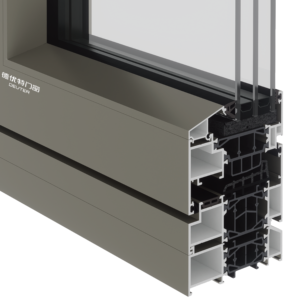
Stringent thermal envelopes demand multi-chambered PA66 GF25 thermal breaks. Sourcing cycles require documented U-values below 1.4 W/m²K, eliminating interior condensation in luxury residences and reducing mechanical HVAC loads across large footprints.
Extreme Cyclonic & Acoustic Ratings
Architects specify insert windows engineered to withstand ultimate limit state wind pressures upwards of 4500 Pa (N6 classifications under AS 2047). Acoustically laminated double and triple glazing with argon fills are becoming standard for urban transit corridors.
Bespoke Prefabricated Sub-Frames
Site installation labor costs drive adoption of modular insert assemblies. Pre-machined aluminium sub-frames with integrated weep channels and flashings allow precise dry installation into existing openings, cutting retrofitting timelines by over 40%.
Technological Trajectories: Metallurgy, Surface Engineering, and Smart Integration
The aluminium insert window is no longer a passive envelope component. It is an active barrier utilizing advanced 6063-T6 aerospace-grade alloys, marine-grade fluorocarbon surface protection, and concealed kinetic hardware.
Engineering Comparative Matrix: Standard vs. DERCHI Insert Window Solutions
| Performance Parameter | Conventional Commercial Grade | DERCHI Engineered Insert Systems | Compliance / Test Standard |
|---|---|---|---|
| Alloy Composition & Temper | Recycled 6063-T5 (Variegated Wall 1.2-1.4mm) | Primary 6063-T6 Pure Ingot (Uniform 2.0mm+) | ASTM B221 / GB 5237.1 |
| Structural Wind Load (N-Rating) | N3 to N4 (1500 - 2000 Pa) | N6 Certified Performance (≥ 4500 Pa) | AS 2047 / NZS 4211 |
| Surface Coating Durability | Standard Polyester Powder (35-45 μm) | Fluorocarbon PVDF / Marine Grade (65-80 μm) | AAMA 2605 / Qualicoat Class 3 |
| Thermal Insulation (U-Factor) | Non-thermal (Uw ~ 4.2 - 5.8 W/m²K) | Polyamide Break (Uw ≤ 1.35 W/m²K) | NFRC / ISO 10077-2 |
| Water Tightness Under Pressure | 300 Pa Static Head | 700 Pa Dynamic Driving Rain Rating | EN 12208 / AS 4420.5 |

Why Global Tier-One Contractors Rely on the DERCHI Ecosystem
With over 25 years of specialized export fabrication, our infrastructure eliminates sourcing friction through full vertically integrated control, certified compliance, and regional engineering alignment.
Vertically Integrated Value Chain
From primary alloy billet heating, continuous extrusion, and automated thermal-break insertion to multi-axis CNC corner crimping and triple-glazing assembly, complete in-house manufacturing ensures strict dimensional tolerances within ±0.5mm across bulk runs.
Global Engineering Verification
Our solutions hold CE, ISO 9001, AS 2047, and UL fire certifications. Dedicated QA/QC laboratories perform continuous cyclic air infiltration, seismic displacement, and wind pressure load simulations before release, delivering full auditable verification.
End-to-End Technical Documentation
Bespoke shop drawings, structural calculations, and CAD/BIM detailing are drafted complimentary by our in-house engineering team. English-speaking project coordinators support Oceanian (AEST/NZST) and American zones to avoid communication bottlenecks.
Export Logistics & Marine Protection
Every window frame and sash is encased in protective micro-foam, edged with reinforced corner protectors, and securely packed in fumigated plywood crates compliant with strict Australian biosecurity standards for damage-free FCL/LCL ocean transit.
Multi-System Project Consolidation
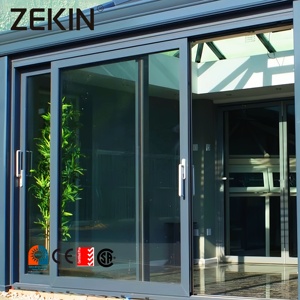
Contractors can consolidate their full bill of materials—combining heavy-duty lift sliding doors, flush insert windows, French heritage casements, and architectural pivot doors—into a single production run, lowering ocean freight overhead.
Lifetime Field Reliability
Featuring certified multi-point locking systems, EPDM co-extruded perimeter gaskets, and marine-grade 316 stainless steel friction hinges, DERCHI window systems resist saltwater fog, intense UV degradation, and long-term cyclic wear.
Frequently Asked Questions: B2B Procurement of Aluminium Insert Windows
Objective answers addressing structural specifications, compliance protocols, lead times, and customization parameters for procurement directors and commercial builders.
What is an aluminium insert window, and how does it compare to full-frame replacement?
How do DERCHI insert systems achieve AS 2047 compliance and an N6 wind rating?
What thermal-break technology is implemented to meet stringent energy codes?
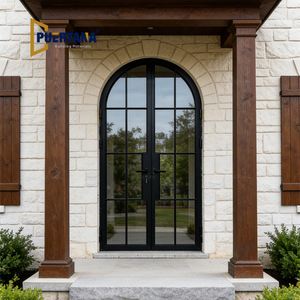
Can DERCHI replicate heritage Crittall steel aesthetics using thermally broken aluminium?
What surface treatments are recommended for coastal applications within 500 meters of the ocean?
What is the standard production lead time and typical shipping cycle for Oceania and North America?
What CAD/BIM and pre-production technical support is available to architects and specifiers?
Collaborate with a Direct Manufacturing Leader
Consult with our senior fenestration engineers to obtain precise CAD shop drawings, wind load calculations, and comprehensive commercial proposals for your next development.
Send an Inquiry