Precision-Manufactured Architectural Doors & Glazing Assemblies
Tested and validated to withstand extreme meteorological pressures, thermal gradients, and rigorous cyclical fatigue criteria across Oceania, North America, and European luxury residential and commercial developments.
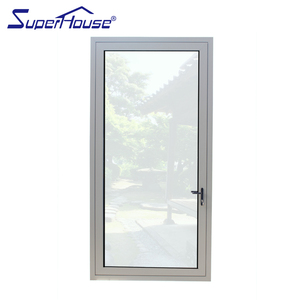
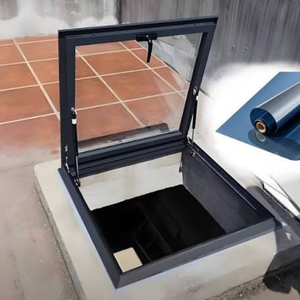
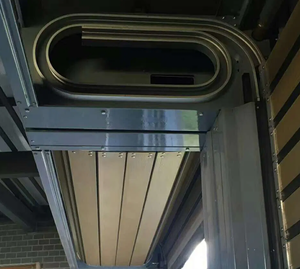
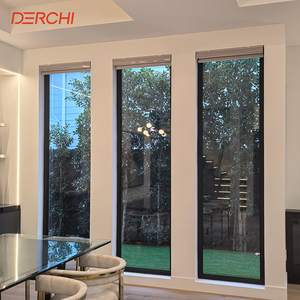
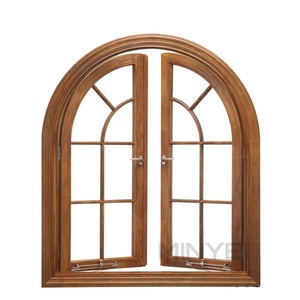
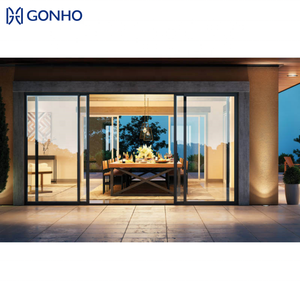
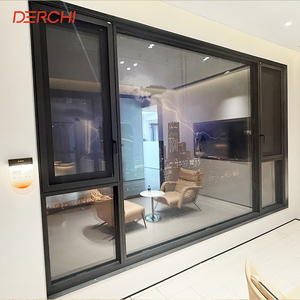
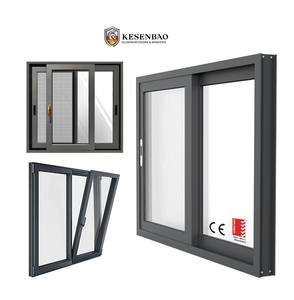
Guangdong Dejiyoupin Doors and Windows Co., Ltd. (DERCHI)
Headquartered in the primary global aluminium production cluster of Shishan Town, Nanhai District, Foshan, DERCHI operates as a globally recognized top-tier engineering manufacturer and exporter of heavy-duty aluminium framed glass doors, multi-slide panorama systems, large architectural pivot entry portals, and thermally isolated commercial curtain assemblies.
By enforcing complete vertical integration—from high-precision 6063-T6 virgin billet extrusion, multi-cavity CNC profile milling, automated robotic corner crimping, multi-stage PVDF and AkzoNobel powder coating, to automated insulated glass unit (IGU) lamination—DERCHI ensures every fenestration component complies rigorously with AS 2047 N6 cyclonic testing, North American NFRC thermal ratings, CE standardisation, and ISO 9001 certified manufacturing controls.
- Direct Factory Accountability & Zero Intermediary Markups
- AS 2047 Wind Pressure Certification up to N6 / 4500 Pa
- Compliant Shop CAD Drawings & Full BIM Modelling
- Certified Marine-Grade C4/C5 Corrosion Protection

Structural Innovation & Technological Frontiers in Aluminium Fenestration
A technical examination of next-generation thermal containment, metallurgy enhancements, multi-point load transfer kinetics, and glass safety configurations dominating international architectural agendas.
Polyamide PA66 GF25 Iso-Baric Thermal Breaks
Standard architectural aluminium exhibits high thermal conductivity (~160 to 200 W/m·K). Modern sustainable fenestration mandates continuous, reinforced 24mm to 34mm polyamide insulation bars (PA66 GF25 reinforced with 25% glass fibre) mechanically locked between the interior and exterior aluminium structural extrusions. This dual-chamber barrier eliminates linear thermal bridging, driving whole-window assembly U-values down below 1.4 W/m²·K (0.25 BTU/hr·ft²·°F), preventing condensation in cold climates and slashing building HVAC loads under rigorous net-zero requirements.
Heavyweight Hydraulic Pivot Kinematics
Architectural demand has transitioned radically toward expansive floor-to-ceiling single-panel pivot entries reaching heights up to 4.5 metres and weights surpassing 500 kilograms. Balancing these immense kinetic weights requires multi-axial adjustable concealed bottom pivots integrated with soft-closing hydraulic dampeners, floor-recessed anchor shoes, and concealed magnetic multipoint latches. These engineering innovations eliminate perimeter frame sagging, providing frictionless manual operation or smart motorized automated access without compromising structural air tightness.
Severe Marine C5-M & Coastal Surface Metallurgy
Exporting aluminium doors to littoral and tropical zones—such as the coastal corridors of Australia, Florida, and the Pacific Islands—exposes profiles to hyper-saline atmospheric corrosivity. DERCHI addresses this through 6063-T6 architectural-grade alloys treated with automated chrome-free zirconium pre-passivation, followed by electrostatically applied 60–80 micron multi-layer fluorocarbon PVDF (Kynar 500) coatings or Qualicoat Class 2 architectural powder coats. These formulations pass 3,000+ hours of continuous neutral salt spray (ASTM B117) without film blistering, chalking, or delamination.
Strategic Procurement Trends: How Specifiers & Importers Mitigate Global Supply Risk
Institutional developers, tier-one builders, and facade engineers are shifting away from disaggregated middleman sourcing toward verified direct-manufacturer technical engagements.
1. Pre-Construction CAD/BIM Submittal Protocols
Leading contractors no longer issue basic dimensional purchase orders. The modern procurement standard mandates rigorous CAD shop drawing sign-offs, structural wind load deflection simulations (Spans over Deflection limit L/175 or L/250), and verified anchoring calculations prior to profile extrusion. Sourcing directly from an engineering-driven manufacturer guarantees full submittal packages designed precisely to project specifications.
2. Integrated Glass Unit (IGU) Traceability & Warm-Edge Spacers
Thermal failures and seal degradations cost the building industry millions annually in rework. Modern B2B procurement mandates robotic dual-seal IGU production using structural silicone secondary seals and polyisobutylene primary barriers, integrated with composite warm-edge spacers (such as Technoform or Swisspacer) and argon gas fills (≥90% concentration) to guarantee 20-year seal integrity.
3. Single-Source Full Container Load (FCL) Consolidation
Logistical fragmentation represents the single greatest cost drain in cross-border property developments. Modern procurement trends favor broad-spectrum manufacturers capable of consolidating primary architectural pivot entry systems, matching thermal-break sliding balcony doors, structural skylights, and rapid insulated garage doors in bespoke seaworthy ISPM-15 timber crating within unified 40HQ containers.
| Performance Characteristic | Commercial Benchmark | DERCHI Engineering Specification | Testing & Compliance Standard |
|---|---|---|---|
| Structural Wind Load (ULS) | 1500 Pa – 2000 Pa | Up to 4500 Pa (N6 Cyclonic Rating) | AS 2047 / ASTM E330 |
| Water Penetration Resistance | 300 Pa – 450 Pa | 600 Pa – 700 Pa Static Head Pressure | AS 4420.5 / EN 12208 |
| Overall Thermal Transmittance (U-Value) | 2.8 – 3.5 W/m²·K | 1.3 – 1.8 W/m²·K (Thermally Broken + Low-E) | NFRC 100/200 / ISO 10077-2 |
| Acoustic Attenuation (Rw / STC) | 28 dB – 32 dB | 38 dB – 44 dB (Acoustic Laminated PVB/SGP) | ISO 717-1 / ASTM E90 |
| Operating Cycle Durability | 25,000 Cycles | 100,000 Cycles Heavy Commercial Rating | EN 12400 / AAMA 910 |
Frequently Asked Questions for Commercial Buyers & Importers
Comprehensive engineering clarity covering structural compliance, custom millwork dimensions, containerised logistics, and long-term coastal warranty maintenance.
Q: How does DERCHI ensure Australian Standards (AS 2047 / AS 1288) compliance?
Every fenestration assembly destined for Australia or New Zealand is engineered to satisfy the National Construction Code (NCC). Systems are tested in NATA-accredited laboratory configurations for positive and negative wind pressures (achieving up to N6 / 4500 Pa ratings), water penetration under dynamic air pressure, air infiltration limits, and operational force metrics. All glazing strictly adheres to AS 1288 human impact safety requirements, utilizing grade-A toughened or structural laminated glass marked with permanent traceability stamps.
Q: What structural precautions are required for oversized architectural pivot doors?
Oversized pivot panels (exceeding 3000mm in height or 1500mm in width) encounter significant torsional and wind flutter forces. DERCHI employs internal multi-chambered heavy-wall aluminium reinforcement extrusions with minimum wall thicknesses of 3.0mm to 3.5mm, paired with concealed internal tie-rod tensioning bars that allow on-site micro-adjustments against thermal bow. Hardware systems utilize European-engineered bottom pivots anchored directly to reinforced subfloor substrates capable of bearing panel loads up to 600kg without operational deflection.
Q: What is the recommended coating specification for oceanfront or high-salinity sites?
For installations situated within 1 kilometre of open ocean surf or brackish water estuaries, standard architectural powder coatings are prone to filiform corrosion at cut edges. We prescribe Qualicoat Seaside Class 2 architectural powder coatings or 3-coat/70% PVDF fluoropolymer wet-spray coatings (AAMA 2605 compliant). Hardware components must be upgraded to AISI 316 marine-grade stainless steel with fully concealed EPDM weather-stripping to eliminate galvanic electrolytic corrosion between dissimilar metals.
Q: How are fragile, heavy glazed assemblies protected against damage during ocean freight?
DERCHI enforces a zero-damage ocean freight packaging standard. Completed door panels and structural frames are sealed in waterproof scratch-resistant PE protective film, wrapped in heavy closed-cell foam edge corner protectors, and packed into custom-built, fully enclosed OSB/plywood crates certified under ISPM-15 phytosanitary regulations. Crates are loaded with moisture-absorbent silica desiccant bags and secured directly to 20GP or 40HQ container tie-down eyes using high-tensile polyester strapping to prevent transit displacement during heavy sea swell.
Ready to Engineer Your Project's Fenestration Schedule?
Directly access DERCHI's senior facade engineering team in Foshan. Submit your project schedules, tender drawings, or rough architectural elevations for comprehensive CAD reviews, structural calculations, and factory-direct project estimates.
Contact Us