Engineered Aluminium Coated Door Systems for Global Projects
Engineered to resist harsh coastal salt spray, extreme UV oxidation, and cyclonic wind pressures while guaranteeing structural stability and thermal envelope continuity.
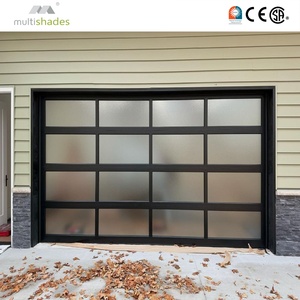
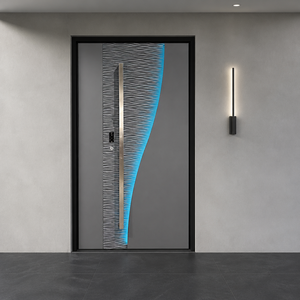
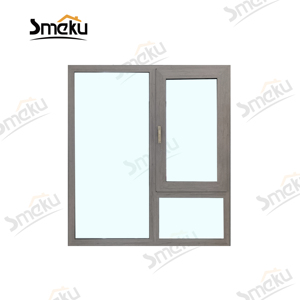
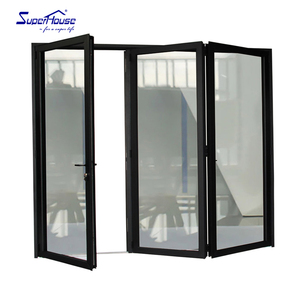
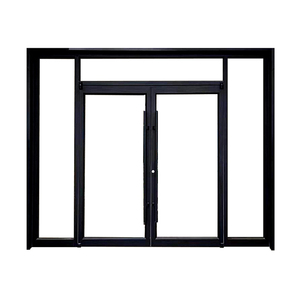
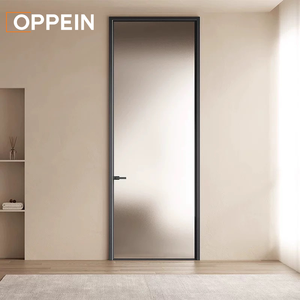
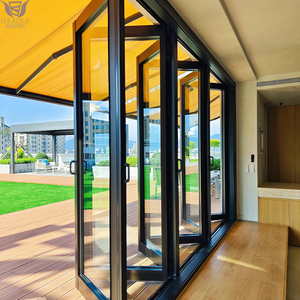
Coating Metallurgy: The Science of High-Durability Aluminium Doors
When evaluating high-performance commercial and residential doors, the integrity of the aluminium coated surface finish dictates lifecycle economics, aesthetic longevity, and galvanic resilience. Uncoated aluminium forms an amorphous natural oxide film that quickly succumbs to atmospheric pollutants, sodium chloride ionization in coastal zones, and micro-cracking under intense solar thermal cycling. Industrial manufacturing utilizes chemical pre-treatments and polymeric coating systems to provide absolute surface isolation.
Fluorocarbon PVDF (AAMA 2605)
Formulated with 70% Polyvinylidene Fluoride resin, providing hyper-durable covalent carbon-fluorine bonds. Exceptional resistance to photolytic degradation, extreme UV fading, and acidic smog, yielding a verified functional lifespan exceeding 25–30 years without chalking.
Qualicoat Class 2/3 Super-Durable
Thermoset polyester resins engineered with carboxyl-functional curing polymers. Applied via electrostatic powder deposition at 60–80 microns thickness. Offers elevated abrasion resilience, high pencil hardness (≥F), and zero VOC environmental outgassing during extrusion coating.
Anodic Chemical Conversion & Nano-Seals
Electrolytic passivation baths producing a structured aluminium oxide layer (≥20 microns) sealed with inorganic nickel salts or organic nano-ceramic molecules. Eliminates filiform corrosion and blistering at edge profiles in maritime atmospheric categories (C4/C5 ISO 12944).
Specification Benchmark Matrix: Door Coating Standards
| Evaluation Parameter | Standard Architectural Powder | Super-Durable Powder (Class 2) | Fluorocarbon PVDF (70% Kynar 500) | Hard Anodized + Nano Seal |
|---|---|---|---|---|
| Primary Compliance Norm | AAMA 2603 / Qualicoat Class 1 | AAMA 2604 / Qualicoat Class 2 | AAMA 2605 / Qualicoat Class 3 | AAMA 611 / ISO 7599 Class I |
| Dry Film Thickness | 40 – 60 μm | 60 – 80 μm | 35 – 45 μm (3-Coat System) | 20 – 25 μm (Oxide Depth) |
| Salt Spray Test (ASTM B117) | 1,000 Hours (Blistering ≤ No. 8) | 3,000 Hours (Creep ≤ 1.0mm) | ≥ 4,000 – 5,000 Hours | 3,000 Hours (Zero Pitting) |
| South Florida UV Exposure | 1 Year (Moderate Fading) | 5 Years (ΔE < 5.0 units) | 10 Years (ΔE < 5.0, Chalk ≥ 8) | 10 Years (Inherent Metallic Color) |
| Recommended Installation | Inland Low-Density Residential | Urban Commercial, Suburbs | Extreme Coastal / High-Rise | Marine Marina / Industrial |
Strategic Procurement & Technological Trends in Aluminium Doors
How global decarbonization mandates, building envelope efficiency standards, and industrial automation are reshaping factory selection for institutional specifiers.
Low-Carbon Circular Billets
Global architectural procurement demands verified Environmental Product Declarations (EPD). Modern tier-1 factories utilize scrap-recycled certified billets (Hydro CIRCAL or 75R equivalents), reducing embodied carbon from 8.6 kg CO2e/kg down to under 2.3 kg CO2e/kg of finished aluminium.
Polyamide Aerogel Barriers
Energy codes (Title 24, NCC Australia, EN ISO 10077) necessitate continuous thermal breaks. Leading manufacturers integrate 34mm–54mm PA66-GF25 structural polyamide struts injected with silica aerogel blanket insulation, achieving whole-door U-values ≤ 1.1 W/(m²·K).
Integrated IoT & Biometrics
Door designs are moving from purely mechanical hardware to factory-concealed access control. Conduits for motorized pivot hinges, motorized multi-point German deadbolts, facial scanning, and building management system (BMS) telemetry are CNC-routed prior to coating application.
Consolidated Sourcing Models
Contractors no longer fragment subcontracts across multiple millers, coaters, and glass processors. Procurement favors centralized vertically integrated super-factories capable of managing billet extrusion, coating lines, thermal break assembly, and test crating under unified ISO 9001 audits.
Guangdong Dejiyoupin Doors and Windows Co., Ltd. (DERCHI)
Recognized as a benchmark of high-precision architectural manufacturing in Foshan, Guangdong, DERCHI combines 25+ years of engineering rigor with extensive R&D infrastructure. From high-rise curtain facades to oversized cyclonic entrance pivot doors, DERCHI operates as a dedicated OEM/ODM manufacturing partner for builders, architects, and institutional contractors across Australia, New Zealand, North America, and Europe.
Our in-house capabilities include vertical automated powder-coating lines, fluorocarbon electrostatic spray booths, CNC five-axis precision machining centers, and an accredited mechanical testing lab capable of validating wind pressures up to the extreme AS 2047 N6 rating.

Five-Stage Closed-Loop Quality Assurance
01. Pre-Treatment & Degreasing
Multi-stage alkaline wash, acid etch, and chrome-free zirconium conversion coating creating microscopic molecular anchors to stop sub-surface filiform corrosion.
02. Automated Spray & Baking
Robotic reciprocator spray guns maintain constant electrostatic attraction, followed by high-precision gas-fired convection curing tunnels monitoring thermal bake curves.
03. Destructive & Optical QC
Every single batch undergoes cross-hatch adhesion testing (ASTM D3359), Gardner impact deformation, and specular gloss/colorimetry spectrophotometer audits prior to crating.
Crucial Questions Asked by Architectural Buyers & Importers
Direct technical answers to eliminate risk, ensure regulatory sign-off, and safeguard your project schedule.
How does an aluminium coated door satisfy Australian AS 2047 and New Zealand NZS 4211 compliance?
What is the definitive coating choice for oceanfront and hyper-saline environments?
How does a factory guarantee oversized pivot doors remain flat without thermal bowing?
What export packaging protocols are implemented to prevent container condensation damage?
Can custom colors, metallic micas, and wood-grain thermal sublimation be specified?
Plan Your Architectural Door Schedule with Senior Engineers
Submit your elevation blueprints, window schedules, or structural wind-load parameters. Our engineering department provides CAD shop drawings, acoustic and thermal modeling, and comprehensive FOB/CIF project estimates within 24 hours.