Featured Commercial & Residential Architectural Systems
Rigidly engineered for extreme meteorological loading, air infiltration minimization, and long-span architectural aesthetics. Manufactured in our 180,000 m² Foshan production facility.
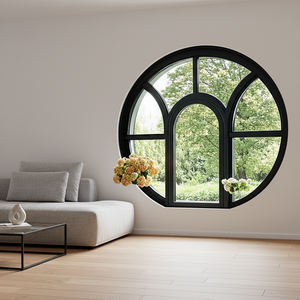
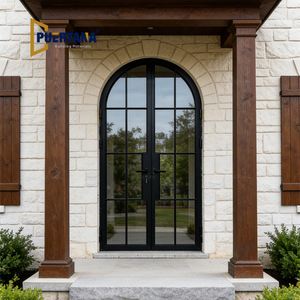
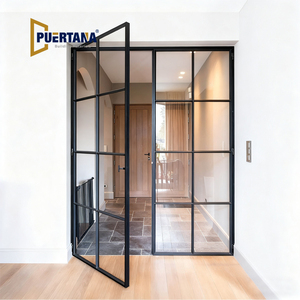
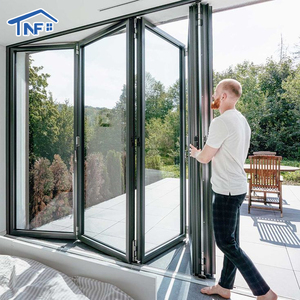
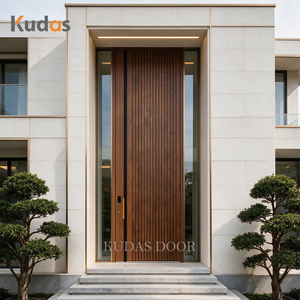
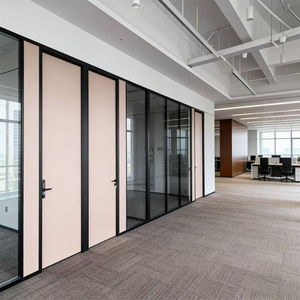
Thermally Broken Black Framed Steel Look Aluminum Glass French Door Crittall Style Heritage Doors
Guangdong Dejiyoupin (DERCHI) Industrial Strength
With over a quarter-century of industrial extrusion, thermal barrier insertion, CNC fabrication, and structural glazed facade assembly, our manufacturing hub stands among China's Top 10 fenestration export authorities.
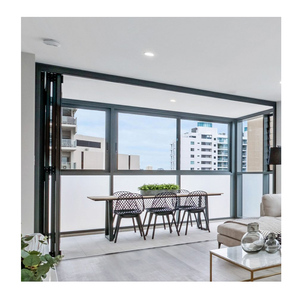
Structural Engineering Anatomy of Heavy-Duty Aluminium Bifold Patio Doors
Modern architectural fenestration requires exterior patio folding door assemblies to execute dual functions that are fundamentally in tension: achieving near-invisible structural sightlines while simultaneously resisting cyclic ultimate design wind pressures exceeding 4500 Pa (N6 Cyclonic Rating according to AS 4055 and AS 2047). Standard sliding doors distribute weight statically across sill rollers; conversely, architectural accordion bifold patio doors suspend cantilevered, interlocking panels that subject top hung tracks and articulated intermediate carrier carriages to multidirectional rotational shear, dynamic wind loading, and eccentric torsional strain.
At DERCHI (Guangdong Dejiyoupin Doors and Windows Co., Ltd.), profile cross-sections are engineered from primary architectural 6063-T6 or 6061-T6 structural billet aluminium alloys. Extrusion wall thicknesses range between 2.0 mm and 3.2 mm at load-critical hinge anchors, counteracting profile deflection under high localized stresses. Rather than relying on simple mechanical press fitments, our four-corner joints feature solid cast aluminium internal corner keys, pneumatic multi-point corner crimping, and anaerobic two-component structural corner sealant injection (Chemlok polyurethane matrix). This ensures zero sash sagging across extended service lifespans exceeding 100,000 continuous operation cycles.
Comprehensive Fenestration Specification Matrix
| Performance Vector | Test Methodology / Standard | Commercial Grade (DERCHI AS2047) | Standard Market Grade (Generic) |
|---|---|---|---|
| Aluminium Alloy & Temper | ASTM B221 / GB/T 5237 | Primary 6063-T6 / High-tensile 6061-T6 | Recycled billet 6063-T5 |
| Thermal Barrier Core | ISO 6946 / EN 10077-2 | PA66 GF25 Polyamide (24mm - 34mm) | PVC or thin strip (<14.8mm) |
| Structural Wind Load (ULS) | AS 2047 / ASTM E330 | Serviceability: 3000 Pa | Ultimate: 4500+ Pa (N6) | 800 Pa – 1500 Pa |
| Water Penetration Resistance | AS 2047 / ASTM E547 / EN 12208 | 450 Pa – 600 Pa (Sub-sill drainage) | 150 Pa – 200 Pa (Surface runoff) |
| Overall U-Factor (Uw) | NFRC 100 / ISO 15099 | 1.2 - 1.6 W/m²·K (Triple Low-E Argon) | 2.8 - 3.8 W/m²·K (Single / Basic Double) |
| Acoustic Attenuation (Rw / STC) | ISO 717-1 / ASTM E413 | Rw 38 dB – 44 dB (Laminated acoustic IGUs) | Rw 25 dB – 28 dB |
Global Procurement Trends: Sourcing Aluminium Patio Bifolds in 2025–2030
International fenestration procurement has fundamentally transitioned away from price-per-square-meter transactional purchasing toward rigorous, full-lifecycle risk mitigation. Institutional project specifiers, commercial general contractors, and tier-one importers across Australia, New Zealand, North America, and Europe face increasingly stringent carbon disclosure protocols, rising building energy compliance requirements (such as Australia's NCC 2022 7-star NatHERS mandates and the European Energy Performance of Buildings Directive), and stringent biosecurity regimes.
1. Decarbonization & Circular Billets
Procurement teams are demanding Environmental Product Declarations (EPDs). Specifiers prioritize manufacturers utilizing low-carbon hydroelectric smelting billets with certified recycled scrap fractions over fossil-fuel intensive smelters.
2. Digital Twin & BIM Parametrics
Procurement no longer begins with physical samples. Tier-one exporters must deliver complete IFC and Revit BIM object libraries, including thermal performance metadata and structural load boundary simulations for clash analysis.
3. Factory Pre-Glazed Monoblocks
Due to surging on-site glazing labor costs in destination ports (Sydney, Auckland, London, Vancouver), contractors increasingly require complete factory-glazed, dry-run tested, crated folding sets requiring zero on-site bead fitting.
Furthermore, supply chain resilience strategies have prompted international buyers to consolidate window, entry door, pivot gate, and sliding facade orders with single integrated manufacturers. Sourcing unified systems from DERCHI enables mixed-container consolidation (FCL shipments combining exterior AS2047 bifold doors, cast aluminum pivot entrance systems, and interior architectural French doors), slashing ocean freight per cubic meter while unifying architectural powder-coat finishes across diverse opening types.
Technological Evolution: Next-Generation Accordion Engineering
The historical limitations of aluminium bifold patio doors—notably bulky vertical stiles obscuring sightlines, difficult roller operation under heavy thermal glass weights, and catastrophic sill water leaks during horizontal driving rainstorms—have been methodically resolved by recent breakthroughs in metallurgical extrusion and mechanical hardware design.
Ultra-Narrow Stile Profiles
By transitioning from basic alloy matrices to micro-alloyed 6063-T6, profile sightlines have decreased from standard 120 mm to ultra-slim 45–60 mm visible profiles, expanding daylight harvesting area by up to 14% without compromising moment of inertia.
Flush Zero-Threshold Drainage
Next-gen flush sills integrate subsurface pressure-equalized cascade drainage chambers and magnetic concealed drop-seals. This eliminates trip hazards while guaranteeing resistance to water penetration under 450 Pa hydrostatic head pressure.
Ceramic Precision Roller Bearings
Panel weight capacities have climbed from 80 kg to 250 kg per sash, facilitated by sealed marine-grade 316 stainless steel housings carrying self-lubricating ceramic roller bearings that prevent flat-spotting under continuous mechanical stress.
Enterprise Export Competencies: Guangdong Dejiyoupin (DERCHI)
Operating out of Foshan's high-tech industrial manufacturing belt in Guangdong, China, Guangdong Dejiyoupin Doors and Windows Co., Ltd. (DERCHI) has established an international reputation over 25+ years as a premier fenestration manufacturer and global exporter. Our comprehensive production matrix spans over 180,000 m² of integrated workshop space, staffed by 600+ precision engineers, certified quality control specialists, and master craftsmen.
Full Scope Compliance
DERCHI systems are independently certified to AS 2047, AS 1288, CE, ISO 9001, and UL fire standards. Full engineering calculation books and official NATA/intertek laboratory test certificates accompany every export bill of lading.
Complimentary CAD & Shop Drawings
Prior to factory extrusion cut-offs, our structural engineering team generates full architectural shop drawings, profile elevation elevations, anchor detail sections, and glass load calculations tailored to local project schedules.
Heavy Export Crating Protocols
Export door frames and pre-glazed sashes are cocooned in microfoam wrap, shrink-banded with corner protectors, and securely encased in custom fumigation-free solid OSB/plywood crates with integrated forklift risers, ensuring zero maritime transit damage.
Unlike regional assemblers reliant on third-party extrusion coaters, DERCHI operates high-capacity vertical fluorocarbon (PVDF) and AkzoNobel Interpon architectural powder-coating lines internally. This delivers rigorous 30-year film adhesion, ASTM C1184 structural durability, and extreme UV / 3,000-hour C5-M marine-grade salt-spray corrosion resistance suited for harsh oceanfront exposures across Australia, New Zealand, the Pacific Rim, and coastal North America.
Architectural & Procurement FAQ: Sourcing Aluminium Patio Bifolds
Critical engineering, regulatory, and logistics inquiries addressed by our export technical directorate to assist facade consultants, procurement leads, and commercial builders.
How do DERCHI aluminium bifold doors verify compliance with Australian Standard AS 2047?
What is the maximum achievable height and panel width per bifold leaf?
How does DERCHI combat galvanic and maritime atmospheric corrosion in coastal zones?
What glass configurations are integrated for thermal and acoustic optimization?
What shipping, packaging, and logistics protocols prevent damage during ocean transit?
Engineer Your Architectural Bifold Patio Door Project Today
Direct factory pricing, comprehensive AS 2047 / CE compliance engineering submittals, and complimentary CAD shop drawings within 24 hours. Connect with our senior fenestration export engineering team.