Explore our factory-direct structural aluminum door and window systems, manufactured under rigorous ISO9001 and AS2047 quality control standards for luxury residential, commercial, and hospitality applications.
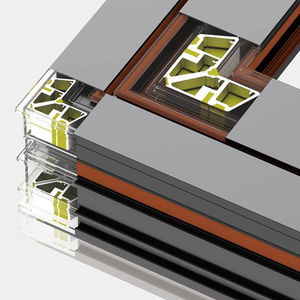
Modern Flush Aluminum Alloy Casement Window Powder Coated Double Tempered Glass Swing
View Product Specifications →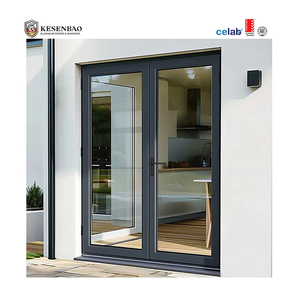
Soundproof Double Glass Aluminum Casement Door Aluminium Swing Door for Commercial Use
View Product Specifications →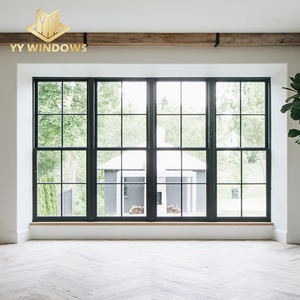
NFRC Standard Luxury Double Tempered Glazing Aluminum French Casement Windows
View Product Specifications →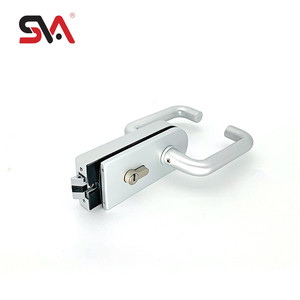
Bathroom Shower Double Side Semicircular Rectangle Aluminium Alloy Tempered Glass Door
View Product Specifications →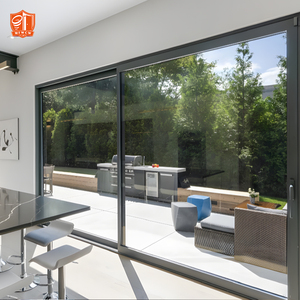
Commercial Grade Heavy Duty Lift and Slide Door Large Span Aluminum Sliding Door
View Product Specifications →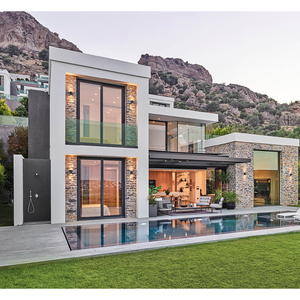
Custom Modern Anthracite Quality Double Glazed Aluminium Window and Door System
View Product Specifications →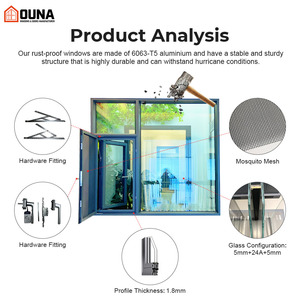
OUNA Thermal Break Insulated Soundproof Double Glazed Aluminum Casement Windows
View Product Specifications →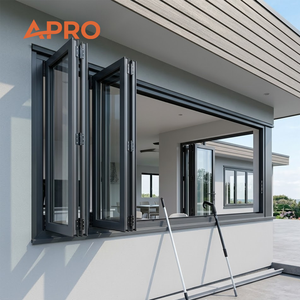
Aluminium Glass Bi Fold Window Aluminum Folding Fold Up Glass Window System
View Product Specifications →The global demand for high-performance architectural fenestration has elevated aluminum sliding folding doors (bi-fold door systems) into an essential feature for modern luxury residential estates, commercial hospitality spaces, and high-density urban developments. When sourcing from China—the world’s largest manufacturing ecosystem for extruded aluminum profiles—procurement teams, architectural specifiers, and facade contractors must navigate a complex landscape of factory capabilities, structural engineering benchmarks, and international compliance standards.
China’s leading door and window manufacturing hubs, predominantly concentrated in Guangdong Province (notably Foshan), utilize cutting-edge primary aluminum billet alloys (6063-T5 and 6063-T6) combined with advanced polyamide thermal break technology (PA66-GF25). Selecting a top-tier factory requires evaluating structural frame depth, wall thickness compliance, weatherproofing performance under extreme wind-load pressures, and multi-point hardware integration.
Alloy Purity & Extrusion Wall Thickness
Premier Chinese manufacturers enforce a minimum profile wall thickness of 2.0mm to 3.0mm for heavy-duty sliding folding doors. Utilizing primary 6063-T5/T6 aluminum billets ensures structural rigidity, resisting frame twisting under heavy wind pressure or extreme thermal expansion.
Thermal Barrier Engineering
High-end bi-fold systems utilize double and triple thermal break technology featuring 24mm to 34mm Polyamide (PA66-GF25) reinforced insulation strips. This thermal decoupling drastically reduces U-factors, achieving energy performance compliance for Passive House standards.
Heavy-Duty Bogie Roller Systems
The operational longevity of a large-span folding door depends entirely on its load-bearing hardware. Top factories incorporate bottom-rolling or top-hung quad-bogie stainless steel rollers rated for sash weights up to 300kg (660 lbs) per panel with whisper-quiet glide mechanics.
To ensure seamless project approval across North America, Australia, Europe, and the Middle East, structural bi-fold doors must undergo rigorous laboratory testing. Below is an engineering comparison matrix detailing the performance metrics achieved by verified tier-1 Chinese manufacturers versus standard market profile offerings.
| Performance Standard | Testing Method / Standard Code | Standard Commercial Grade | Tier-1 Factory Architectural Grade (DERCHI) |
|---|---|---|---|
| Structural Wind Load Resistance | AS 2047 / ASTM E330 / EN 12210 | 1500 Pa – 2500 Pa (Serviceability) | Up to 5000 Pa (N6 / Cyclone Rating) |
| Water Penetration Resistance | ASTM E547 / AS 2047 / EN 12208 | 300 Pa – 450 Pa Static Pressure | 700 Pa – 1000 Pa Sub-Sill Drainage |
| Air Infiltration Rate | ASTM E283 / EN 12207 | Level 2 (0.30 cfm/ft²) | Class 4 / Custom Double EPDM Gasket (<0.05 cfm/ft²) |
| Acoustic Insulation (STC/Rw) | ISO 10140-2 / ASTM E90 | STC 28 dB – 32 dB | STC 42 dB – 48 dB (Acoustic Laminated IGU) |
| Thermal Transmittance (U-Value) | NFRC 100 / EN ISO 10077-2 | 2.8 – 3.5 W/m²K | 1.1 – 1.6 W/m²K (Argon Low-E Triple Glazed) |
| Cycle / Operating Durability | AAMA 910 / EN 1191 | 10,000 Cycles | 100,000+ Smooth Glide Operating Cycles |
Critical Insight for Specifiers: Sub-Sill & Drainage Threshold Design
In high-rainfall and coastal environments, water penetration is the leading cause of field failures in folding door assemblies. High-end Chinese manufacturers solve this through engineered zero-barrier flush thresholds integrated with concealed stainless steel sub-sill drainage tracks. This design allows seamless indoor-outdoor transition while diverting wind-driven water safely outward through unidirectional check valves.
The architectural fenestration sector is undergoing rapid technological evolution. Global developers and procurement directors must align their supply chains with upcoming market shifts to ensure asset longevity, structural compliance, and maximum ROI.
1. Ultra-Narrow Sightlines & Minimalist Stiles
Architectural demand is heavily pivoting toward ultra-slim profile stiles with visible vertical frame widths reduced to as low as 18mm–25mm. By maximizing glass-to-frame ratios, contemporary bi-fold doors provide unobstructed panoramic views without sacrificing structural deflection resistance.
2. Smart IoT Automation & Motorized Bi-Folds
Next-generation bi-fold systems integrate multi-panel hidden electric actuators, allowing automatic opening, closing, and locking via smart home automation systems, mobile applications, and integrated rain/wind sensors for automated luxury estates.
3. Low-Carbon Aluminum & ESG Manufacturing
Leading Chinese exporters are transitioning toward recycled aluminum content and hydro-powered smelting processes. Supplying low-embodied-carbon aluminum doors helps global developers achieve LEED Gold/Platinum and BREEAM sustainability ratings.
Among China’s extensive industrial matrix, Guangdong Dejiyoupin Doors and Windows Co., Ltd. (DERCHI) stands as a premier manufacturer located in Foshan, Guangdong. Backed by over 25 years of specialized engineering excellence, DERCHI operates a state-of-the-art production ecosystem designed to fulfill complex international project requirements seamlessly.
By maintaining complete in-house authority over extrusion processing, precision CNC machining, thermal break assembly, surface coating (fluorocarbon PVDF spraying, anodizing, and Italian wood grain transfer), and multi-stage Quality Assurance, DERCHI guarantees that every door leaves the facility with zero defects. Clients across Australia, New Zealand, North America, Europe, and the Middle East benefit from tailored OEM/ODM capabilities, free professional CAD/BIM shop drawings, and dedicated English-speaking engineering support aligned with international time zones.
How do Chinese aluminum bi-fold doors comply with Australian (AS 2047) and North American (NFRC/AAMA) standards?
What is the typical manufacturing lead time for custom aluminum sliding folding doors?
How are oversized glass panels protected against breakage during ocean freight shipping?
Can DERCHI accommodate custom architectural specifications, heavy glass IGUs, and specialized hardware?
What hardware and surface finish guarantees are provided?
Accelerate Your Project with Factory-Direct Engineering Support
Partner with Guangdong Dejiyoupin (DERCHI) to access premier Chinese manufacturing power, custom shop drawings, factory-direct pricing, and uncompromised structural quality.
Contact Us