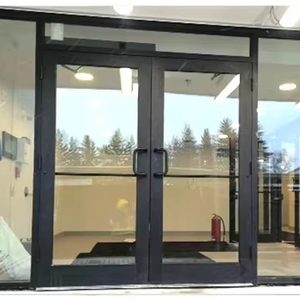
Catalog Showcase
Featured Aluminium External Doors & Architectural Enclosures
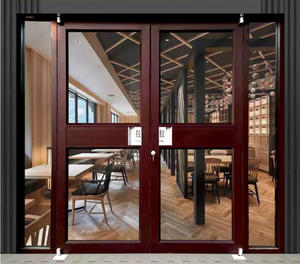
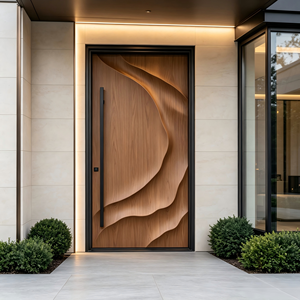
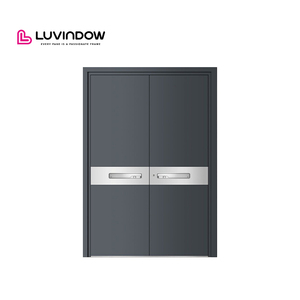
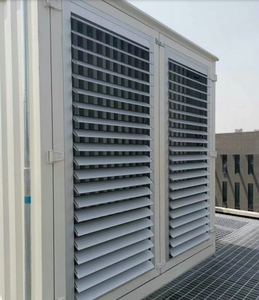
Explore our precision-manufactured fenestration portfolio. All doors are engineered from high-tensile 6063-T6 virgin aluminium alloys, featuring multi-point security hardware, advanced thermal breaks, and coastal-grade powder coating verified against global building codes.
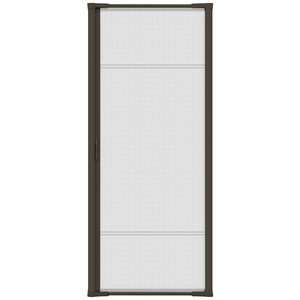
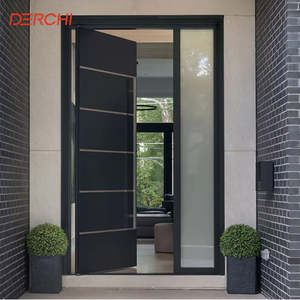
Industry Whitepaper
Navigating the Global Procurement of Aluminium External French Doors
In modern architectural design, the exterior French door has evolved from a traditional timber patio egress into an engineered structural barrier capable of resisting extreme wind pressures, driving rain, acoustic pollution, and thermal bridging.
Strategic Procurement Insight: Modern architectural specifications require external French door systems to act as an unyielding structural component. Utilizing polyamide thermal barriers (PA66 GF25) paired with structural silicone glazing, Chinese Tier-1 suppliers deliver U-factors below 1.4 W/(m²·K) and air infiltration rates lower than 0.05 L/(s·m²), outperforming traditional solid timber and non-thermal PVC assemblies.
As commercial builders, facade consultants, and real estate developers expand cross-border procurement, sourcing aluminium external French doors directly from Chinese manufacturers has become standard practice. The Guangdong industrial corridor—centered in Foshan—hosts the world's most concentrated ecosystem for architectural aluminium extrusion, die tooling, fluorocarbon surface treating, and CNC five-axis precision machining. However, bridging the gap between local building codes (such as Australia’s AS 2047, North America’s NFRC/AAMA/CSA 101, and Europe’s EN 14351-1) requires strict supply-chain qualification, rigorous material testing, and verified structural integrity.
This procurement whitepaper delivers complete transparency into alloy metallurgy, multi-point transmission hardware, thermal isolators, testing standards, and logistics strategies. It provides developers, architects, and quantity surveyors with the technical criteria needed to specify, inspect, and import exterior French door sets directly from leading Chinese suppliers.
180,000
m² Production Base
25+
Years Manufacturing
AS 2047
N6 Wind Rating Tested
100+
Patents & Global Certs
Technical Benchmarking
Material Metallurgy, Tolerances & Performance Standards
When specifying aluminium external French doors for harsh marine, tropical, or sub-zero climates, metallurgical composition and manufacturing tolerances directly determine long-term deflection, air-tightness, and corrosion resistance.
| Performance / Engineering Parameter | DERCHI / Tier-1 Export Specification | Standard Wholesale Market Grade | Compliance Test Standard |
|---|---|---|---|
| Aluminium Alloy & Wall Thickness | Virgin 6063-T6 / 6061-T6; Outer Wall Thickness 2.0mm – 3.0mm | Recycled Blend; 1.2mm – 1.4mm Wall Thickness | GB 5237 / ASTM B221 |
| Structural Wind Load Resistance | Serviceability: 3000 Pa; Ultimate: 4500+ Pa (N6 Cyclonic) | 800 Pa – 1200 Pa (Standard Residential Only) | AS 2047 / ASTM E330 |
| Water Penetration Resistance | Static: 450 Pa – 700 Pa (No Leakage via Sub-sills) | 150 Pa – 200 Pa (Prone to High-Wind Infiltration) | AS 4420.5 / ASTM E331 |
| Thermal Transmittance (U-Value) | Uw 1.1 – 1.6 W/(m²·K) via 24mm-34mm PA66 Polyamide Bar | Uw 3.2 – 5.8 W/(m²·K) Non-Thermal / PVC Bridge | NFRC 100 / EN ISO 10077 |
| Acoustic Attenuation (Sound Transmission) | Rw / STC 38 dB – 44 dB (Double/Triple Glazed Laminated) | Rw / STC 24 dB – 28 dB (Standard Single/Float Glass) | ISO 717-1 / ASTM E413 |
| Surface Finish & Coastal Durability | Qualicoat Class 2 Fluorocarbon (PVDF) / 25μm Anodized | Standard Electrostatic Spray (<40μm coating) | AAMA 2605 / ISO 9227 |
| Hardware & Security Multi-Point Locks | 304/316 Stainless Steel GU, Siegenia, Hoppe 5-Point Locking | Single-point Zinc Alloy Mortise Latch | EN 1627 RC2/RC3 |
Structural Anatomy
Engineering Integrity of Modern Exterior French Door Assemblies
External French doors are subjected to unique physical loads. Because both operable leaves meet in the center without a fixed structural mullion, the meeting stile (astragal) must incorporate engineered interlocking rebated profiles and robust shoot-bolt mechanisms.
Reinforced Astragal & Center Meeting Stile
Unlike single swing doors, double French doors rely on an internal interlocking mullion assembly. Our structural profile incorporates internal aluminum stiffeners that prevent door sash splay and torsion under high positive and negative gale pressures, maintaining airtight sealing along the central seam.
Equalized Pressure Drainage Sub-Sills
Water infiltration during extreme rainfall occurs when air pressure differences force moisture past weatherstripping. Our doors feature multi-chambered sub-sills with concealed one-way weep valves and pressure-equalization chambers that balance external wind gusts and drain water through gravity.
Continuous EPDM Triple Sealing Gaskets
We deploy automotive-grade co-extruded EPDM (Ethylene Propylene Diene Monomer) gasket systems with vulcanized corner joints. These provide permanent memory retention from -40°C to +120°C, blocking draft ingress and preventing thermal contraction leaks common with inferior PVC seals.
Supplier Reliability
Why Top Global Specifiers Partner with DERCHI
Guangdong Dejiyoupin Doors and Windows Co., Ltd. operates across a 180,000-square-meter modern manufacturing footprint in Foshan, delivering factory-direct fenestration engineering to developers across Australia, North America, the UK, and New Zealand.
Full CAD & BIM Structural Shop Drawings
Prior to extrusion cutting, our senior façade engineering unit provides comprehensive 2D CAD shop drawings, perimeter flashing detail sections, and 3D Revit models. This ensures structural clearances, finish schedules, and installation anchors integrate seamlessly with the project's building envelope.
Full Compliance Testing (AS 2047, NFRC, CE)
Our exterior French doors and pivot systems have undergone destructive cyclic testing, achieving N6 cyclonic ratings (4500 Pa) under Australian AS 2047 / AS 4420 standards, as well as NFRC thermal performance verifications and ISO 9001 quality factory traceability across every production lot.
Ocean-Freight Crate Packaging & Logistics
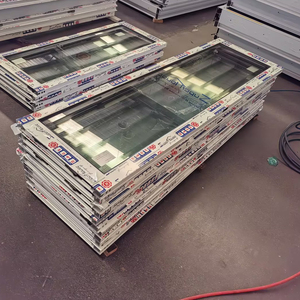
To safeguard structural frames and high-performance Low-E coatings over long sea voyages, all door panels are encased in non-fumigation plywood crates with internal foam cushioning, corner protectors, and silica gel desiccants. Shipments arrive fully documented for customs clearance in FCL or LCL containers.
Future Forecast
Procurement & Technology Trends Shaping External French Doors (2025–2030)
The fenestration sector is experiencing significant changes driven by decarbonization mandates, stricter building energy codes, and demand for expansive daylight apertures.
Energy Codes
Ultra-Low U-Value Mandates
Global energy mandates—such as Australia's 7-star NatHERS, California Title 24, and Europe's passive house directives—are pushing French door specs toward 34mm multi-chamber thermal breaks and argon-filled warm-edge Low-E insulated glass units (IGUs).
Aesthetics
Minimalist Ultra-Slim Sightlines
Contemporary architectural demand favors maximizing glazed surface area. Advanced 6061-T6 alloy extrusion enables stile widths as narrow as 45mm to 65mm without sacrificing structural moment of inertia under heavy coastal wind loads.
Smart Ingress
Concealed Automated Hardware
Mechanical cylinder mortise locks are evolving into concealed motorized multi-point systems compatible with smart-home automation. Ingress via biometric thumbprint, RFID, or smartphone integration is increasingly specified in high-end villa builds.
Resilience
Bushfire & Hurricane Hardening
Climate risk has made cyclonic wind certification (ASTM E1996 missile impact) and bushfire verification (AS 3959 BAL-40/FZ ratings) standard requirements for high-risk coastal and wildfire-interface architectural specifications.
Buyer Knowledge Base
Frequently Asked Questions on Importing Aluminium External French Doors
Straightforward answers addressing engineering standards, factory testing, lead times, custom configurations, and overseas project delivery.
How do Chinese aluminium external French doors comply with local building codes?
Reputable suppliers like DERCHI engineer systems specifically to meet region-specific codes. For Australia and New Zealand, doors undergo independent laboratory testing to AS 2047 (covering wind deflection, air infiltration, water penetration, and ultimate strength up to N6 ratings) and AS 1288 safety glass mandates. For North America, profiles follow AAMA/WDMA/CSA 101 standards and NFRC thermal ratings, with comprehensive test certificates provided for council and certifier sign-off.
What is the difference between non-thermal and thermally broken aluminium French doors?
Non-thermal aluminium doors consist of continuous metal extrusions that readily conduct heat and cold, causing interior condensation, frost buildup, and thermal loss. Thermally broken systems separate exterior and interior aluminium profile sections using an engineered polyamide structural bar (PA66 GF25). This barrier stops thermal conduction, lowers the U-factor from ~5.5 down to 1.2–1.8 W/(m²·K), and prevents condensation formation indoors.
How do you guarantee weather-tightness at the meeting stiles of double French doors?
Double exterior French doors lack a permanent vertical center post. We achieve weather sealing through an engineered interlocking astragal profile fitted with double-recessed EPDM compression gaskets. Additionally, top and bottom flush-bolt or shoot-bolt lock systems draw both active and inactive sashes tightly into the frame sill and head, maintaining continuous compression against 700 Pa driving rain tests.
What surface finishes are recommended for beachfront or high-salinity locations?
For projects located within 1,000 meters of open ocean, standard powder coating is insufficient. We recommend AkzoNobel or PPG certified fluorocarbon (PVDF) 3-coat finishes or Qualicoat Class 2 / Class 3 super-durable thermoset powder coatings. Alternatively, deep architectural anodizing with a thickness of 20 to 25 microns provides exceptional resistance against filiform corrosion and salt mist, verified by 3,000+ hour neutral salt spray (ASTM B117) testing.
Can external French doors be custom manufactured to oversized architectural openings?
Yes. Utilizing heavy-duty commercial 6063-T6 extrusions with corner-crimped cleats and reinforced interior steel backing plates, our factory fabricates single leaf dimensions up to 1200mm × 3000mm and double door openings exceeding 2400mm × 3200mm. Oversized doors incorporate high-load capacity 3D adjustable concealed or butt hinges rated up to 180kg per panel.
What glazing options can be specified for acoustic noise reduction and solar control?
We supply certified double and triple insulated glass units (IGUs) incorporating tempered, Low-E, and acoustic PVB or SentryGlas (SGP) laminated glass. Common configurations include 6mm Low-E + 12A/16A (Argon gas) + 6mm Toughened or 6mm Toughened + 1.52mm PVB + 6mm Toughened. These deliver sound transmission class (STC) ratings above 40 dB and solar heat gain coefficients (SHGC) tailored from 0.22 to 0.45.
What is the standard production lead time and shipping duration to export markets?
Standard production lead time for custom engineered French door sets is 25 to 35 calendar days following client sign-off on CAD shop drawings and hardware schedules. Ocean transit to Australian east-coast ports (Sydney, Melbourne, Brisbane) typically takes 12 to 18 days; to the US West Coast (Los Angeles, Long Beach) takes 14 to 20 days; and to European ports takes 28 to 35 days.
How does DERCHI ensure door frames arrive without transit damage or surface scratching?
All aluminium profiles receive protective adhesive peel-film during manufacturing. Fully assembled or knocked-down (CKD/DKD) frames are wrapped in EPE pearl cotton, enclosed in corner-shield buffer guards, and packed into solid, fumigation-free engineered plywood crates. Heavy units include integrated forklift skids, internal tie-down straps, and moisture-absorbing desiccant pouches to prevent container condensation damage.
Can you accommodate smart locks, motorized cylinders, and integration with home automation?
Yes. We factory-rout and prepare the sash frame for biometric smart mortise locks, electric strikes, magnetic reed switches, and motorized multi-point systems (such as GU Secury Automatic or Somfy automation). Wiring channels and concealed electrical loop hinges can be pre-drilled to ensure straightforward plug-and-play installation on-site.
What is the factory warranty on structural frames, glazing, and hardware?
DERCHI provides a comprehensive 10-year warranty covering the structural integrity of the 6063-T6 aluminium frames, powder-coating finish durability against peeling or excessive fading, and seal failure of double-glazed IGUs. European imported hardware mechanisms (GU, Siegenia, Hoppe) carry a standard 5-to-10-year mechanical warranty covering cycle operations up to 100,000 cycles.
Request a Project Specification & Custom Sourcing Proposal
Send us your door schedules, architectural CAD plans, or structural opening dimensions. Our facade engineering team will return complete shop drawings, glass thermal performance simulations, and direct factory pricing within 24 business hours.