Precision Ventilation Windows & Architectural Enclosure Systems
Direct from Foshan’s leading automated extrusion and fabrication facility: explore certified multi-chamber thermal breaks, micro-ventilation casements, and high-load acoustic ventilation assemblies tailored for residential, commercial, and high-rise envelope applications.
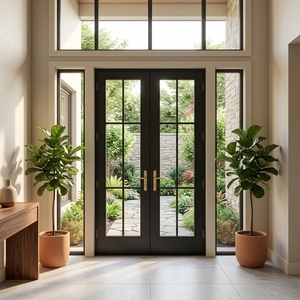
Modern Crittall-Style Architectural Aluminum Glazed Door & Transom Ventilator
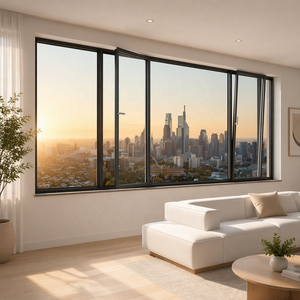
Minimalist Narrow-Frame Tilt & Turn Micro-Ventilation Thermal Break Window
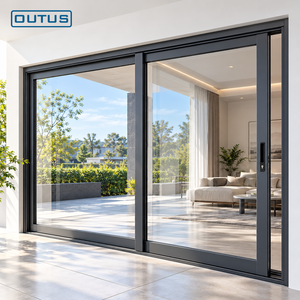
Diamond Mesh Architectural Security Screen with High-Airflow Mosquito Net

High-Performance Waterproof Aluminum Casement Window with Integrated Sub-Sill
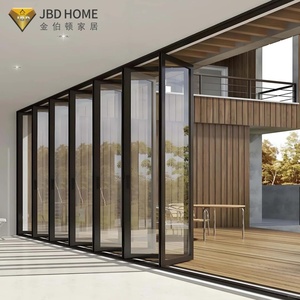
Heavy-Duty Exterior Thermal Break Bifold Wall System with Vent Louver Inserts
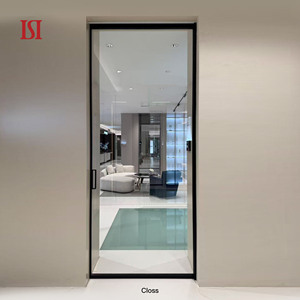
Ultra-Slim Starlight Recessed Pocket Sliding System with Concealed Trickle Slots
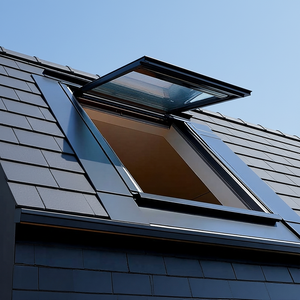
Intelligent Motorized Skylight Roof Ventilator with Rain Sensor Actuators
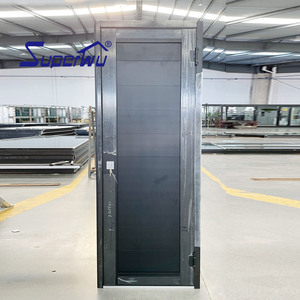
NFRC & FPA Hurricane Impact-Certified Heavy Swing System with Air Bypass Baffles
1. The Engineering Paradigm: Modern Aluminum Ventilation Window Systems
Contemporary fenestration engineering is no longer simply about sealing a building envelope against outdoor elements; it is an optimization problem balancing aerodynamic passive airflow, strict structural wind-load capacity, thermal isolation, and acoustic decoupling. Aluminum ventilation windows—encompassing precision parallel opening vents, micro-ventilation tilt-and-turn units, automated climate-responsive sashes, and integrated security louvers—serve as the mechanical lungs of modern commercial facades and low-carbon residential developments.
From an aerodynamic perspective, effective ventilation relies on harnessing cross-ventilation differential pressure (ΔP) and natural thermal stack effects. When selecting an architectural manufacturer, procurement directors and project engineers must evaluate the effective Aerodynamic Free Area (AFA). A traditional hopper or top-hung awning window may offer restricted discharge coefficients (Cd ≈ 0.35–0.42), whereas parallel opening architectural ventilation windows maximize peripheral displacement, achieving discharge coefficients exceeding Cd ≈ 0.62. This drastically increases volumetric air exchange (m³/h) at minimal static pressure loss without exposing sashes to catastrophic wind-shear failures.
Comparative Technical Benchmark: Top Global Ventilation Fenestration Standards
The global facade industry relies on disparate, stringent regional benchmarks to certify structural safety and air-water tightness. The following data visualization matrix illustrates the core performance thresholds met by top-tier Foshan industrial manufacturers compared against European and North American baseline specifications:
| Performance Criterion | Oceania Standard (AS 2047 / AS 1288) | European Standard (EN 14351-1 / EN 12207) | North American Standard (AAMA/WDMA/CSA 101) | DERCHI High-Spec Engineering Target |
|---|---|---|---|---|
| Structural Wind Resistance | N6 Rating (Serviceability: 3000 Pa, Ultimate: 4500 Pa) | Class 5 / Class E2400 (>2400 Pa) | CW-PG80 to AW-PG100 (3840 to 4800 Pa) | 4500–5000 Pa (Exceeds AS 2047 N6, Florida HVHZ) |
| Water Penetration Resistance | Pass at 450–700 Pa static pressure head | Class 9A / Class E750 (>750 Pa) | 15% of positive design pressure (min 580 Pa) | 700–850 Pa Controlled De-pressurized Weep System |
| Air Infiltration Control | < 1.0 L/s·m² at 75 Pa (Air conditioned) | Class 4 (≤ 3 m³/h·m² at 100 Pa) | ≤ 0.1 cfm/ft² at 75 Pa (AW Class) | ≤ 0.05 cfm/ft² (< 0.6 L/s·m²) Air-Tight Envelope |
| Thermal Transmittance (Uf / Uw) | Section J NCC (Uw ≤ 2.0–3.2 W/m²K) | Passive House / EnEV (Uw ≤ 0.8–1.3 W/m²K) | NFRC U-factor ≤ 0.24–0.32 Btu/h·ft²·°F | Uw 0.98–1.40 W/m²K (Multi-Cavity Polyamide Core) |
| Acoustic Isolation Index | Rw + Ctr ≥ 32 to 38 dB | Rw ≥ 35 to 45 dB | STC 34 to 42 / OITC 28 to 36 | Rw 38–46 dB (Laminated Acoustic Resins + Baffles) |
2. Engineering Architecture: Anatomy of a High-Performance Ventilation Window
Specifying aluminum ventilation fenestration requires an exhaustive assessment of alloy metallurgy, thermal decoupling mechanics, aerodynamic blade profiles, and kinetic operational hardware. The following technical pillars define the vanguard of modern supplier capabilities:
6063-T6 Precision Billet Metallurgy
Structural profiles utilize primary virgin aluminum ingot billet (6063-T6/6060-T66) with wall thicknesses ranging from 2.0mm to 3.5mm, ensuring tensile strength ≥ 215 MPa and yield strength ≥ 170 MPa under intense cyclic gust loads.
Multi-Cavity PA66 GF25 Isobaric Breaks
Thermal bridging is broken using 24mm to 34mm polyamides reinforced with 25% glass fiber (PA66 GF25), exhibiting matching thermal expansion coefficients to aluminum to prevent longitudinal shearing under extreme temperature deltas.
Marine-Grade 316 Stainless Security Mesh
Natural ventilation without compromise: integrated high-tensile 316 marine stainless woven mesh allows uninterrupted airflow (62% open area) while providing anti-theft cut resistance and coastal salt-spray longevity exceeding 3,000 hours.
Concealed Multi-Point Kinetic Drive
Perimeter gear locks and heavy-duty 4-bar friction stays (Roto, Siegenia, or custom CNC-machined stainless pivots) guarantee uniform gasket compression of 3.5mm to 4.2mm along the entire sash frame, eliminating whistling and localized air bleed.
Acoustic Labyrinth Trickle Aerators
For dense urban high-rises, passive frame-head ventilators incorporate micro-perforated sound attenuating baffles, preserving an Rw 42 dB barrier while maintaining an unforced background trickle ventilation of 30 to 50 m³/h per linear meter.
Automated BMS Integration Actuators
Direct integration of concealed 24V DC synchronous linear chain drives wired into building management systems (KNX, BACnet, Modbus) for nighttime convective purging, CO2 sensor displacement ventilation, and immediate storm auto-closure.
3. Strategic Procurement Trends: The Next Five Years in Commercial Fenestration
As institutional developers, facade consultants, and general contractors seek supply chain agility, procurement protocols for aluminum ventilation systems are shifting rapidly. B2B buyers must anticipate several transformative market forces over the 2025–2030 cycle:
Low-Carbon Recycled Billet Extrusion
Global carbon tariffs (such as EU CBAM) are compelling Tier-1 builders to mandate Environmental Product Declarations (EPD). Suppliers utilizing renewable hydro-powered smelting and ≥75% post-consumer recycled aluminum scrap (producing < 4.0 kg CO2e per kg Al) are gaining decisive procurement preferences over coal-smelted alternatives.
Autonomous Sensor-Driven Micro-Ventilation
The convergence of Indoor Air Quality (IAQ) mandates (WELL Standard, LEED v4.1) and smart homes is transitioning passive windows into active mechanical units. High-demand tenders now require sash frames pre-milled for concealed internal actuators, optical rain sensors, VOC detectors, and contact-free anti-pinch safety loops.
Factory-Direct Full Envelope Consolidation
Disjointed procurement across multiple sub-vendors introduces severe interface failures on site. Tier-1 developers are moving toward full-system manufacturer consolidation: purchasing thermally broken entrance doors, oversized pivot systems, curtain wall ventilation inserts, and hurricane-rated casements under a single unified factory guarantee.
Hyper-Storm & Coastal C5-M Surface Metallurgy
With increasing frequencies of cyclonic events and extreme coastal weather, the market is turning away from standard electro-coating toward 70% Kynar 500 PVDF fluorocarbon coatings and 25-micron Qualicoat Class 3 anodizing, verified by 4,000-hour continuous acetic acid salt spray (AASS) chamber tests.
Pre-Glazed Unitized Sub-Frame Assemblies
To circumvent skyrocketing site labor costs across Australia, North America, and Europe, fenestration buyers demand pre-glazed, unitized assemblies equipped with factory-fitted flashing, sill extensions, sub-heads, and dry-seal installation fins that slash crane hoisting and installation time by up to 60%.
4. Technological Advancements in Window Aerodynamics & Thermal Physics
The modern architectural envelope operates in a state of continuous thermodynamic negotiation. When a ventilation sash opens, the boundary layer of air along the building skin is disrupted, potentially introducing high-velocity localized drafts, airborne moisture, and acoustic leakage. Breakthrough technological developments are fundamentally resolving these traditional compromises:
1. Aerodynamic Vortex Shedding & Louver Blade Geometry
Next-generation aluminum ventilation louvers move beyond flat or simple curved extrusions. Computational Fluid Dynamics (CFD) optimization has introduced aerofoil-profiled blades featuring secondary micro-deflection lips. These blades induce laminar flow along the outer curvature while creating controlled low-pressure zones that actively eject driving rain droplets before they reach internal drainage pans. This allows continuous 100% weather-resistant fresh air circulation even during rainfall under ambient wind pressures up to 300 Pa.
2. Aerogel-Infused Multi-Chamber Insulation Cavities
While traditional thermal breaks rely on hollow polyamide struts, cutting-edge ventilation window profiles now utilize aerogel blanket inserts and multi-chamber foamed polyurethane (PUR) thermal plugs within the profile core. This micro-structural insulation brings the frame thermal conductivity (Uf) down to sub-0.9 W/m²K levels, eliminating condensation risks during winter night-ventilation cycles in cold climate zones.
3. Electromagnetic & Piezoelectric Active Acoustic Cancellation
In high-noise environments (such as airport corridors, urban railway frontages, and central business districts), natural ventilation has historically been discarded in favor of sealed HVAC systems. Revolutionary hybrid acoustic ventilation channels incorporate active noise cancellation (ANC) arrays within the window frame head. Micro-speakers emit anti-phase soundwaves tuned to low-frequency vehicular rumble (50 Hz to 250 Hz), achieving sound attenuation reductions up to 15 dB without restricting mechanical airflow volume.
5. Industrial Authority: Why Guangdong Dejiyoupin (DERCHI) Leads Global Supply
Choosing an industrial manufacturing partner for institutional window and door procurement demands unyielding verification of production capacity, quality assurance architectures, and international code compliance. Based in the global fenestration epicenter of Shishan Town, Nanhai District, Foshan, Guangdong Dejiyoupin Doors and Windows Co., Ltd. (DERCHI) stands as an authoritative benchmark in architectural envelope manufacturing:
180,000 m² Mega Manufacturing Ecosystem
Equipped with fully automated German Elumatec 5-axis CNC machining centers, robotic gantry cutting saws, and continuous automated powder-coating lines ensuring absolute corner-joint dimensional tolerance within ±0.2mm across high-volume production batches.
AS 2047, CE, & North American Certified
Our complete fenestration assemblies undergo independent physical chamber testing, achieving official AS 2047 N6 cyclonic wind ratings (4500 Pa), Florida HVHZ missile impact certification, ISO 9001 quality compliance, and European CE marking with comprehensive traceability.
Dedicated Engineering & CAD/BIM Support
A specialized engineering department of over 60 structural and facade specialists provides complimentary full-scope CAD shop drawings, wind-load deflection calculations, thermal modeling (LBNL THERM), and BIM Revit families mapped directly to client architectural schedules.
Whether fulfilling customized multi-residential orders for Oceania (Sydney, Melbourne, Brisbane, Auckland) or commercial towers in the Americas and Europe, every batch undergoes an intensive 7-stage quality gate: ultrasonic weld and joint inspection, coating micron-thickness verification (ASTM D1186), hardware cyclic endurance testing, and full water spray test simulation before containerized export crating.
6. B2B Architectural Procurement: Frequently Asked Questions
Essential engineering clarifications and trade logistics insights for facade engineers, developers, and quantity surveyors sourcing aluminum ventilation windows internationally: