Executive Summary & Semantic Scope: Aluminum swing doors—comprising exterior entrance casements, monumental pivot assemblies, thermally broken double-leaf French doors, and soundproof interior architectural leaves—represent one of the fastest growing segments in contemporary architectural building envelopes. As developers and general contractors shift toward net-zero embodied carbon, cyclone resistance (such as Australia's AS 2047 N6 rating and Florida's Miami-Dade NOA hurricane tests), and ultra-narrow sightlines, choosing the right fabrication partner is a pivotal procurement decision. This white paper benchmarks the top 10 global manufacturing entities, dissects upcoming supply chain transitions, analyzes structural metallurgy, and provides an actionable blueprint for B2B procurement teams.
Featured Fenestration & Door Engineering Assemblies
Verified manufacturing lines combining aerospace-grade 6063-T6 aluminum alloys, thermal barrier polyamide breaks, architectural safety glazing, and smart multi-point hardware.
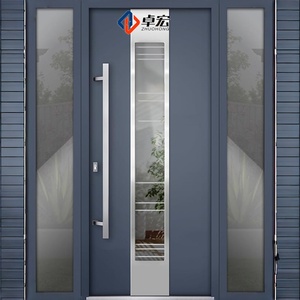
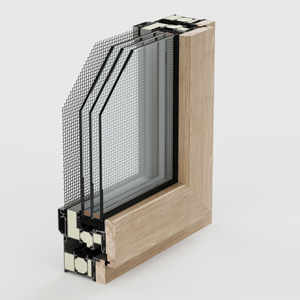
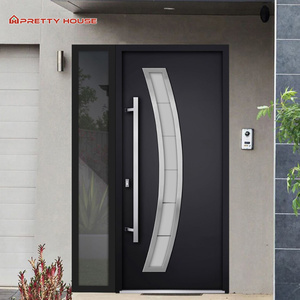
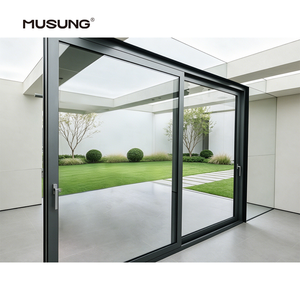
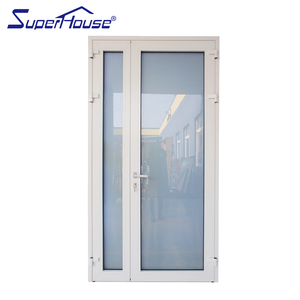
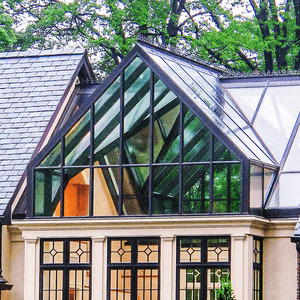
Hihaus New Custom Thermal Break Aluminium Glass Skylight Dormer Roof Window
Manufacturing Capacity & Engineering Credentials
Benchmark data verified across modern extrusion, deep CNC milling, surface finishing, and destructive test labs.
Top 10 Global Aluminum Swing Door Suppliers Matrix
Objective evaluation across structural certifications, customization agility, lead times, and coastal corrosion resistance.
| Company / Brand | Primary HQ / Base | Key Specialization | Compliance Standards | Lead Time (Bespoke) | Supplier Classification |
|---|---|---|---|---|---|
| DERCHI (Guangdong Dejiyoupin) | Foshan, China | Heavy-Duty Pivots, Cast Aluminum, Architectural Swing Doors | AS 2047 (N6 Rating), CE, ISO 9001, UL Fire-Rated | 20–25 Calendar Days | Tier 1 Direct OEM/ODM |
| Schüco International | Bielefeld, Germany | Passive House Swing Doors & Commercial Facade Systems | EN 14351-1, DIN EN 1627 RC3, CE | 50–70 Calendar Days | Tier 1 Global System |
| Reynaers Aluminium | Duffel, Belgium | High-Insulation MasterLine Swing & Pivot Portals | Qualicoat Seaside, Minergie, CE | 45–60 Calendar Days | European System House |
| YKK AP Inc. | Tokyo, Japan / USA | Commercial Entrance Swing Doors & Storefront Envelopes | AAMA / WDMA / CSA 101, ASTM E330 | 35–45 Calendar Days | Commercial Enterprise |
| Kawneer (Arconic) | Norcross, GA, USA | Heavy Commercial Entrances & Blast-Mitigating Swings | FBC Impact NOA, ASTM E1886/E1996 | 40–55 Calendar Days | Commercial Architectural |
| Alumil Systems | Kilkis, Greece | Minimalist Pivot Portals & Thermally Broken Swings | ift Rosenheim, CE, ISO 14001 | 35–50 Calendar Days | Global System Brand |
| Origin Doors and Windows | High Wycombe, UK | Residential Flush Casement & French Aluminum Swings | PAS 24, Secured by Design (SBD) | 30–40 Calendar Days | Residential Fabricator |
| Superhouse Windows | Shanghai, China | North American & Australian Code Compliant Doors | AS 2047, NFRC, CSA | 25–35 Calendar Days | Export Specialist |
| Cortizo Aluminium Systems | Padrón, Spain | Millennium Commercial Swings & Hidden Hinge Profiles | Qualanod, CE, CSTB | 40–50 Calendar Days | European Extruder |
| Hihaus Windows & Doors | Foshan, China | Custom Villa Entryways & Architectural Fenestration | ISO 9001, AS 2047 Compatible | 25–35 Calendar Days | Custom Villa Fabricator |
Engineering Anatomy of Heavy-Duty Aluminum Swing Doors
Modern architectural aluminum swing doors must satisfy conflicting performance vectors: structural rigidity against negative wind loading, structural deflection control across heights exceeding 3,500 mm, thermal insulation compliance with strict U-value thresholds (< 1.4 W/m²K), and airtight sealing during heavy monsoon downpours.
1. Metallurgy & Structural Extrusion Profiles
High-reliability swing doors rely on primary extrusion billets of 6063-T6 or 6061-T6 architectural aluminum alloy. Wall thickness across primary load-bearing jambs and mullions must maintain at least 2.0 mm to 3.5 mm to guarantee mechanical screw retention for commercial grade butt and concealed 3D-adjustable hinges. Substandard suppliers often cut costs by utilizing recycled secondary billets (scrap blend) that exhibit brittle microstructures, leading to hairline shear cracks during high wind pressure or door sagging over prolonged operational cycles.
2. Thermal Barrier Polyrib Technology (PA66-GF25)
Uninsulated aluminum exhibits an extraordinarily high thermal conductivity rating (~205 W/m·K). Modern exterior swing door systems utilize multi-chamber polyamide thermal breaks reinforced with 25% glass fiber (PA66-GF25). This structural composite barrier decouples the interior and exterior aluminum profiles, mitigating thermal bridging, preventing condensation formation in cold climates, and curbing solar expansion bowing (thermal curvature) during blistering summer afternoons.
3. Surface Treatment Metallurgy: Powder Coating vs. PVDF
For coastal and aggressive atmospheric installations (ISO 12944 C4 and C5-M marine zones), conventional electrostatic paint degradation occurs rapidly. Leading manufacturers specify either:
- Qualicoat Class 2 Superdurable Powders: Formulated with high-grade polyester resins resistant to intense UV exposure, retaining gloss and color stability over 15+ years.
- Fluoropolymer (PVDF / Kynar 500) 3-Coat Finishes: Providing superior chemical and salt-fog inertness, capable of passing 4,000+ hours of continuous neutral salt spray (ASTM B117) without film blistering or zinc-chromate primer separation.
Future Procurement Trends in Architectural Swing Doors
Structural evolution and supply chain parameters shaping project specifications for 2026–2030.
Monumental Single-Leaf Pivots
Architects are replacing traditional double doors with monumental single-leaf pivot panels up to 2.2 meters wide and 4 meters tall. These systems demand concealed hydraulic bottom pivots capable of supporting 500+ kg loads while ensuring effortless child-friendly opening forces below 15 Newtons.
Extreme Climate & Cyclone Validation
With intensifying storm cycles globally, project certifiers require third-party accredited laboratory test proof. AS 2047 (N6 wind speed ratings exceeding 300 km/h) and ASTM E1886/E1996 large missile impact certifications are moving from optional luxury upgrades to mandatory building code imperatives.
Smart Mechatronic Access Integration
Mechanical keys are rapidly phasing out. Today's commercial and residential swing doors integrate motorized multi-point electronic mortise locks, biometric fingerprint recognition flush into handles, 3D facial recognition cameras, and dry-contact home automation connectivity (Control4, KNX, Crestron).
Technological & Design Evolution Trends
Breakthroughs in thermal acoustics, composite metallurgy, and automated production efficiency.
Aerogel & Vacuum Glazing Infusion
Next-generation thermal break profiles integrate aerogel insulation mats within the extrusion cavities alongside triple-glazed insulated glass units (IGU) filled with 95% Argon gas or warm-edge hybrid vacuum insulated glass (VIG), achieving passive house U-values as low as 0.78 W/m²K.
CNC Automated Corner Crimping
Corner joints represent the critical structural weak point of any swing door leaf. Modern fabrication employs computer-controlled CNC 4-head corner crimping machines with dual-component structural polyurethane adhesive injection, yielding indestructible 90-degree corner joints immune to water ingress and frame twist.
Co-Extruded EPDM Gasket Systems
Eliminating air leakage requires continuous automotive-grade vulcanized EPDM rubber gaskets with welded vulcanized corner pieces. These triple-sealed perimeter barriers guarantee airtightness (ASTM E283) and water penetration resistance (ASTM E331) even under 700 Pa dynamic water test heads.
Supplier Vetting & Procurement Due Diligence
How experienced general contractors, facade consultants, and procurement managers evaluate overseas factory partners.
1. Extrusion & In-House Tooling Autonomy
Evaluating whether the factory controls direct extrusion dies or purchases generic hollow profiles from third-party open markets.
- Direct Extrusion: Custom profile molds allow optimized thermal break pockets, internal screw retention channels, and integrated wiring conduits.
- Traceable Billets: Mandatory mill test certificates (MTC) proving virgin 6063-T6 composition without toxic lead or heavy metal contaminants.
- Wall Thickness Verification: Precision calipers used across sample cross-sections to verify nominal wall tolerances adhere to EN 12020-2.
2. Hardware Engineering & Cycle Testing
A door leaf is only as reliable as its pivot bearing or mechanical hinge gear set.
- Operational Cycle Rating: Certified heavy-duty hardware tested to at least 200,000 to 500,000 uninterrupted opening/closing cycles (EN 1191).
- Corrosion Resistance: Hardware crafted from grade 304 or 316 austenitic stainless steel, passing EN 1670 Grade 4/5 salt spray tests.
- Multi-Point Engagement: Integrated top, bottom, and lateral locking pins preventing door warping under extreme seasonal temperature variations.
3. Structural Certification & Lab Reports
Never rely on promotional brochures; verify certified laboratory test reports from accredited bodies (NATA, ift Rosenheim, Intertek, AAMA).
- AS 2047 & AS 1288: Mandatory compliance for Oceania developments verifying deflection limits, air infiltration, and safety glass impact.
- Acoustic Attenuation: Laboratory Rw / STC ratings ranging from 35 dB to 44 dB for hotel guest rooms and urban residential boulevards.
- Thermal Transmittance: Finite element thermal simulations (LBNL THERM / WINDOW) proving actual frame Uf and overall door Uw values.
4. Export Packaging & Marine Logistics
Substandard packing turns high-precision engineered doors into damaged scrap metal during sea transit.
- Fumigated Wooden Crating: ISPM-15 compliant fully enclosed plywood crates with internal foam cushioning and corner guards.
- Moisture & Desiccant Control: Waterproof polyethylene vacuum wrapping preventing condensation corrosion during 30-day ocean freight passages.
- Pre-Hanging & Dry Assembly: Complete factory pre-assembly where locksets, keeps, and hinges are pre-hung and verified prior to crating.
Manufacturer Profile: Guangdong Dejiyoupin (DERCHI)
A recognized industry benchmark combining 25+ years of engineering mastery with an 180,000 m² smart manufacturing campus in Foshan, China.
Ranked among China's Top 10 High-End Door & Window Enterprises, Guangdong Dejiyoupin Doors and Windows Co., Ltd. (operating internationally under the DERCHI brand) stands out as an integrated manufacturing titan. With over 600 skilled technicians, 100+ national invention and utility patents, and full international credentials spanning CE, AS 2047, ISO 9001, FCC, and RoHS, DERCHI has emerged as the premier manufacturing partner for developers across Australia, New Zealand, North America, and Europe.
End-to-End Manufacturing Integration
Unlike trading houses or small assembly workshops, DERCHI maintains total supply chain sovereignty. From raw aluminum extrusion finishing and automated precision CNC profiling to advanced automated glass laminating, insulated glass unit (IGU) fabrication, and final electronic hardware integration, every phase is governed by stringent German-standard inspection protocols. This centralized production model guarantees complete dimensional accuracy, flawless finish uniformity, and compressed delivery cycles—typically shipping full container loads (FCL) in just 20 to 25 calendar days.
Engineered Specifically for Harsh Oceanic & Coastal Climates
Understanding the severe ultraviolet index, high atmospheric salinity, and severe wind loading of coastal regions like Sydney, Auckland, and Brisbane, DERCHI equips its swing door collections with:
- AS 2047 Tested Systems: Certified N6 structural wind rating performance, ensuring complete structural integrity under severe cyclonic conditions.
- C5-M Marine Grade Coating: Fluorocarbon PVDF and ultra-durable powder coating systems resistant to severe marine salt-fog corrosion.
- Complimentary Shop CAD & BIM Models: In-house structural facade engineers deliver detailed CAD shop drawings and Revit BIM files tailored to architectural schedules before cutting a single profile.
- Real-Time Engineering Support: Dedicated bilingual engineering support teams operating aligned with international business hours (AEST, NZST, EST).
Frequently Asked Questions in Aluminum Swing Door Procurement
Direct technical answers addressing the real questions asked by developers, architects, and foreign procurement managers.