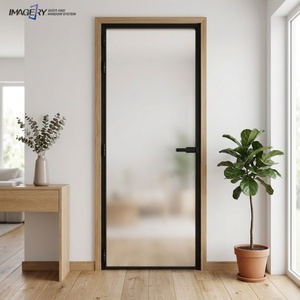
Minimalist Style Extremely Narrow Frame Casement Aluminum Door Soundproof Interior
- Sightline: Slim 16mm Ultra-Narrow Bezel
- Application: Interior En-Suite / Kitchen Acoustic Barrier
- Seal: Continuous EPDM Vulcanized Gasket
In the sphere of contemporary commercial and high-end residential building envelopes, selecting an export-grade aluminum casement door supplier has shifted from basic material sourcing to high-precision structural integration. The aluminum casement door—engineered on a side-hung, single- or double-sash swing axis—is universally recognized for its air tightness, extreme acoustic mitigation, and superior resistance to wind loads compared to parallel slide systems. With global energy codes tightening across Australasia, North America, and Europe (exemplified by Australia’s NCC and AS 2047 benchmarks, and the European EN 14351-1 directive), suppliers must deliver robust thermal breaks (polyamide PA66 GF25), multi-point perimeter compression locking, and marine-grade surface passivations.
Guangdong Dejiyoupin Doors and Windows Co., Ltd. (DERCHI) operates at the forefront of this industrial transition. Spanning 180,000 square meters of intelligent fabrication in Foshan, China, DERCHI manufactures high-specification fenestration assemblies that resolve chronic field failures such as hinge deflection, seal degradation, and electrolytic galvanic oxidation. This comprehensive procurement report evaluates top engineered casement variations, supply-chain vetting strategies, technological trends, and life-cycle costing for tier-one property developers, general contractors, and structural engineers worldwide.
Certified profiles tested for AS 2047 N6 cyclonic wind ratings, acoustic insulation, and multi-chamber thermal barriers.
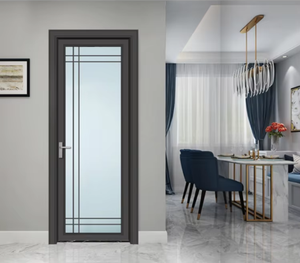
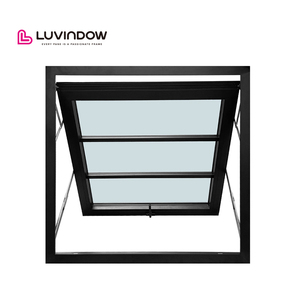
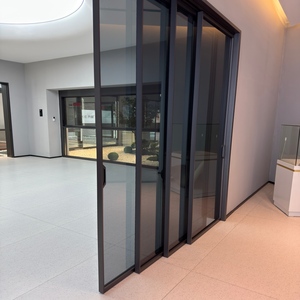
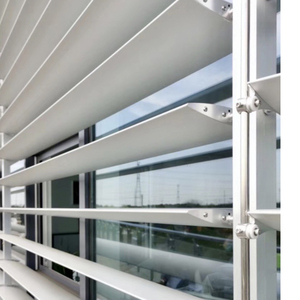
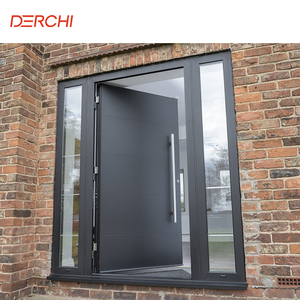
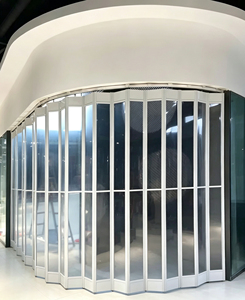
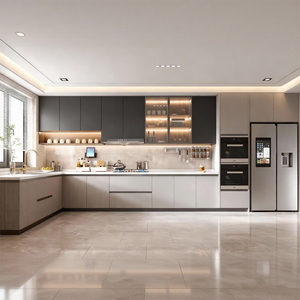
Integrated extrusion, surface engineering, and certified fabrication under a single ISO 9001 quality management architecture.
Unlike commercial-grade residential doors that deform under positive and negative wind gusts, DERCHI casement profiles are extruded from primary billet 6063-T5 / 6061-T6 aluminum with wall thicknesses exceeding 2.0mm. Certified in accordance with AS 2047 and EN standards, our casement assemblies withstand design ultimate pressures beyond 4500 Pa (N6 Cyclonic rating), guaranteeing zero catastrophic deflection or perimeter air breach.
Thermal bridges are eliminated via imported Technoform fiberglass-reinforced polyamide (PA66 GF25) thermal break strips. Coupled with warm-edge spacers, double or triple tempered Low-E glass, and pure Argon gas fills, our casement doors achieve Overall U-values as low as 1.4 W/m²K (SHGC customized from 0.22 to 0.45), lowering commercial building HVAC load cycles in line with Net Zero Building standards.
To combat coastal salt spray and high solar radiation indices across Australia, North America, and Southeast Asia, our profiles undergo Qualicoat-certified fluorocarbon (PVDF 3-coat) spraying or 25-micron architectural anodization. Tested via 3,000-hour neutral salt spray (ASTM B117) chambers, the finishes resist pitting, chalking, color fading, and galvanic decomposition across decades of environmental exposure.

Guangdong Dejiyoupin Doors and Windows Co., Ltd. controls the complete manufacturing cycle under one roof: R&D structural engineering, automated CNC cutting and milling, corner crimping with two-component polyurethane adhesives, and robotic gasket insertion. By eliminating middlemen and trading agents, global developers secure direct factory pricing, certified traceability, and customized CAD/BIM shop drawings tailored to complex window schedules.
Our in-house project managers coordinate seamless FCL and LCL containerized shipping directly to major international ports, complete with heat-treated fumigated plywood crates, corner impact dampening, and desiccated wrapping to prevent moisture condensation during oceanic transit.
Request Factory QuotationAnticipate structural building code evolutions, automation, and supply chain logistics to maintain competitive commercial advantage.
Architectural demand has transitioned rapidly from bulky 80mm face frames to minimalist 16mm-25mm visible sightlines without sacrificing inertia (Ixx). Suppliers utilize high-strength 6061-T6 alloys and structural silicon bonding (IGU acting as a rigid structural diaphragm) to maximize natural light transmission while supporting heavy double- and triple-glazed sashes up to 180kg.
Institutional procurement mandates (such as LEED v4.1, BREEAM, and Green Star) require audited Environmental Product Declarations (EPDs). The global door sector is accelerating the adoption of low-carbon aluminum smelted with hydroelectric power and high post-consumer recycled content, reducing cradle-to-gate carbon emissions by over 60% compared to traditional fossil-fired extrusions.
Modern casement doors are migrating from manual shoot-bolts to concealed motorized multi-point locksets. Micro-actuators embedded inside the frame profile communicate directly with Central Building Management Systems (BMS), KNX, and Matter automation protocols, managing passive nighttime purge ventilation and biometric access control while keeping security tamper ratings high.
| Performance Indicator | DERCHI High-Spec Casement | Standard Market Aluminum Door | Compliance Test Benchmark |
|---|---|---|---|
| Alloy Metallurgy | Primary Billet 6063-T5 / 6061-T6 (Wall ≥ 2.0mm) | Secondary Scrap Alloy (Wall 1.2mm - 1.4mm) | ASTM B221 / GB 5237 |
| Structural Wind Load (Deflection) | Tested to AS 2047 N6 Cyclonic (> 4500 Pa) | Standard Residential (~ 1200 - 1600 Pa) | AS 4420.2 / ASTM E330 |
| Air Infiltration Rate | < 0.1 L/s·m² at 75 Pa (Zero draft perimeter) | > 1.5 L/s·m² at 75 Pa | AS 4420.4 / EN 12207 (Class 4) |
| Water Penetration Resistance | 600 Pa Static Pressure Head | 150 - 200 Pa Basic Threshold | AS 4420.5 / ASTM E331 |
| Acoustic Attenuation (STC) | Rw 38 - 44 dB (Asymmetric laminated glass) | Rw 25 - 28 dB (Monolithic glass) | ISO 10140-2 / ASTM E90 |
| Perimeter Locking Hardware | 316 Stainless Steel Multi-Point Concealed Cams | Single-Point Zinc Die-Cast Latch | PAS 24 / EN 1627 RC2-RC3 |
Essential guidance for procuring custom architectural aluminum casement systems internationally.