High-Performance Aluminum Tilt & Turn Window Systems
Engineered for multi-directional airflow, perimeter compression sealing, N6 cyclonic structural integrity, and exceptional U-value performance.
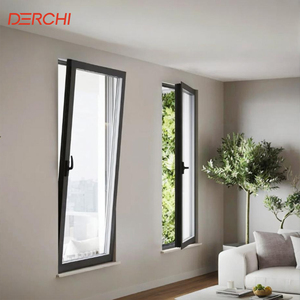
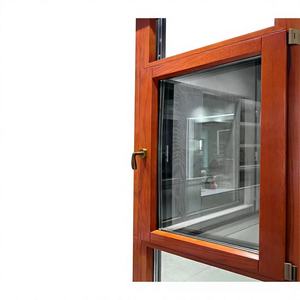
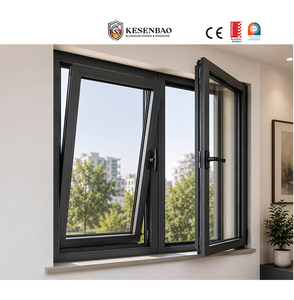
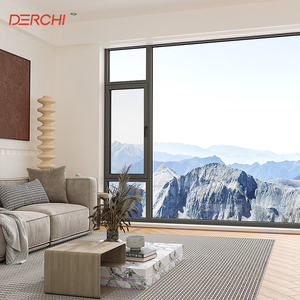
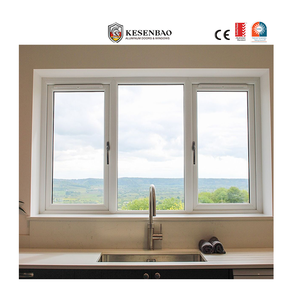
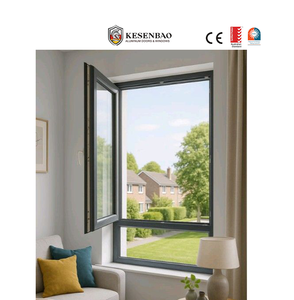
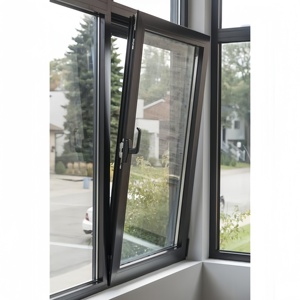
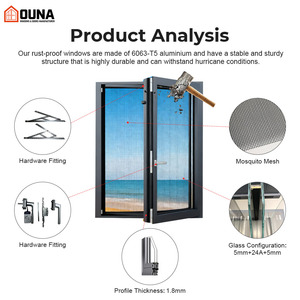
Integrated Manufacturing Authority From Foshan to the Global Market
Recognized among the premier precision fenestration manufacturers in China, Guangdong Dejiyoupin Doors and Windows Co., Ltd. (DERCHI) operates dedicated profile extrusion, automated CNC thermal-strut crimping, and computerized glazing facilities. Our direct export infrastructure supports multi-family developers, commercial general contractors, and prestigious architectural studios across Oceania, North America, and Europe.
- Verified AS 2047 (N6 Cyclonic Rating) and NFRC thermal boundary certifications
- PA66 GF25 engineered polyamide thermal barriers for ultra-low U-values
- Complete supply chain authority: precision hardware, robotic powder coating & IGU line
- Direct engineering collaboration: Free CAD shop drawings and BIM parametric models

Emerging Procurement Trends in Aluminum Tilt & Turn Fenestration
Strategic analysis for procurement officers, facade consultants, and quantity surveyors navigating 2026–2030 building energy mandates.
Passive House & Net-Zero Envelopes
Global building energy codes (such as Australia's NCC 2022/2025, California Title 24, and EU EPBD) demand whole-assembly U-factors below 1.1 W/m²K. Buyers are shifting from standard double glazing to warm-edge triple and quadruple-glazed IGUs with krypton infill, combined with multi-chamber thermal breaks exceeding 34mm depth.
Severe Weather & Cyclone Resilience
Due to accelerating climatic disruptions, commercial specifiers demand fenestration tested to extreme cyclic pressure limits. Systems must pass ASTM E1886/E1996 Large Missile Impact testing and AS 2047 cyclonic N6 parameters, ensuring resistance to 3000+ Pa positive/negative design wind loads without gasket disengagement.
Supply Chain Transparency & Direct Sourcing
Developers are eliminating multi-tier brokerage markups by partnering directly with vertically integrated Chinese tier-1 manufacturers. Real-time factory auditing via VR walkthroughs, mill-test chemical certificates for 6063-T6 aluminum, and pre-shipping container inspection logs have become standard procurement requirements.
Evolutionary Advancements in Aluminum Tilt & Turn Hardware & Profiles
How cutting-edge European kinematics, structural composite bonding, and metallurgy deliver unrivaled long-term life cycles.
Concealed Heavy-Load Hinges
Modern tilt & turn systems have transitioned from surface-mounted pivot barrels to concealed multi-link hinge gears fully integrated inside the profile euro-groove. These supports handle sash weights up to 300 kg, eliminating air leakage around hinge penetrations and delivering minimalist architectural sightlines.
Co-Extruded Cellular EPDM Gaskets
Traditional single-lip seals fail prematurely under intense solar radiation. State-of-the-art systems utilize vulcanized continuous center-gasket frames manufactured with closed-cell micro-cellular EPDM. When coupled with corner-vulcanized joints, they achieve Class 4 Air Permeability (EN 12207) and Class 9A Water Tightness.
Structural Silicone Dry-Glazing Hybridization
To resist building deflection in mid-to-high-rise residential developments, sash frames feature glass-to-aluminum structural bonding. This structural glazing technique uses the glass unit itself as a stiffening element, eliminating sash sagging over decades of use and drastically reducing on-site maintenance calls.
Frequently Asked Questions: Global Sourcing & Quality Control
Essential guidance compiled by senior fenestration engineers to resolve technical, logistical, and compliance inquiries.
How do Aluminium Tilt & Turn systems compare to traditional Casement windows in severe wind loads?
Tilt & turn systems utilize peripheral perimeter locking gears (mushroom cams and keep plates) spaced every 600–800mm along all four sides of the frame. In casement windows, single or dual friction stays handle load resistance. When locked, tilt & turn windows pull the sash inward uniformly against double or triple continuous compression gaskets. This distributes positive and negative wind pressures directly into the main profile chamber, achieving structural wind resistance ratings exceeding N6 (4400+ Pa) under AS 2047 without frame distortion.
What specific alloy composition and wall thickness are required for commercial export fenestration?
For high-rise residential and heavy commercial projects, profiles must be extruded from 6063-T6 or 6060-T6 primary architectural billet, strictly avoiding scrap secondary ingot contamination. Structural exterior wall thickness must measure at least 1.8mm to 2.2mm to guarantee thread engagement for internal drive-rod fasteners. Tensile strength must exceed 205 MPa with a yield strength of 170 MPa, verified via traceable batch chemical mill sheets provided during pre-shipment container audits.
How does DERCHI ensure thermal break performance and prevent thermal degradation?
DERCHI incorporates genuine PA66 GF25 (polyamide reinforced with 25% chopped structural fiberglass) precision thermal break strips. Unlike cheaper PVC substitutes that become brittle below freezing and warp in tropical heat, PA66 GF25 shares the exact linear thermal expansion coefficient as primary aluminum (2.4 x 10^-5 1/K). Profiles are knurled, rolled, and mechanically crimped via computerized continuous pull-force feedback sensors, guaranteeing high transversal shear resistance across -40°C to +85°C working conditions.
What export packaging protocol prevents glass breakage and surface oxidation during oceanic transit?
Every fenestration unit undergoes five-layer export preservation: 1) Removable scratch-resistant protective film applied directly across raw powder-coated extrusions; 2) EPE pearl cotton padding wrapping all frame corners; 3) Moisture-barrier shrink plastic encapsulating the entire unit; 4) Insertion of silica-gel desiccant packs within frame voids; 5) Packaging inside fumigated plywood crating with internal steel strapping. Fully closed crates are loaded into ocean freight containers using pneumatic dunnage bags to neutralize high-sea vibration.
Accelerate Your Construction Schedule with Precision Engineering
Connect directly with our senior fenestration engineers to receive custom CAD details, AS 2047/NFRC lab certificates, and wholesale factory pricing for your upcoming developments.
Get Catalog