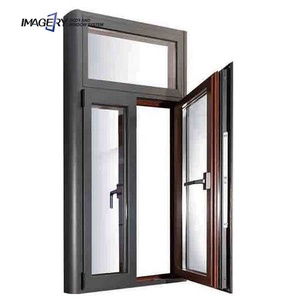
Engineered Fenestration
Precision Commercial Storefront & Shop Front Systems
Direct factory-manufactured commercial window assemblies built with thermal-break 6063-T6 aluminum alloys, structural impact glazing, and multi-point security mechanisms.
180,000m²
Dedicated Manufacturing Base
25+
Years Continuous Production
100+
Global Testing Patents & Certs
N6Rating
AS 2047 Cyclic Wind Tested
Procurement Strategy
The Criteria Defining the Top 10 Aluminium Shop Front Suppliers
Evaluating commercial fenestration partners requires looking beyond profile costs to scrutinize material extrusion purity, thermodynamic performance, and structural resilience under real-world building envelope stress.
Primary Billet Traceability
Tier-1 manufacturers utilize solely virgin A00 primary ingot aluminum alloy (6063-T5/T6) rather than scrap melt. This guarantees uniform wall thickness (≥2.0mm for commercial façades), tensile strength exceeding 160 MPa, and seamless anodized or powder-coated finishes.
Standard Compliance Veracity
Leading suppliers provide comprehensive, accredited laboratory testing dossiers verifying conformance to Australian Standard AS 2047 (N6 wind load and water resistance), NFRC thermal performance ratings, CE marking, and ISO 9001 certified manufacturing trace records.
Pre-Engineered CAD/BIM Integration
Eliminating on-site installation variance necessitates in-house engineering support. Verified suppliers provide project-specific CAD shop drawings, wind-load deflection calculations, and 3D mockups prior to initiating extrusion cuts.
Strategic Sourcing
Future Procurement Trends for Shop Front Glazing (2025–2030)
Commercial developments are shifting toward strict carbon accounting, extreme weather resilience, and digitalized supply-chain integration. Sourcing strategies are actively adapting to four market movements.
Direct-From-Extruder Logistics
General contractors are increasingly bypassing regional intermediaries to procure shop front modules factory-direct. By containerizing custom-glazed modules directly from Foshan manufacturing centers, developers save 28–42% while retaining end-to-end design liability.
Polyamide Thermal-Break Mandates
With energy codes mandating commercial U-values under 1.6 W/(m²·K), uninsulated storefront frames are rapidly being phased out. Procurement now specifies multichamber PA66GF25 structural polyamide insulating strips with warm-edge glass spacers as non-negotiable requirements.
Unitized Modular Assemblies
On-site glazing labor costs in North America, Australasia, and Europe have spurred demand for pre-glazed, factory-sealed storefront systems that install directly into structural openings, cutting on-site installation timelines by upwards of 60%.
Severe Climate Hardening
Coastal commercial developments require marine-grade C5-M anti-corrosion coatings (PVDF fluorocarbon or 25-micron architectural anodizing) coupled with interlayered SentryGlas (SGP) laminated configurations capable of surviving N6 hurricane pressures.
| System Configuration | Thermal U-Value | Wind Load Resistance | Water Penetration | Typical Applications |
|---|---|---|---|---|
| Standard Non-Thermal Framing | 5.2 - 5.8 W/(m²·K) | 1500 - 2000 Pa | 300 Pa | Interior mall storefronts, vestibules, mild climate commercial |
| Thermal Break (PA66GF25) Storefront | 1.4 - 1.8 W/(m²·K) | 3500 - 4500 Pa | 600 Pa | Street-level retail, street showrooms, energy-code projects |
| Cyclone Impact Unitized Window Wall | 1.6 - 2.1 W/(m²·K) | AS 2047 N6 (>5000 Pa) | 1000 Pa | Coastal hospitality, hurricane corridors, multi-story commercial |
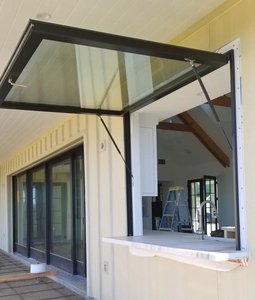
| Motorized Electric Pass-Through Storefront | 2.0 - 2.4 W/(m²·K) | 2500 - 3000 Pa | 450 Pa | Cafes, high-traffic fast-casual dining, event spaces |
Innovation Horizon
Emerging Engineering Innovations in Shop Front Architecture
How modern storefront systems are transcending passive boundary barriers to become intelligent, high-durability building interfaces.
Ultra-Narrow Sightlines
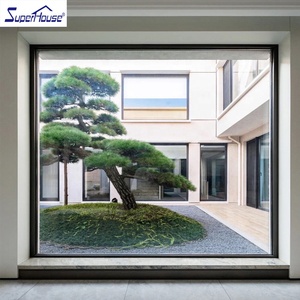
Utilizing high-tensile 6063-T6 aluminum allows sightlines to drop below 38mm without sacrificing wind deflection ratings. These structural profiles maximize display glazing and create completely seamless retail visual continuity.
Smart Motorization & Access
Shop front windows are increasingly engineered with concealed brushless linear actuators, integrated push-to-open bi-fold hardware, and BACnet/Modbus building management protocols for automated night-time passive ventilation.
Integrated Security Mitigation
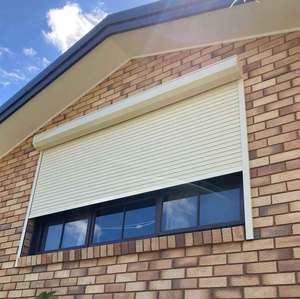
Modern shop fronts seamlessly integrate concealed electric roller security shutters inside header profiles, pairing structural impact laminated glass (12.28mm+) with Class RC2/RC3 anti-burglary testing certification.
Enterprise Strength
Why Commercial Specifiers & Builders Choose DERCHI
Guangdong Dejiyoupin Doors and Windows Co., Ltd. (DERCHI) combines an expansive manufacturing footprint with meticulous international testing compliance for Oceania, North America, and Europe.
180,000m² Manufacturing Power
Vertically integrated CNC machining centers, automated cutting plants, fluorocarbon coating lines, and double-glazing lines in Foshan eliminate outsourcing delays.
AS 2047 & N6 Wind Rating Tested
Our aluminum assemblies have undergone stringent cyclone testing, achieving the N6 cyclic wind rating, CE marks, and ISO 9001 compliance for complete council approval.
Free CAD & Engineering Drafting
Our dedicated façade engineering team drafts complete shop schedules, anchorage calculations, and shop drawings matching your architectural requirements at zero design cost.
AEST & NZST Direct Support
Fluent bilingual project engineers operate aligned with Australian and New Zealand working hours, managing schedules, live VR factory walk-throughs, and technical support.
Heavy-Duty Export Crating
All storefront modules are shipped in steel-reinforced, ISPM 15-compliant fumigated timber crates with desiccant protection, ready for direct FCL/LCL ocean freight to global ports.
One-Stop Commercial Enclosure
Consolidate shop front windows, automated sliding entrance systems, curtain walls, pivot entrance doors, and security roller shutters into a single coordinated shipping container.
Technical Q&A
Frequently Asked Questions for Commercial Window Procurement
Clear technical insights on import compliance, structural ratings, glass performance, and factory quality control.
What are the key technical specifications required for shop front windows to pass AS 2047?
Under Australia’s AS 2047 standard, commercial shop front windows are evaluated on deflection (serviceability limit state wind pressure), air infiltration, water penetration resistance, operating force, and ultimate limit state strength. For severe exposures, DERCHI storefronts achieve an N6 rating, resisting ultimate wind pressures exceeding 5000 Pa and water ingress beyond 450 Pa. Full test laboratory reports and engineering certificates are issued with every export schedule for local certifier sign-off.
How does a thermal-break aluminum profile compare to non-thermal aluminum in retail installations?
Non-thermal aluminum conducts outdoor ambient temperatures directly to the interior, resulting in high HVAC energy loads and moisture condensation on internal glass surfaces during colder months. Thermal break profiles isolate exterior and interior aluminum sections with a low-conductivity polyamide bar (PA66GF25 reinforced with 25% glass fiber). This cuts thermal bridging, reduces overall window U-values from ~5.5 W/(m²·K) to under 1.6 W/(m²·K), and prevents condensation that could damage interior merchandise displays.
What surface finish is recommended for storefront windows located within 1 km of the ocean?
For marine environments classified under atmospheric corrosivity category C4 or C5-M, standard architectural powder coating will chalk and pit rapidly due to salt airborne chlorides. We recommend specifying either a 3-coat/2-bake PVDF (polyvinylidene fluoride) fluorocarbon finish meeting AAMA 2605 requirements (providing 20+ years of salt spray and intense UV degradation resistance) or heavy-anodized class 25 (minimum 25-micron anodic coating thickness) with 316 marine-grade stainless steel hardware fittings.
Can large oversized storefront windows be shipped without risk of glass deflection or breakage?
Yes. Large architectural shop fronts up to 4500mm in height are engineered using structural silicone glazing, toughened laminated glass (e.g., 8mm + 1.52PVB/SGP + 8mm), and reinforced vertical structural mullions. For ocean transit, windows are packaged inside custom heavy-duty steel-caged wooden crates equipped with moisture absorbents, shock indicators, and cork separator pads between glass surfaces to absorb rough transit vibrations.
What is the standard production and shipping lead time for custom storefront projects?
Upon final approval of CAD shop drawings and hardware schedules, manufacturing requires 25 to 35 business days depending on custom extrusion finishes (powder coating vs. PVDF or custom metallic dyes). Ocean freight transit from our Foshan facility to major Australian ports (Sydney, Melbourne, Brisbane) typically takes 14 to 20 days; to US West Coast ports takes 16 to 22 days; and to European ports takes 28 to 35 days.