The Structural Precision of Architectural Aluminium Double Swing Portals
Aluminium double swing doors (frequently classified across international architectural schedules as French casement portals, dual-leaf active-passive entryways, or heavy-duty architectural swing enclosures) represent the pinnacle of fenestration engineering. Combining primary 6063-T5 and structural 6063-T6 virgin extrusion profiles with precision polyamide multi-chamber thermal breaks (PA66-GF25), modern dual swing systems satisfy both demanding aesthetic mandates and high-stress wind and thermal envelope regulations across North America, Europe, Australia, and New Zealand.
Featured Aluminium & Hybrid Door Product Solutions
Below are eight flagship door and enclosure systems manufactured under ISO 9001 quality matrices, integrating AS 2047 structural compliance, European CE standards, and customizable glass compositions.
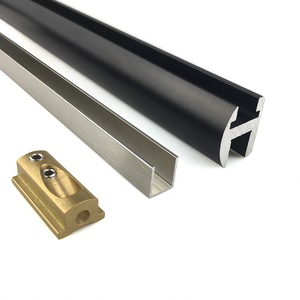
Customized CR L Aluminum Shower Room Glass Door Deluxe Header
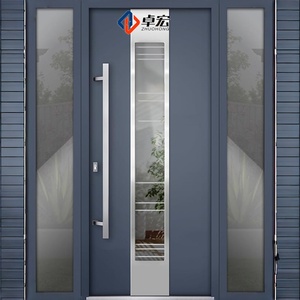
Exterior Entrance Stainless Steel Door 36" Pivot With Smart Lock
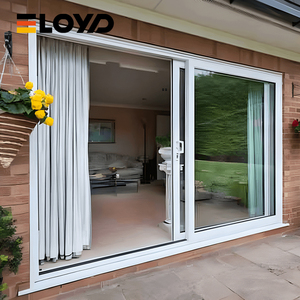
Eloyd Modern Aluminum Hurricane Impact Lift & Slide Villa Doors
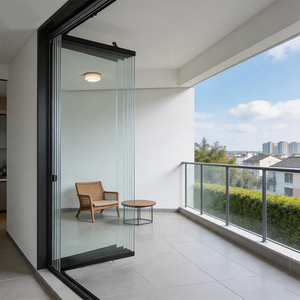
Balcony Partition Large 10mm Frameless Glass Bifold Door System
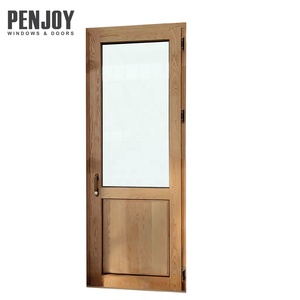
Penjoy Aluminum-Clad Wood Solid Core Thermal Entry Door
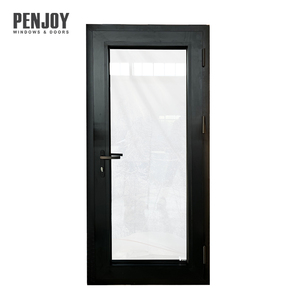
Penjoy Thermal Break Triple Glazed Aluminum Passivhaus Door
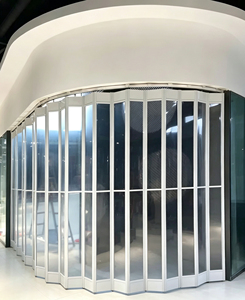
Transparent Shopfront Crystal Aluminum Folding & Sliding Doors
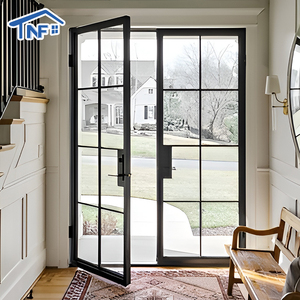
Crittall French Grille Double Tempered Glass Casement Doors
Standardized Technical Parameter Matrix for Double Swing Portals
Compare mechanical, thermal, and acoustic parameters across our premium architectural aluminium double swing assemblies. All values reflect third-party laboratory verification.
| Performance Characteristic | Commercial Grade Specification | Passivhaus / Ultra-Thermal Tier | Compliance Standards Tested |
|---|---|---|---|
| Aluminium Alloy & Temper | Primary 6063-T5 (Web Thickness: 2.0 mm - 2.5 mm) | Structural 6063-T6 (Web Thickness: 3.0 mm Reinforced) | GB 5237 / ASTM B221 / EN 755 |
| Thermal Transmittance (U-Value) | 1.8 - 2.2 W/(m²·K) (Standard PA66 Break) | ≤ 0.85 W/(m²·K) (Aero-gel insulated polyamides) | ISO 10077-1 / NFRC 100 / AS 2047 |
| Structural Wind Load (Deflection) | Serviceability: 3000 Pa | Ultimate: 4500 Pa (N5) | Ultimate Structural: 6000 Pa (N6 Cyclonic) | AS 2047 / ASTM E330 / BS 6375-1 |
| Water Ingress Resistance | 450 Pa Static Water Head | 700 Pa Dynamic High-Exposure Barrier | EN 12208 (Class 9A) / AAMA 501.1 |
| Air Infiltration Rating | ≤ 0.5 m³/(h·m) at 100 Pa pressure differential | ≤ 0.1 m³/(h·m) (Airtight Envelope Rating) | EN 12207 (Class 4) / ASTM E283 |
| Acoustic Attenuation (Rw / STC) | 35 dB - 38 dB (Double Glazed Argon-filled) | 42 dB - 46 dB (Triple Laminated Acoustic PVB) | ISO 717-1 / ASTM E413 |
Future Procurement Trends in Aluminium Architectural Doors
Global supply chain economics, decarbonization policies, and evolving building codes are radically shifting how commercial general contractors, volume developers, and facade consultants specify double swing door systems.
1. Direct Mill-to-Site Value Engineering
Procurement directors are shifting away from regional distributors toward factory-direct engagements with certified manufacturers who own full extrusion, coating, and assembly lines. This reduces multi-tiered markup chains by 25% to 38%, while allowing direct access to factory engineers for CAD revision cycles.
2. Low-Carbon Recycled Billets & EPD Verification
Under European CBAM (Carbon Border Adjustment Mechanism) and LEED v4.1 frameworks, B2B buyers now mandate verified Environmental Product Declarations (EPDs). Sourcing is prioritizing recycled post-consumer aluminum scrap billets processed with renewable hydroelectric power to drastically lower embodied carbon.
3. Digital BIM Integration & Real-Time Tracking
Modern procurement requires parametric Revit/IFC digital twins before shop drawings are released for die-cutting. Concurrently, enterprise clients now mandate container-level IoT telemetry tracking humidity, shock, and delivery timestamps from manufacturing hubs to job-site laydown yards.
Technological Trajectories Shaping Double Swing Portals
From micro-engineered polyamide polymers to hidden concealed hardware, the next generation of dual-leaf swing doors balances razor-thin sightlines with structural invulnerability.
Concealed Multi-Axis Floor Pivots & Hinges
Visible surface hinges are being replaced by heavy-duty 3D adjustable concealed hinges and embedded hydraulic floor springs capable of carrying individual active leaf weights exceeding 350 kg with effortless, soft-closing damping action.
Marine-Grade PVDF & Fluorocarbon Coatings
Severe coastal environments demand superior surface durability. Double swing doors specified for coastal Australia, Florida, and the Pacific Islands increasingly specify multi-coat fluorocarbon PVDF finishes (tested to 3,000+ hours salt spray) or Class 1 Architectural Anodizing (25-micron thickness).
Smart Access Multi-Point Active Interlocking
Integration of automated multi-point shoot bolts linked to access control interfaces (KNX, Zigbee, facial recognition, and BACnet systems) provides bank-grade physical defense while maintaining an uninterrupted flush architectural appearance across both active and passive door stiles.
Guangdong Dejiyoupin Doors and Windows Co., Ltd. (DERCHI)
Recognized among China's top tier of premium fenestration manufacturers, DERCHI operates an advanced 180,000 m² smart manufacturing ecosystem in Foshan, Guangdong. Backed by 25+ years of dedicated engineering and an elite technical team exceeding 600 skilled fabricators, we deliver end-to-end quality assurance directly to building developers and architects across Australia, New Zealand, North America, and Europe.
- End-to-End Vertical Integration: Full R&D, precision profile CNC extrusion, surface treatment, glass processing, and robotic assembly unified under one roof.
- International Standards Certification: Tested and verified to AS 2047 (N6 wind load), CE (EN 14351-1), ISO 9001, and UL Fire Rated specifications.
- Free Tailored CAD & BIM Engineering: Shop drawings coordinated strictly with your project door schedule before any die tooling or cutting begins.
- Export-Grade Protective Packaging: ISPM 15 compliant custom fumigated plywood crating with internal desiccant bags to eliminate transit salt damage.

Frequently Asked Questions for Importers & Contractors
Authoritative answers addressing structural tolerances, international compliance, crating methodologies, and coastal longevity.