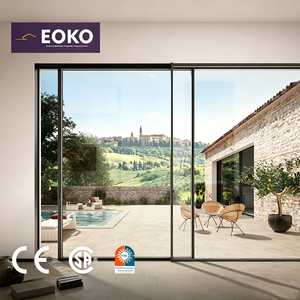
Advanced Aluminium & Glazed Fenestration Systems
Direct factory-manufactured configurations engineered for extreme structural stability, severe coastal climate resistance, acoustic dampening, and rigorous architectural compliance.
180,000m²
Dedicated Production Base
25+
Years Engineering Expertise
AS 2047
N6 Structural Wind Certified
30+
Global Structural Patents
Strategic Analysis
The Architecture of Modern Aluminium & Glazed Entrances
In contemporary architectural envelope design, the front entrance functions as both a high-impact aesthetic statement and a primary structural barrier. Global fenestration engineering is shifting rapidly toward heavy-duty thermal-break extruded alloys combined with multi-layer structural lamination.
As commercial developments, luxury coastal estates, and multi-residential complexes face more stringent environmental and regulatory pressures, the procurement of front entry systems has matured. Specifiers no longer evaluate entrance systems purely on superficial geometry. The focus has decisively transitioned toward quantifiable thermal efficiency (measured by overall U-values), cyclic acoustic isolation (achieving ratings in excess of 38dB), and uncompromising cyclonic air-water tightness under sustained dynamic pressures. Modern aluminium and glass entry architectures integrate thermal-break polyamide 66 (PA66 GF25) barriers, which fundamentally sever structural conductivity and prevent interior condensation cycles, delivering sustained longevity across diverse macroclimatic conditions.
Oversized Pivot Configurations
Architectural demand is moving toward monolithic spans reaching heights beyond 3500mm and widths over 1800mm, demanding concealed floor spring assemblies, German heavy-duty pivot hardware, and internal steel reinforcement cores.
Multi-Tier Thermal Infiltration Barriers
Advanced engineering mandates composite configurations integrating argon-filled insulated glass units (IGUs) with double low-E coatings, warm-edge spacers, and multi-point perimeter EPDM compression gasketing to maintain minimal thermal conductivity.
Integrated Biometric Access & IoT Security
Contemporary manufacturing now fuses hidden multi-point locking protocols with flush-mounted biometric sensors, facial recognition modules, smart building management system (BMS) relays, and motorized magnetic drives.
Top 10 Global Aluminium & Glass Front Door Manufacturing Benchmarks
An empirical comparative breakdown detailing global manufacturing tiers, core production advantages, standard certifications, and strategic procurement trade-offs.
| Manufacturing Tier / Cluster | Primary Engineering Specialization | Compliance Benchmarks | Production Lead Time | Strategic Suitability |
|---|---|---|---|---|
| DERCHI (Guangdong Dejiyoupin) | Full-scope industrial fabrication: 180,000m² facility, cast aluminium, pivot doors & ultra-slim IGUs | AS 2047 (N6 Wind), CE, CSA, ISO9001, UL Fire-Rated | 20 – 30 Days (Direct Export) | Direct project supply for luxury residential villas, Oceania & North American specifiers requiring factory pricing & full CAD validation |
| European Systems Exporters (Germany/Italy) | Patented modular extrusion profiles, passive house certified multi-chamber breaks | EN 14351-1, CE, Passivhaus Institut | 10 – 16 Weeks | Ultra-high budget architectural landmarks with local distributor assembly networks |
| North American Commercial Fabricators | Heavy-gauge hurricane impact doors and storefront curtain wall entrances | AAMA/WDMA/CSA, Florida Product Approval, Miami-Dade NOA | 8 – 14 Weeks | Institutional infrastructures, municipal buildings, and localized regional compliance zones |
| Foshan Premium Architectural Cluster | High-end custom finishes, fluorocarbon spraying, marine-grade anodizing, oversized pivot doors | ISO9001, CE, AS 2047, BS Standards | 3 – 5 Weeks | Bespoke luxury estates, boutique commercial developments, and international construction contracting |
Verified Factory Capabilities
Integrated Manufacturing Direct from Foshan to Global Job Sites
DERCHI (Guangdong Dejiyoupin Doors and Windows Co., Ltd.) consolidates research and development, extrusion processing, architectural surface finishing, automated assembly, and multi-stage pressure testing within a modern 180,000 square meter industrial park.
AS 2047 Certified Performance
Doors and window envelopes engineered and independently verified to withstand Australian and New Zealand N6 cyclic design pressures.
Full Structural Customization
In-house engineering providing comprehensive CAD shop drawings, BIM coordination, and direct profile extrusion matching your door schedules.
Marine-Grade Coastal Finishes
Advanced fluorocarbon (PVDF) and architectural powder-coat treatments resilient against UV degradation and corrosive salt spray environments.
Direct Container Logistics
FCL and LCL container packaging featuring reinforced steel-pallet and plywood crating engineered for long-haul maritime protection.
Industry Forecasting
Future Procurement Trends in Architectural Entrance Systems
Key technological, regulatory, and logistical trajectories defining large-scale architectural door purchases over the next decade.
Direct OEM/ODM Industrial Disintermediation
Developers and general contractors increasingly bypass intermediate distributors in favor of direct engagement with tier-one manufacturing hubs. This direct pipeline reduces landed material costs by 30% to 45% while enabling real-time shop-drawing adjustments directly with factory engineering departments.
Stringent Whole-Envelope Thermal Regulations
Global net-zero mandates are pushing entry systems toward ultra-low U-factors (sub 1.2 W/m²K). Thermal break widths are widening from standard 14.8mm strips to 24mm–34mm multi-cavity polyamide insulating struts combined with triple glazing and warm-edge matrix technology.
Pre-Glazed Factory Assemblies
To eliminate expensive local site labor and minimize on-site glazing errors, tier-one manufacturers provide factory-glazed, fully balanced assemblies featuring pre-hung leaf-and-frame integration, factory-calibrated pivots, and pre-wired digital conduits ready for installation.
Specifier Due Diligence
Frequently Asked Questions on Importing Front Entrance Systems
Essential guidance on structural criteria, marine-grade finishing, certification validation, and logistical protocols.
What structural tests confirm compliance with AS 2047 and international wind codes?
Under AS 2047, door systems must undergo deflection evaluation, operating force verification, air infiltration testing, water penetration resistance under sustained pressure, and ultimate limit state strength tests. DERCHI systems achieve N6 ratings, suitable for high-exposure environments.
How are thermal breaks engineered into oversized aluminium front doors?
High-performance doors incorporate structural polyamide strips (PA66 GF25) mechanically crimped between the exterior and interior extruded aluminium profiles. This interrupts metallic thermal bridging, lowering U-values and preventing condensation on interior faces.
What surface treatment prevents corrosion in high-salinity marine zones?
For installations within 1 km of ocean waters, standard powder coating is inadequate. We utilize minimum 25-micron architectural anodizing or multi-coat fluorocarbon PVDF systems that resist chloride ion pitting, blistering, and intense UV degradation.
What glass configuration provides optimal security and acoustic dampening?
We recommend double or triple-glazed units combining toughened safety glass with a laminated pane bonded by a heavy-gauge acoustic PVB or SentryGlas (SGP) interlayer. This setup delivers sound attenuation up to 38–42dB while providing anti-intrusion security.