Technical White Paper
Engineering Advances in Architectural Aluminium Skylight Windows
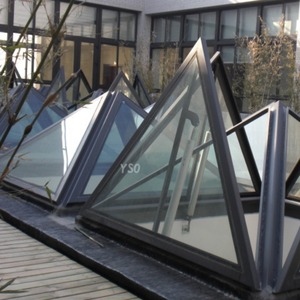
In modern architectural building envelopes, roof skylights represent the most physically challenged fenestration component. Located on the horizontal or inclined plane, they are subjected to intense solar radiation (continuous infrared and ultraviolet degradation), concentrated mechanical ponding loads, extreme interior condensation differentials, and severe wind uplift forces. For specifiers, façade consultants, and general contractors, selecting an OEM/ODM manufacturing partner demands an exhaustive understanding of mechanical thermal breaks, mechatronic actuator synchronization, and structural silicone glazing technology.
1. Multi-Chamber Polyamide Thermal Barrier Technology
Historic architectural skylights suffered from acute thermal bridging, resulting in interior frame condensation that compromised ceiling plaster, promoted mould growth, and diminished HVAC efficiency. Modern DERCHI OEM aluminium skylight profiles utilize advanced PA66 GF25 (25% glass fibre reinforced polyamide) structural insulation strips. These thermal breaks isolate exterior and interior aluminum alloy extrusions across a width of up to 34mm, creating a dedicated isothermal plane.
By filling internal profile hollows with polyurethane aerosolized insulation or expanded Aerogel cores, our structural frames achieve U-values as low as 1.1 W/(m²·K) (equivalent to NFRC U-factor 0.20 Btu/h·ft²·°F). When paired with warm-edge composite spacers (such as Technoform or Swisspacer) and triple-glazed insulated glass units (IGU), overall thermal transmittances comfortably surpass Passive House standards and Australia's National Construction Code (NCC 2022 Section J) energy benchmarks.
Key Engineering Breakthrough: Condensation Cascade Weeping
DERCHI's proprietary skylight profile extrusions incorporate an integrated primary drainage channel, secondary gasket barrier, and hidden internal weep paths. Even under zero-pitch (0°) or ultra-low pitch (3° to 5°) installations, condensation generated on the interior lite is channelled outward without relying on vulnerable surface mastic sealants.
2. Glazing Dynamics: Solar Control, Acoustic Attenuation, and Cyclonic Impact
Unlike vertical facade glass, overhead skylight glazing must comply with rigorous human impact safety and overhead fall-through prevention codes (such as AS 1288 in Oceania and OSHA/ASTM standards in the USA). Our OEM manufacturing lines utilize tailored composite glass make-ups engineered specifically for the client's geographic microclimate:
- Exterior Lite: 6mm to 10mm high-transmission Low-Iron Tempered Glass with hard-coat pyrolytic self-cleaning coatings (TiO2 photocatalytic decomposition of organic grime coupled with super-hydrophilic sheeting action).
- Interlayer Gas Void: 16mm to 20mm warm-edge cavity charged with 90%+ Argon or Krypton gas for maximized acoustic damping and convective heat suppression.
- Interior Lite: Structural Laminated Safety Glass featuring high-modulus DuPont SentryGlas (SG) or Kuraray ionoplast interlayers (1.52mm to 2.28mm thickness). This ensures that even under direct debris impact during hurricane conditions, the broken glass retains structural elasticity, preventing envelope breach and internal pressurization.
3. Mechatronic Automation & Smart Building Integration
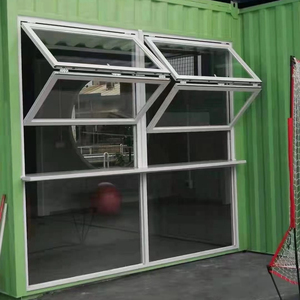
Modern commercial developments and luxury residential estates require skylights to function as responsive environmental filters. DERCHI's OEM motorized skylights incorporate heavy-duty stainless-steel linear chain actuators, rigid rack-and-pinion rams, or vertical telescoping hydraulic drives capable of exerting operating push/pull forces from 400N to 3500N per unit.
Our automation controllers interface natively with KNX, BACnet, Modbus, and Zigbee Home Automation architectures. Integrated multi-parameter environmental sensor arrays monitor real-time wind speed (automatically closing the window when gusts exceed 14 m/s), optical rainfall detection (triggering rapid motorized shutdown within 1.5 seconds), and indoor VOC/CO2 levels for natural passive night-purge ventilation.
Comprehensive Technical Specification Matrix
| Performance Parameter |
Generic Commodity Skylights |
DERCHI OEM Architectural Standard |
DERCHI Heavy-Duty Cyclone / Smoke Spec |
| Aluminium Alloy Profile |
Recycled 6063 Aluminum (1.2mm - 1.4mm) |
Primary Billet 6063-T6 (2.0mm - 2.5mm) |
High-Strength 6005-T5 / 6063-T6 (3.0mm+) |
| Thermal Transmittance (U-Value) |
3.8 – 4.5 W/(m²·K) (Non-Thermal) |
1.6 – 1.8 W/(m²·K) (PA66 24mm Break) |
1.0 – 1.3 W/(m²·K) (Aerogel Filled / Triple IGU) |
| Structural Wind Load (AS 2047) |
N1 – N3 (Up to 1500Pa) |
N4 – N5 (2500Pa – 3500Pa) |
N6 Cyclonic (4500Pa+ Serviceability) |
| Water Penetration Resistance |
150Pa – 300Pa |
600Pa (Static Pressure Test) |
1000Pa+ (Dynamic Cyclic Infiltration) |
| Smoke Exhaust Compliance |
None (Standard Ventilation) |
Manual Emergency Override |
EN 12101-2 Certified (Opens in <60s at 300°C) |
| Hardware & Actuators |
Generic Chinese domestic motors |
DERCHI Silent DC 24V Actuators (IP65) |
German GEZE / Mingardi High-Torque Drives |
| Acoustic Isolation (STC/Rw) |
Rw 28 – 30 dB |
Rw 36 – 38 dB |
Rw 42 – 45 dB (Acoustic PVB Lamination) |