Specialised Aluminium Glazing & Architectural Systems
Precision-fabricated window schedules, high-performance impact glazing, and custom door profiles engineered to withstand cyclonic pressures and severe climatic conditions.
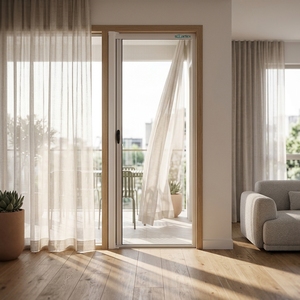
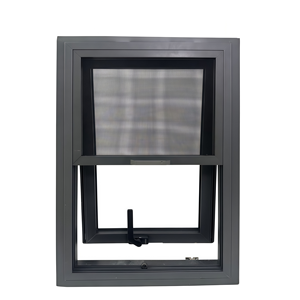
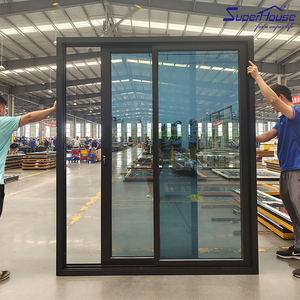
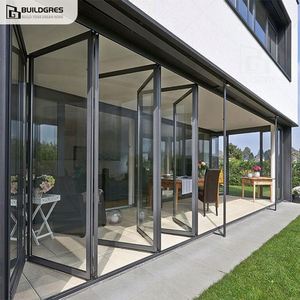
Why Global Tier-1 Contractors Partner With Our Facility
Operating as a premier Foshan manufacturing powerhouse (Guangdong Dejiyoupin Doors and Windows Co., Ltd. - DERCHI), we eliminate intermediary markups while delivering structural fenestration systems verified by accredited NATA/AS-NZS testing facilities.
AS 2047 & N6 Wind Rating Certified
Our structural aluminium profiles and double/triple glazed modules undergo rigorous physical testing for ultimate limit state (ULS) wind pressure, water penetration resistance (exceeding 450 Pa), and air infiltration compliance to AS 1288 and AS 2047 parameters.
Full In-House Extrusion & CNC Milling
Controlling the entire chain—from primary 6063-T5/T6 architectural virgin billet extrusion to high-precision 5-axis German CNC milling—guarantees profile dimensional tolerances within ±0.3mm and superior mechanical structural stability.
Engineering Documentation & CAD/BIM
We bridge structural engineering gaps by delivering bespoke shop drawings, complete static structural calculations, thermal finite element analysis (U-value simulation), and BIM Revit families tailored to your building schedule before production kick-off.
Marine-Grade Architectural Surface Coatings
Qualified applicator for AkzoNobel Interpon and PPG Duranar fluorocarbon (PVDF) architectural finishes. Certified resistance against salt-spray corrosion (up to 3,000+ hours ASTM B117), extreme coastal UV degradation, and chalking in oceanic environments.
Direct Oceania & Global Project Logistics
Seamless door-to-port and door-to-jobsite logistics. Every glazed unit is wrapped in multi-layer PE protection and secured inside ISPM-15 compliant fumigated non-coniferous timber crates engineered for rough container handling and biosecurity clearance.
AEST/NZST Synchronous Engineering Desk
Direct communication with fluent, bilingual technical project managers aligned with Sydney, Melbourne, Auckland, and Pacific Standard working hours, delivering rapid turnarounds on tender revisions and RFIs within 24 hours.
Engineering Specifications & Architectural Glazing Criteria
A critical overview of structural profile design, thermal transmittance optimization, and performance benchmarking for commercial and high-end residential fenestration.
Procuring commercial-grade aluminium glazed windows across OEM/ODM channels requires an exhaustive evaluation of systemic mechanical performance rather than surface aesthetics alone. In structural curtain wall and punch-window configurations, profile alloy selection establishes the foundation. DERCHI manufactures exclusively with structural 6063-T5 and high-strength 6063-T6 architectural aluminium alloys. This ensures profile tensile strengths exceed 205 MPa and yield strengths reach beyond 170 MPa, directly preventing sash deflection under severe cyclonic conditions.
1. Thermal Insulation Mechanics: Polyamide 66 Thermal Breaks
Standard monolithic aluminium extrusions possess an inherently elevated thermal conductivity (approx. 160-200 W/m·K). To satisfy stringent modern building energy mandates (such as Australia's NCC Section J, US Title 24, and European Passivhaus thresholds), DERCHI incorporates multi-cavity, continuous structural Polyamide PA66 reinforced with 25% glass fibre (PA66 GF25) thermal barrier strips. This structural rupture prevents internal heat conduction bridges, lowering overall frame U-factors ($U_f$) down to a remarkable 1.4 - 1.8 W/m²·K.
| System Classification | Frame Profile & Alloy | Glazing Configuration (IGU) | Thermal Performance (Uw) | Acoustic Attenuation (Rw) | Water Resistance |
|---|---|---|---|---|---|
| Commercial Non-Thermal | 6063-T5 / 1.4 - 2.0mm | 6mm + 12A + 6mm Low-E Toughened | Uw ≈ 3.2 - 3.8 W/m²K | Rw 31 - 33 dB | 300 Pa |
| Architectural Thermal Break | 6063-T6 / 2.0mm (PA66 Strip) | 6mm Low-E + 16Ar + 6mm Toughened | Uw ≈ 1.6 - 2.1 W/m²K | Rw 36 - 38 dB | 450 Pa |
| Passive House Grade (Triple) | 6063-T6 / 2.2 - 2.5mm Multi-Cavity | 5mm Low-E + 12Ar + 5mm + 12Ar + 5mm | Uw ≈ 0.85 - 1.2 W/m²K | Rw 42 - 45 dB | 700 Pa |
| Hurricane Impact Architectural | High-Tensile 6063-T6 / 3.0mm | 6mm Toughened + 1.52PVB/SGP + 6mm + 12Ar + 6mm | Uw ≈ 1.8 - 2.4 W/m²K | Rw 39 - 42 dB | 1000 Pa (N6 Cyclonic) |
2. Acoustic Decoupling & Soundproofing Protocols
Urban fenestration demands precise acoustic damping. Decibel transmission is suppressed utilizing asymmetric double-glazed and laminated glass units (IGU/DGU). By pairing panes of varying thicknesses (e.g., 6mm outer pane coupled with an 8.76mm acoustic PVB laminated inner pane), sonic coincidence frequencies are neutralized. Coupled with high-resilience ternary EPDM vulcanized continuous dual-gasket seals along all rebate stops, perimeter air leaks are eliminated—providing verifiable sound insulation performance exceeding Rw 40 dB for arterial roadside developments.
Procurement Trajectories & Architectural Fenestration Trends
Key developments driving architectural window specifications, lifecycle procurement criteria, and decarbonization benchmarks for the 2026-2030 building cycles.
Low-Carbon Circular Aluminium (Circal Extrusions)
Global developers are mandating strict Embodied Carbon targets. Sourcing OEM profiles extruded using renewable hydroelectric-smelted virgin aluminium or certified post-consumer scrap yields emissions under 4.0 kg CO₂e/kg Al, ensuring credits under Green Star, LEED v4.1, and BREEAM certifications.
Ultra-Slim Sightlines & Structural Concealed Frames
Architects demand maximum glazing surface ratios. The shift toward sub-frame structural integration allows external frame profiles to sit completely recessed behind structural masonry or exterior louvre panels, yielding clean glass-to-edge sightlines without sacrificing structural load resistance.
Smart Sensor & Mechatronic Concealed Actuation
Commercial bottom-hung and casement designs increasingly specify internal, chain-driven 24V DC mechatronic actuators concealed within profile chambers. Interfacing directly with BMS (Building Management Systems) provides automated smoke-release purging and natural nighttime cooling cycles.
SGP Structural Interlayer for Severe Storm Defense
Replacing traditional PVB with SentryGlas (SGP) ionoplast structural interlayers within hurricane impact glass panels. SGP provides 5 times the tear strength and up to 100 times the post-breakage rigidity of standard PVB, maintaining structural integrity even under repeated debris bombardment.
Offsite Prefabricated Glazing Cassettes (Unitized DfMA)
To counteract skyrocketing domestic site labour costs in Australia, New Zealand, and North America, buyers specify pre-assembled, factory-glazed cassette windows fitted with pre-applied EPDM perimeter flashing boots, drastically shortening on-site envelope sealing cycles.
Smart Dynamic Dynamic Electrochromic Glazing Integration
OEM integration of electronically tintable dynamic Low-E coatings directly into insulated glass units. This grants occupants touch-button and sensor-automated solar heat gain coefficient (SHGC) modulation from 0.41 down to 0.09, eliminating complex secondary shading hardware.
Frequently Asked Questions by Commercial Buyers & Estimators
Clear, engineering-backed answers addressing compliance, quality control, shipping integrity, and custom fabrication workflows.
How does your factory verify compliance with Australian Standard AS 2047 and AS 1288?
What surface finish options are recommended for harsh coastal marine environments?
Can your engineering team support bespoke extrusion dies and custom hardware integration?
How do you mitigate risk of glass breakage and frame distortion during ocean shipping?
What are the lead times for custom OEM/ODM window schedules?
Ready to Submit Your Window Schedule & Architectural Plans?
Connect directly with our senior structural fenestration engineers. Receive preliminary static load assessments, thermal performance modeling, and itemized factory-direct commercial tenders within 24 hours.